

ANA DE ALMEIDA
“Ficou
a ver
passar
navios.”
#ARTS-BASED RESEARCH #ARCHITECTURE #COMMONS #INSTALLATION #SPACE #MULTIMEDIA #IDENTITY #PERFORMANCE
#NEO-COLONIAL #VIDEO #GENDER
BIO. Ana de Almeida (b.1987) is an artist and author from Lisbon, currently based in Vienna. She is a member of the artists’
collective dienstag abendof
of VBKÖ and of the Interndinner collective against precarization of work in the cultural field. Her artistic practice addresses memory and remembering processes, narrative constructions that connect space and subject, and plurispatial and multilayered narratives in general.
Ana de Almeida is currently a Ph.D. candidate at the Academy of Fine Arts of Vienna, pursuing a doctoral thesis about the production of images in the 1974—1989 inter-revolutionary space between the Carnation and the Velvet Revolutions.
Ana de Almeida is currently a Ph.D. candidate at the Academy of Fine Arts of Vienna, pursuing a doctoral thesis about the production of images in the 1974—1989 inter-revolutionary space between the Carnation and the Velvet Revolutions.
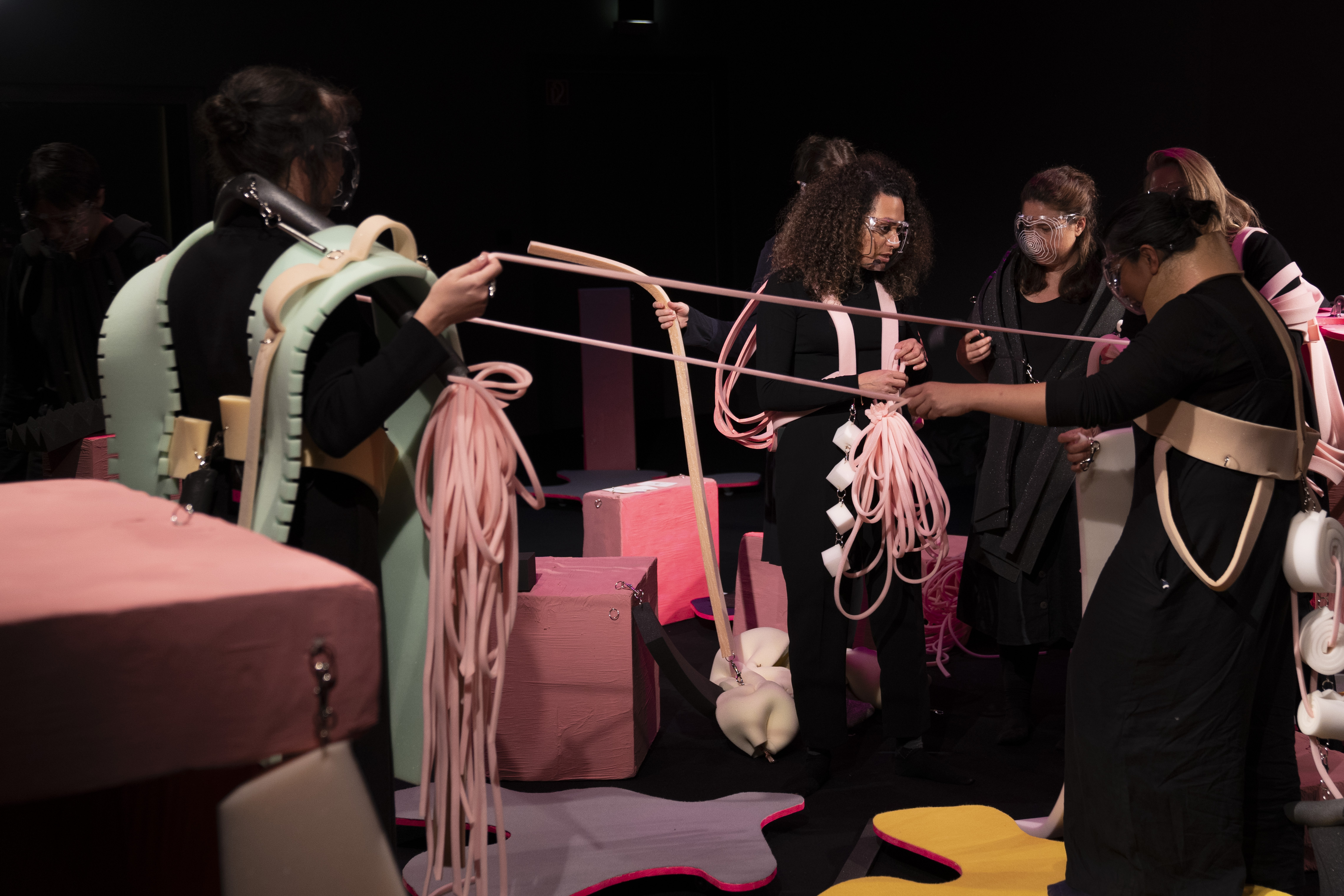
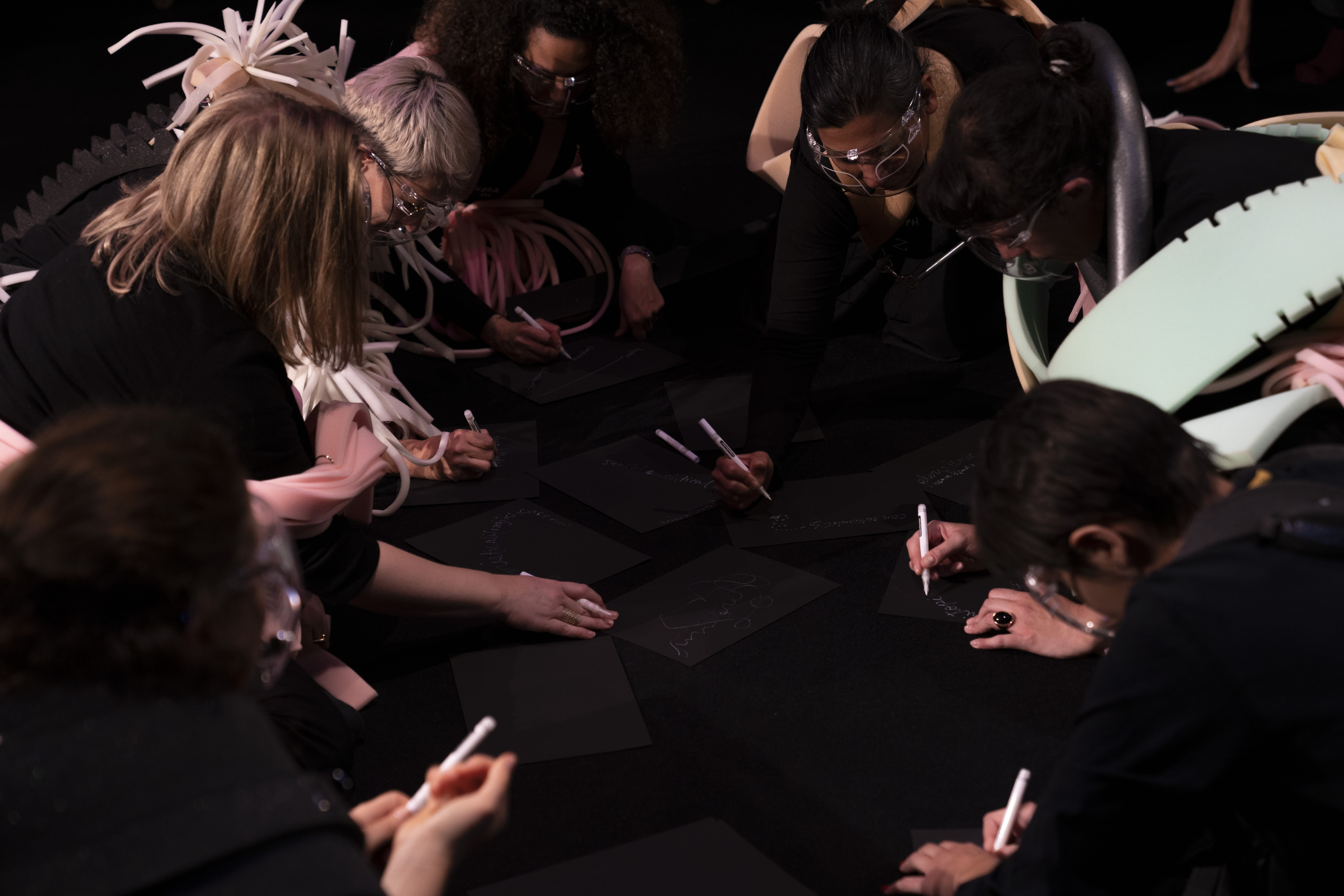
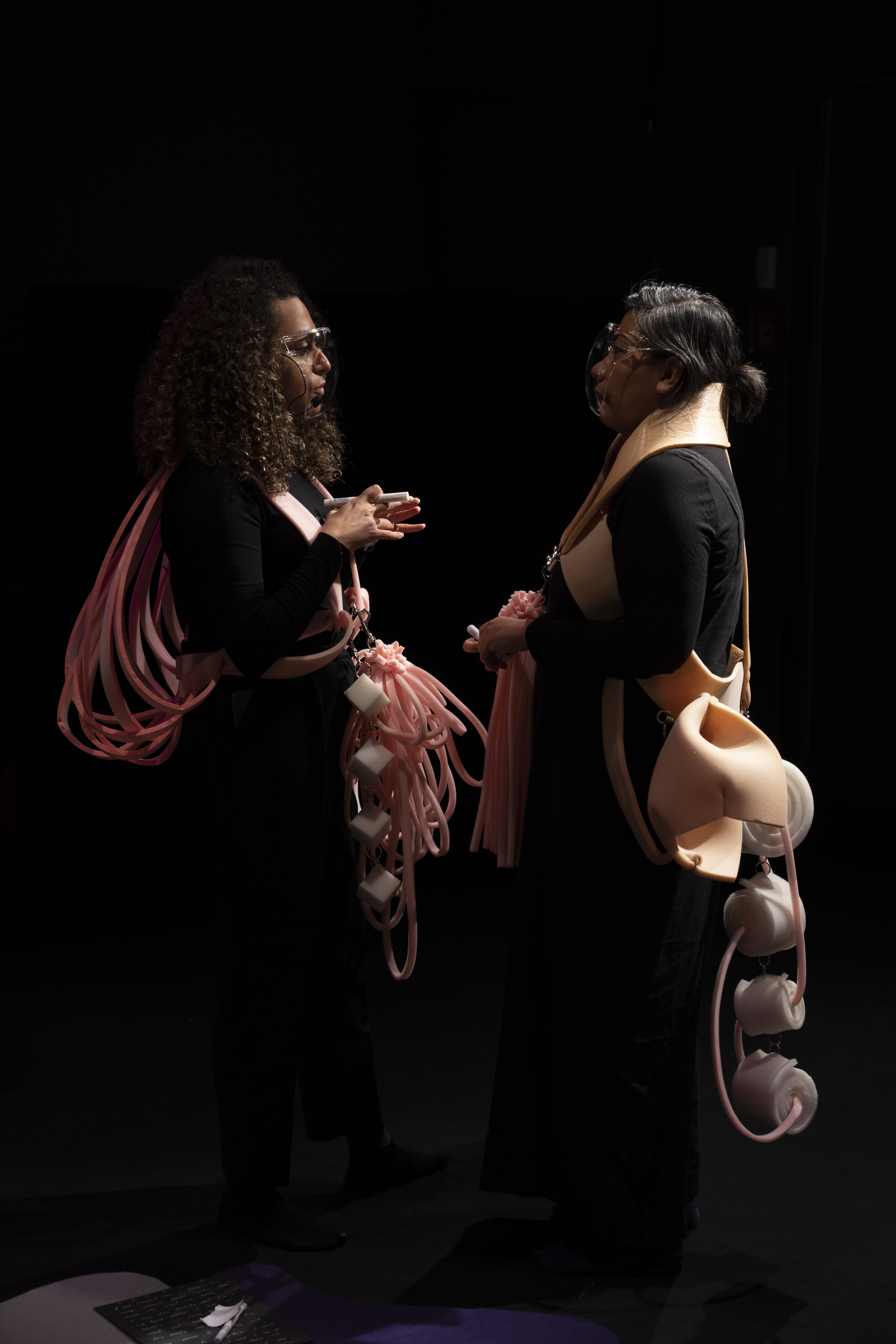

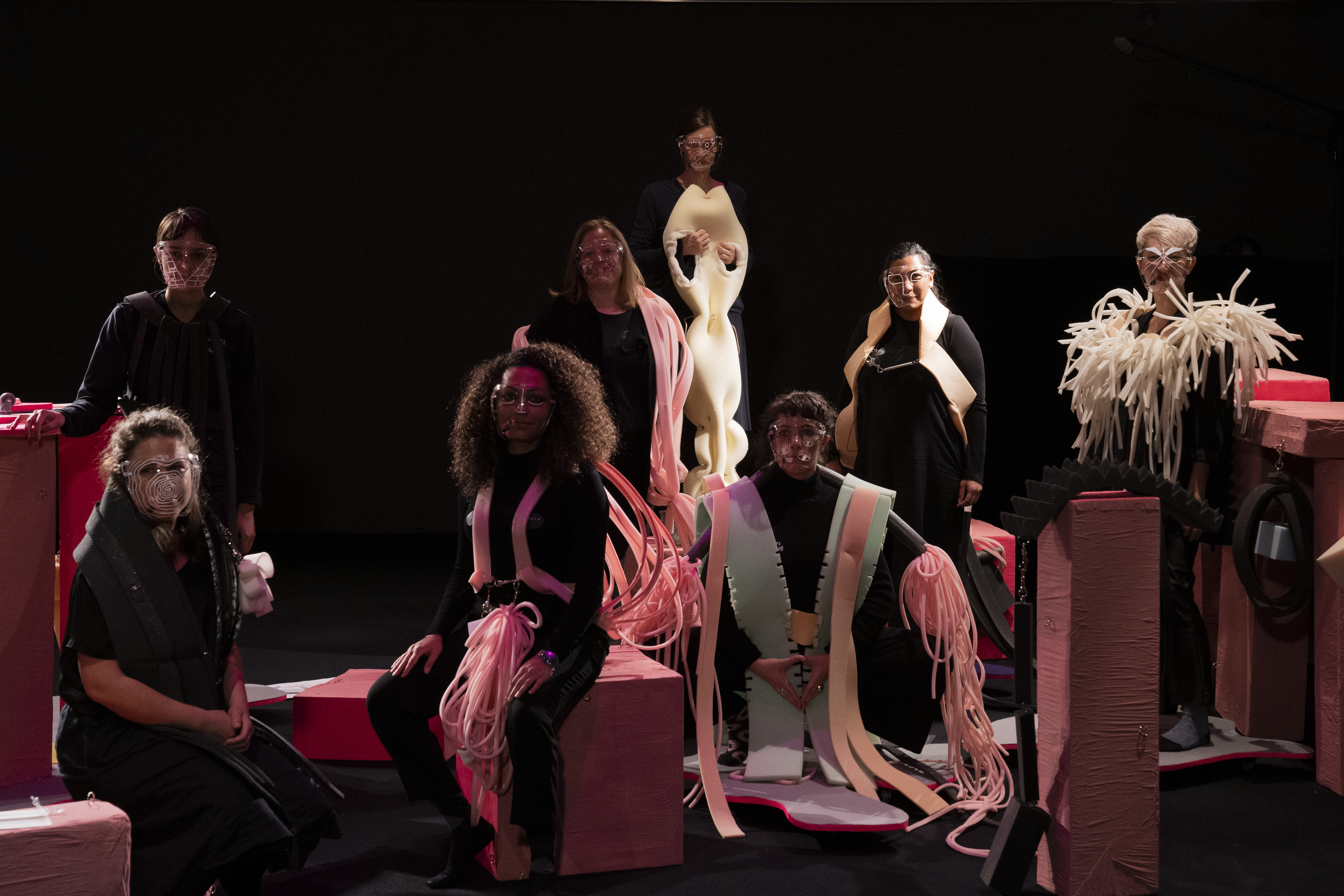
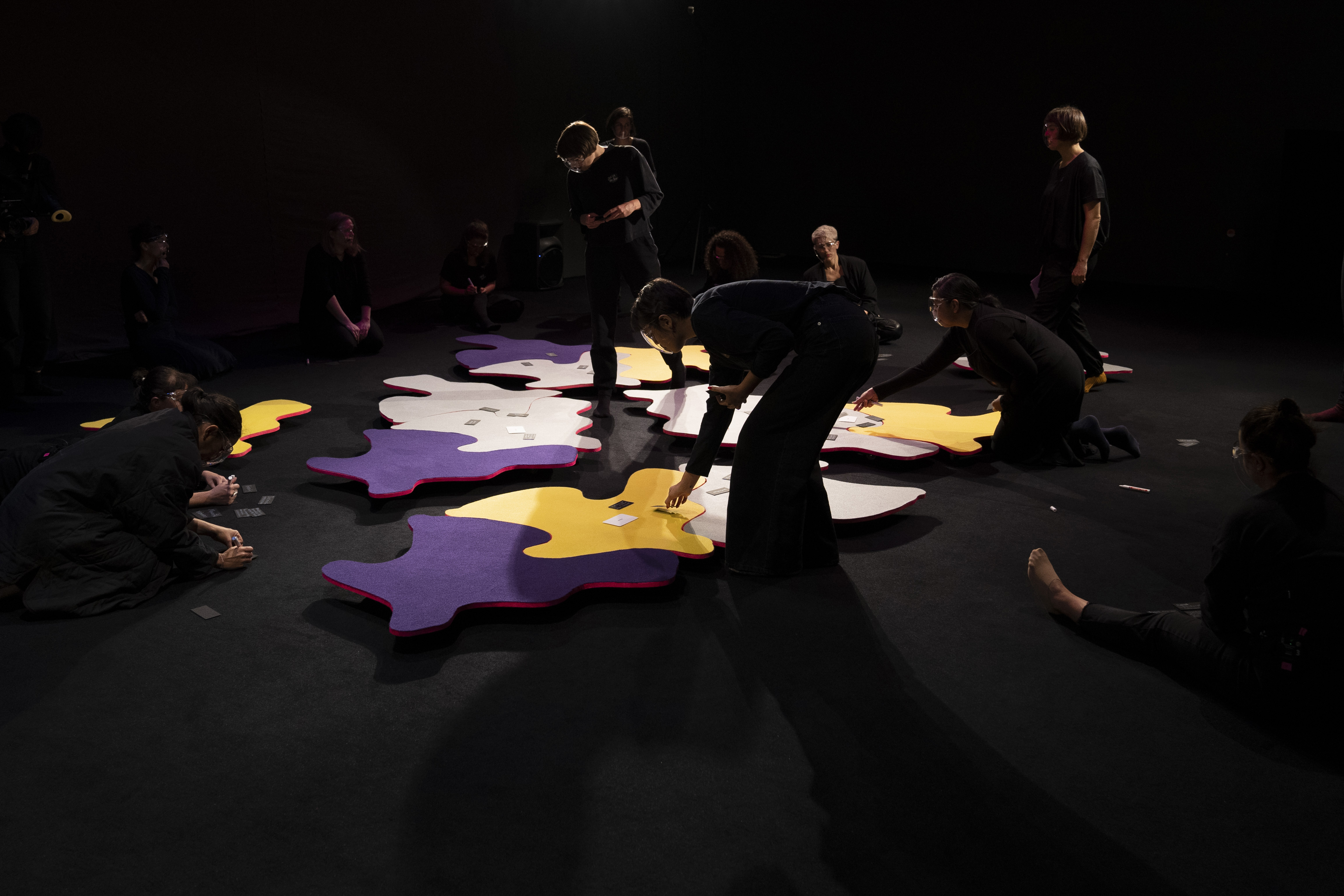
Ana de Almeida, Alicja Rogalskaand & Vanja Smiljanic
NOVA. Future thoughts on surviving together (2020 AT)
Live Action Role Play
In the future, gender inequality was erased. Nova is a multitude of newly born, radically inclusive and self-managed communities. Heterogeneous in their forms of commoning and social organization, Nova share a vow to never let oppression in any form rise again. Nova. Future thoughts on surviving together is a feminist futurist LARP - Live Action Role Play by Ana de Almeida, Alicja Rogalska and Vanja Smiljanić; directed towards feminist and queer-feminist activists based in Vienna. NOVA is a day of speculative gaming aimed at sharing survival strategies, exercising solidarity and intersectionality, creating solidarity networks and forming new alliances between different emancipatory movements. Together, we created a piece of feminist political fiction - a work in progress and a world free of patriarchal oppression in the making.
With: VBKÖ, Saloon Wien, Kunst & Kind, Latinxs Unidxs, Kültür Gemma, Cine Collective, Mala Sirena, female:pressure.


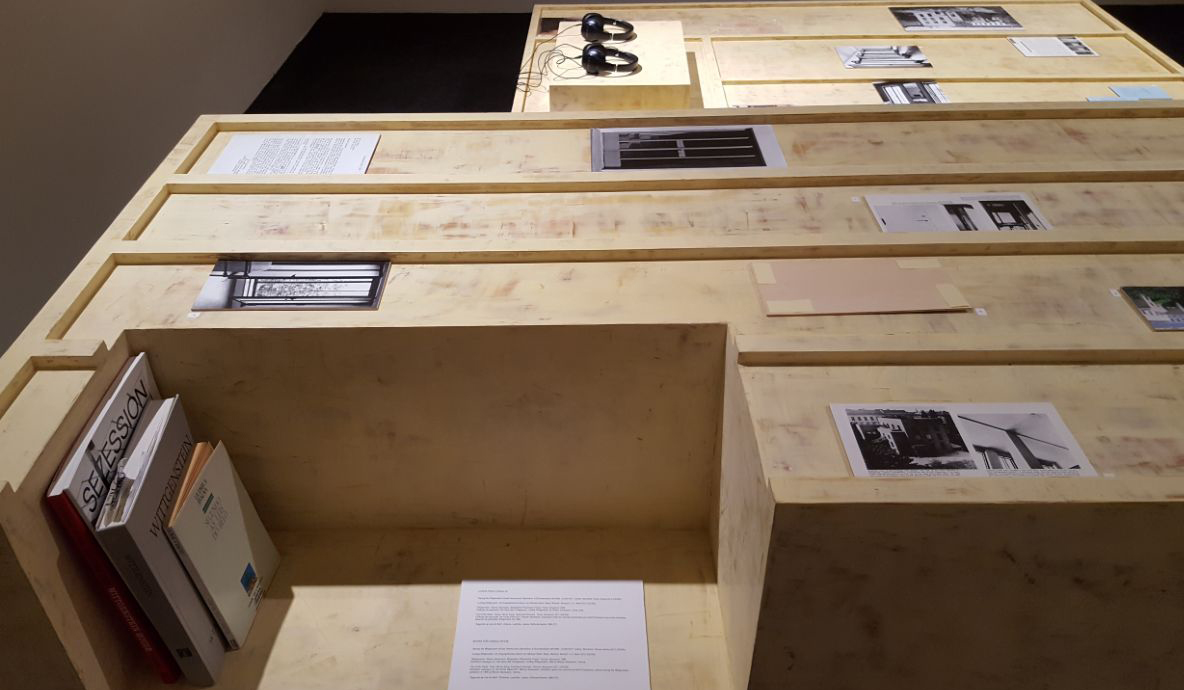
A Casa / The House The flat / Die Fläche (2018 PT)
MDF, stucco-lustro, stereo sound 42'5'' looped
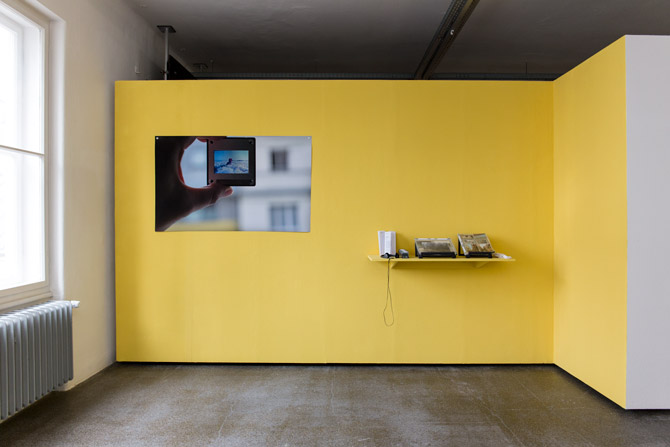
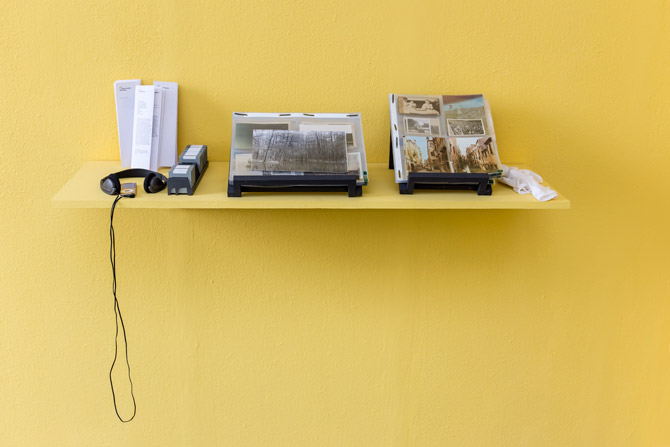
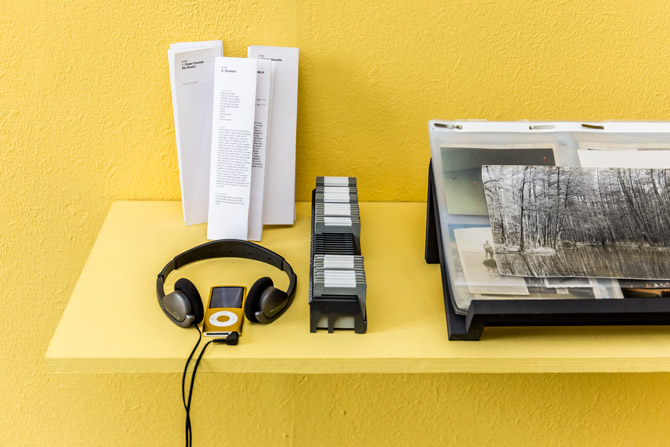
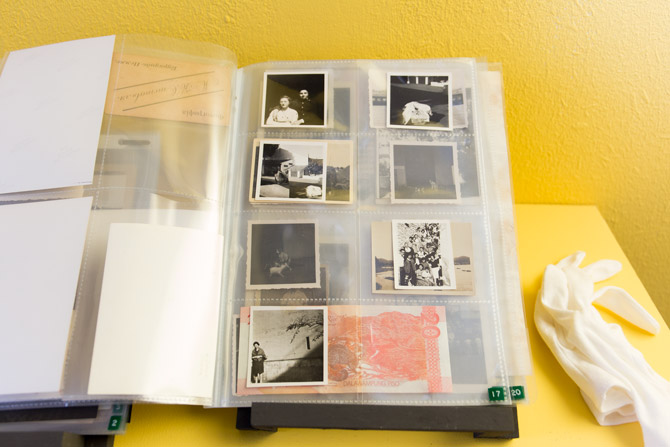
Likewise a sculpture, A Casa (The House) shares the aesthetic and architectonic language of the House Wittgenstein in Vienna. The two volumes are a transposition and folding down of two of its architectonic elements: a window and the vestibule door. They serve as display for documental material such as letters and photos and incorporate an audio piece with interviews led by the artist. The surface is covered by stucco-lustro, a coating technique proliferating in Vienna on the turn to the 20th century, similar to how could the original coating of the walls of the House Wittgenstein have looked like before they were painted white after World War II. The highlighting of the stucco-lustro architectonic detail points out to a fundamental discovery for the understanding of the house as aesthetic experiment in which the house interiors, composed by materials which evoke extreme hardness, seem to dematerialize through the highly reflecting properties of the stucco walls.

Photos: © Ana de Almeida & Stephanie Misa
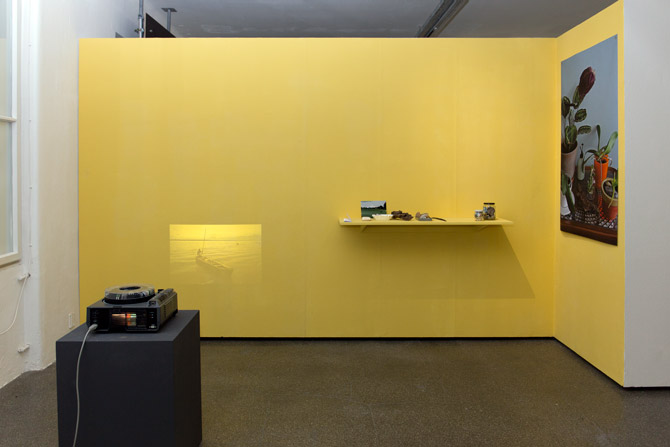
Untitled (Yellow) (2017 PT)
Wall, yellow paint, memorabilia, diashow, stereo sound
A cooperation between Ana de Almeida (PT/AT) and Stephanie Misa (PH/AT) . This is a project about landscape as formal and informal disposition of elements. Coordinates. An arrangement, a hierarchy: borders and de-limitations, transpositions and transgressions, frames and their inside-outside, margins, and of course landscape — of the geographical, political, personal, and emotional nature. Edouard Glissant’s Traité du Tout-Monde. (Poétique IV), calls it archipelagic thinking, a group of islands that lends its topography to an alternative imaginary: a reassessment of the insularity of bound cultures, of nation-states, and the heaviness of “continental thought”. The archipelago is an alternative imaginary, one that posits that identity could be as a conglomeration of islands (composed of many, yet is one). Identity formation, embodiment, complex colonial histories, evolution, interconnectedness, diaspora and change — Oh to dispell the oppressive idea of nationalistic wholeness!
CHRISTINE SCHÖRKHUBER
“Es ist von
Gewicht welche
Beziehungen
Beziehungen knüpfen.
![]()
Es ist von
Gewicht welche
Welten Welten
verweltlichen.”
Donna Haraway
#ARTS-BASED RESEARCH #BODY #COMMONS #ELECTRONICS #FABULATION #GENDER #HACKING #SOUND #INSTALLATION #INTERACTIVE #ONTOLOGY #SCIENCE
BIO. Graduated at the Academy of Fine Arts, Vienna, in 2008.
She is currently living and working as sound and media artist, video maker and musician based in Vienna. She realizes big sound installations in public space as well as video art, musical composition and silentnoise performances. The artist is mainly interested in close listening, in the intersections of audio and visual arts and the dynamics of relations and systems on individual, sociopolitical and technological level. Various exhibitions, performances and residencies in national and international context, New Austrian Sound of Music Grant 2014/2015, Recognition Awars for Media Arts, Lower Austria, 2019
.


Gefüge /Cloud (2019)
Electronics, metal mesh
“Cloud“ is an anthropomorphic, kinetic sculpture made of metal mesh, that enrolls a momentary social constellation, but also follows its own, pulsating logic. The mesh reacts to changes in the electric eld caused by the presence of people and other factors in the room. This generates breathing movements, that vary in intensity and direction and manifest in the shape of the metal mesh over a longer period of time. Contrasting the heavy materiality of the metal, the sculpture forms a oating object in a random accumulation of ne, conductive threads in motion. The mesh becomes vivid matter, apparently essential, and re ects a reference system of anthropomorphic interpretation.
Electricity is not just a tool or a means to an end, it is artistic material and as a physical medium a central player in the object. Donna Haraway calls this an „inorganic negotiator in processes and structures.


Photos: © Damian Griffiths
Something in the Air (2017)
Fans, Wood, Electricity
The object transforms the acoustic sound of human speech into the haptic experience of air movement. A recording of a spoken text is applied on the power control circuit of fans and thereby generates wind out of words. By the sound of the rotating engines and the floating air, the phonemes can be perceived as whispering schemes even without loudspeakers and thus refer to the nature of the articulated language in a physical sense.

Geräuschteppich/Sonic Carpet (2019)
Carpet, Sound, Microcontrollers
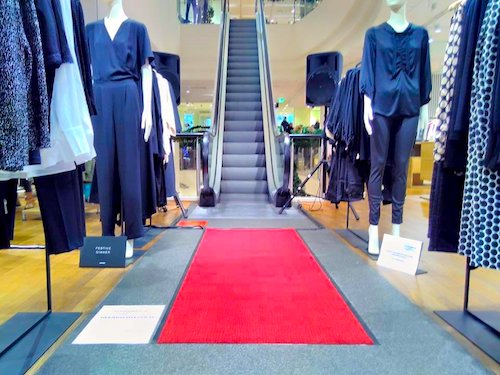
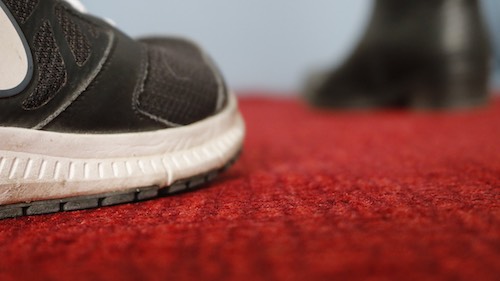
The noise carpet is an environment for active listeners - experiencing an electroacoustic concert. The carpet as a furnishing object, warming surface, room divider and generally inconspicuous everyday object. Here it becomes the center a staged szenario, taking up the expectable and speculating with the unexpectable.
Pressure sensors under the carpet control a modular composition, its form and interaction is determined by the audience. Walking, standing, lying down and sitting triggers different constellations and sound fields. The noise carpet is a collective, space and situation-related electronic instrument that is played by the visitors through their movements.