

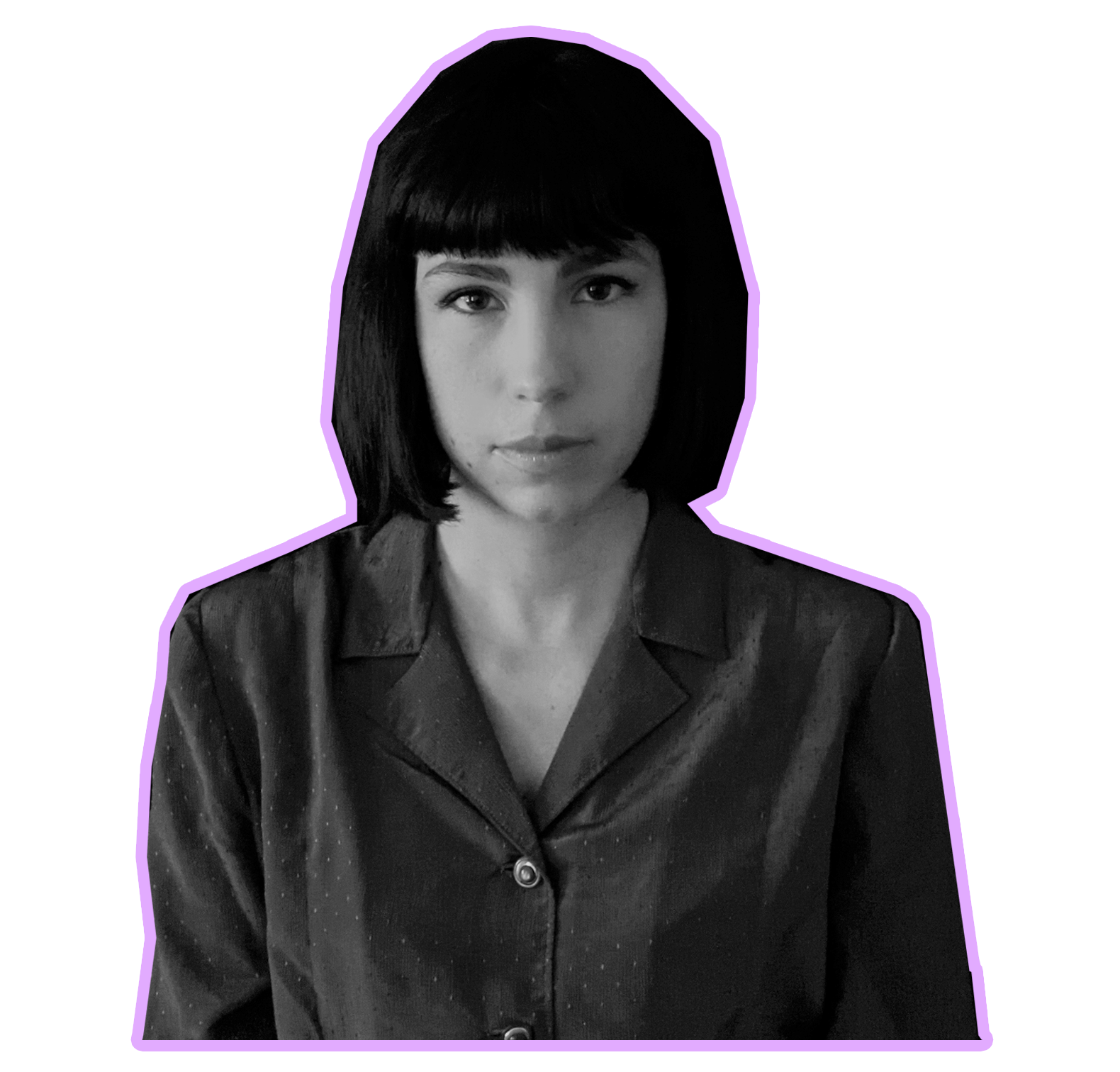
ANA DE ALMEIDA
“Ficou
a ver
passar
navios.”
#ARTS-BASED RESEARCH #ARCHITECTURE #COMMONS #INSTALLATION #SPACE #MULTIMEDIA #IDENTITY #PERFORMANCE
#NEO-COLONIAL #VIDEO #GENDER
BIO. Ana de Almeida (b.1987) is an artist and author from Lisbon, currently based in Vienna. She is a member of the artists’
collective dienstag abendof
of VBKÖ and of the Interndinner collective against precarization of work in the cultural field. Her artistic practice addresses memory and remembering processes, narrative constructions that connect space and subject, and plurispatial and multilayered narratives in general.
Ana de Almeida is currently a Ph.D. candidate at the Academy of Fine Arts of Vienna, pursuing a doctoral thesis about the production of images in the 1974—1989 inter-revolutionary space between the Carnation and the Velvet Revolutions.
Ana de Almeida is currently a Ph.D. candidate at the Academy of Fine Arts of Vienna, pursuing a doctoral thesis about the production of images in the 1974—1989 inter-revolutionary space between the Carnation and the Velvet Revolutions.
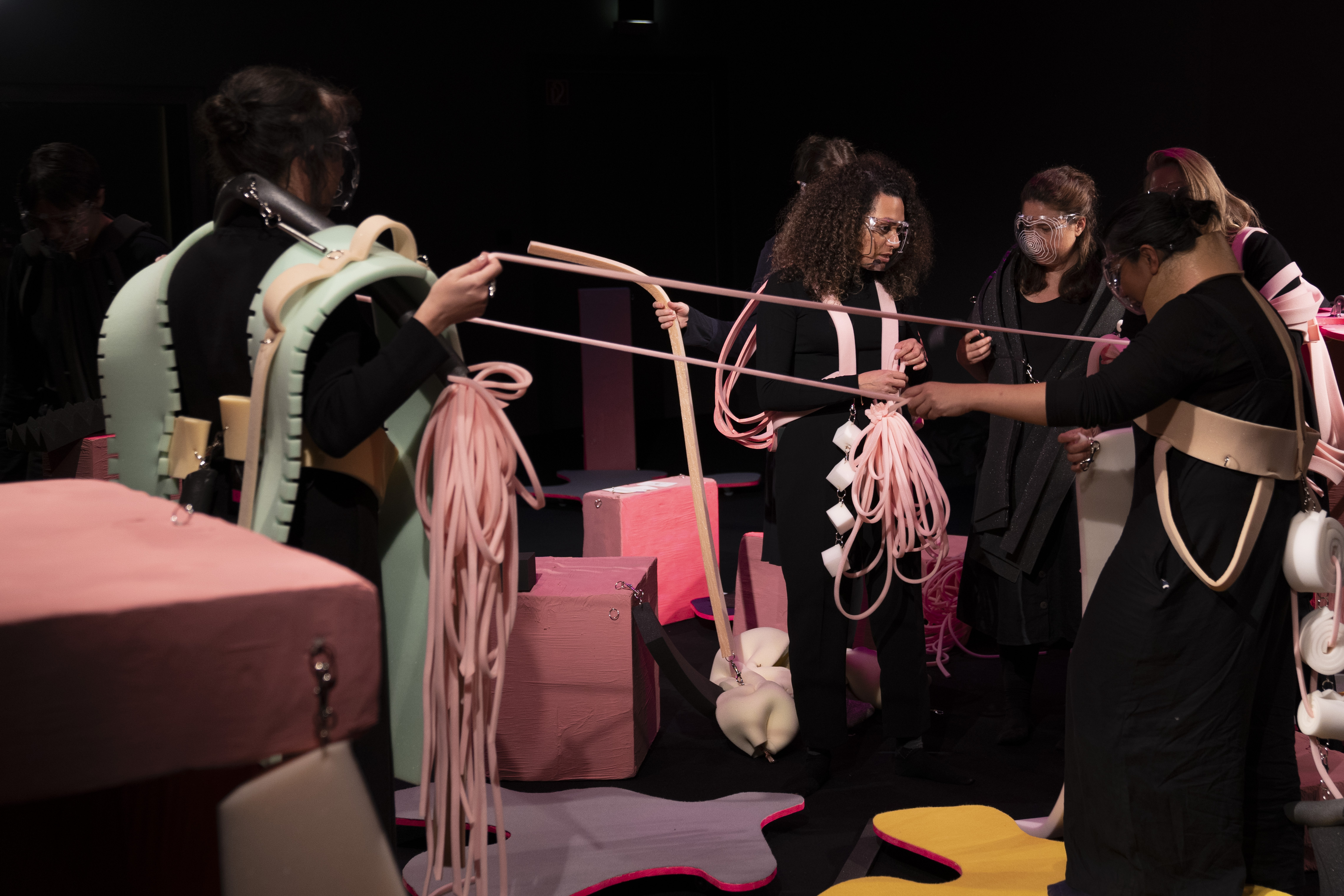
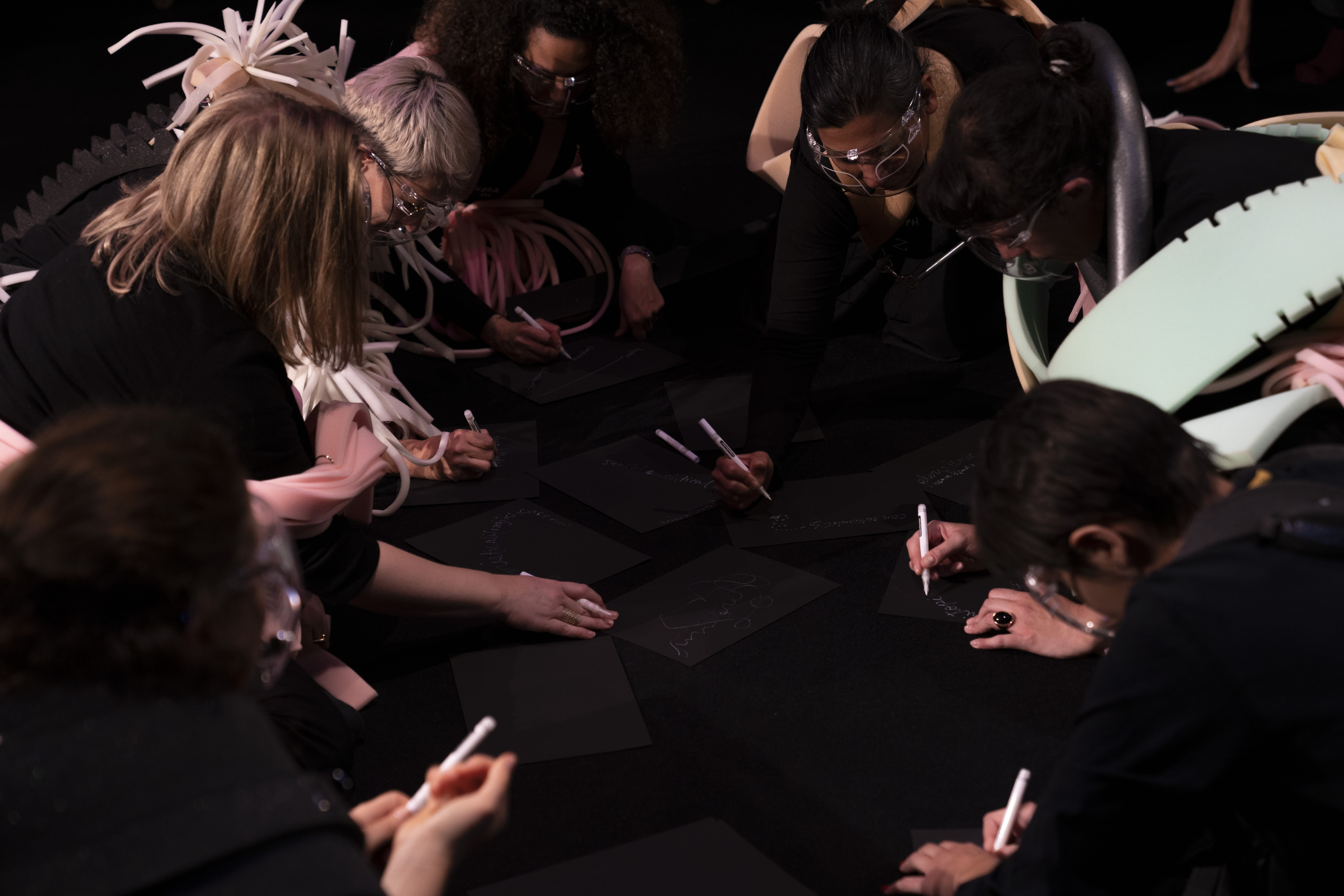
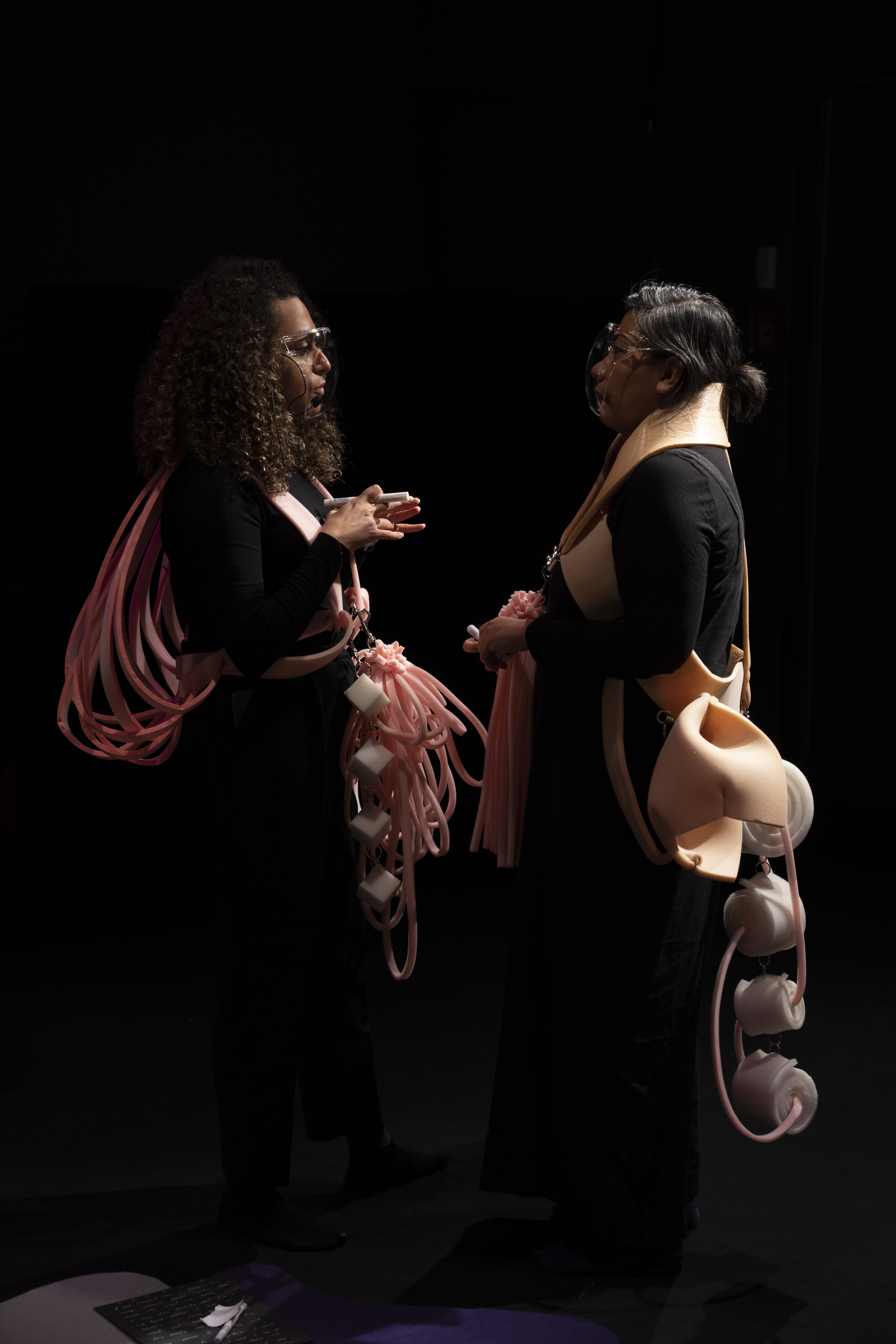

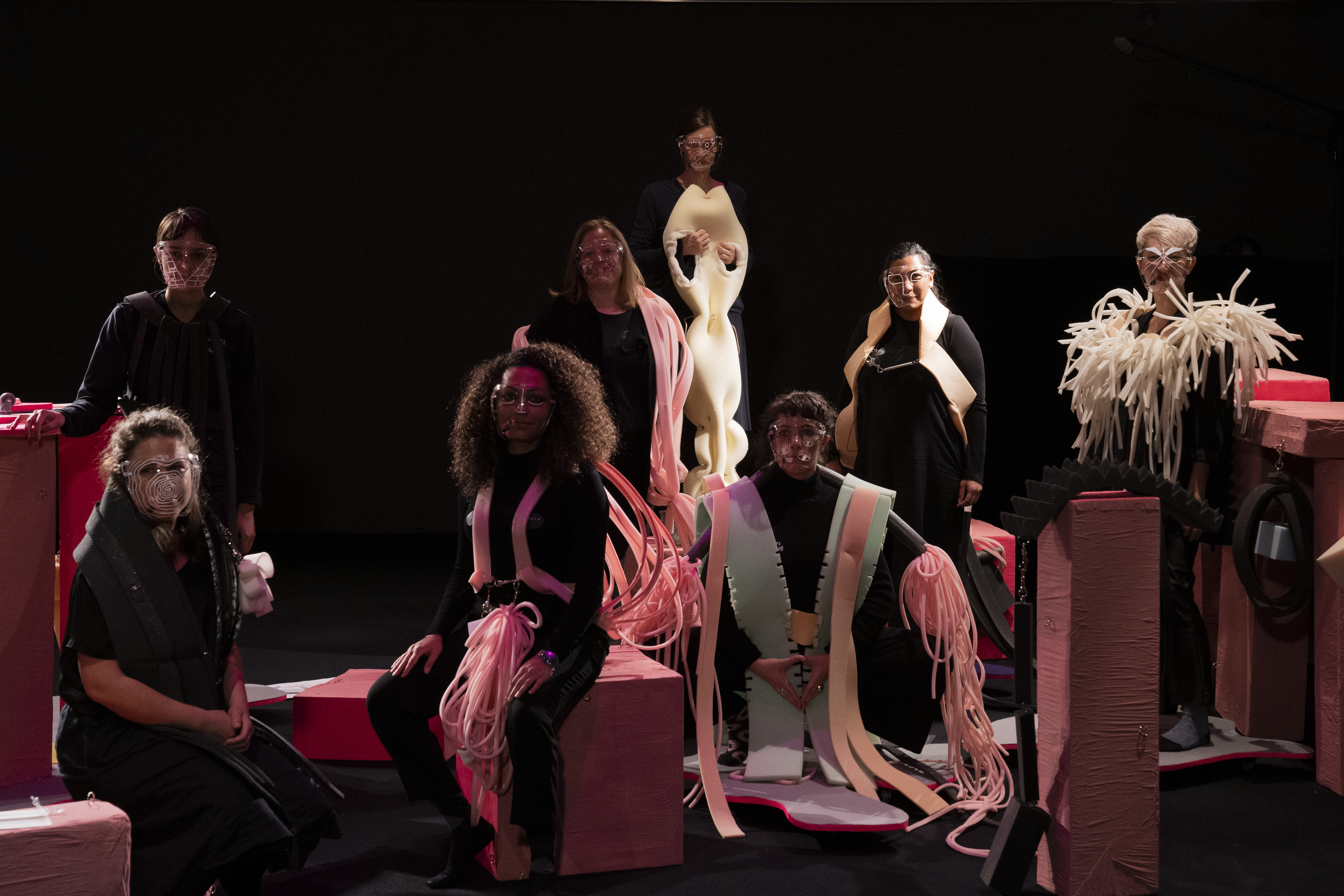
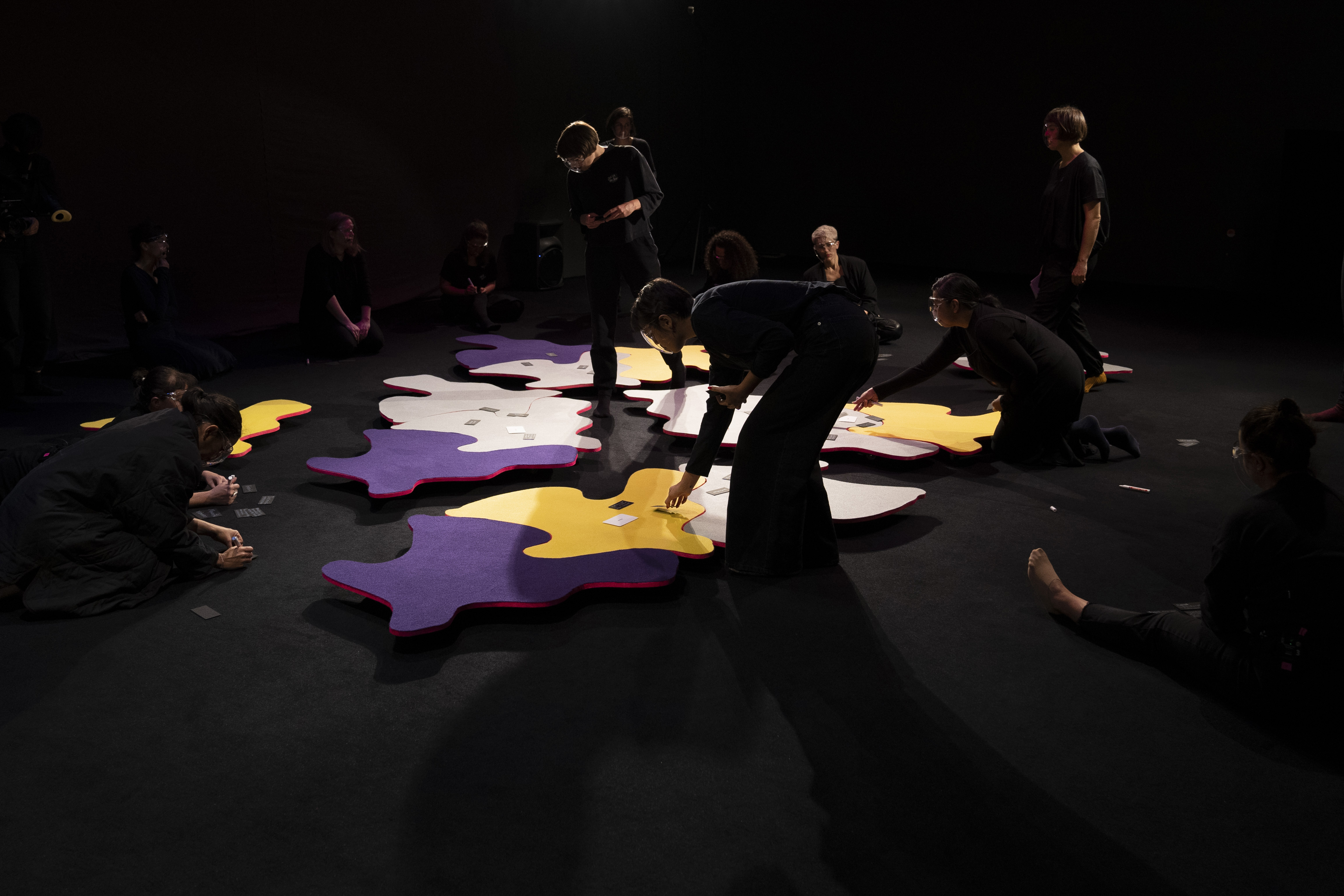
Ana de Almeida, Alicja Rogalskaand & Vanja Smiljanic
NOVA. Future thoughts on surviving together (2020 AT)
Live Action Role Play
In the future, gender inequality was erased. Nova is a multitude of newly born, radically inclusive and self-managed communities. Heterogeneous in their forms of commoning and social organization, Nova share a vow to never let oppression in any form rise again. Nova. Future thoughts on surviving together is a feminist futurist LARP - Live Action Role Play by Ana de Almeida, Alicja Rogalska and Vanja Smiljanić; directed towards feminist and queer-feminist activists based in Vienna. NOVA is a day of speculative gaming aimed at sharing survival strategies, exercising solidarity and intersectionality, creating solidarity networks and forming new alliances between different emancipatory movements. Together, we created a piece of feminist political fiction - a work in progress and a world free of patriarchal oppression in the making.
With: VBKÖ, Saloon Wien, Kunst & Kind, Latinxs Unidxs, Kültür Gemma, Cine Collective, Mala Sirena, female:pressure.


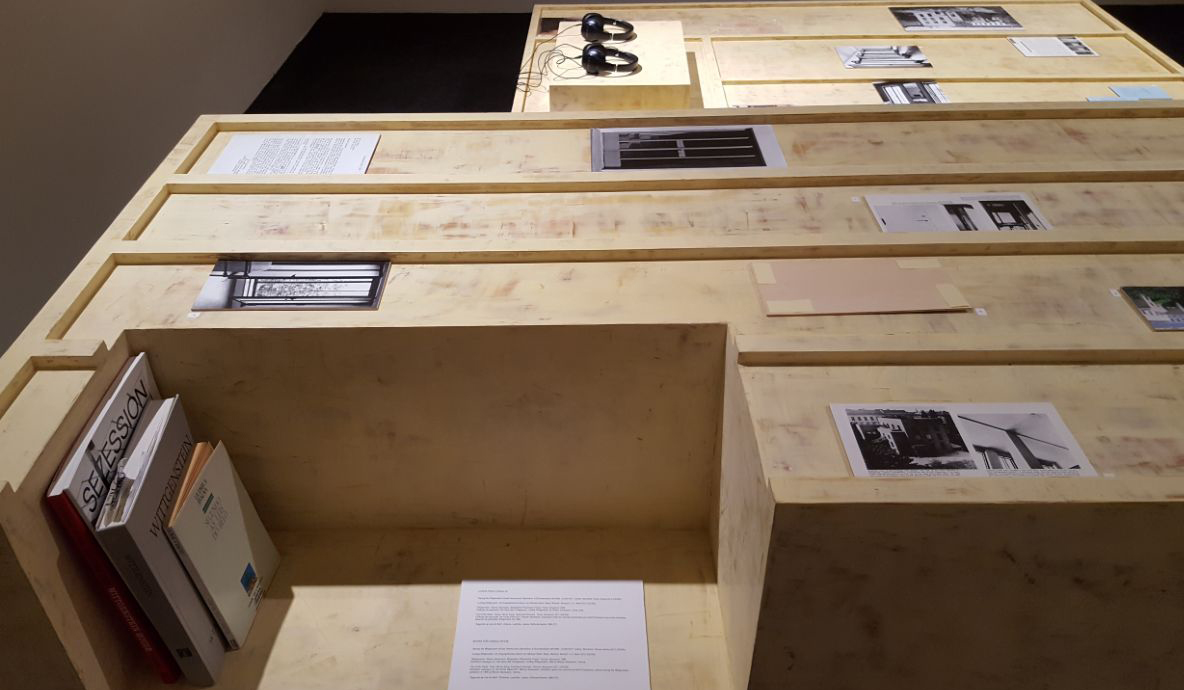
A Casa / The House The flat / Die Fläche (2018 PT)
MDF, stucco-lustro, stereo sound 42'5'' looped
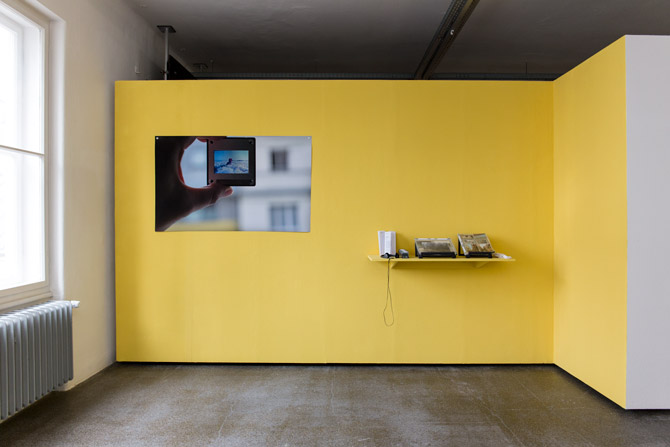
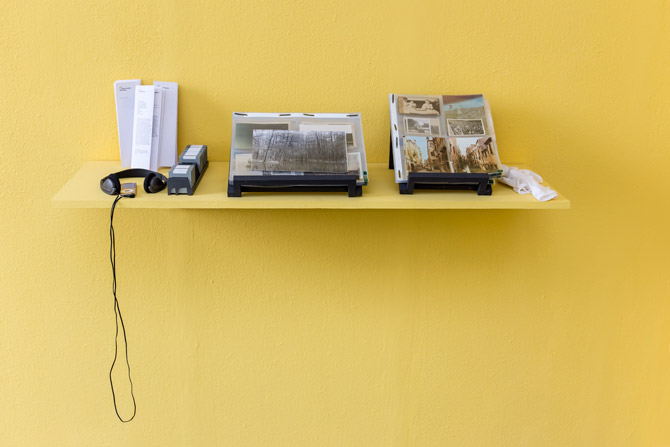
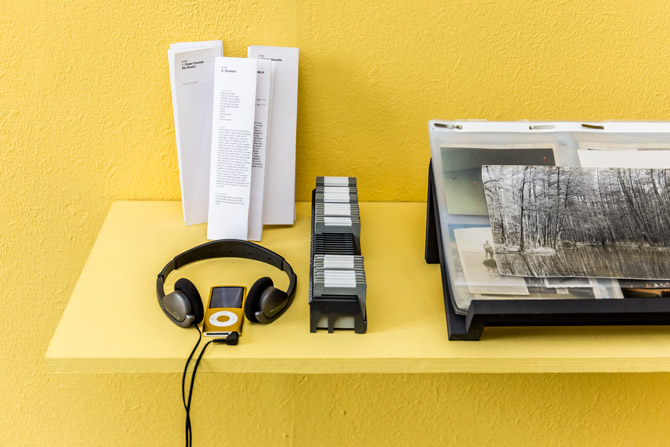
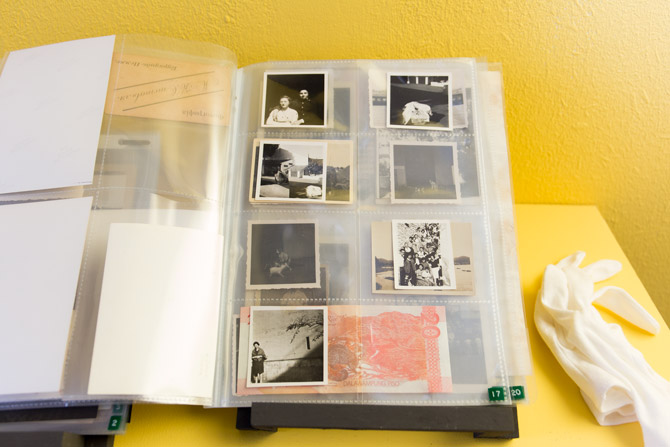
Likewise a sculpture, A Casa (The House) shares the aesthetic and architectonic language of the House Wittgenstein in Vienna. The two volumes are a transposition and folding down of two of its architectonic elements: a window and the vestibule door. They serve as display for documental material such as letters and photos and incorporate an audio piece with interviews led by the artist. The surface is covered by stucco-lustro, a coating technique proliferating in Vienna on the turn to the 20th century, similar to how could the original coating of the walls of the House Wittgenstein have looked like before they were painted white after World War II. The highlighting of the stucco-lustro architectonic detail points out to a fundamental discovery for the understanding of the house as aesthetic experiment in which the house interiors, composed by materials which evoke extreme hardness, seem to dematerialize through the highly reflecting properties of the stucco walls.

Photos: © Ana de Almeida & Stephanie Misa
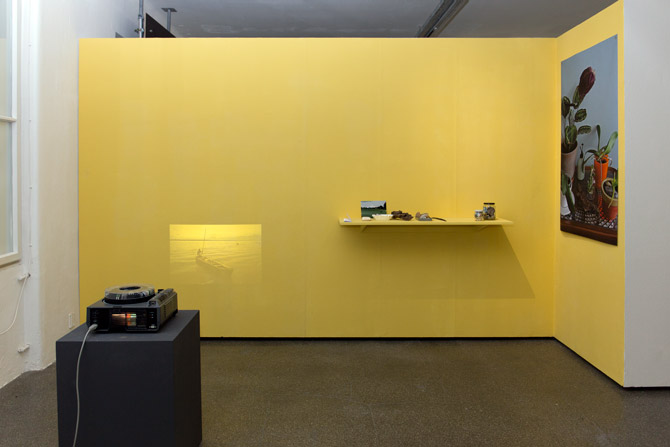
Untitled (Yellow) (2017 PT)
Wall, yellow paint, memorabilia, diashow, stereo sound
A cooperation between Ana de Almeida (PT/AT) and Stephanie Misa (PH/AT) . This is a project about landscape as formal and informal disposition of elements. Coordinates. An arrangement, a hierarchy: borders and de-limitations, transpositions and transgressions, frames and their inside-outside, margins, and of course landscape — of the geographical, political, personal, and emotional nature. Edouard Glissant’s Traité du Tout-Monde. (Poétique IV), calls it archipelagic thinking, a group of islands that lends its topography to an alternative imaginary: a reassessment of the insularity of bound cultures, of nation-states, and the heaviness of “continental thought”. The archipelago is an alternative imaginary, one that posits that identity could be as a conglomeration of islands (composed of many, yet is one). Identity formation, embodiment, complex colonial histories, evolution, interconnectedness, diaspora and change — Oh to dispell the oppressive idea of nationalistic wholeness!
FEMALE OBSESSION
“Clap your
hands
![]() and
and
say yeah:

(...) to produce
new workable strategies.”
#ACTIVISM #LANGUAGE #GENDER #PERFORMANCE #BODY
BIO.
Ursula Maria Probst, a.k.a.Female Obsession lives and works in Vienna. Realisation of projects at Myanmar, Vietnam, China, Cuba, Argentinia, Panama, Brazil, Israel, Palestine, Turkey, Bulgaria. Artistic director for Fluc Vienna. Curatorial projects: Kulturdrogerie, Mz* Baltazar's Laboratory, vesch, KÖR, Public Art lower austria, freiraum Q21 MQ, fluca Austrian Cultural Pavilion Plovdiv/Bulgaria, Vienna Artweek, Galerie Krinzinger, K/haus, KulturKontakt Austria. Curator of the Austrian contributions to the Havana Biennale 2015. Lecturer at the Academy of Fine Arts Vienna, visiting professor at the University of Applied Arts Vienna, art and film critic for Kunstforum International, Spike, Modern Painters, dérive, artmagazine, Umelec, Springerin), art historian (worked with Louise Bourgeois).
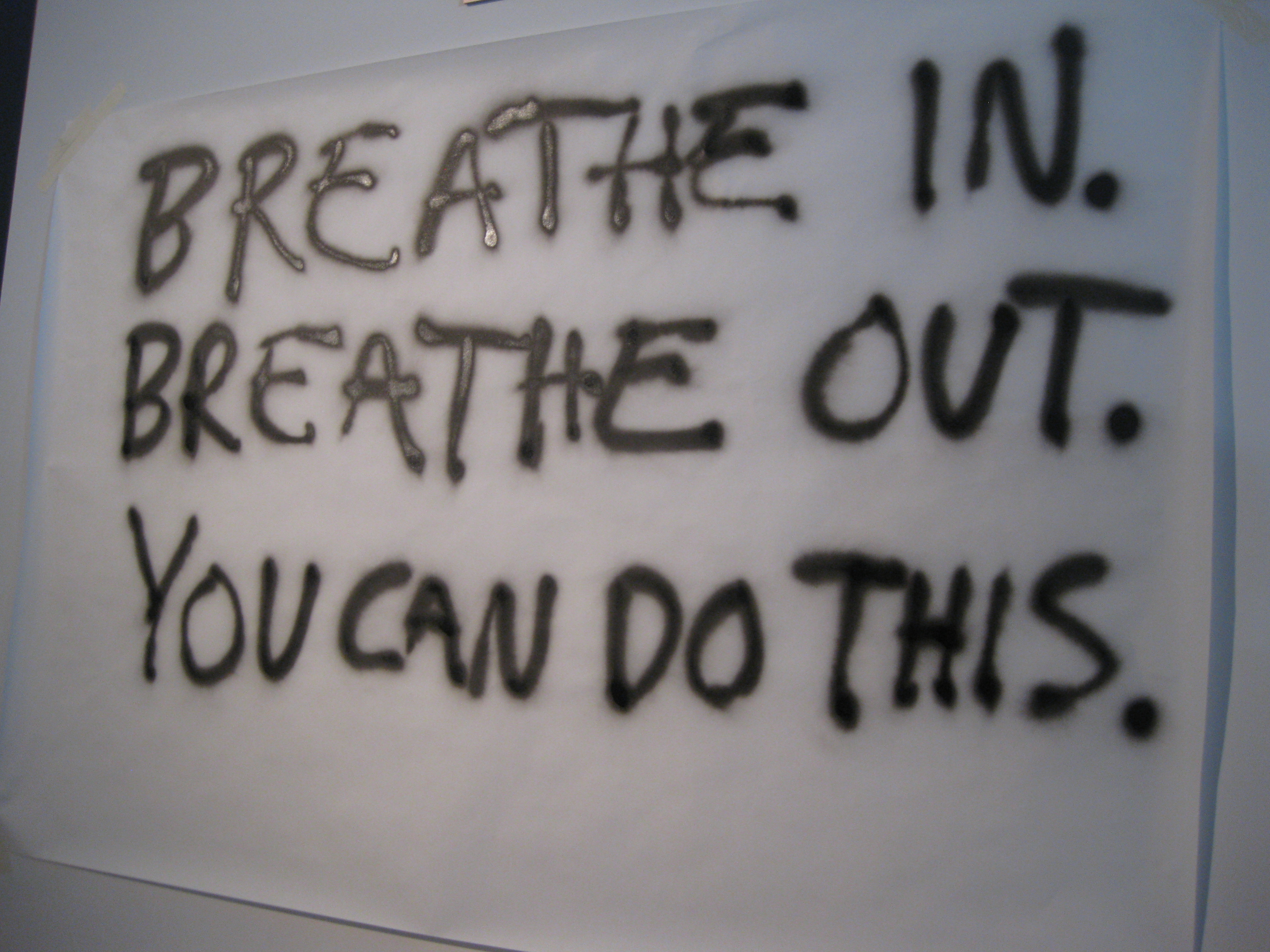
BREATH IN. BREATH OUT. YOU CAN DO THIS (2020)
Interventionist Photgraphy
A body under tension. Existing is like drinking without thirst. How can we reflect on the consequences, find new interpretations through a reordering? A liberation or the short history of an attunement to the spirited attack and unhindered view of lustfully committed blunders. Instead of an achivology, today there is a queryology, a science of query systems. Anyone who enters personal data into social networks like Facebook knows neither at the time of entry nor later exactly who is using the data. Data from social networks is passed on en masse, encrypted connections are cracked. This is a phenomenon that researchers call the privacy paradox. Although the protection of privacy is perceived as very important, little is done about it. In other words, a loss of control meets an effect of counter-control.
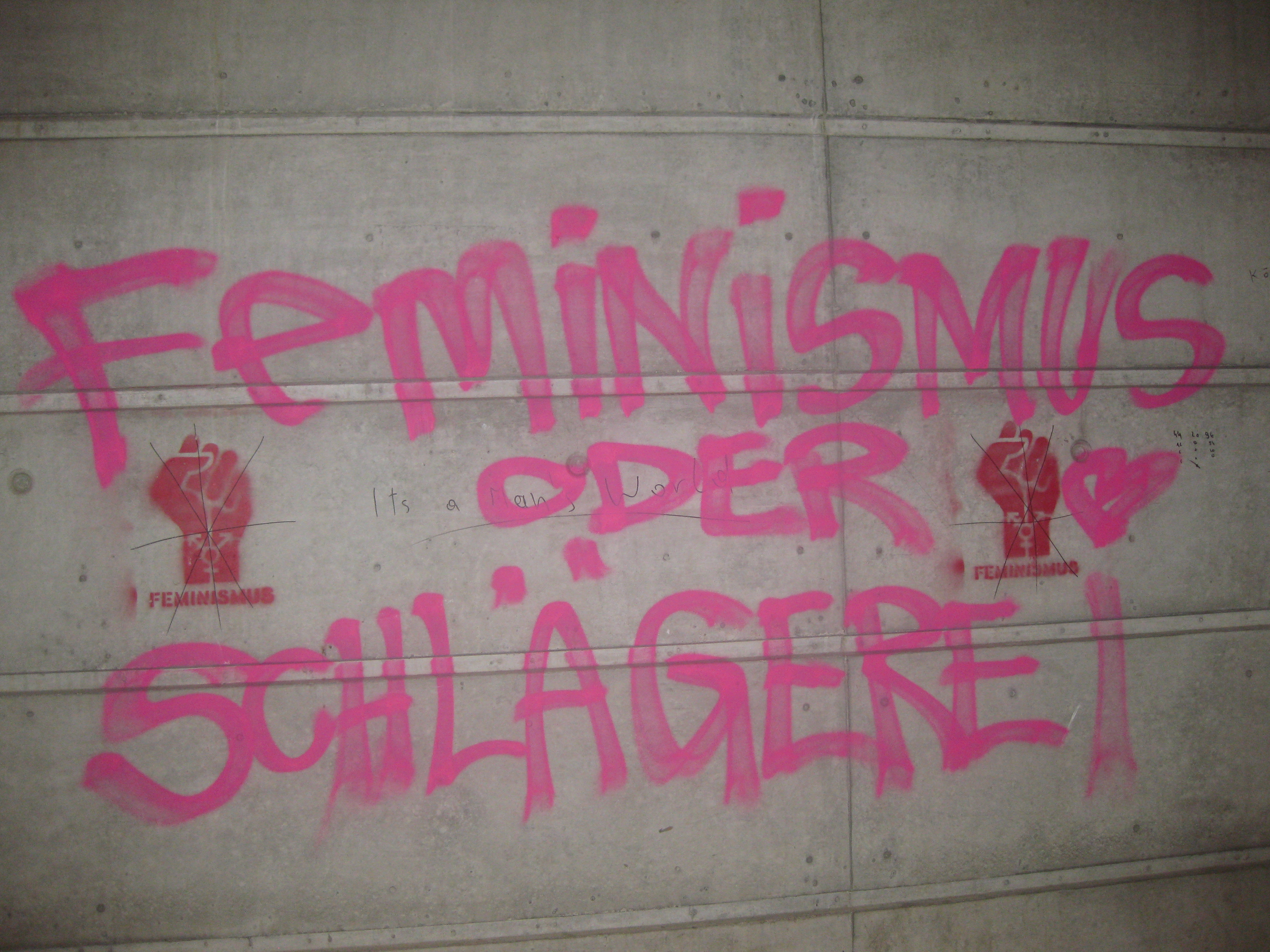
FEMINISMUS ODER SCHLÄGEREI (2020)
Interventionist Photography
Instead of remaining in the limited realm of micro-political intervention or languishing in simplistic fantasies of a return to an idealized "natural authenticity", xenofeminism understands alienation as a generating impulse. We are all alienated. Was it ever different? It is because of - and not in spite of - our alienated situation that we can free ourselves from the shodder of immediacy. Freedom is not a given and certainly not a "natural" given. Alienation is an effect and function of the possibility to build freedom. The "given" is mobile. Nothing is rigid. Everything is susceptible to radical change - material conditions as well as social forms. Laughter begins when language dries up. Its definition also slips away from the definite. Like contemporary art, laughter tries to free itself from the social laws and conventions on which it is based. The act of laughter occurs in borderline situations. It arises from them and generates them at the same time.

Photos: © Ursula Maria Probst
SIAMO PARTIGIANO VIVIAMO (2020)
Interventionist Photgraphy
How can the way we eat, learn, dress, love, live and talk be a way to renew ourselves and our society from the ground? Art is the place that produces a specific sociability, promotes ecological balance and conserves biodiversity. Performance is an option to reflect the multi-tasking ethos of our times, the possibilities to incorporate new technologies, its potential for reaching a broader audience through an interactive engagement. Participatory art in general has always prioritized experiential immediacy, and its more activist variants have rarely considered how and why one might also consider the transmission of these works to a secondary audience; demonstrable impact in the here and now is invariably seen as more important.