

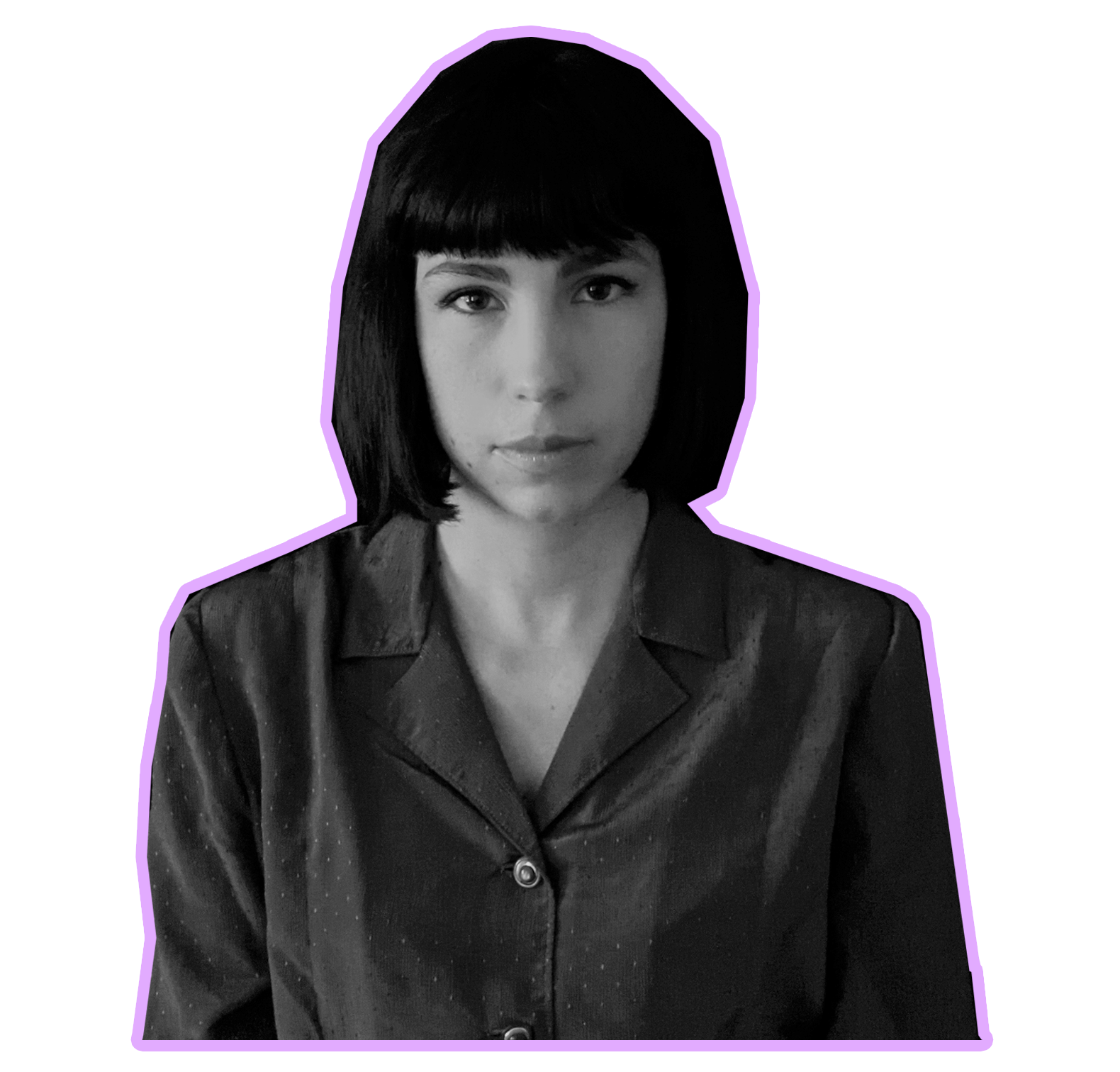
ANA DE ALMEIDA
“Ficou
a ver
passar
navios.”
#ARTS-BASED RESEARCH #ARCHITECTURE #COMMONS #INSTALLATION #SPACE #MULTIMEDIA #IDENTITY #PERFORMANCE
#NEO-COLONIAL #VIDEO #GENDER
BIO. Ana de Almeida (b.1987) is an artist and author from Lisbon, currently based in Vienna. She is a member of the artists’
collective dienstag abendof
of VBKÖ and of the Interndinner collective against precarization of work in the cultural field. Her artistic practice addresses memory and remembering processes, narrative constructions that connect space and subject, and plurispatial and multilayered narratives in general.
Ana de Almeida is currently a Ph.D. candidate at the Academy of Fine Arts of Vienna, pursuing a doctoral thesis about the production of images in the 1974—1989 inter-revolutionary space between the Carnation and the Velvet Revolutions.
Ana de Almeida is currently a Ph.D. candidate at the Academy of Fine Arts of Vienna, pursuing a doctoral thesis about the production of images in the 1974—1989 inter-revolutionary space between the Carnation and the Velvet Revolutions.

Ana de Almeida, Alicja Rogalskaand & Vanja Smiljanic
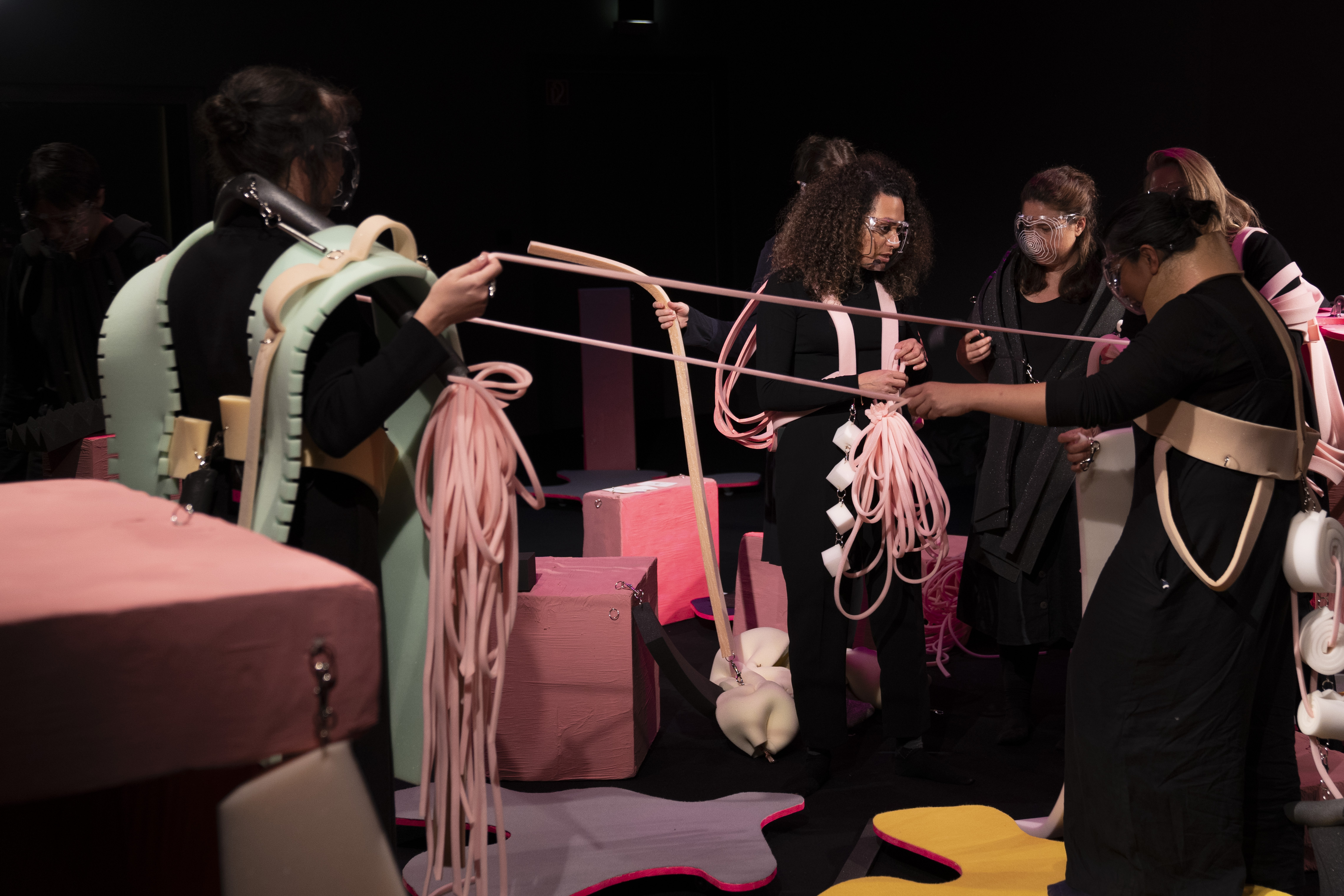
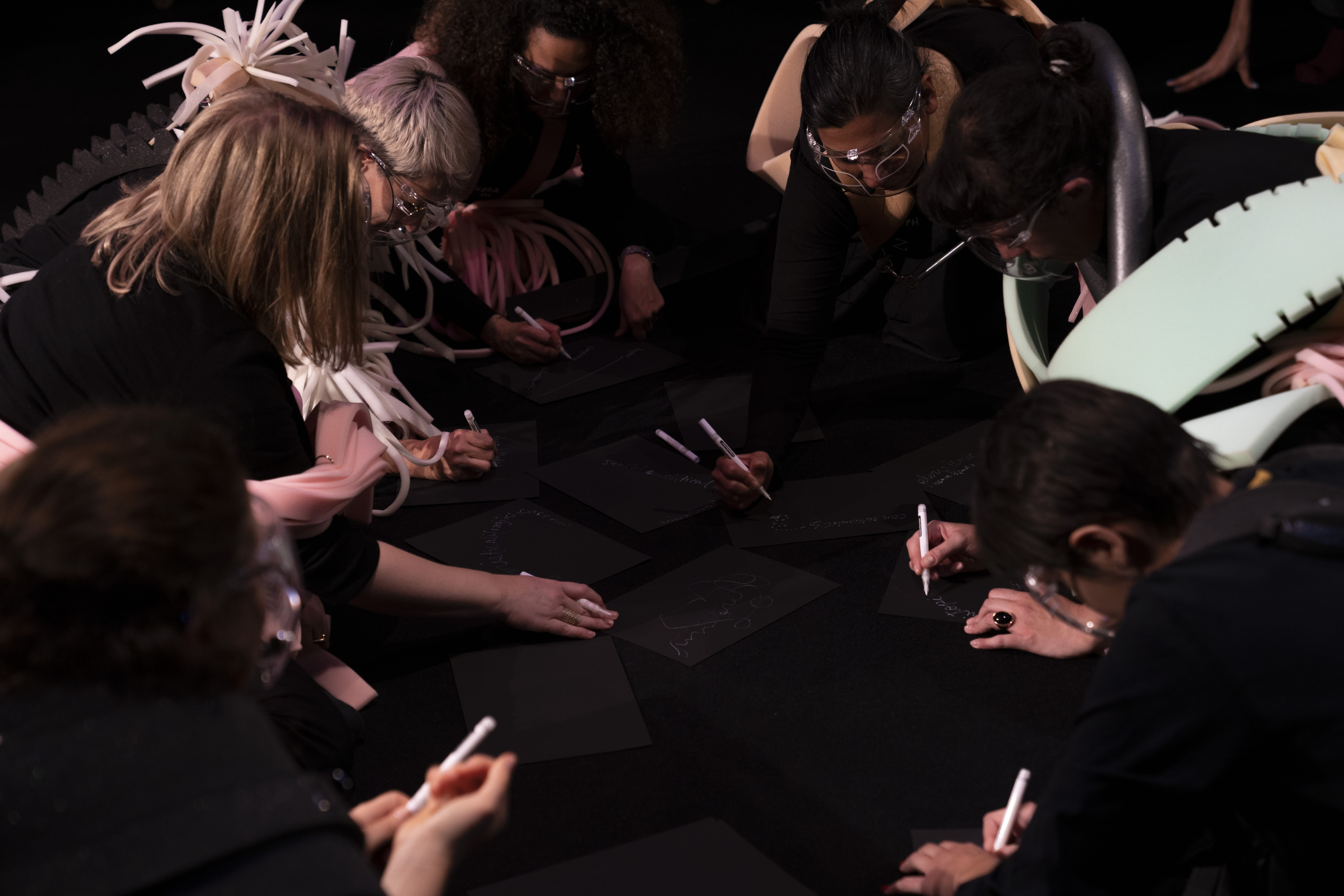
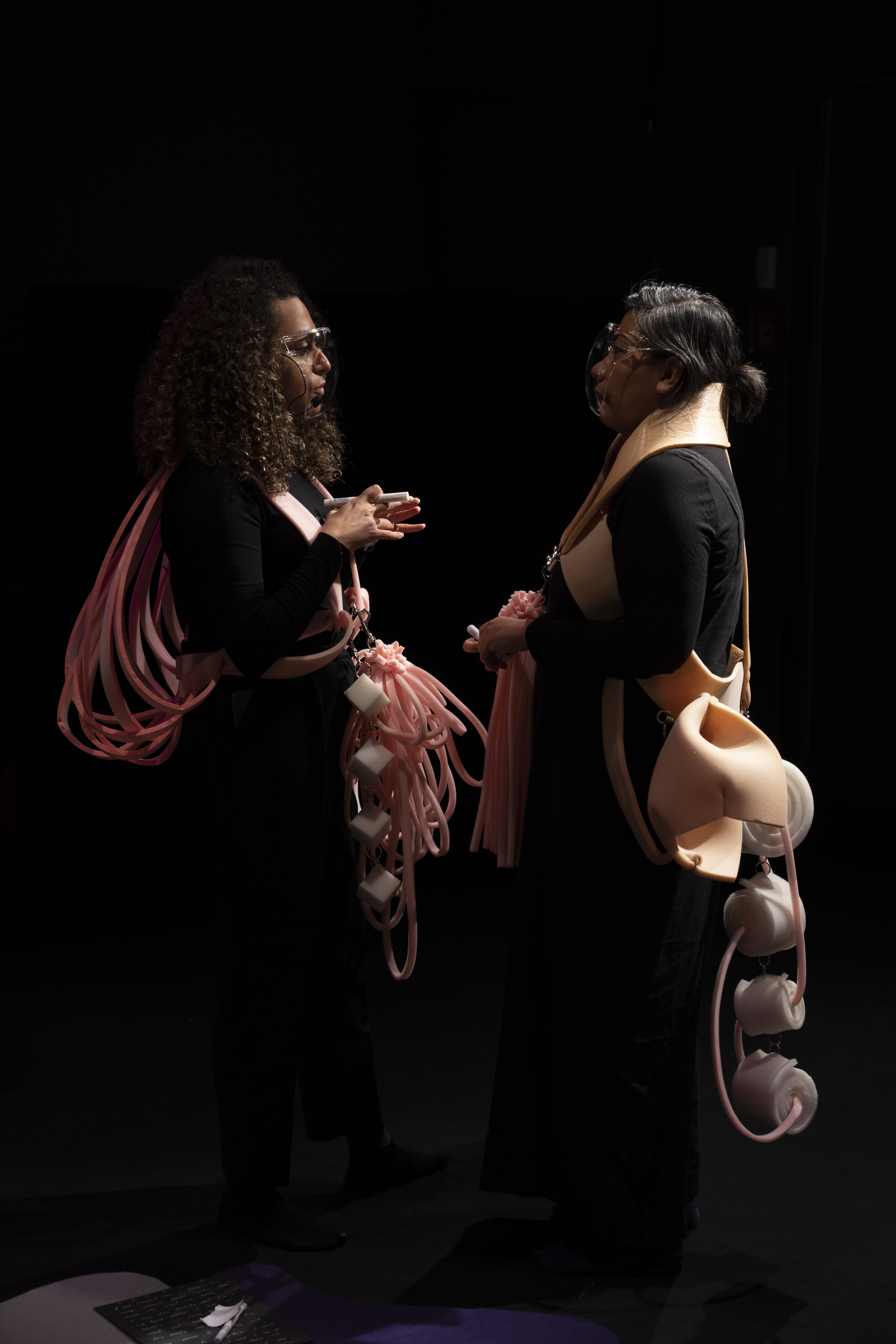
NOVA. Future thoughts on surviving together (2020 AT)
Live Action Role Play
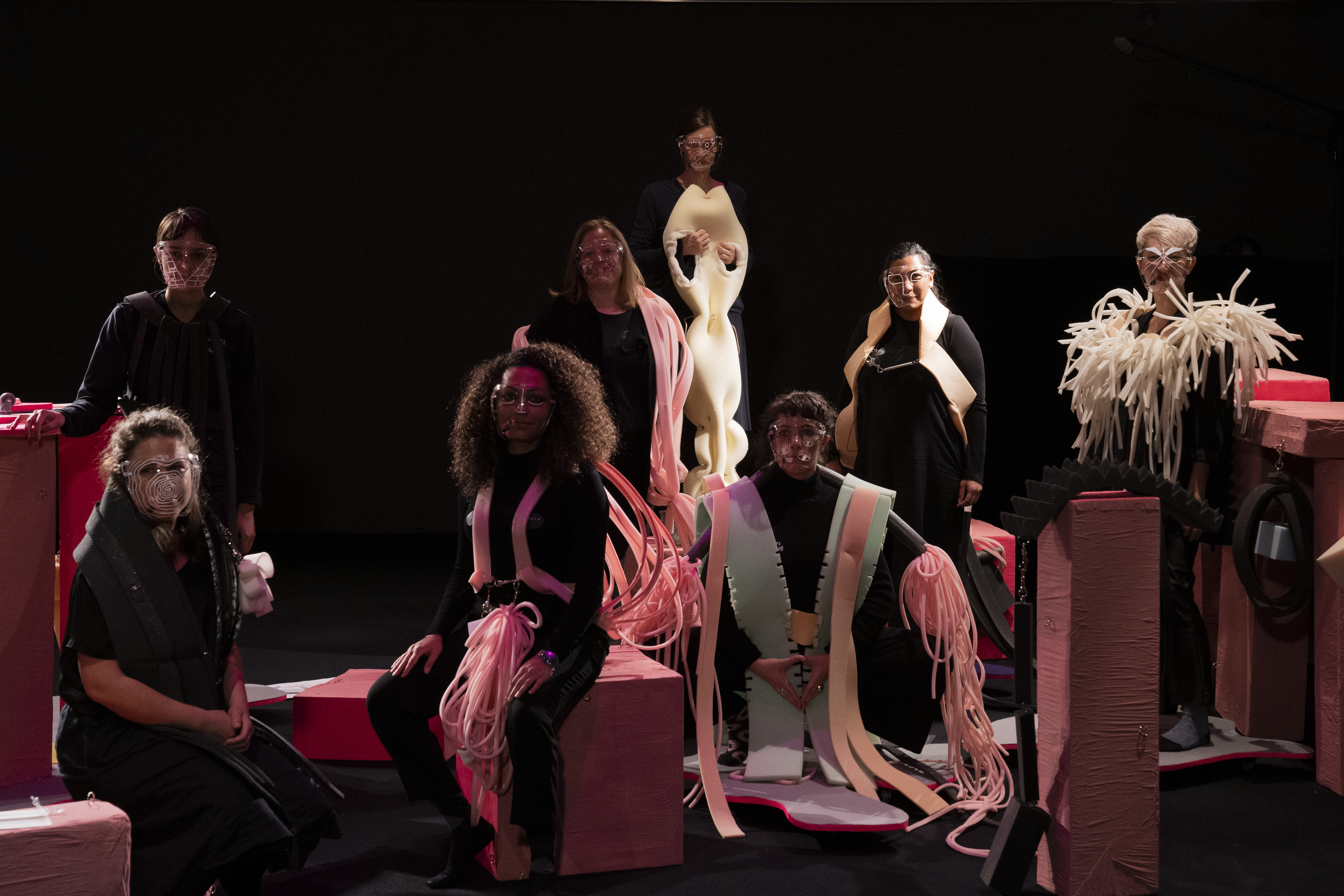
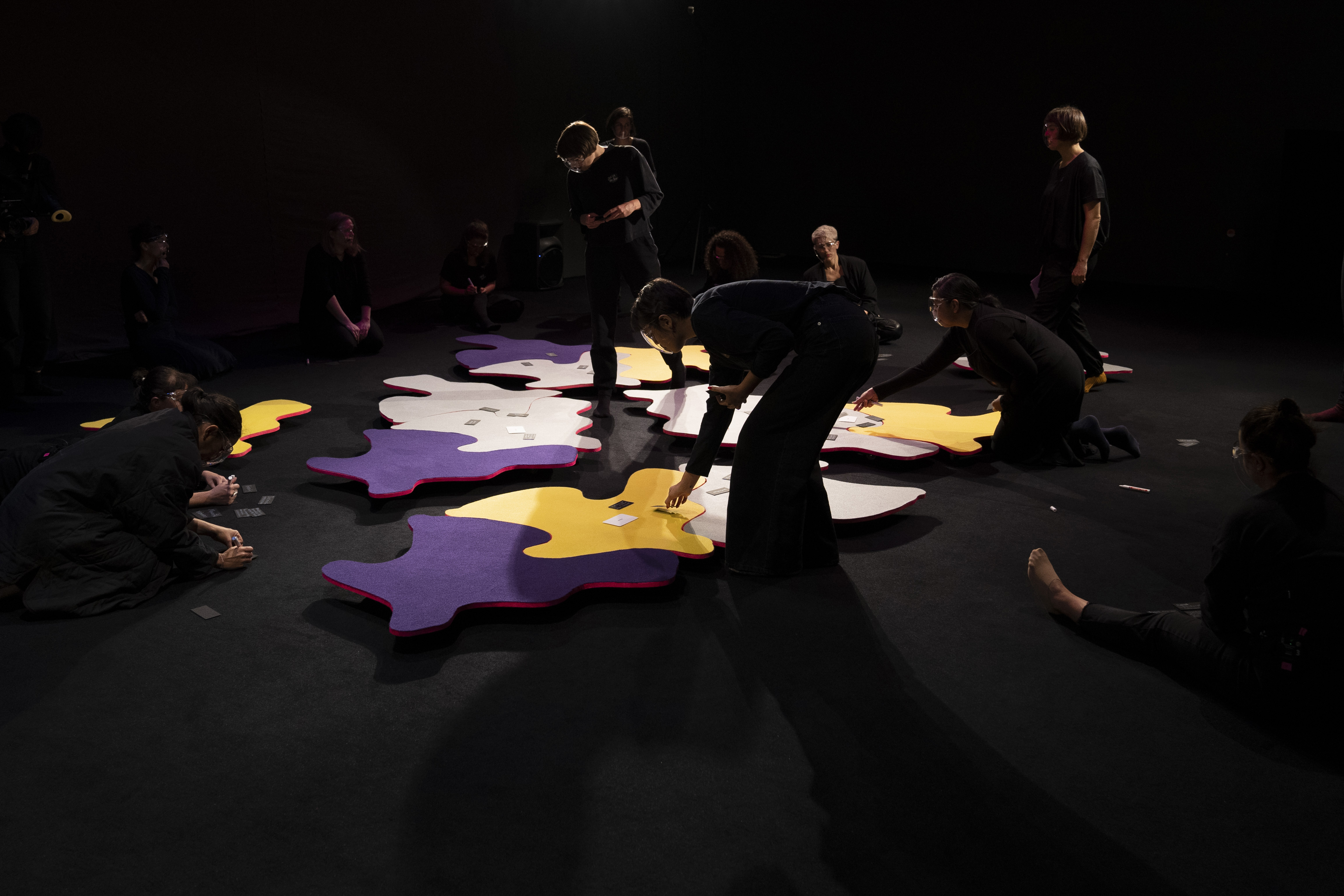
In the future, gender inequality was erased. Nova is a multitude of newly born, radically inclusive and self-managed communities. Heterogeneous in their forms of commoning and social organization, Nova share a vow to never let oppression in any form rise again. Nova. Future thoughts on surviving together is a feminist futurist LARP - Live Action Role Play by Ana de Almeida, Alicja Rogalska and Vanja Smiljanić; directed towards feminist and queer-feminist activists based in Vienna. NOVA is a day of speculative gaming aimed at sharing survival strategies, exercising solidarity and intersectionality, creating solidarity networks and forming new alliances between different emancipatory movements. Together, we created a piece of feminist political fiction - a work in progress and a world free of patriarchal oppression in the making.
With: VBKÖ, Saloon Wien, Kunst & Kind, Latinxs Unidxs, Kültür Gemma, Cine Collective, Mala Sirena, female:pressure.


A Casa / The House The flat / Die Fläche (2018 PT)
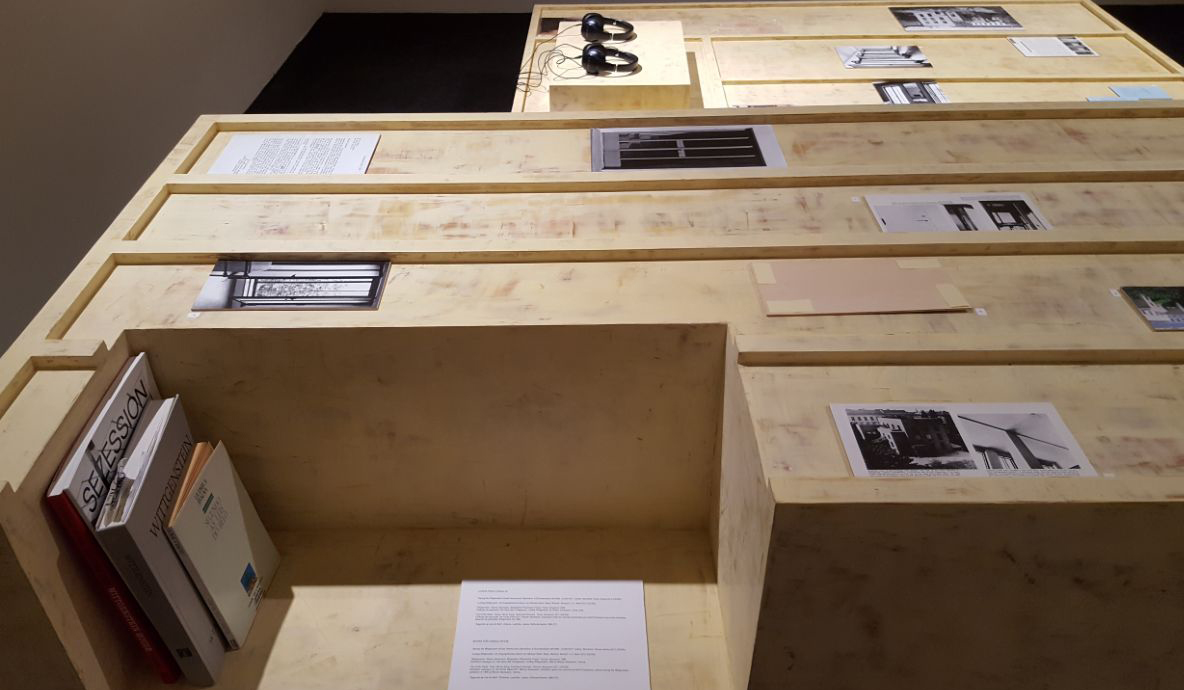
MDF, stucco-lustro, stereo sound 42'5'' looped
Likewise a sculpture, A Casa (The House) shares the aesthetic and architectonic language of the House Wittgenstein in Vienna. The two volumes are a transposition and folding down of two of its architectonic elements: a window and the vestibule door. They serve as display for documental material such as letters and photos and incorporate an audio piece with interviews led by the artist. The surface is covered by stucco-lustro, a coating technique proliferating in Vienna on the turn to the 20th century, similar to how could the original coating of the walls of the House Wittgenstein have looked like before they were painted white after World War II. The highlighting of the stucco-lustro architectonic detail points out to a fundamental discovery for the understanding of the house as aesthetic experiment in which the house interiors, composed by materials which evoke extreme hardness, seem to dematerialize through the highly reflecting properties of the stucco walls.

Photos: © Ana de Almeida & Stephanie Misa
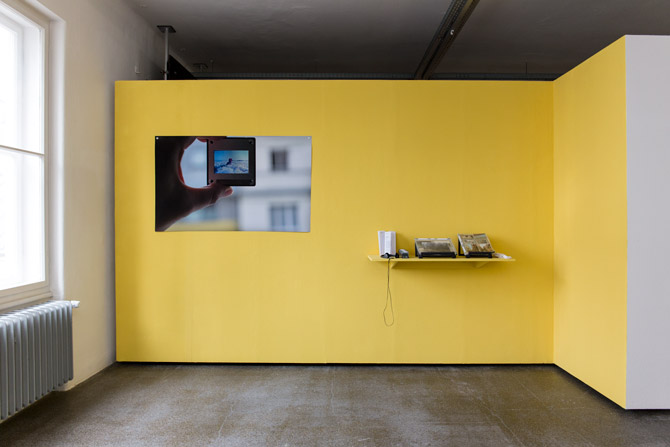
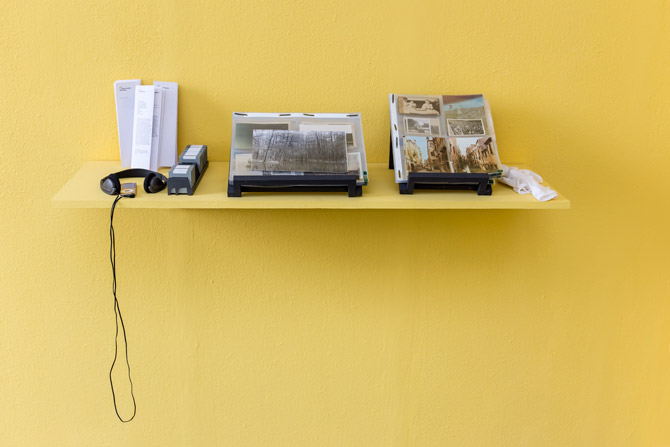
Untitled (Yellow) (2017 PT)
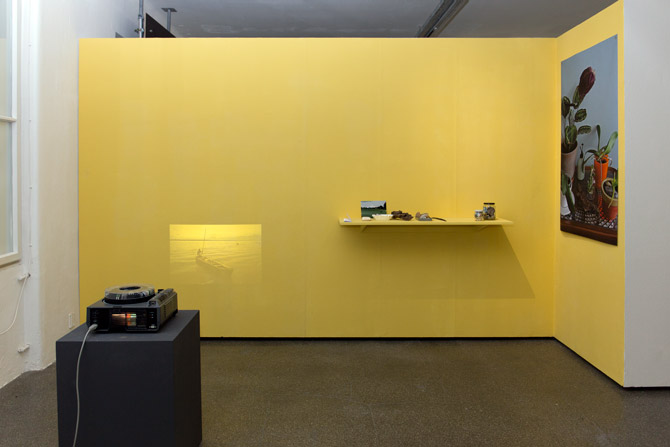
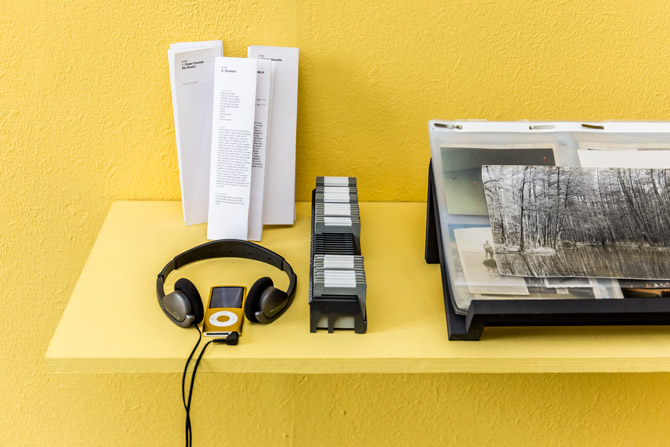
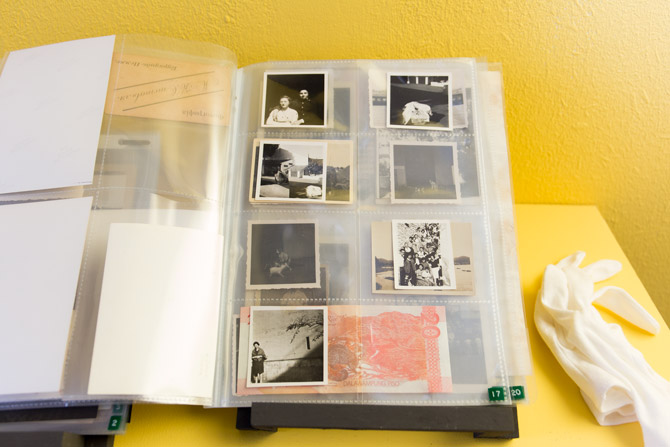
Wall, yellow paint, memorabilia, diashow, stereo sound
A cooperation between Ana de Almeida (PT/AT) and Stephanie Misa (PH/AT) . This is a project about landscape as formal and informal disposition of elements. Coordinates. An arrangement, a hierarchy: borders and de-limitations, transpositions and transgressions, frames and their inside-outside, margins, and of course landscape — of the geographical, political, personal, and emotional nature. Edouard Glissant’s Traité du Tout-Monde. (Poétique IV), calls it archipelagic thinking, a group of islands that lends its topography to an alternative imaginary: a reassessment of the insularity of bound cultures, of nation-states, and the heaviness of “continental thought”. The archipelago is an alternative imaginary, one that posits that identity could be as a conglomeration of islands (composed of many, yet is one). Identity formation, embodiment, complex colonial histories, evolution, interconnectedness, diaspora and change — Oh to dispell the oppressive idea of nationalistic wholeness!
ISABELLA KOHLHUBER
“If you consider
artworks as
crystalline forms
of meaning,
art becomes
a way of
communicating.”
#ARTS-BASED RESEARCH #BODY #INSTALLATION #LANGUAGE #PERFORMANCE #SCULPTURE #SPACE
BIO. Isabella
Kohlhuber (born 1982), lives and works in Vienna. She studied transmedia art
with Brigitte Kowanz at the University of Applied Arts Vienna and was a
lecturer there from 2013 to 2019. Her drawings, collages, sculptures and media
installations revolve around writing and pictorial or auditory linguistic
forms. Her works have been exhibited nationally and internationally and were
most recently on view at the PAC Festival Marseille (FR), Galleria Doris Ghetta
(I) at Vienna Contemporary (AT), and Bluerider Art Gallery Taipei (TWN).
Numerous installations have been implemented temporarily and permanently in
public spaces.
Photos: © Rudi Strobl
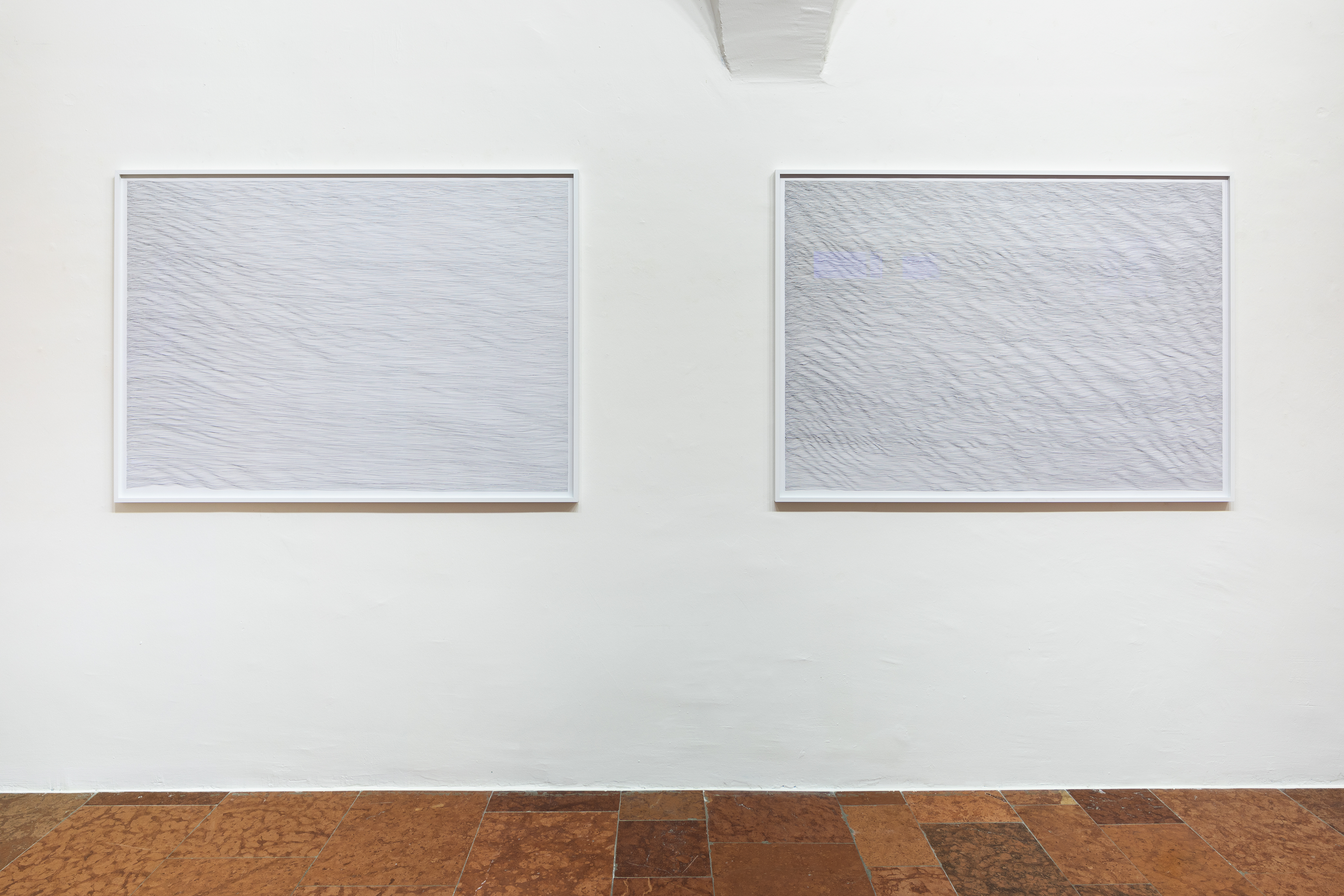
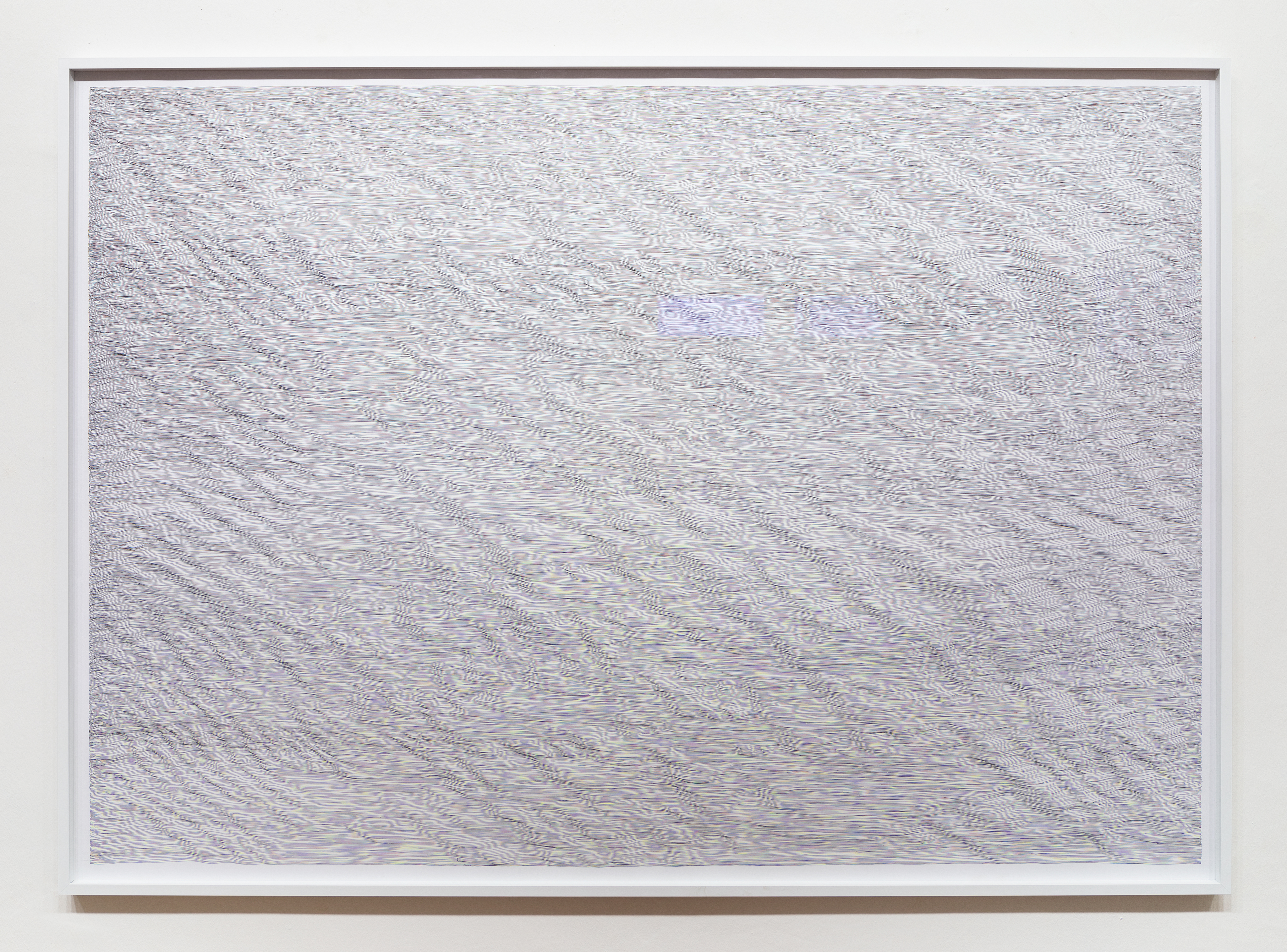
Untitled (lines) – algorithmic drawings (2012, 2017- ongoing)
Ink on paper, 100 x 140 cm
"In Isabella Kohlhuber's drawings, the specifications are manifold: the sheet is mounted horizontally on the wall; the artist's body positions itself en face to it without the fixation of a second, supporting hand; the lines are drawn by a single body movement without interruption from left to right with always the same distances. Every "mistake", every irregularity is thereby taken up in the next line - for the distances between them should always remain the same - and thus integrated into the formula. Within this set of rules, the living thereby penetrates: the trembling of the hand, the sometimes strong, sometimes unsteady stand, the joy or the tiredness during the creation show up as mutually reinforcing visual undulations. The resulting image becomes a vibrating pictogram of the gesture of inscribing the artist's body."
Text (excerpt): Angela Akbari
Shown at numerous venues such as Lenikus Studios, 2012, Galleria Doris Ghetta Ortisei 2016, Bluerider Art Gallery Taipei 2018/19, Traklhaus Salzburg 2020


Photos: © Isabella Kohlhuber
Aus dem Gesetz [From The Law] (2016)
Vapour barrier sheet, lasercut, §76 UrhG, steel, 100 x 1600 cm, dimensions variable
"Isabella Kohlhuber's newly produced floor work „Aus dem Gesetz“ made from vapor barrier sheet is based on a passage from the Austrian copyright law on the protective rights of sound carriers. The foil, which is actually used to prevent moisture from rising from the ground, in combination with an outdated text of the law cut from it in the artist's developed typeface „Bastards“, shows the effective powers of language in all its dependence on context and convention."
Text: Christian Egger, from the booklet accompanying the exhibition "Sighs Trapped By Liars“, Künstlerhaus Graz 2016.
Shown at Künstlerhaus Graz (AT), »Sighs Trapped By Liars – Language In Art«, 2016/3/12–2016/5/29 Bluerider Art Gallery Taipei, Isabella Kohlhuber – Untitled, 2018/12/8 – 2019/1/31 and various other exhibitions
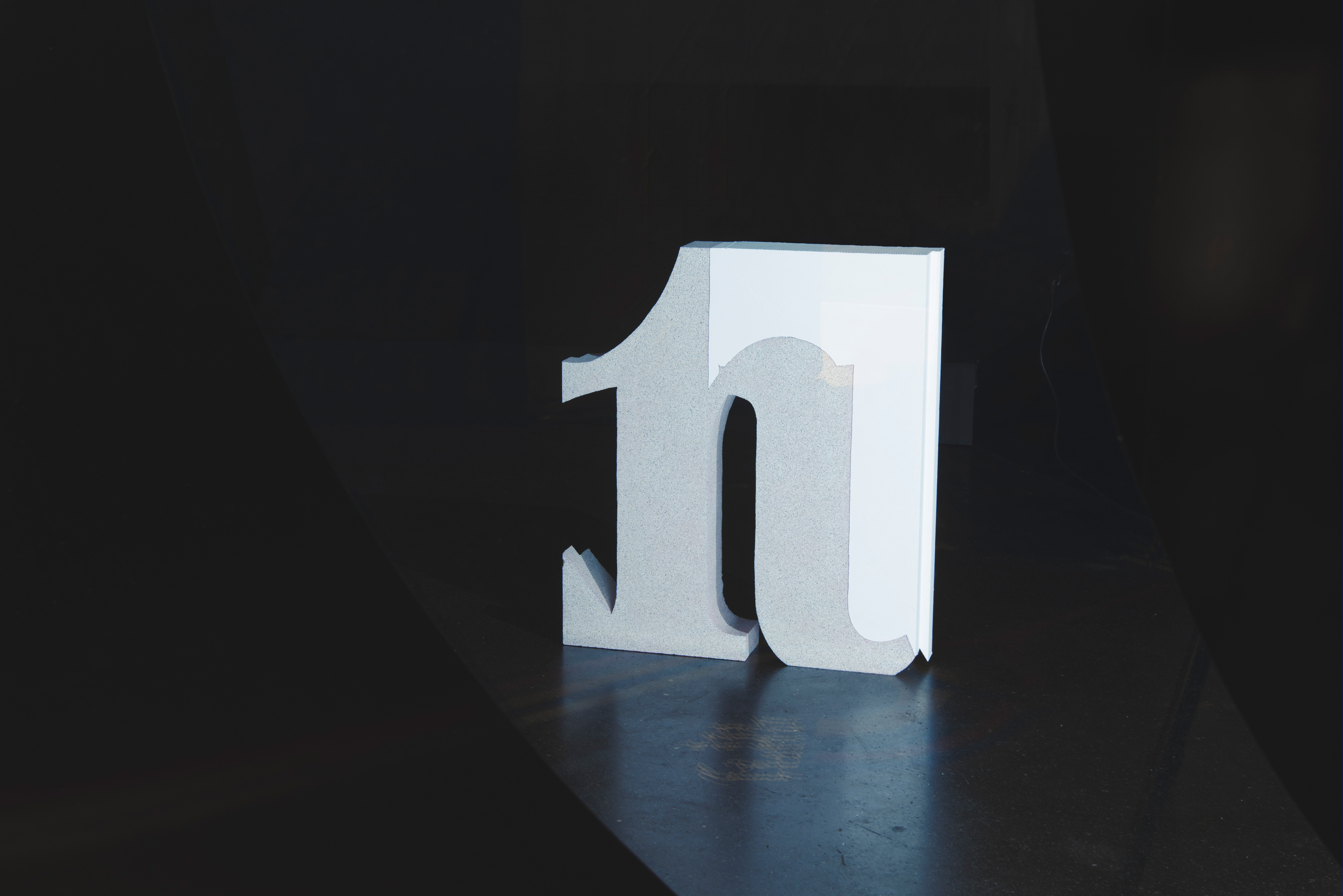


No No No (2016)
LED-light, motion sensors, micro-controller, adhesive film, polystyrene, varnish, 4,20 x 3,70 x 2,80 m
Shown at Artistic Bokeh, Museumsquartier Vienna, 2016/10/7 – 2016/11/10 curated by Mz* Baltazar’s Lab as part of the series „uno, dois, drei…“
With the installation „No No No“ the black glass window of the show room Artistic Bokeh in Vienna’s Museumsquartier becomes a changeable interface. Isabella Kohlhuber applies interactive devices to reveal the threshold of function and dysfunction in the languages of humans and machines. Kohlhuber uses adhesive foil fixed on the window, displaying letter-forms as permanent disposable tools. Motion sensors cause viewers involuntarily to activate or deactivate its visibility. The message thereby occasionally withdraws from perceptibility. „No No No“ opens a conceptual gap between the showroom‘s window and its minimal content, while gently swapping between elements of negation (“no”) and activation (“on”). Does the artist intend to play off today‘s necessity of an affirmative, pleasing language against an inner silent resistance? And does repetition, as given in the title, make a gesture of refusal stronger? While trying to decontextualize the artist asks “can there ever be no context?”