

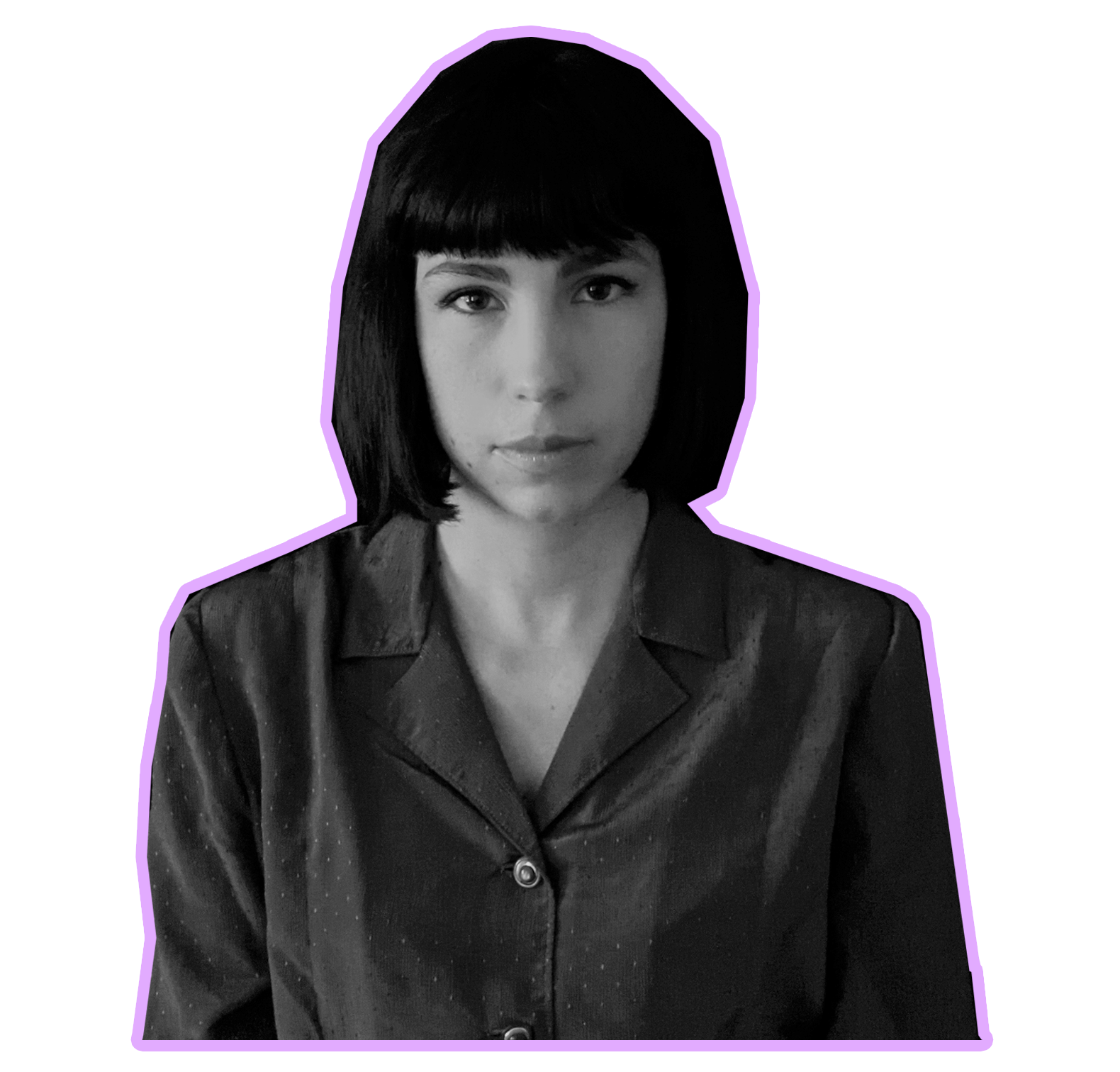
ANA DE ALMEIDA
“Ficou
a ver
passar
navios.”
#ARTS-BASED RESEARCH #ARCHITECTURE #COMMONS #INSTALLATION #SPACE #MULTIMEDIA #IDENTITY #PERFORMANCE
#NEO-COLONIAL #VIDEO #GENDER
BIO. Ana de Almeida (b.1987) is an artist and author from Lisbon, currently based in Vienna. She is a member of the artists’
collective dienstag abendof
of VBKÖ and of the Interndinner collective against precarization of work in the cultural field. Her artistic practice addresses memory and remembering processes, narrative constructions that connect space and subject, and plurispatial and multilayered narratives in general.
Ana de Almeida is currently a Ph.D. candidate at the Academy of Fine Arts of Vienna, pursuing a doctoral thesis about the production of images in the 1974—1989 inter-revolutionary space between the Carnation and the Velvet Revolutions.
Ana de Almeida is currently a Ph.D. candidate at the Academy of Fine Arts of Vienna, pursuing a doctoral thesis about the production of images in the 1974—1989 inter-revolutionary space between the Carnation and the Velvet Revolutions.
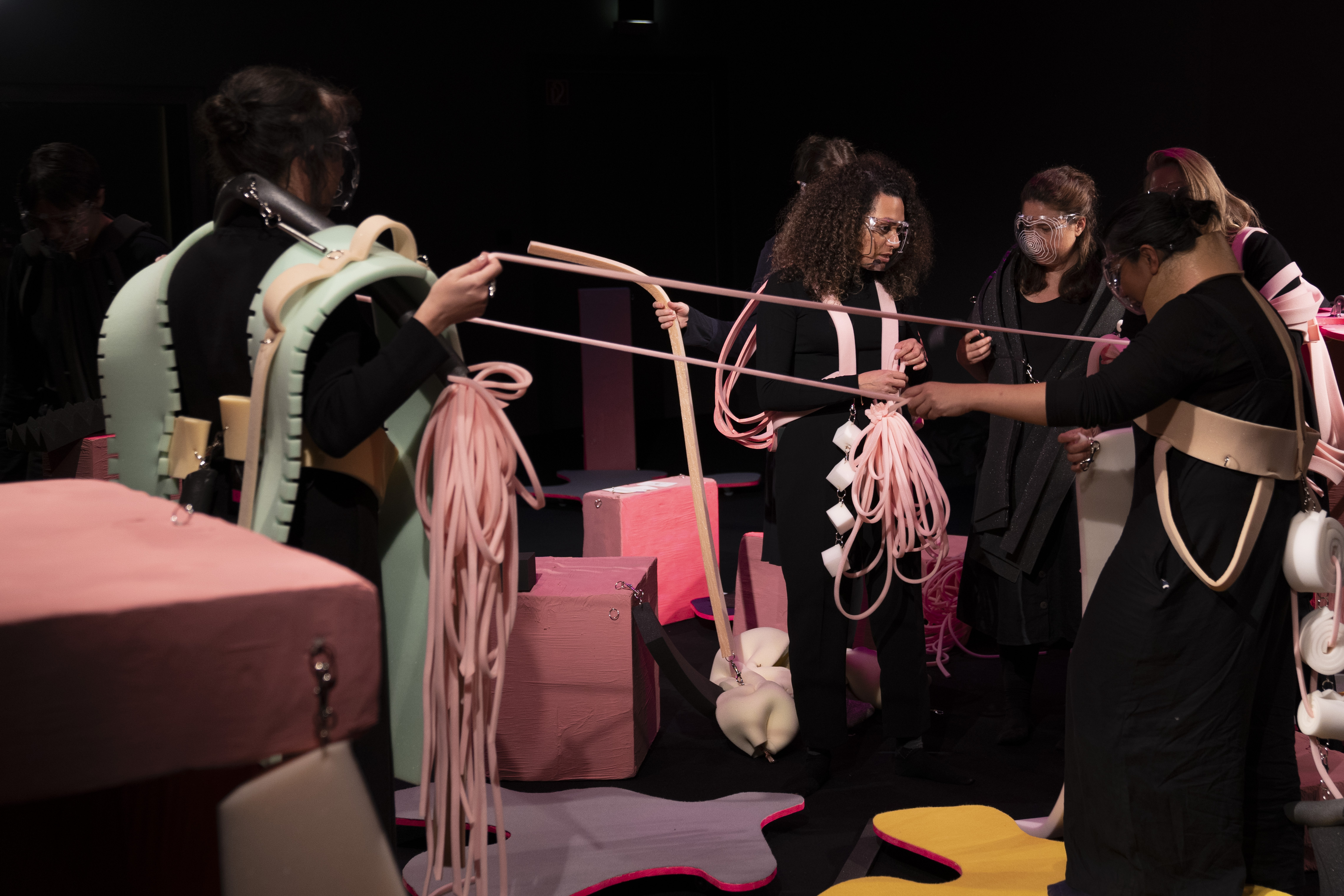
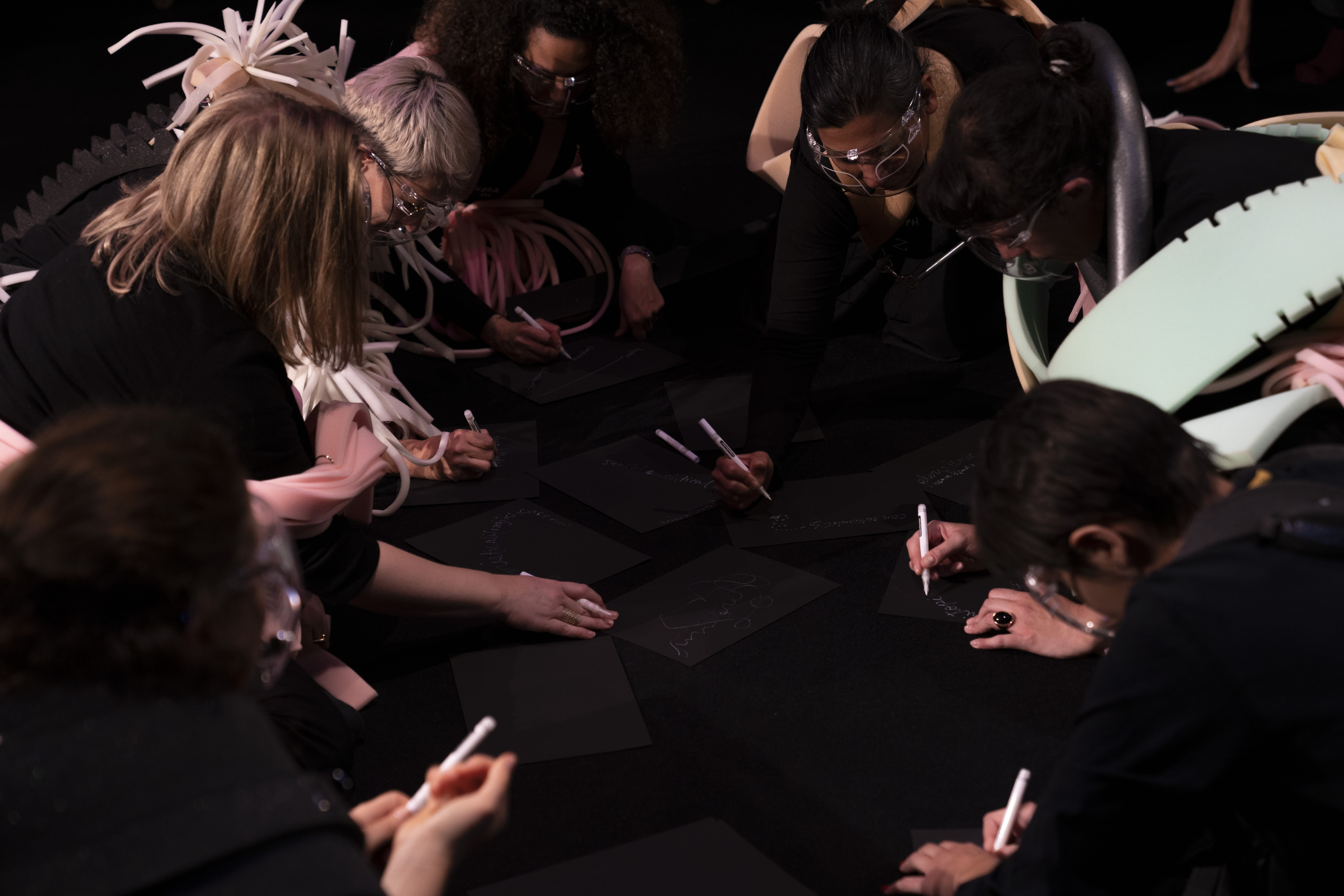
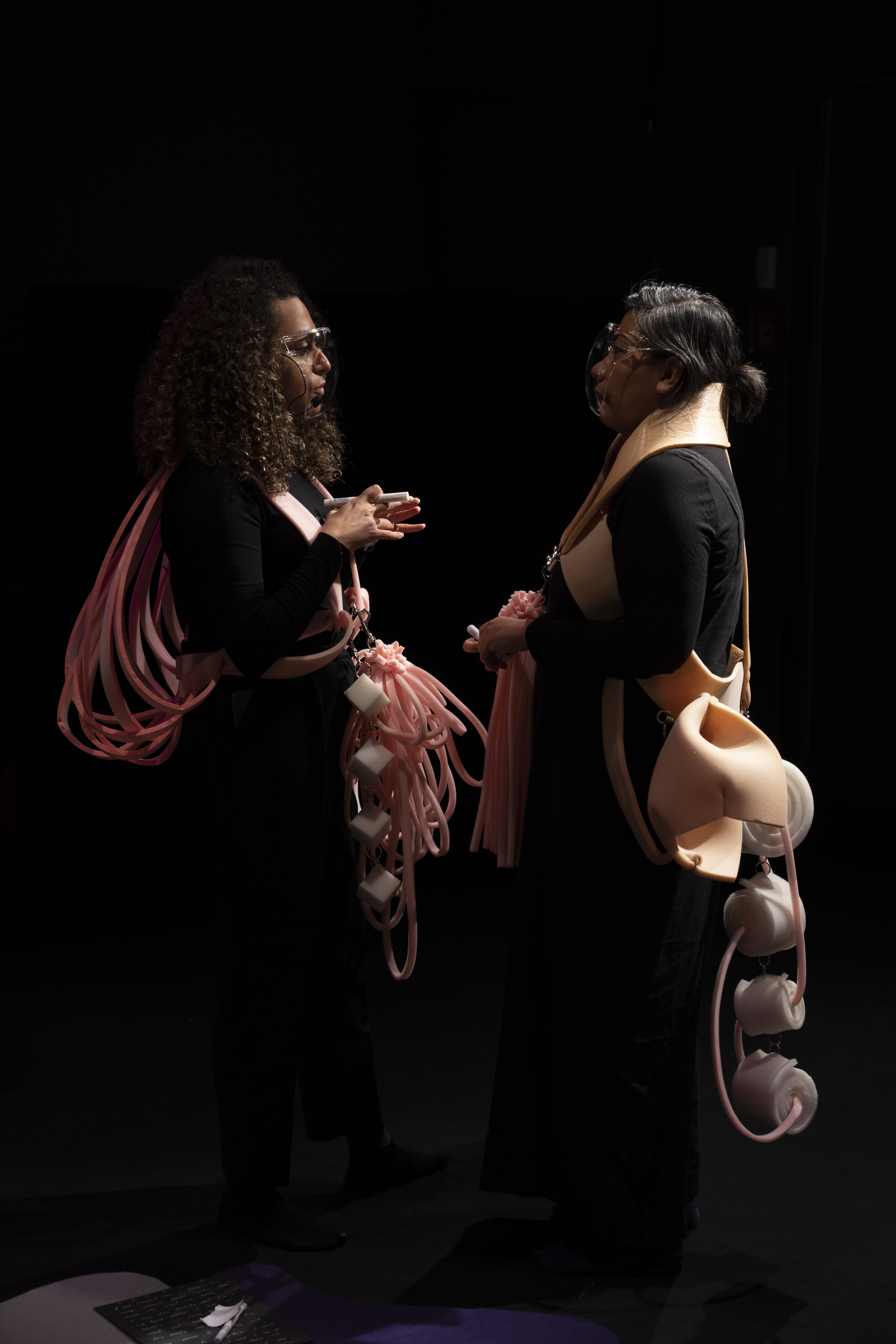

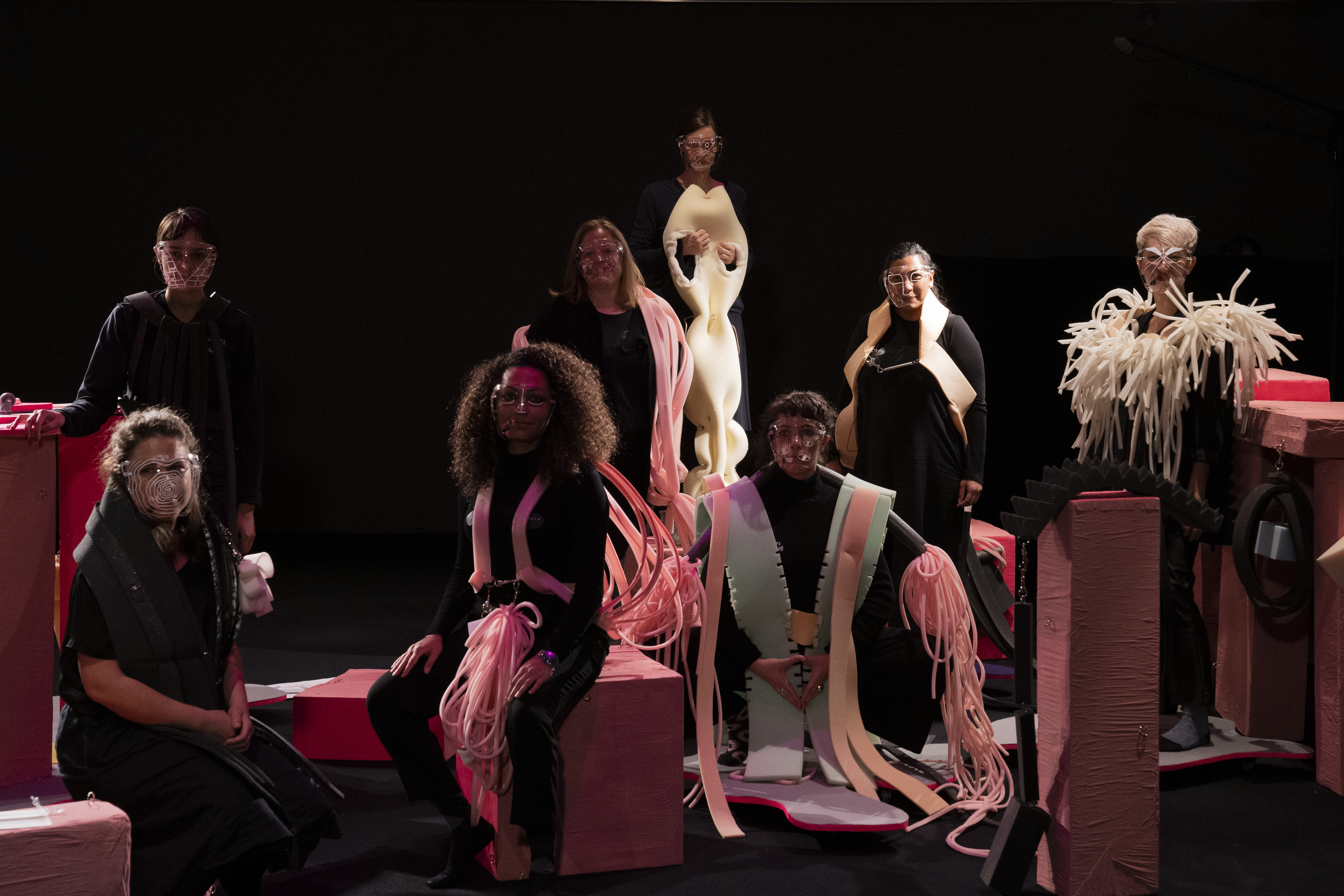
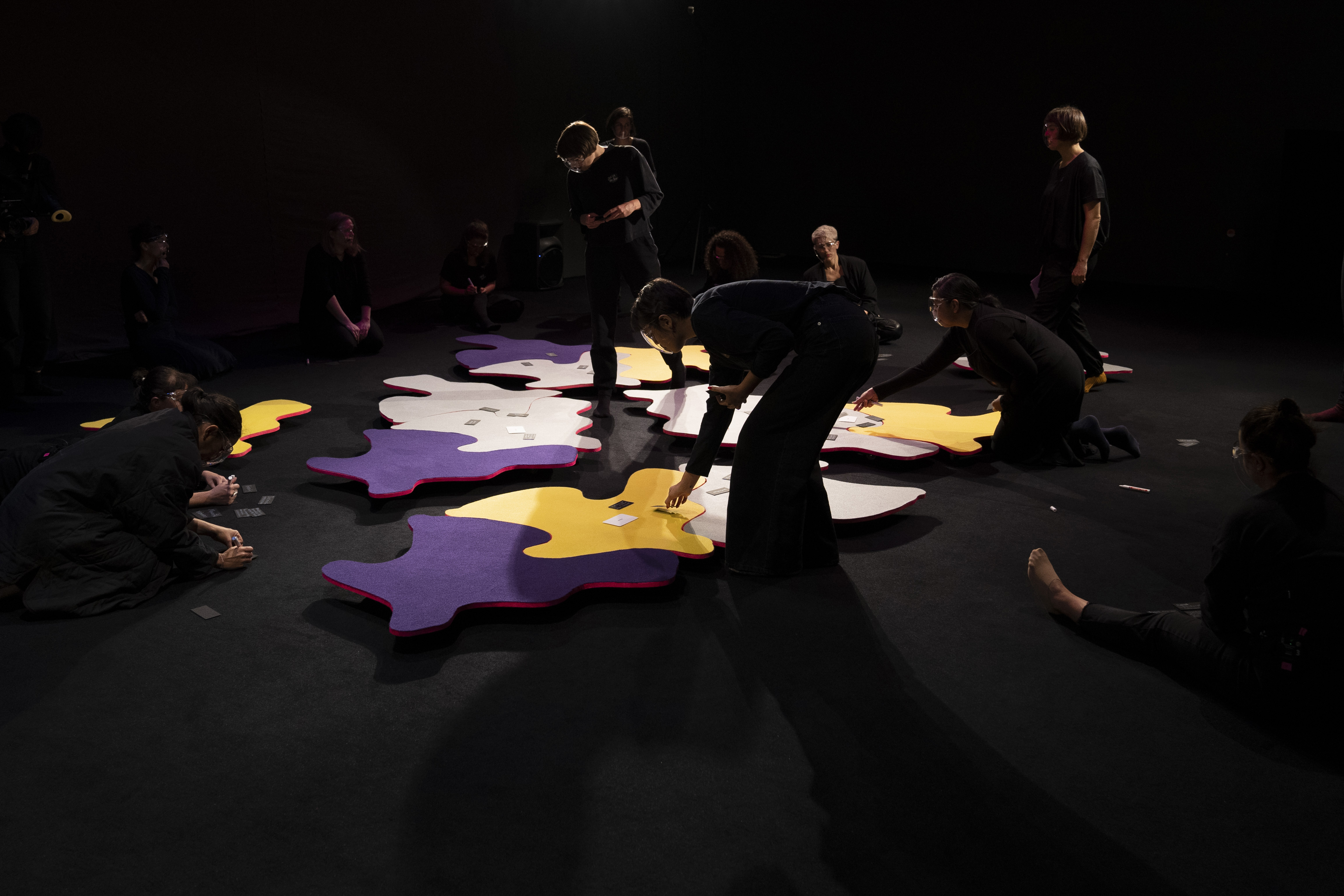
Ana de Almeida, Alicja Rogalskaand & Vanja Smiljanic
NOVA. Future thoughts on surviving together (2020 AT)
Live Action Role Play
In the future, gender inequality was erased. Nova is a multitude of newly born, radically inclusive and self-managed communities. Heterogeneous in their forms of commoning and social organization, Nova share a vow to never let oppression in any form rise again. Nova. Future thoughts on surviving together is a feminist futurist LARP - Live Action Role Play by Ana de Almeida, Alicja Rogalska and Vanja Smiljanić; directed towards feminist and queer-feminist activists based in Vienna. NOVA is a day of speculative gaming aimed at sharing survival strategies, exercising solidarity and intersectionality, creating solidarity networks and forming new alliances between different emancipatory movements. Together, we created a piece of feminist political fiction - a work in progress and a world free of patriarchal oppression in the making.
With: VBKÖ, Saloon Wien, Kunst & Kind, Latinxs Unidxs, Kültür Gemma, Cine Collective, Mala Sirena, female:pressure.


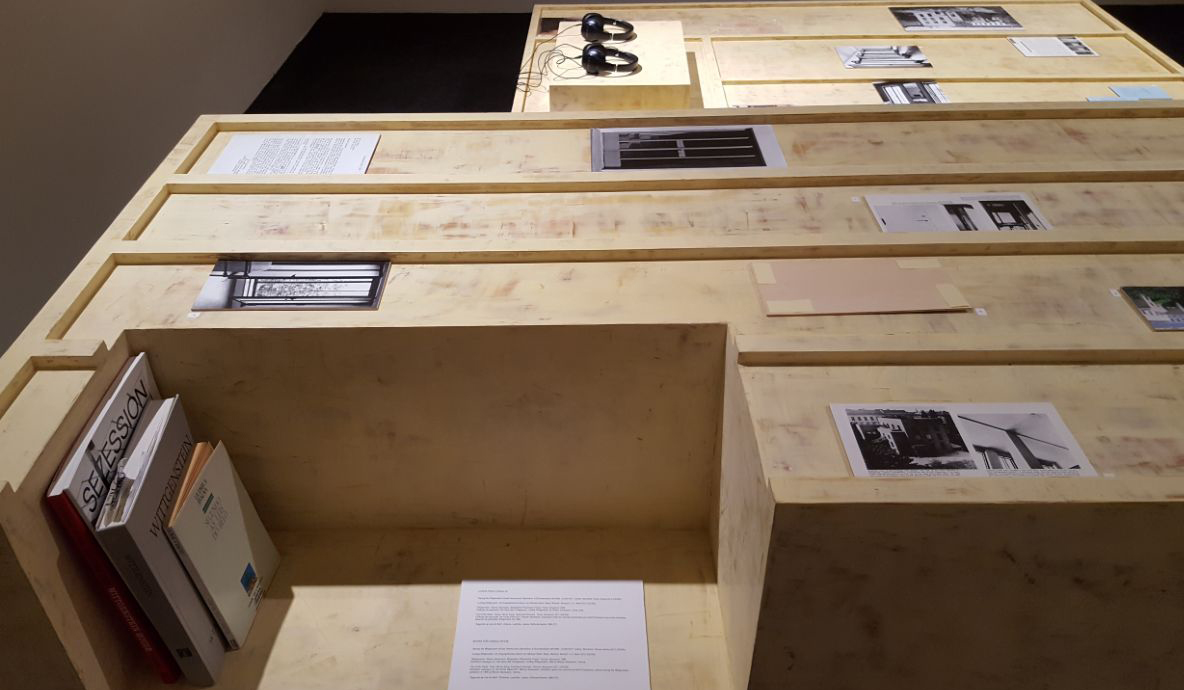
A Casa / The House The flat / Die Fläche (2018 PT)
MDF, stucco-lustro, stereo sound 42'5'' looped
Likewise a sculpture, A Casa (The House) shares the aesthetic and architectonic language of the House Wittgenstein in Vienna. The two volumes are a transposition and folding down of two of its architectonic elements: a window and the vestibule door. They serve as display for documental material such as letters and photos and incorporate an audio piece with interviews led by the artist. The surface is covered by stucco-lustro, a coating technique proliferating in Vienna on the turn to the 20th century, similar to how could the original coating of the walls of the House Wittgenstein have looked like before they were painted white after World War II. The highlighting of the stucco-lustro architectonic detail points out to a fundamental discovery for the understanding of the house as aesthetic experiment in which the house interiors, composed by materials which evoke extreme hardness, seem to dematerialize through the highly reflecting properties of the stucco walls.

Photos: © Ana de Almeida & Stephanie Misa
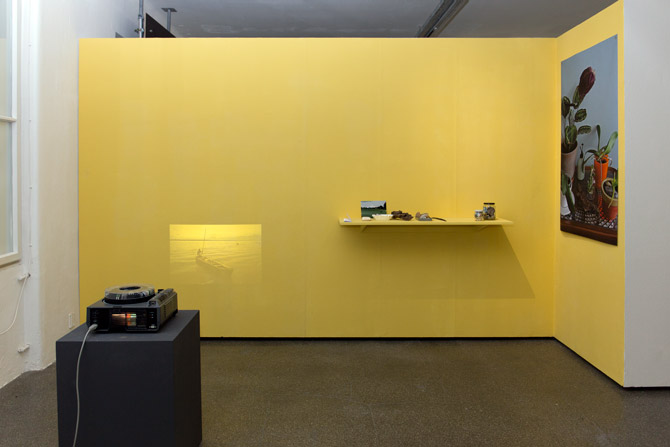
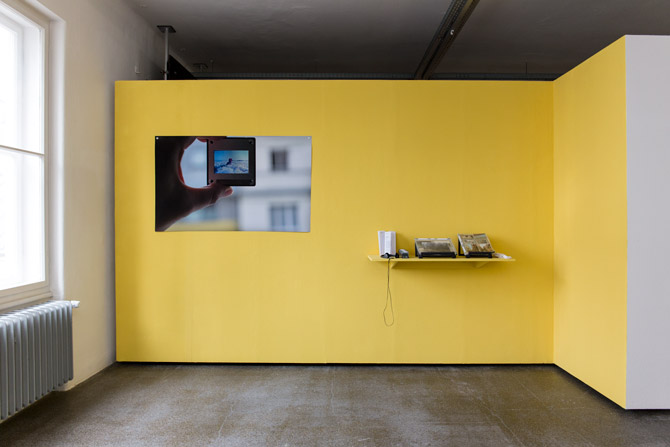
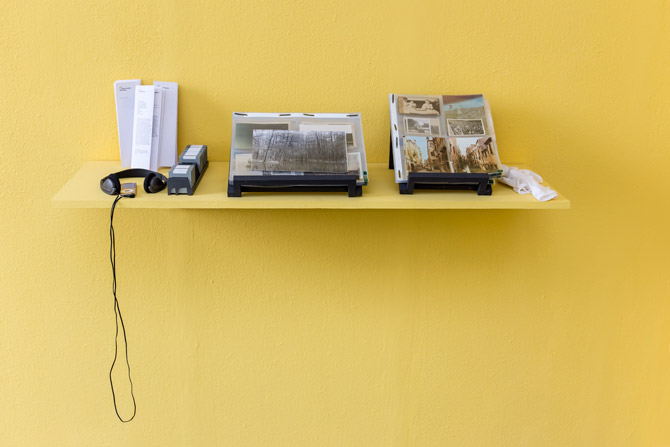
Untitled (Yellow) (2017 PT)
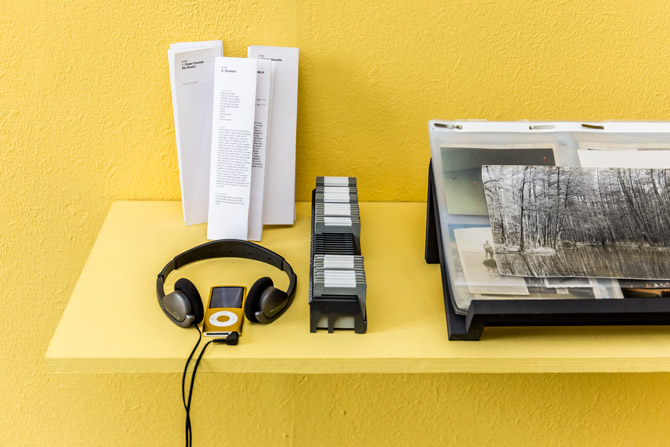
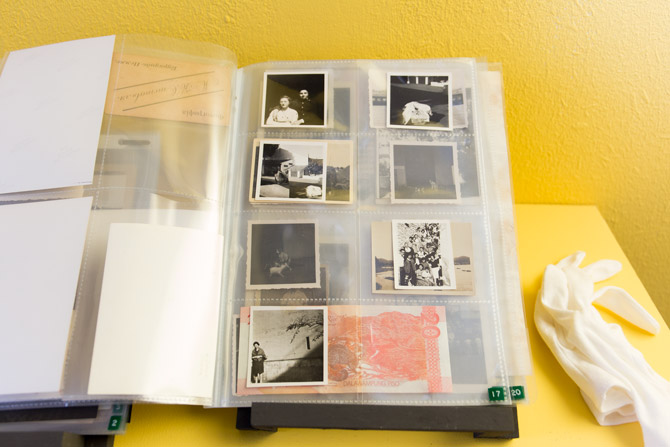
Wall, yellow paint, memorabilia, diashow, stereo sound
A cooperation between Ana de Almeida (PT/AT) and Stephanie Misa (PH/AT) . This is a project about landscape as formal and informal disposition of elements. Coordinates. An arrangement, a hierarchy: borders and de-limitations, transpositions and transgressions, frames and their inside-outside, margins, and of course landscape — of the geographical, political, personal, and emotional nature. Edouard Glissant’s Traité du Tout-Monde. (Poétique IV), calls it archipelagic thinking, a group of islands that lends its topography to an alternative imaginary: a reassessment of the insularity of bound cultures, of nation-states, and the heaviness of “continental thought”. The archipelago is an alternative imaginary, one that posits that identity could be as a conglomeration of islands (composed of many, yet is one). Identity formation, embodiment, complex colonial histories, evolution, interconnectedness, diaspora and change — Oh to dispell the oppressive idea of nationalistic wholeness!
JULIA FRANK
MULTIMEDIA ARTIS

#COMMONS #IDENTITY #MATERIAL #INSTALLATION
BIO. Frank’s artistic practice questions, analyzes and portraits the urgency of systematic rehabilitation. The central theme in Frank’s questioning is the nature of conflicts, those in which the individual or the collective play a crucial role in the animation of such. No environment, can exist without its contributing member/s.Through the use of various media and research based components on topics like identity, corporeality, perception and social norms, abstract concepts take an inviting shape for the viewer to engage. Creating the potential to contribute to the conversation and questioning at will.
Fine Corsa (Exhibition View) (2020)
Installation
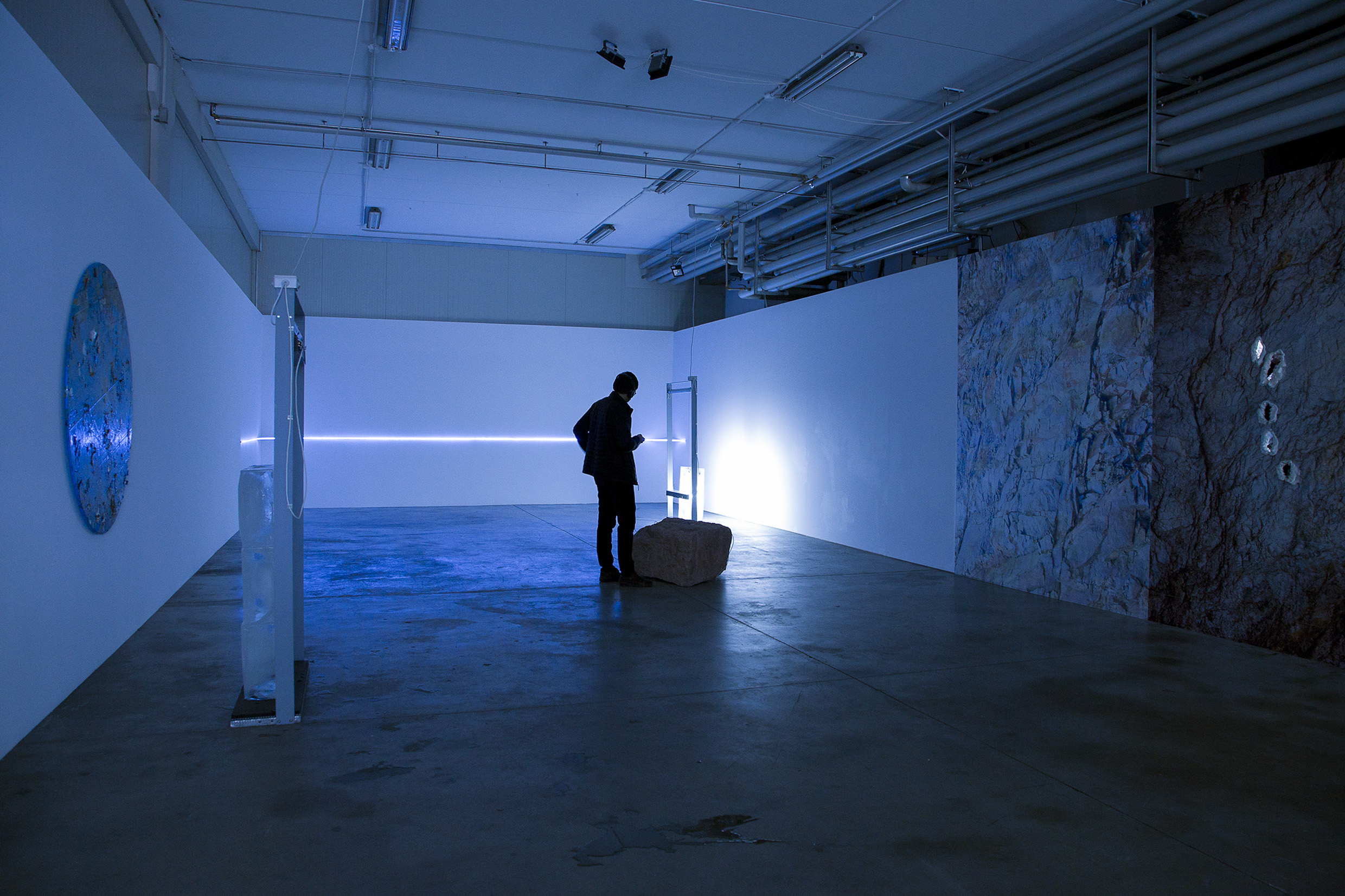
(Part 1, Text by Stefano Riba) Geodes are small cavities in rock, which are generally spherical or ovoidal in shape and lined with crystals. In Italian the word, geode, may be either masculine or feminine, and its etymology derives directly from the primordial goddess Gea, Geo or Ge, the earth mother, in ancient Greek Γῆ, or Ghê. Julia Frank’s exhibition Fine corsa (End of the road) opens with a large curtain printed with the image of a blue eye, which looks like the earth (Gea) seen from space. Behind the initial diaphragm, we find ourselves in an artificial geode containing both the cosmogony, the birth of the universe, and the cosmagony, its death. Inside it, instead of crystals the artist grafts decomposing synthetic films, melting contaminated ice, words evoking change (of habits and climate), and luminous diodes (in the past it was the godhead who brought light, now it is LEDs).
The Time Is Now (Fine Corsa) (2020)
Installation
(Part 2, Text by Stefano Riba)
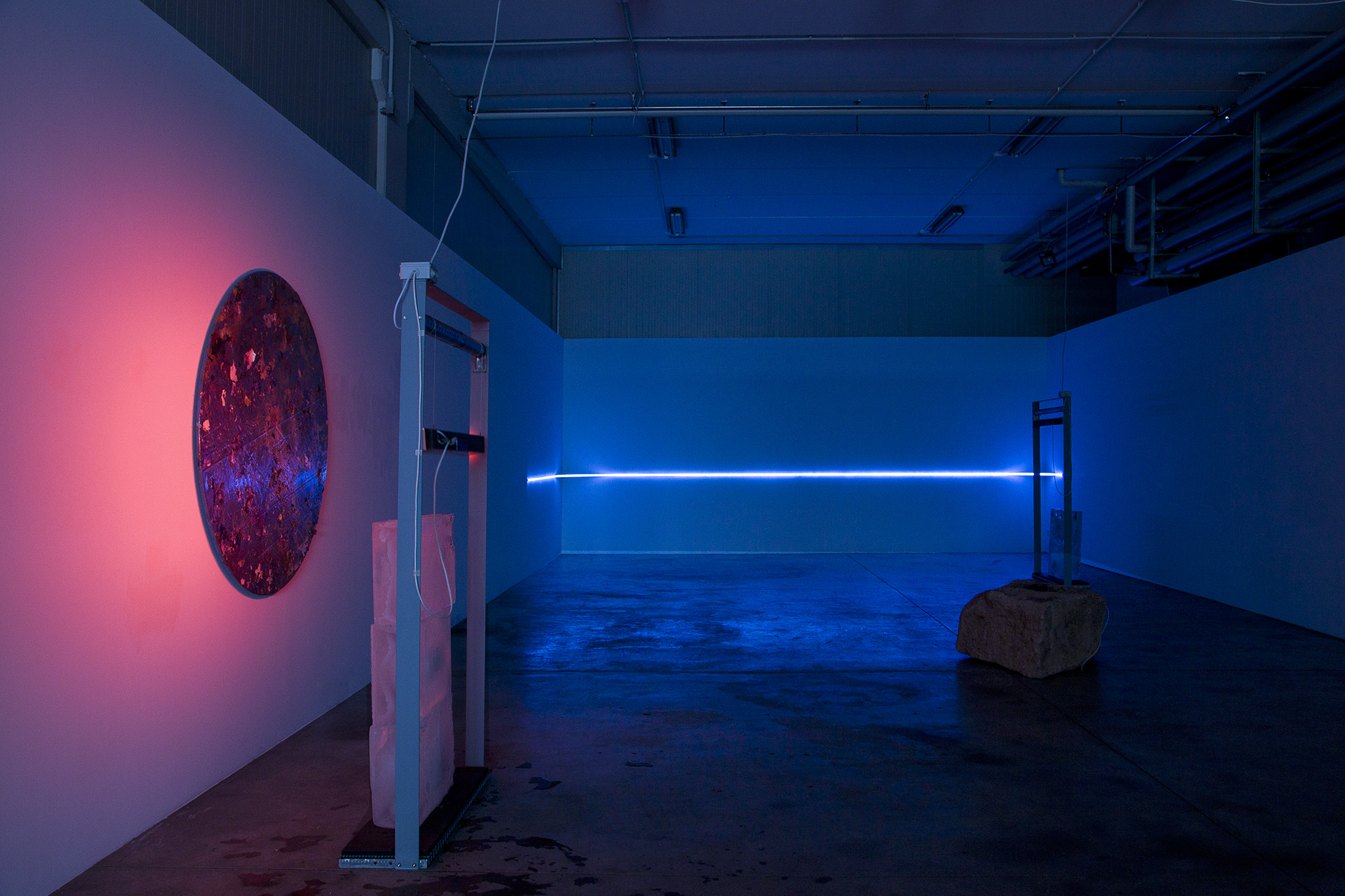
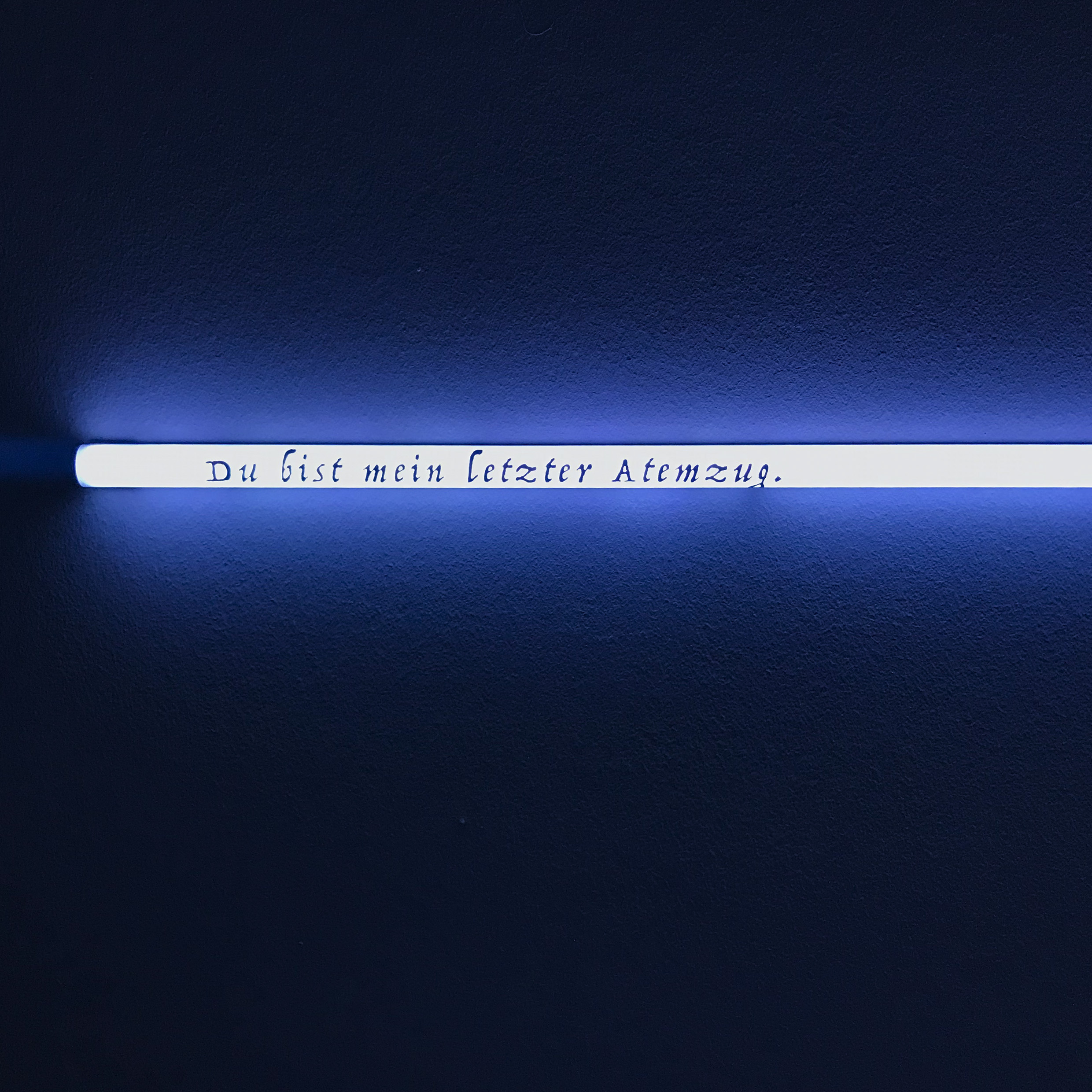
But eventually a natural element emerges from the synthetic panorama of Fine corsa: a crystal. Special conditions of temperature and pressure and the presence of fluids and che- mical-physical elements are essential for them to form. It also takes time, a great deal of time. In short, what is necessary is the same mixture of elements that generated human life. For cosmagony, on the other hand, all it takes is a little poetry, a little time and a little attention. This is precisely why the crystals are kept in a crack in the wall, which can be seen but not touched. For whatever human beings touch risks being ruined irreparably. The purity of the mineral thus indicates a possible way to salvation or, on the contrary, reminds humans of their impurities.

Photos: © Michael Strasser
FC / Ice White (2020)
Sculpture
(Part 3, Text by Stefano Riba)
One leaves Julia Frank’s geode exhibition fascinated and puzzled. It is a bit like visiting the (real) geode of Pulpì, the largest in the world, where a notice at the entrance warns that in order to protect the crystals from deterioration admission is limited to a certain number of visitors and that the temperature, humidity and carbon dioxide levels are controlled and kept stable by a specially designed system. In order to see a wonder of nature, human beings have broken biological balance but have reconstructed it artificially by pretending that nothing has been broken at all, not knowing how long this fake balance will last.
How long will the illusions we have created last? This is the question that Julia Frank asks us in this exhibition.