

ANA DE ALMEIDA
“Ficou
a ver
passar
navios.”
#ARTS-BASED RESEARCH #ARCHITECTURE #COMMONS #INSTALLATION #SPACE #MULTIMEDIA #IDENTITY #PERFORMANCE
#NEO-COLONIAL #VIDEO #GENDER
BIO. Ana de Almeida (b.1987) is an artist and author from Lisbon, currently based in Vienna. She is a member of the artists’
collective dienstag abendof
of VBKÖ and of the Interndinner collective against precarization of work in the cultural field. Her artistic practice addresses memory and remembering processes, narrative constructions that connect space and subject, and plurispatial and multilayered narratives in general.
Ana de Almeida is currently a Ph.D. candidate at the Academy of Fine Arts of Vienna, pursuing a doctoral thesis about the production of images in the 1974—1989 inter-revolutionary space between the Carnation and the Velvet Revolutions.
Ana de Almeida is currently a Ph.D. candidate at the Academy of Fine Arts of Vienna, pursuing a doctoral thesis about the production of images in the 1974—1989 inter-revolutionary space between the Carnation and the Velvet Revolutions.

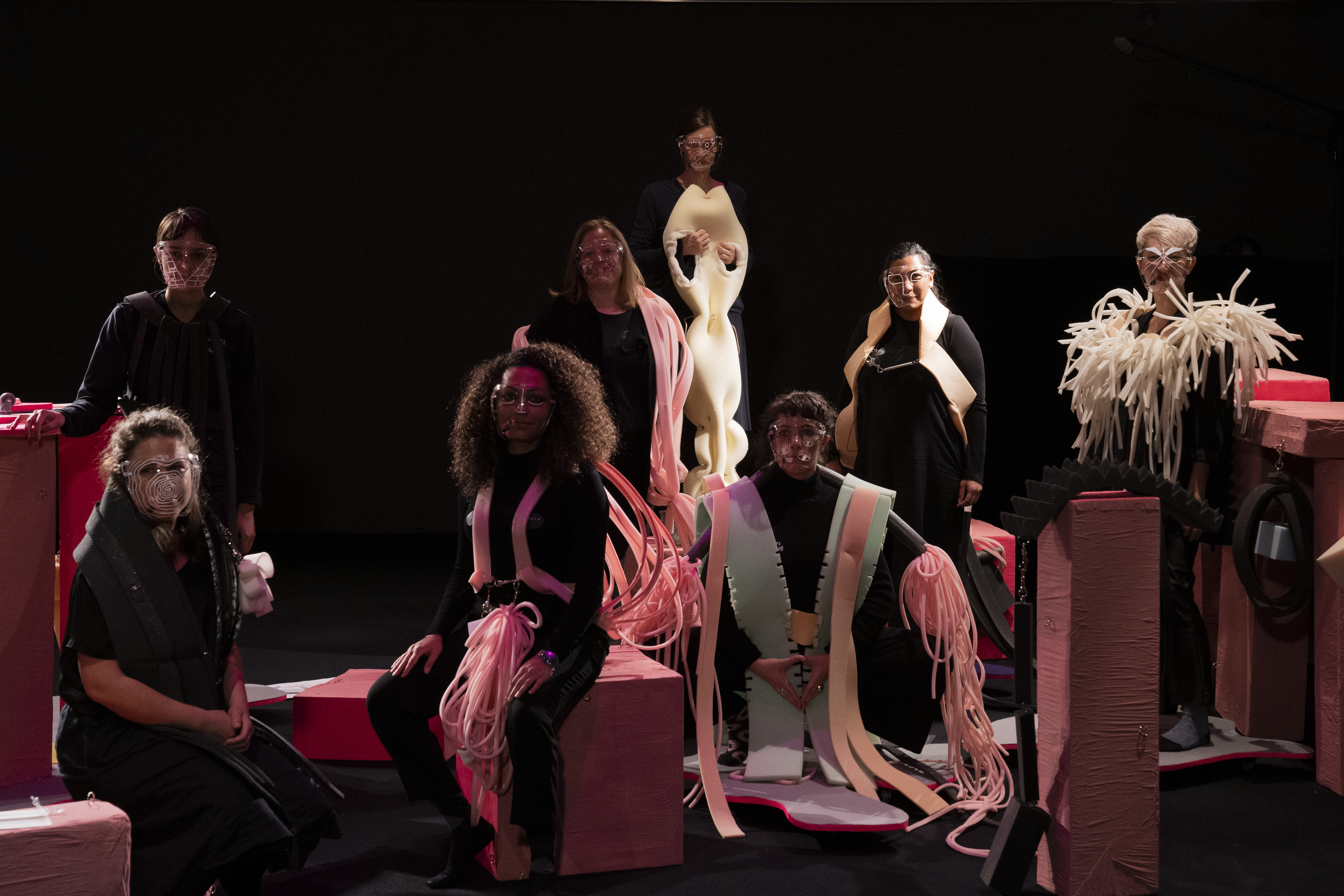
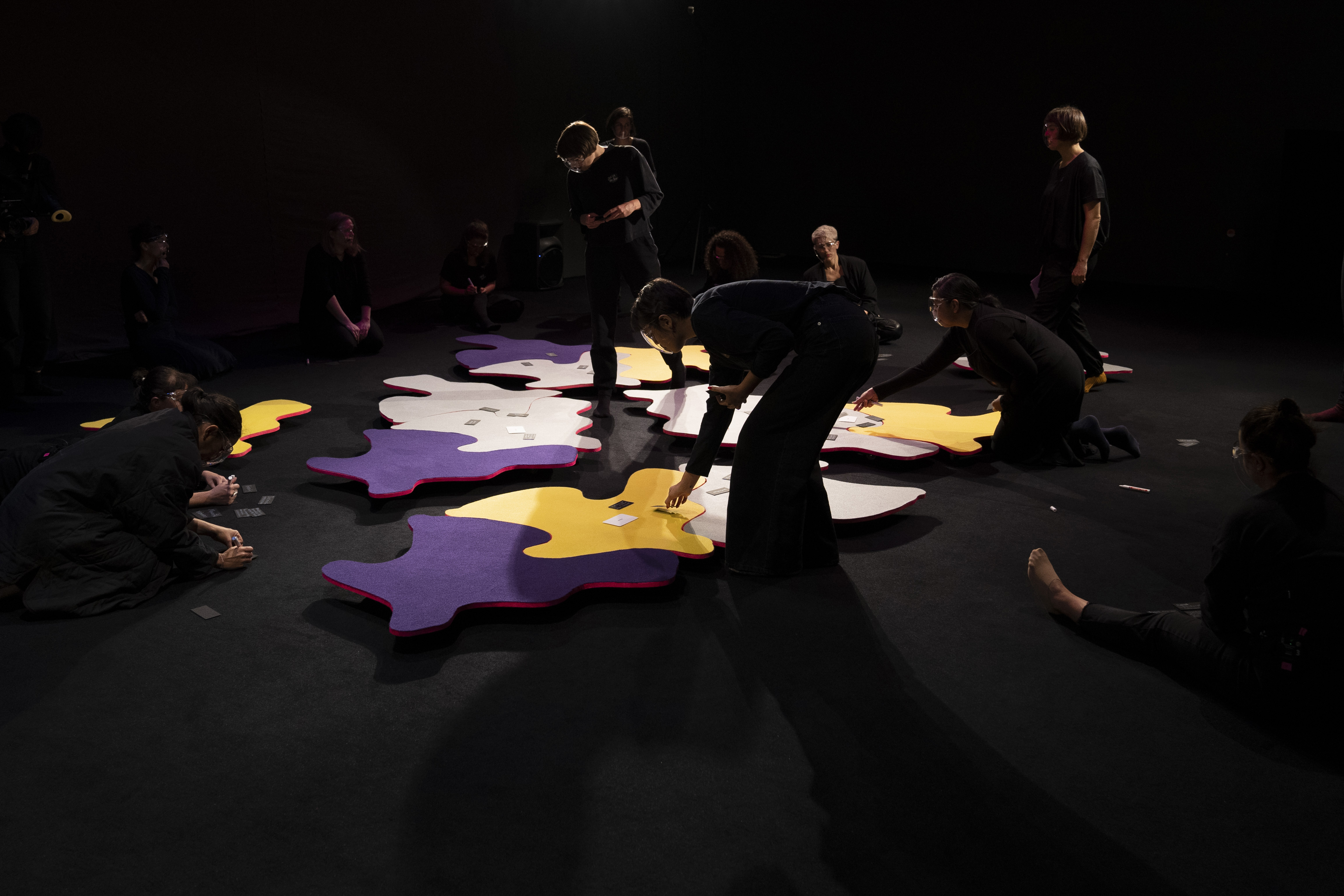
Ana de Almeida, Alicja Rogalskaand & Vanja Smiljanic
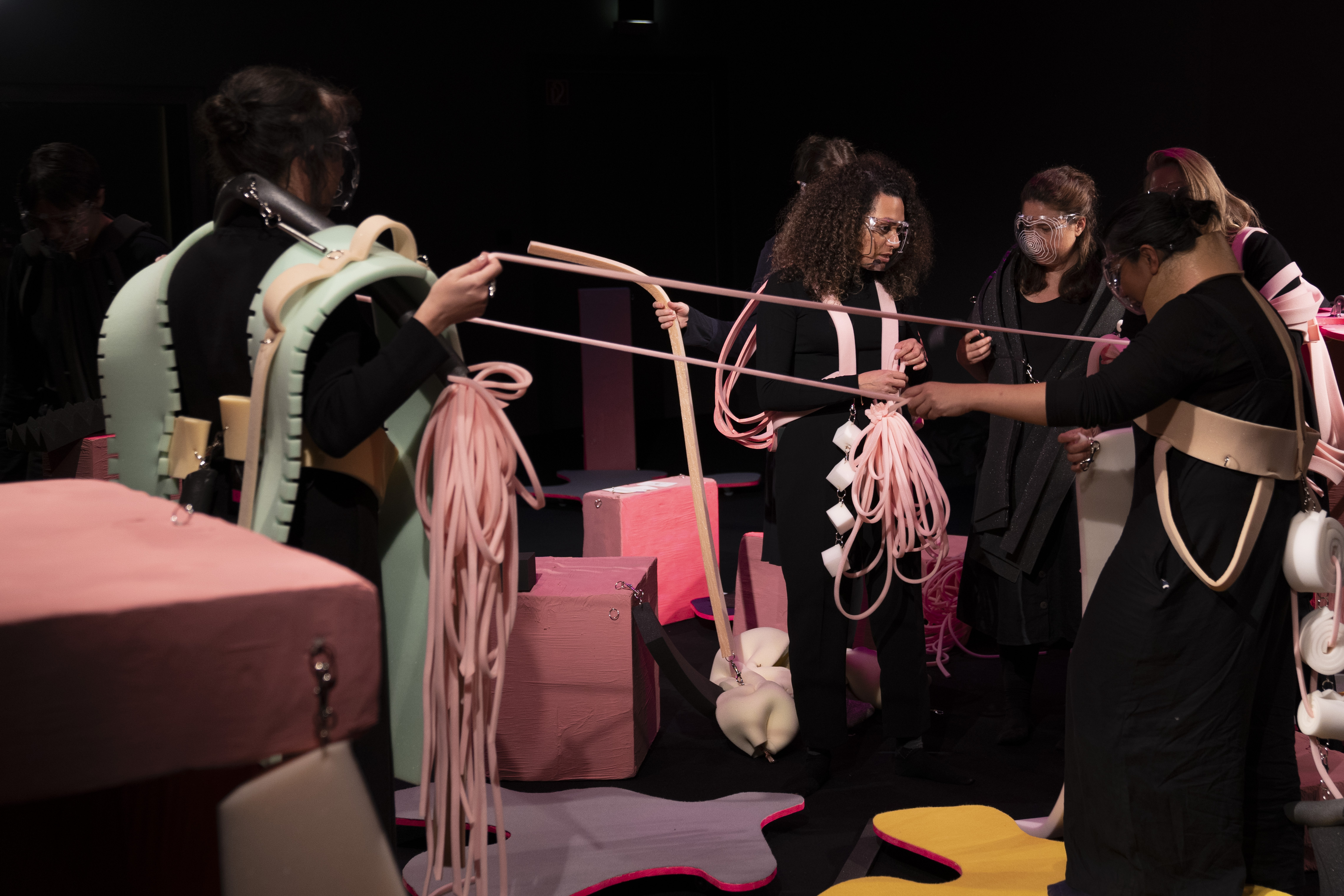
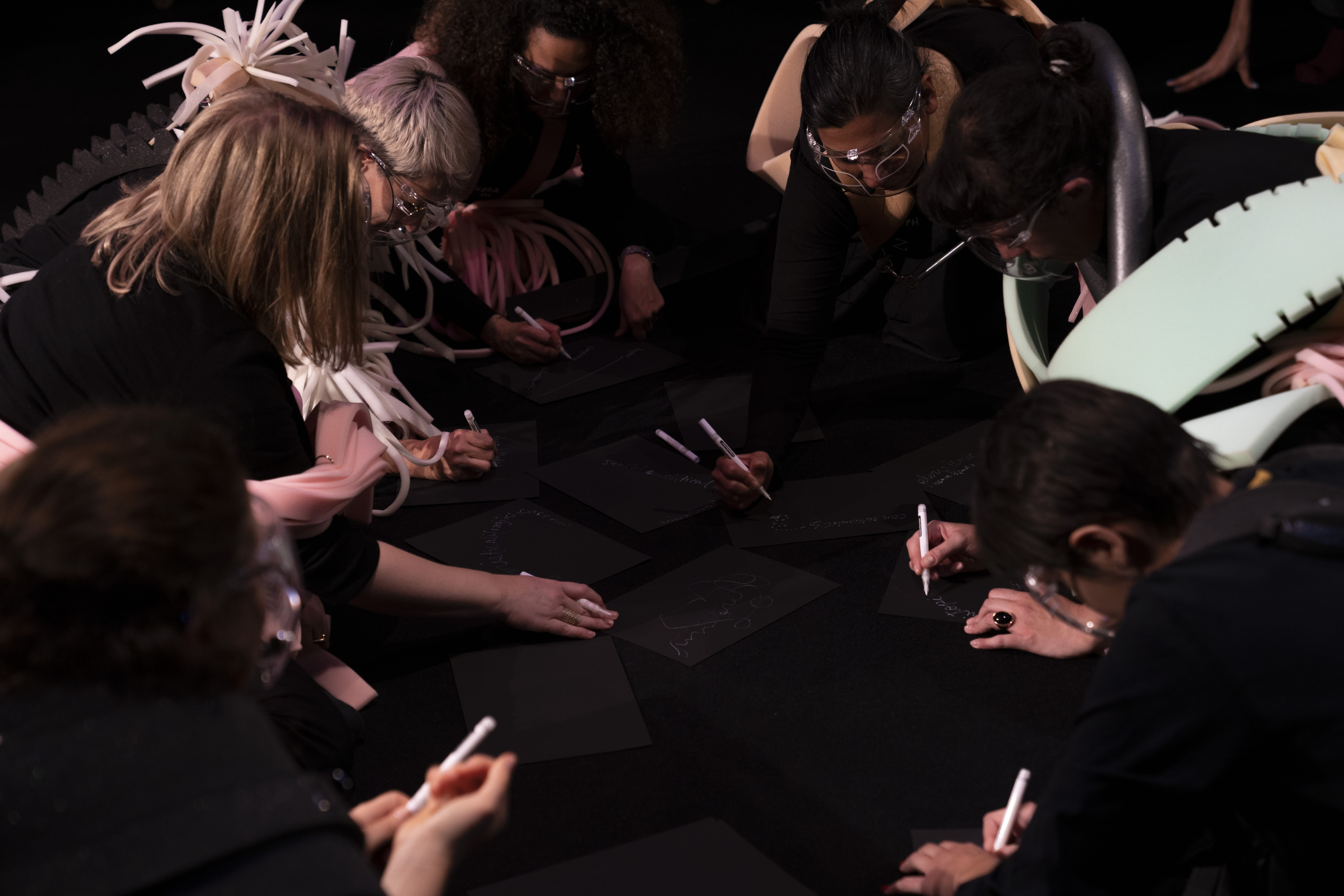
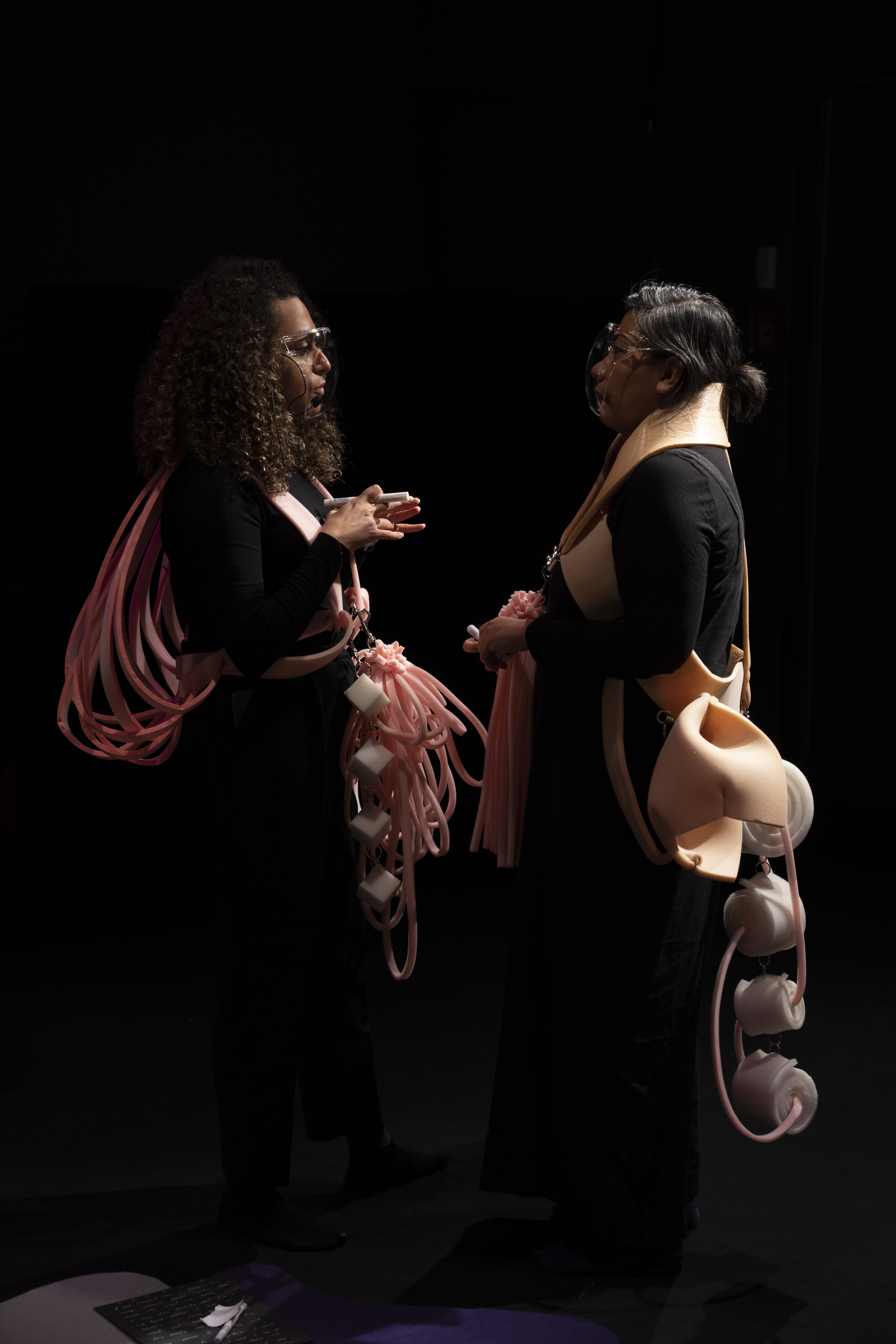
NOVA. Future thoughts on surviving together (2020 AT)
Live Action Role Play
In the future, gender inequality was erased. Nova is a multitude of newly born, radically inclusive and self-managed communities. Heterogeneous in their forms of commoning and social organization, Nova share a vow to never let oppression in any form rise again. Nova. Future thoughts on surviving together is a feminist futurist LARP - Live Action Role Play by Ana de Almeida, Alicja Rogalska and Vanja Smiljanić; directed towards feminist and queer-feminist activists based in Vienna. NOVA is a day of speculative gaming aimed at sharing survival strategies, exercising solidarity and intersectionality, creating solidarity networks and forming new alliances between different emancipatory movements. Together, we created a piece of feminist political fiction - a work in progress and a world free of patriarchal oppression in the making.
With: VBKÖ, Saloon Wien, Kunst & Kind, Latinxs Unidxs, Kültür Gemma, Cine Collective, Mala Sirena, female:pressure.


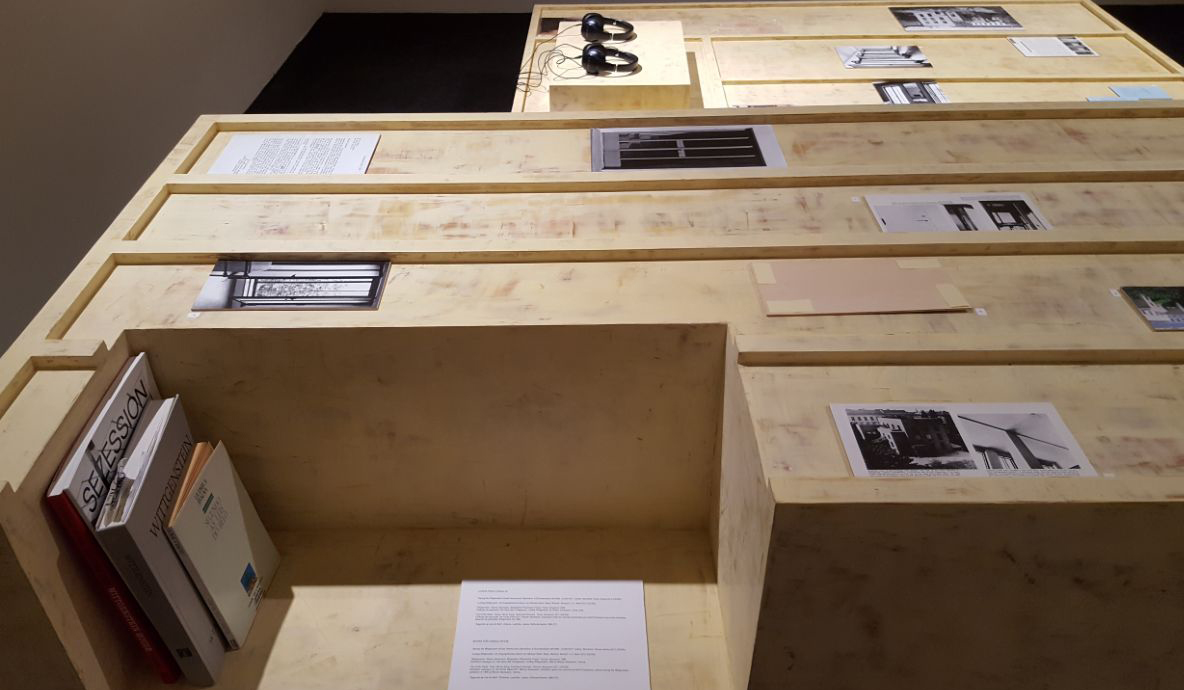
A Casa / The House The flat / Die Fläche (2018 PT)
MDF, stucco-lustro, stereo sound 42'5'' looped
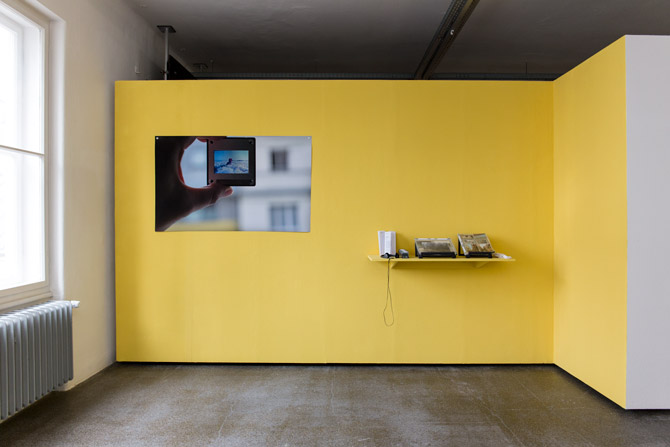
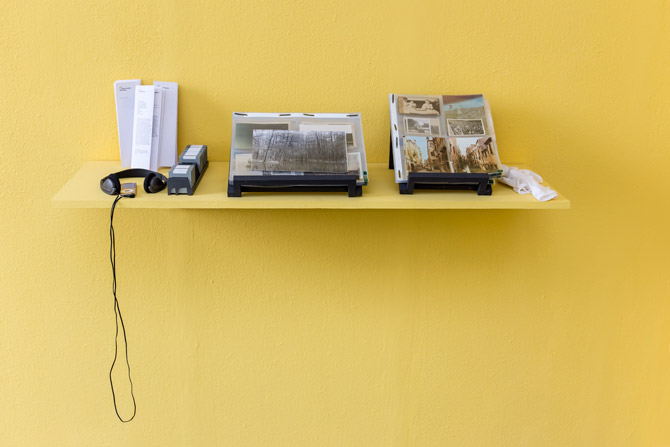
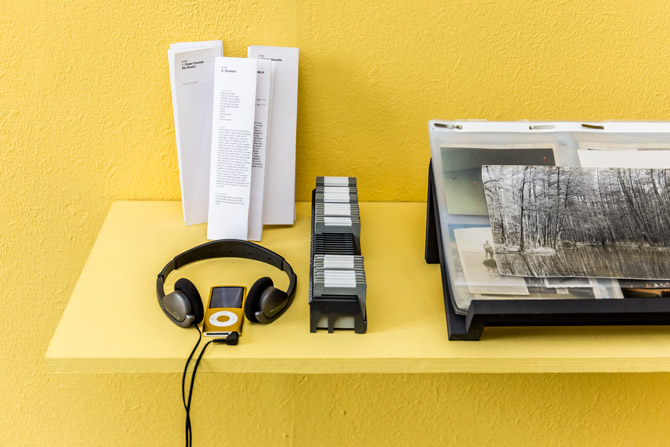
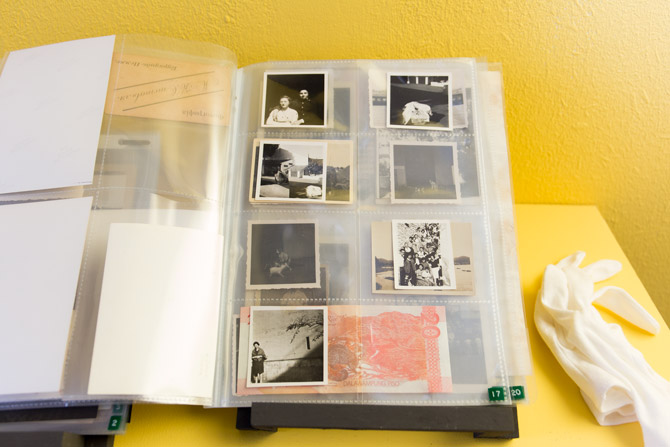
Likewise a sculpture, A Casa (The House) shares the aesthetic and architectonic language of the House Wittgenstein in Vienna. The two volumes are a transposition and folding down of two of its architectonic elements: a window and the vestibule door. They serve as display for documental material such as letters and photos and incorporate an audio piece with interviews led by the artist. The surface is covered by stucco-lustro, a coating technique proliferating in Vienna on the turn to the 20th century, similar to how could the original coating of the walls of the House Wittgenstein have looked like before they were painted white after World War II. The highlighting of the stucco-lustro architectonic detail points out to a fundamental discovery for the understanding of the house as aesthetic experiment in which the house interiors, composed by materials which evoke extreme hardness, seem to dematerialize through the highly reflecting properties of the stucco walls.

Photos: © Ana de Almeida & Stephanie Misa
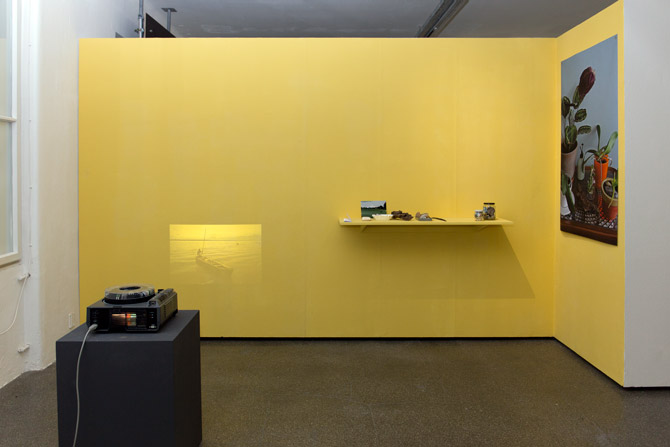
Untitled (Yellow) (2017 PT)
Wall, yellow paint, memorabilia, diashow, stereo sound
A cooperation between Ana de Almeida (PT/AT) and Stephanie Misa (PH/AT) . This is a project about landscape as formal and informal disposition of elements. Coordinates. An arrangement, a hierarchy: borders and de-limitations, transpositions and transgressions, frames and their inside-outside, margins, and of course landscape — of the geographical, political, personal, and emotional nature. Edouard Glissant’s Traité du Tout-Monde. (Poétique IV), calls it archipelagic thinking, a group of islands that lends its topography to an alternative imaginary: a reassessment of the insularity of bound cultures, of nation-states, and the heaviness of “continental thought”. The archipelago is an alternative imaginary, one that posits that identity could be as a conglomeration of islands (composed of many, yet is one). Identity formation, embodiment, complex colonial histories, evolution, interconnectedness, diaspora and change — Oh to dispell the oppressive idea of nationalistic wholeness!
LISA TRUTTMANN
“If we
opened
![]() people up,
people up,

we’d find
Landscapes.”
- Agnès Varda
#ARCHITECTURE
#ARTS-BASED RESEARCH #BIO #ECOLOGY #INSTALLATION #INTERACTIVE #SCIENCE #VIDEO
BIO.
Lisa Truttmann is an artist and filmmaker based in Vienna, Austria. In her practice she ties documentary elements into staged settings and rhythmic compositions, tracing the structures of social, architectural and ecological landscapes. She studied media arts in Vienna and received a M.F.A. in Film/Video at California Institute of the Arts, where she developed her feature film debut "Tarpaulins" (2017). Lisa’s moving images and installations have been shown in exhibitions and film festivals such as CPH:DOX Copenhagen, New York Film Festival, Images Festival Toronto, Viennale, Kunsthalle Vienna, Kunstsammlung NRW, among others. Teaching activities since 2017, grants and awards since 2005.
Lisa Truttmann is an artist and filmmaker based in Vienna, Austria. In her practice she ties documentary elements into staged settings and rhythmic compositions, tracing the structures of social, architectural and ecological landscapes. She studied media arts in Vienna and received a M.F.A. in Film/Video at California Institute of the Arts, where she developed her feature film debut "Tarpaulins" (2017). Lisa’s moving images and installations have been shown in exhibitions and film festivals such as CPH:DOX Copenhagen, New York Film Festival, Images Festival Toronto, Viennale, Kunsthalle Vienna, Kunstsammlung NRW, among others. Teaching activities since 2017, grants and awards since 2005.
Photos: © Lisa Truttman
Critters Chorus, Cycle 1 (2022)
2-channel video installation, 13:30 min.
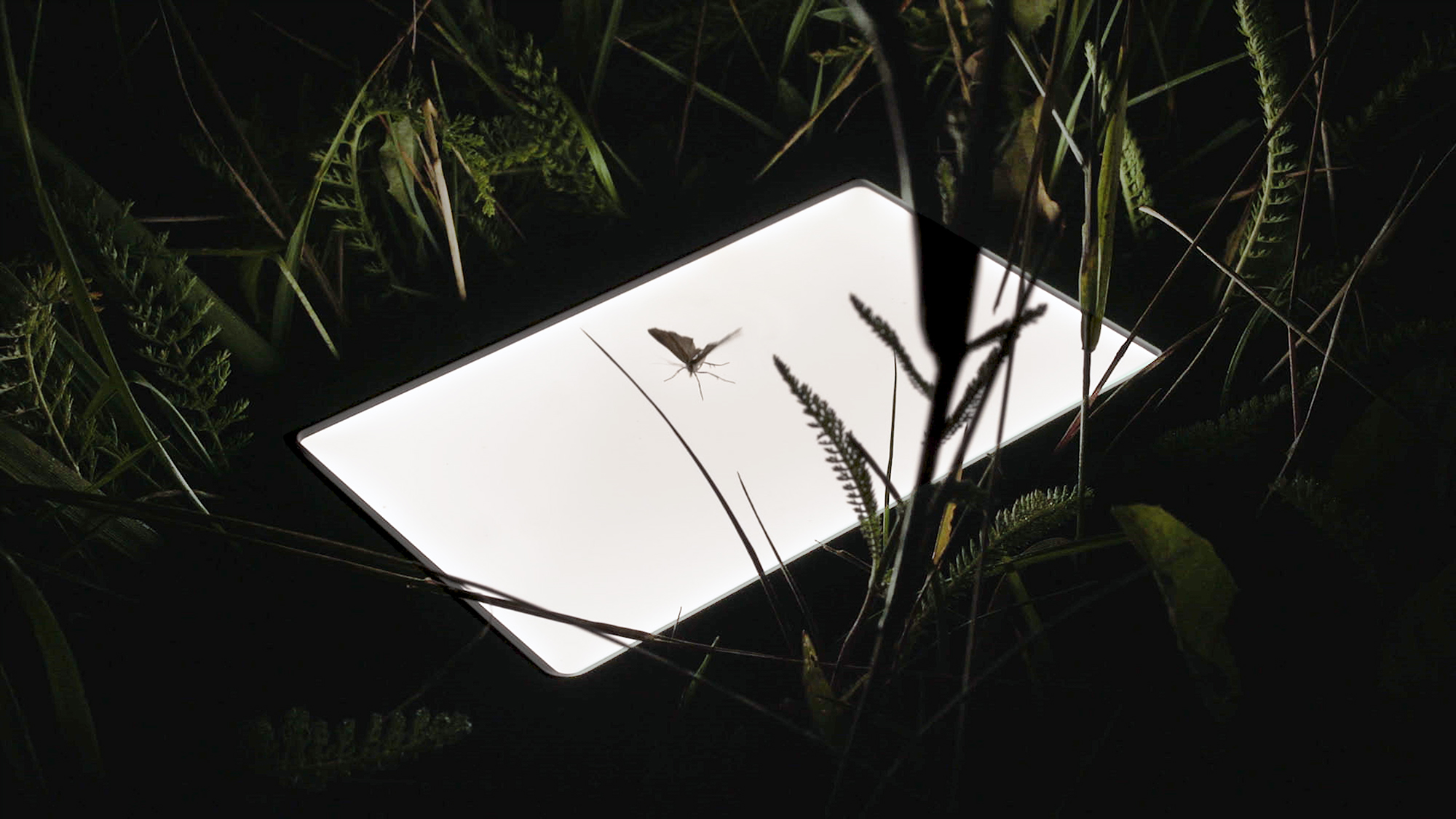
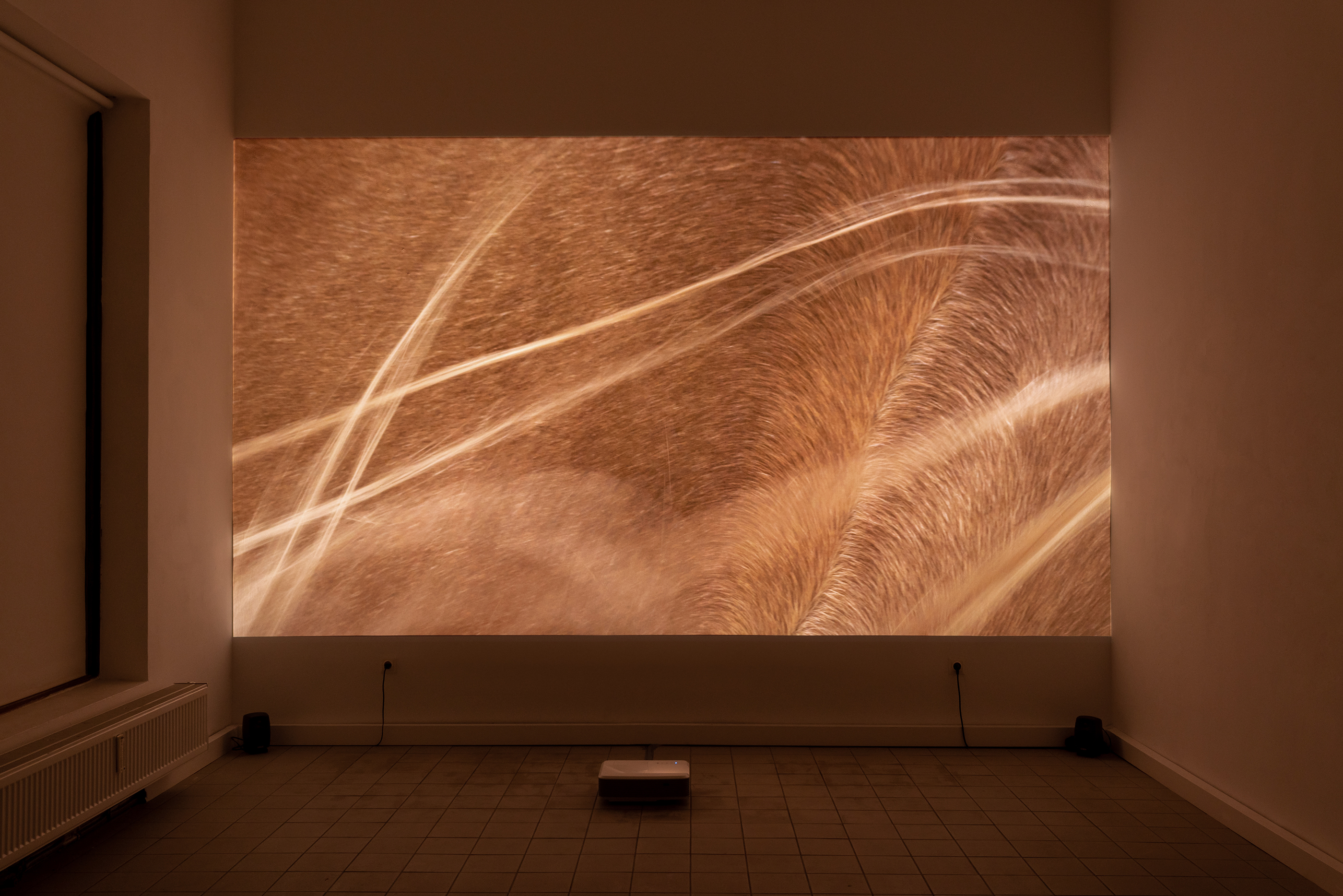
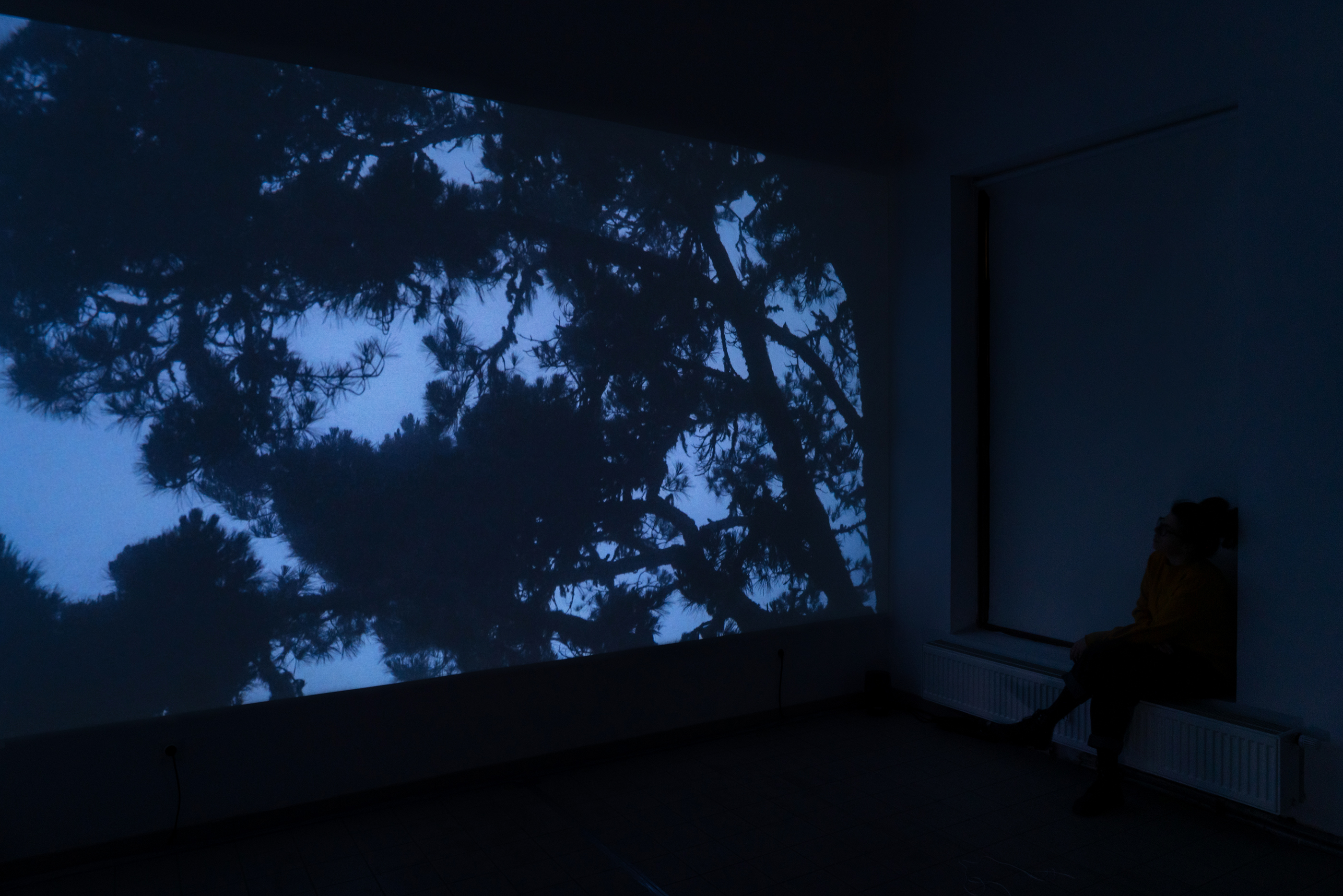
Whirring and flashing in the night sky. Wild foliage on a moist forest floor, rapidly passing by. Nervous encounters at a redwood tree, gurgling chatter with turkeys at dusk. Casually coiffed horses, unpredictable flying objects and flapping rotors. Speckled skin scrabbles, covered in lush ferns. Swirling fog, dripping haze, old men’s beard, light – diffracted. Sassy badgers, strings and figures.
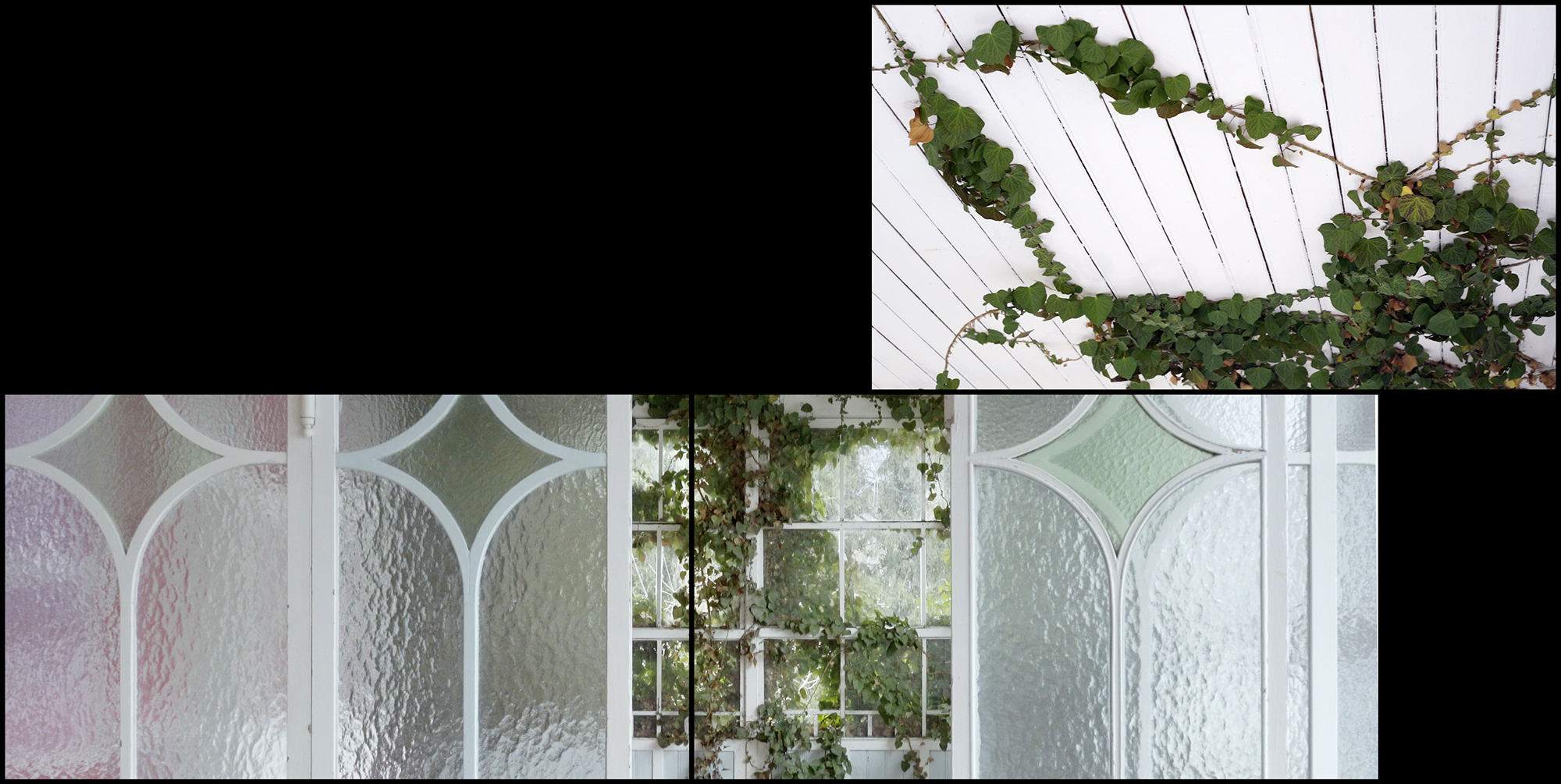
"Critters Chorus, Cycle 1" is the first part of an ongoing project, developed while delving into unfamiliar habitats. Lead by questioning the so-called “species problem”, Truttmann investigates the (im)possibilities of taxonomic categorization of living organisms from an artistic point of view. This way she creates a fictional ecosystem of rhythmic montage and unruly composition, in which the species raise their voices against imposed classification.
Shot at Maajaam Project Space, Estonia, 2019 and Djerassi Resident Artists Program, California, 2022, exhibited at Mz* Baltazar's Laboratory.
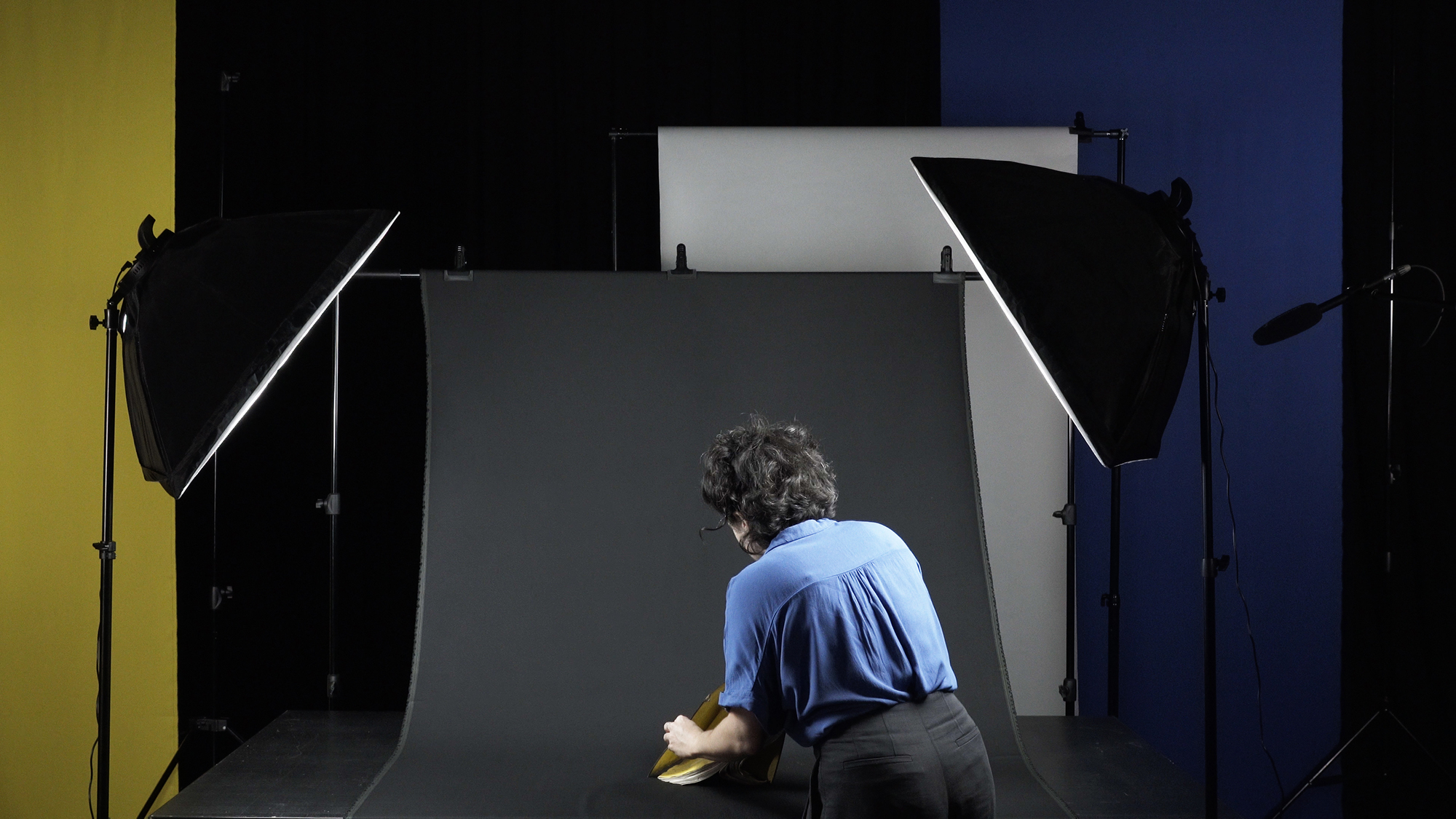
Photos: © Lisa Truttman
Memorabilien (2021)
Cinema projection and photo exhibition
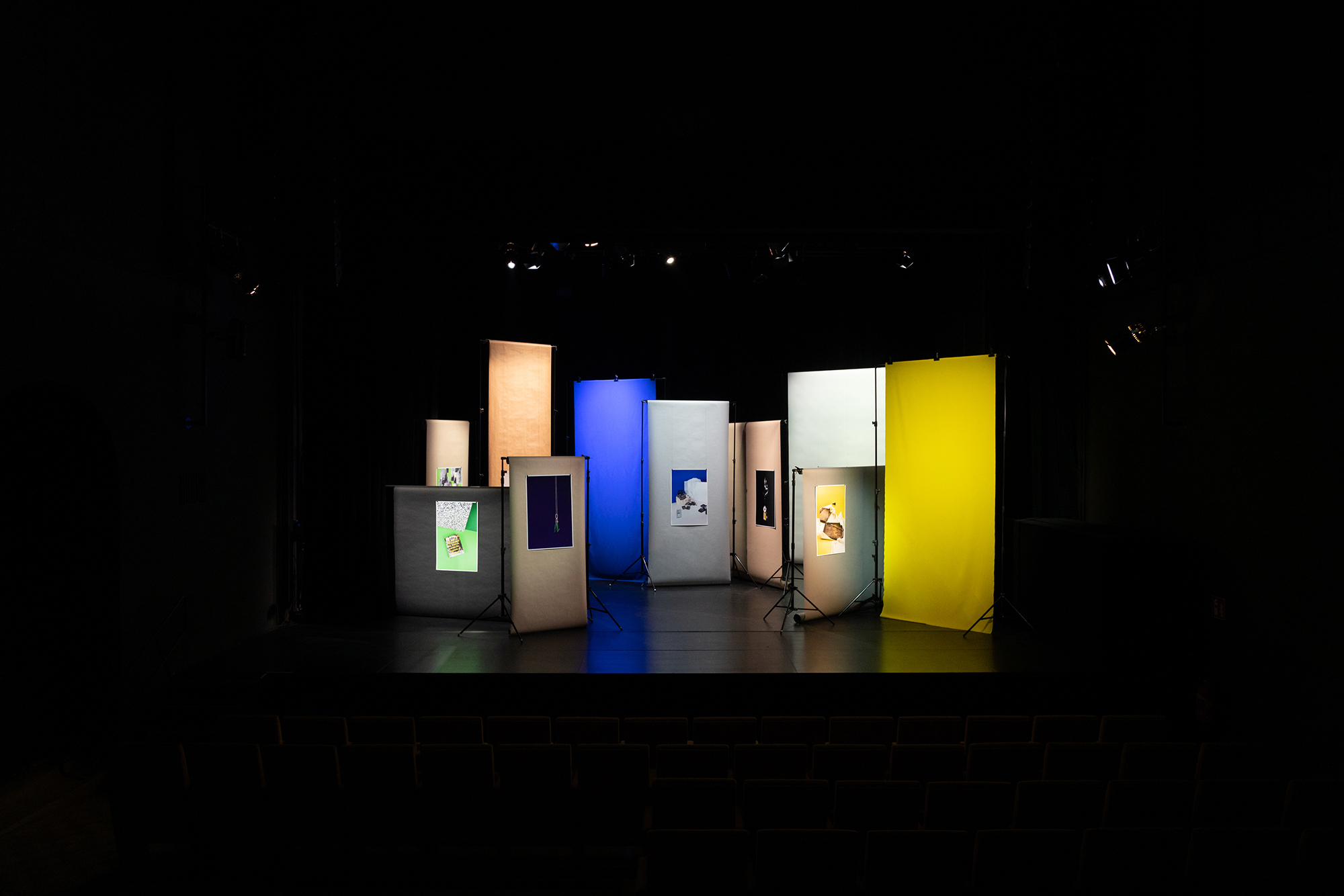
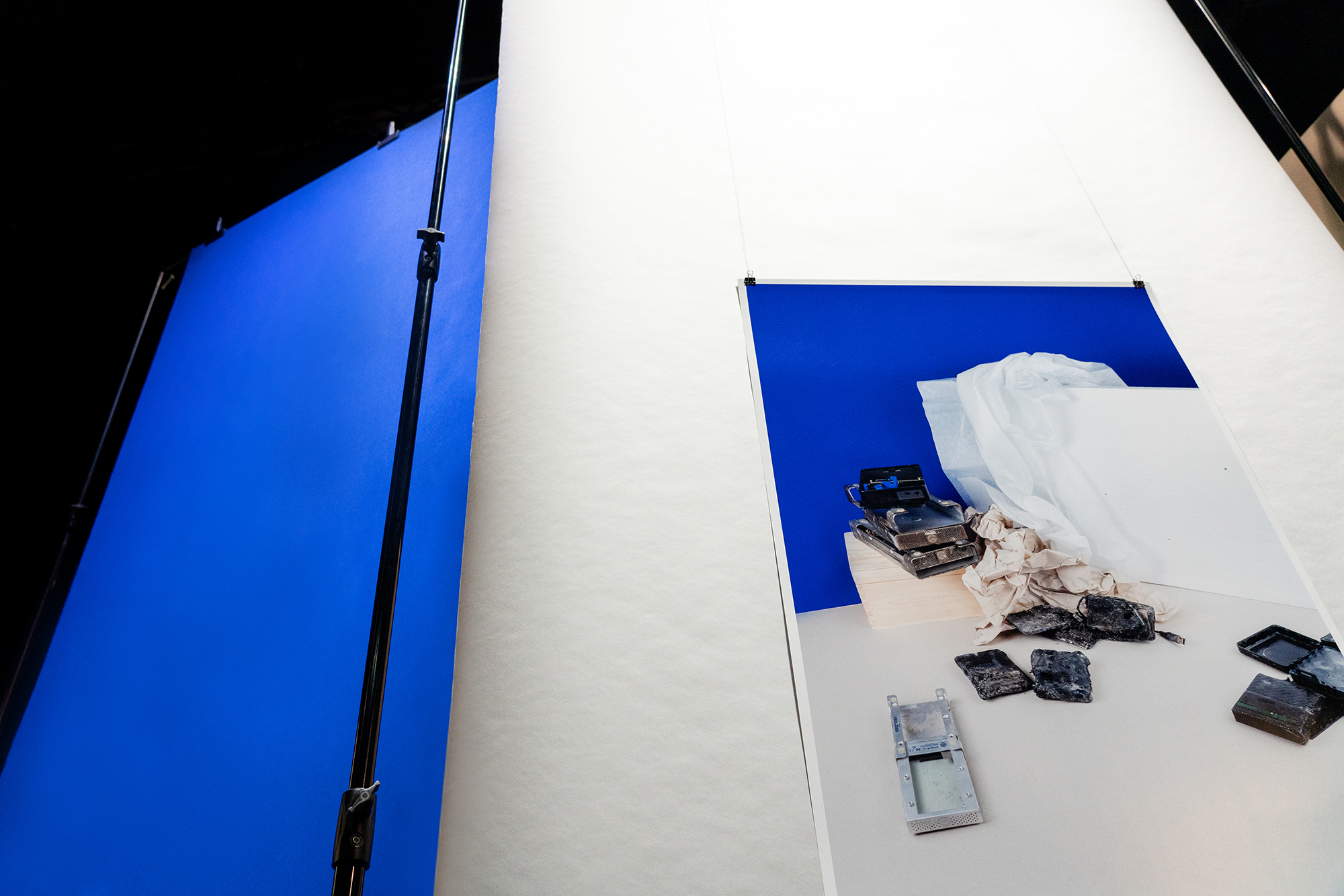
In 2019 Lisa Truttman’s apartment and studio were destroyed entirely in Mjor fire. In her work “Memorabilien” she takes up this decisive life event in order to reflect upon the meaning of personal things and their value as possible art objects.
Truttman recued fragmentary objects, archived and staged them as photographic and cinematic still lifex. In a playful and essayistic manner, Truttman shares her work and thought processes, spanning a web in which the relationship between subject and object is continuosly re-woven. During this process of medial abstraction, the memorabilia undergo a spatial transformation as well: Moving images soon detach themselves from the projection screen, the cinema space opens up, the stage becomes a temporary photo and film studio and finally transforms into a walk-in exhibition space.
Developed and presented at Le Studio Film und Bühne.
Photos: © Lisa Truttman
Tracks I-III (2021)
3-channel video installation, 19:57 min
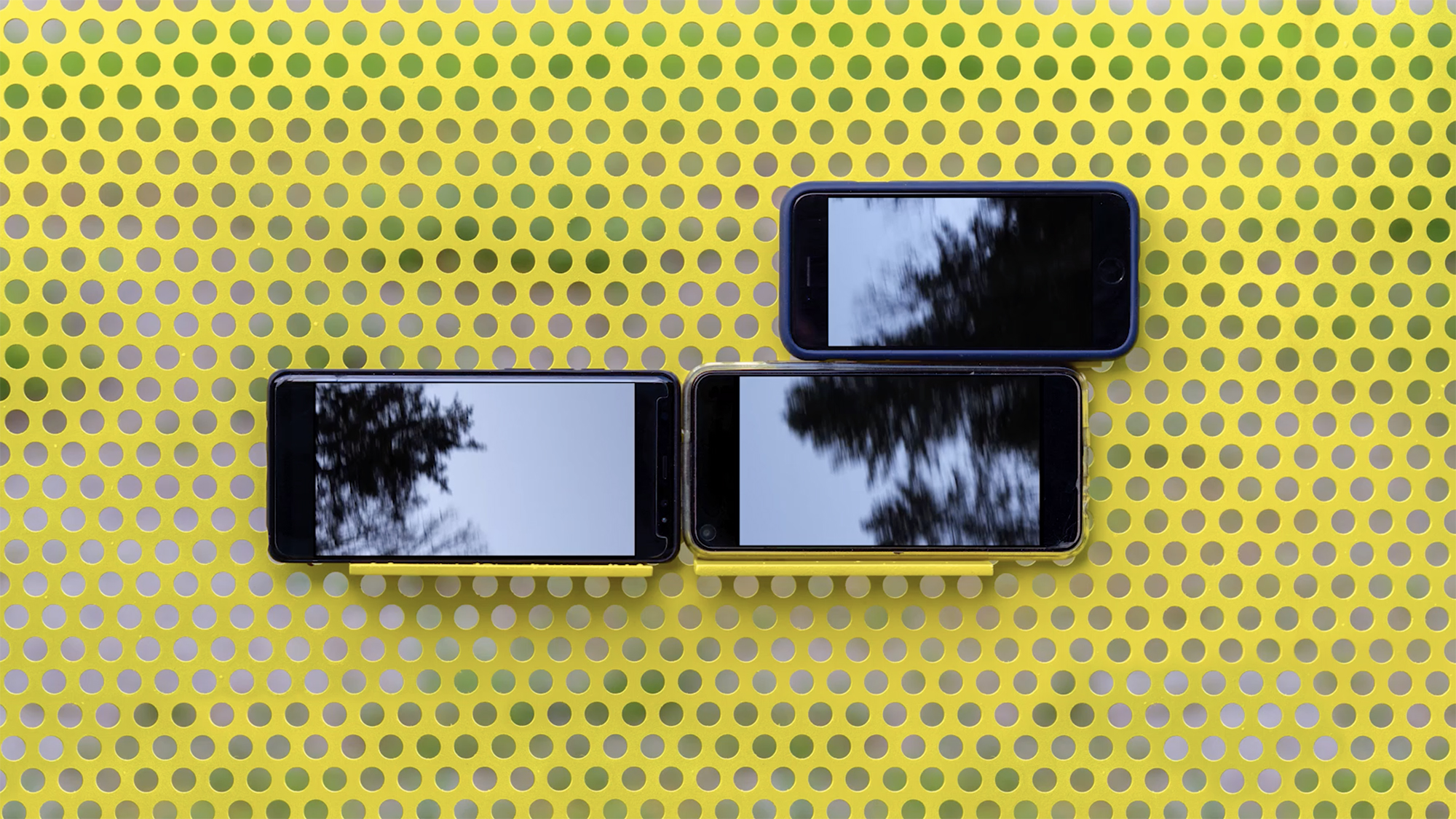
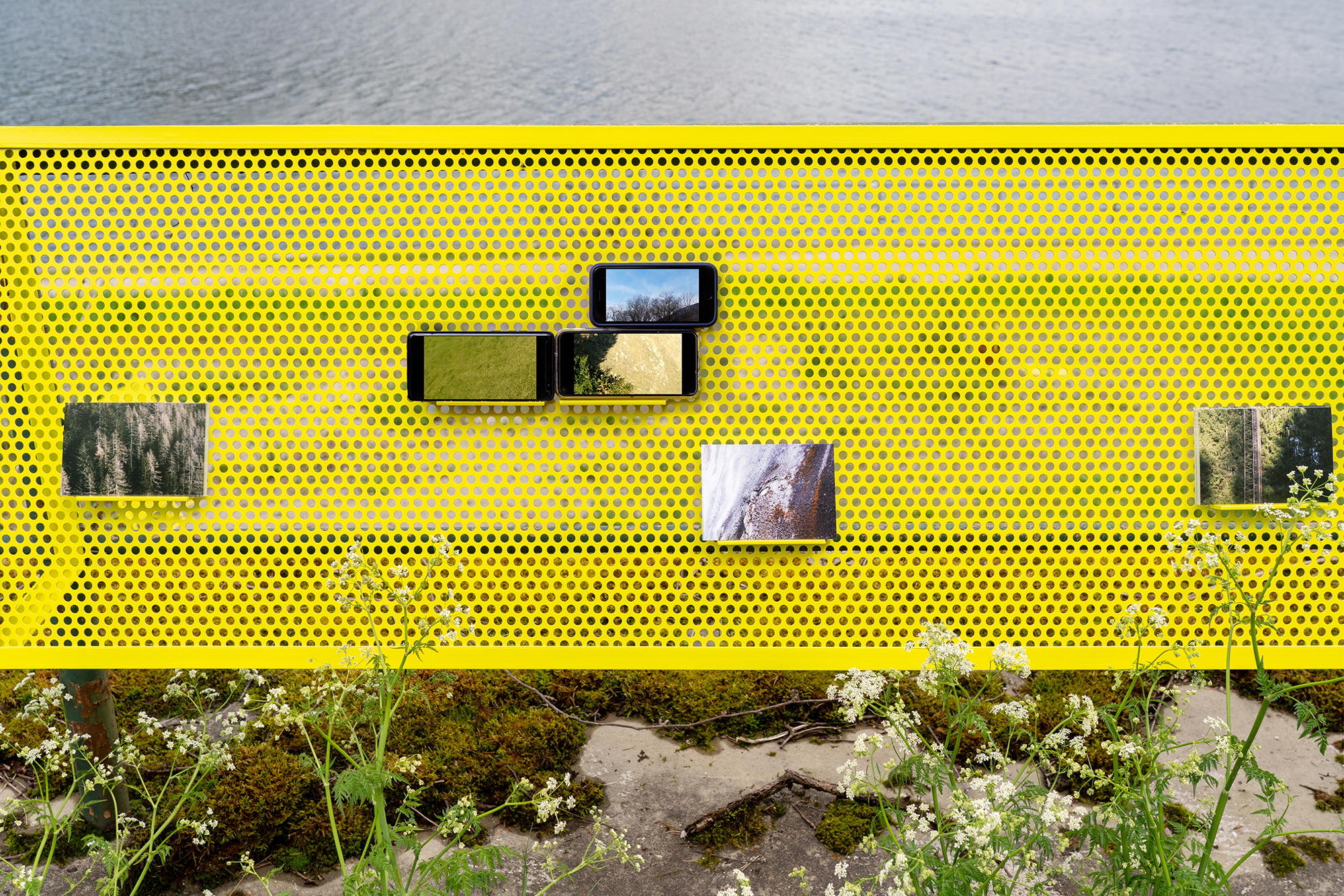
At the beginning of film history, fast-moving landscapes haunted early cinemas as “Phantom Rides”. Back then, cameras mounted on trains visually conquered supposedly untouched areas at top speed, now mobile radio signals control our technological gaze and access rural areas. Tracks I-III searches for traces, following the former section of the “Ischlerbahn” between the towns Mondsee and Srobl. On a digital phantom ride of the present, we cross the landscape, associate connections, looking forward in fragments and backwards in time. We ask how invisible signals travel, how they manifest themselves in moving images, and why we are now looking at cell phones instead of the screen in a cinema.
“Tracks I-III” is parte of the collective project “Techno Scapes”, using visitors’ mobile devices as cinema screens. It was developed by members of The Golden Pixel Cooperative for the Supergau Festival, and installed in the area around Lueg, a former train station of the “Ischlerbahn”.