

ANA DE ALMEIDA
“Ficou
a ver
passar
navios.”
#ARTS-BASED RESEARCH #ARCHITECTURE #COMMONS #INSTALLATION #SPACE #MULTIMEDIA #IDENTITY #PERFORMANCE
#NEO-COLONIAL #VIDEO #GENDER
BIO. Ana de Almeida (b.1987) is an artist and author from Lisbon, currently based in Vienna. She is a member of the artists’
collective dienstag abendof
of VBKÖ and of the Interndinner collective against precarization of work in the cultural field. Her artistic practice addresses memory and remembering processes, narrative constructions that connect space and subject, and plurispatial and multilayered narratives in general.
Ana de Almeida is currently a Ph.D. candidate at the Academy of Fine Arts of Vienna, pursuing a doctoral thesis about the production of images in the 1974—1989 inter-revolutionary space between the Carnation and the Velvet Revolutions.
Ana de Almeida is currently a Ph.D. candidate at the Academy of Fine Arts of Vienna, pursuing a doctoral thesis about the production of images in the 1974—1989 inter-revolutionary space between the Carnation and the Velvet Revolutions.
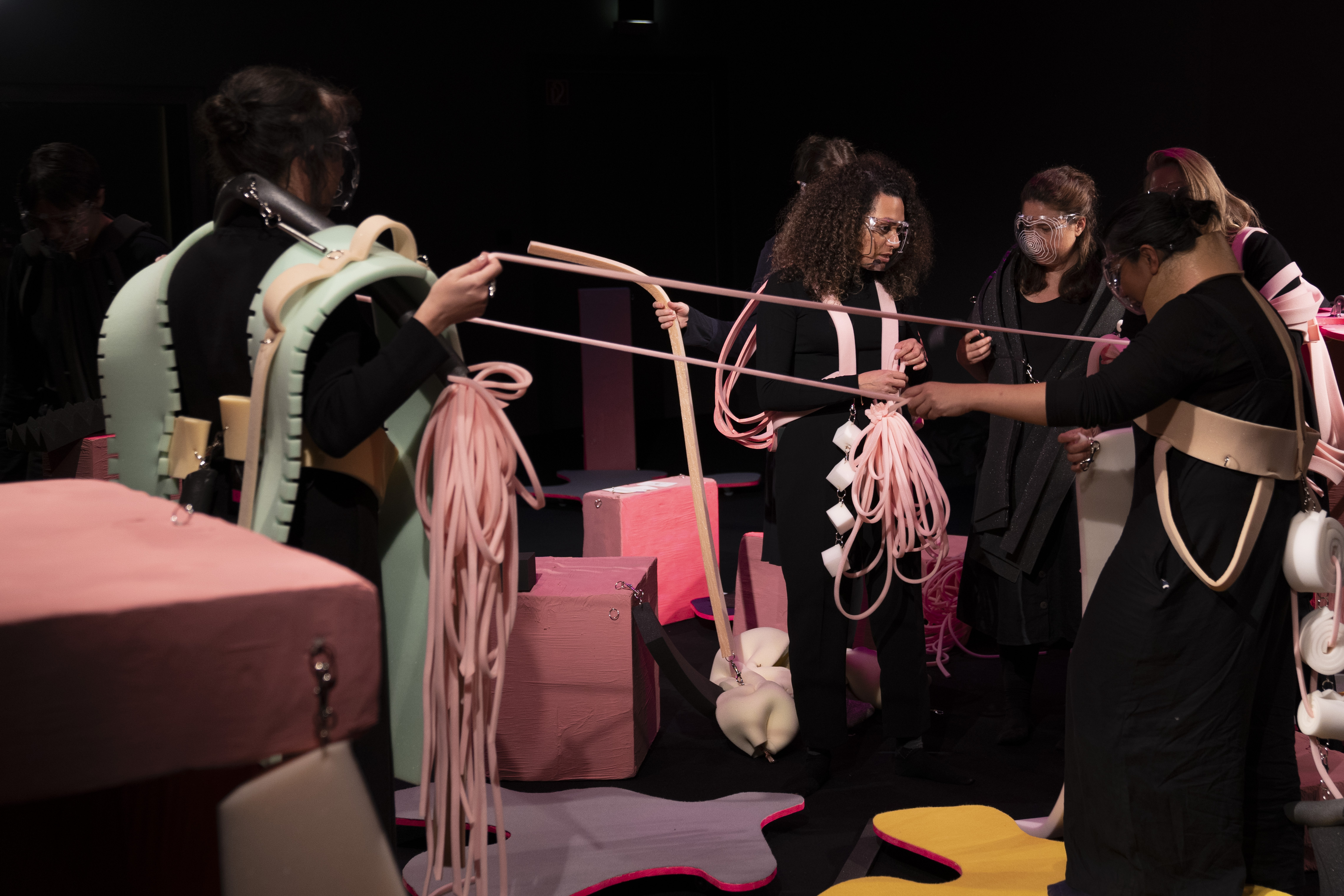
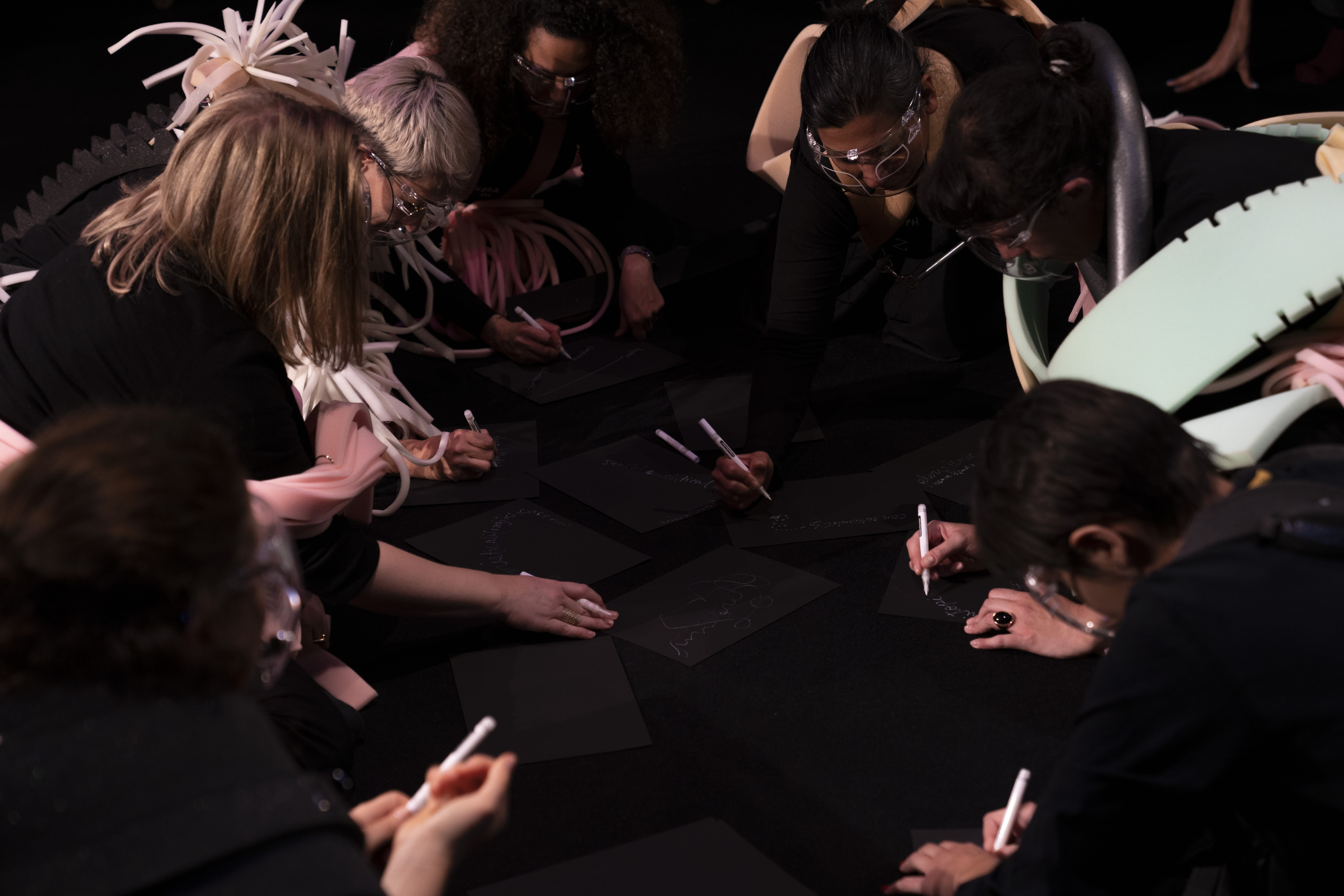
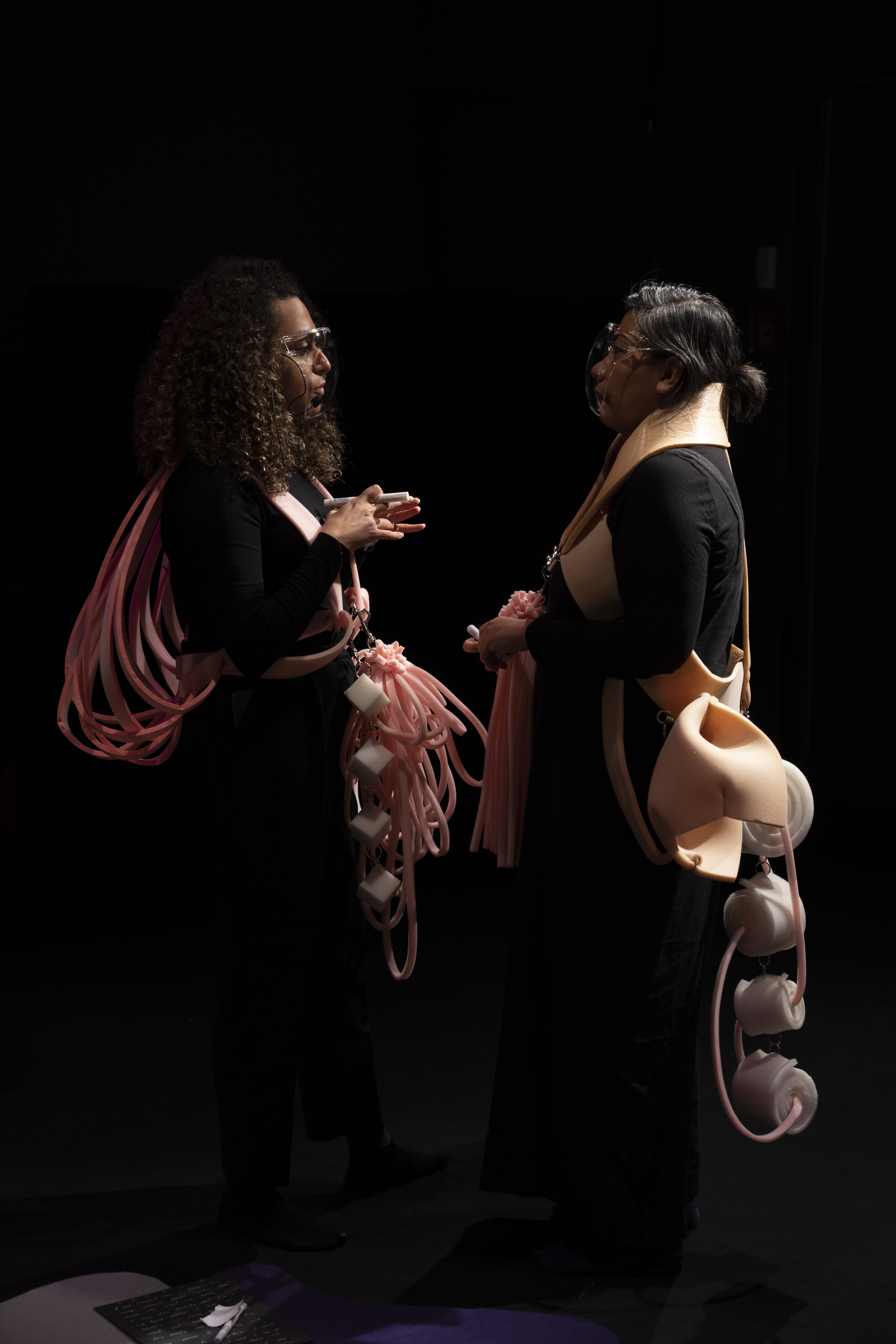

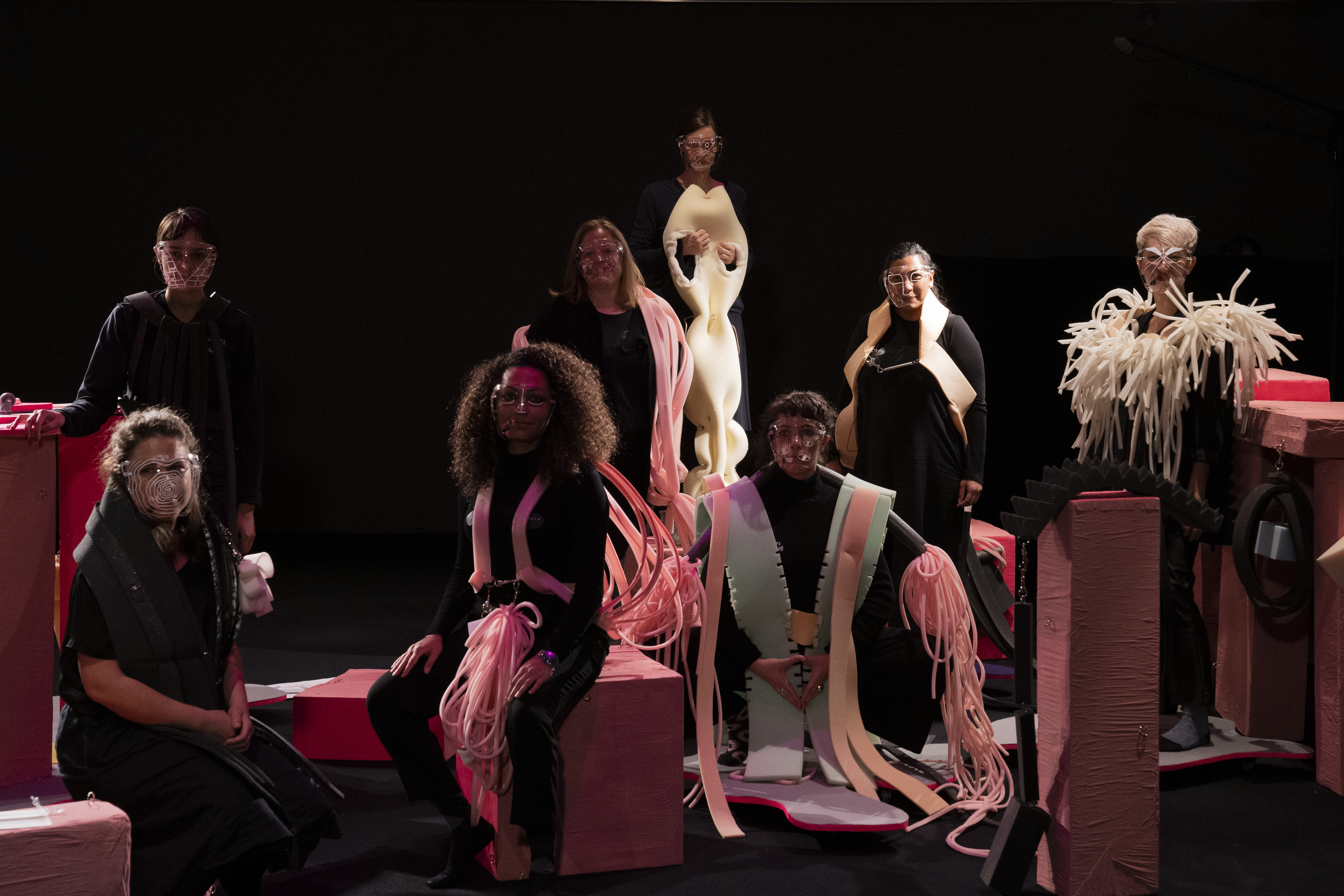
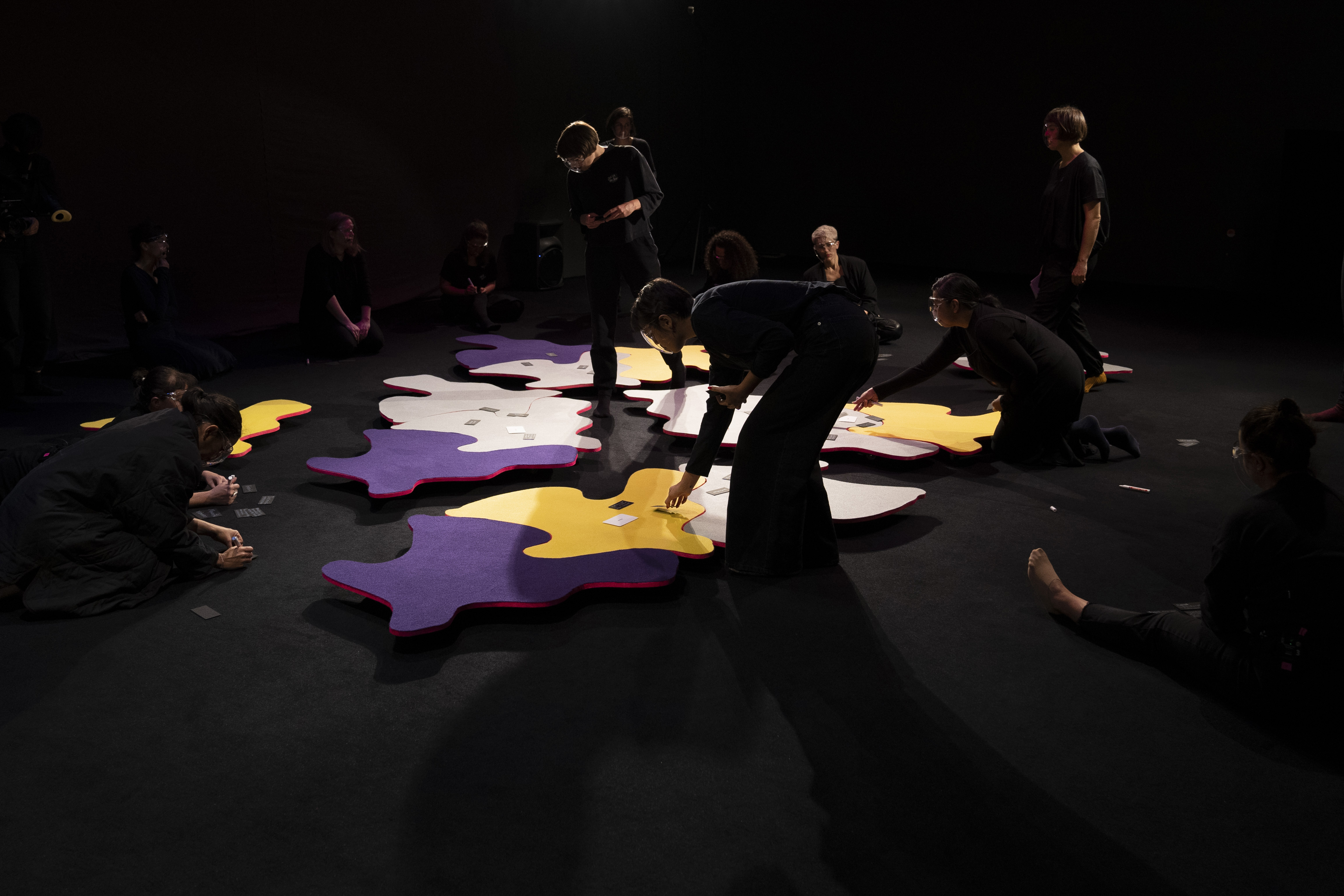
Ana de Almeida, Alicja Rogalskaand & Vanja Smiljanic
NOVA. Future thoughts on surviving together (2020 AT)
Live Action Role Play
In the future, gender inequality was erased. Nova is a multitude of newly born, radically inclusive and self-managed communities. Heterogeneous in their forms of commoning and social organization, Nova share a vow to never let oppression in any form rise again. Nova. Future thoughts on surviving together is a feminist futurist LARP - Live Action Role Play by Ana de Almeida, Alicja Rogalska and Vanja Smiljanić; directed towards feminist and queer-feminist activists based in Vienna. NOVA is a day of speculative gaming aimed at sharing survival strategies, exercising solidarity and intersectionality, creating solidarity networks and forming new alliances between different emancipatory movements. Together, we created a piece of feminist political fiction - a work in progress and a world free of patriarchal oppression in the making.
With: VBKÖ, Saloon Wien, Kunst & Kind, Latinxs Unidxs, Kültür Gemma, Cine Collective, Mala Sirena, female:pressure.


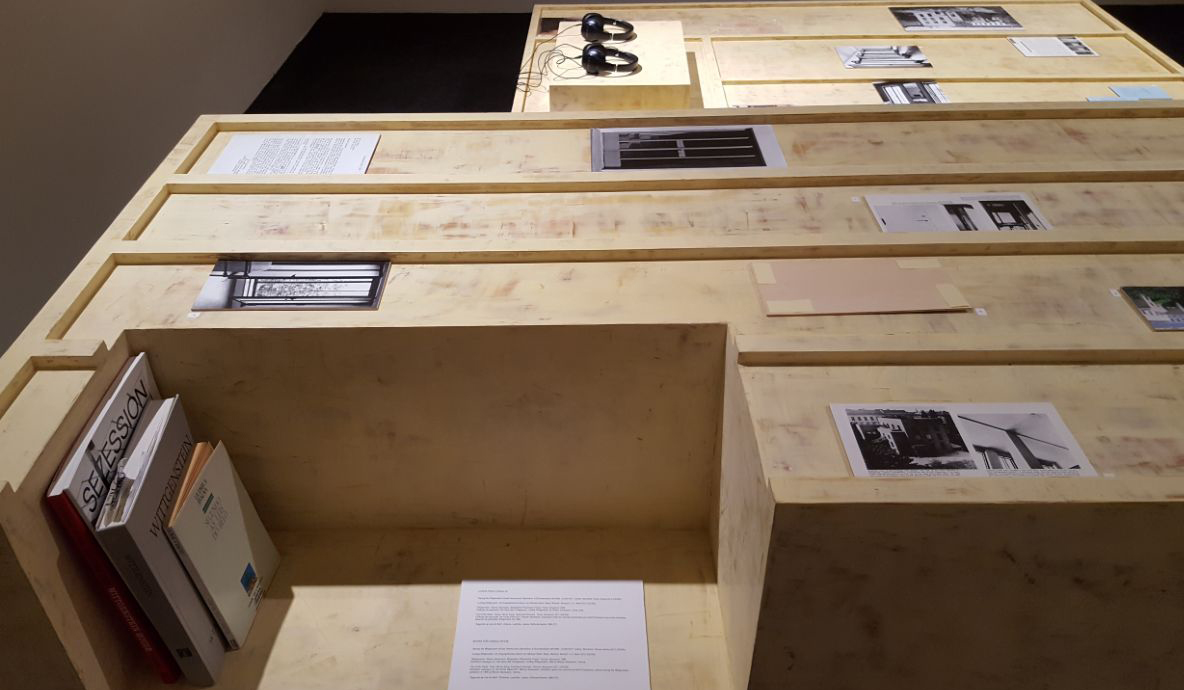
A Casa / The House The flat / Die Fläche (2018 PT)
MDF, stucco-lustro, stereo sound 42'5'' looped
Likewise a sculpture, A Casa (The House) shares the aesthetic and architectonic language of the House Wittgenstein in Vienna. The two volumes are a transposition and folding down of two of its architectonic elements: a window and the vestibule door. They serve as display for documental material such as letters and photos and incorporate an audio piece with interviews led by the artist. The surface is covered by stucco-lustro, a coating technique proliferating in Vienna on the turn to the 20th century, similar to how could the original coating of the walls of the House Wittgenstein have looked like before they were painted white after World War II. The highlighting of the stucco-lustro architectonic detail points out to a fundamental discovery for the understanding of the house as aesthetic experiment in which the house interiors, composed by materials which evoke extreme hardness, seem to dematerialize through the highly reflecting properties of the stucco walls.

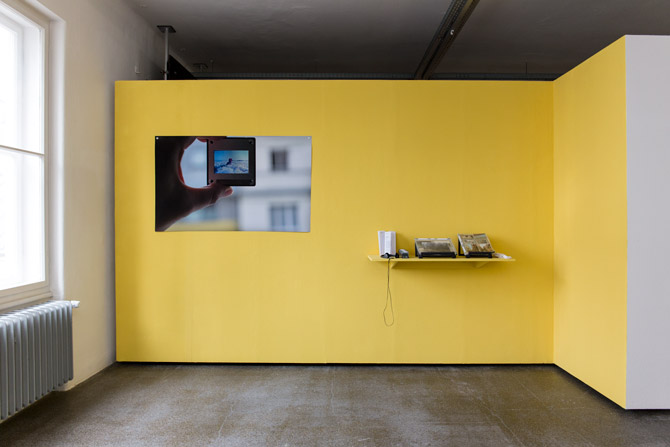
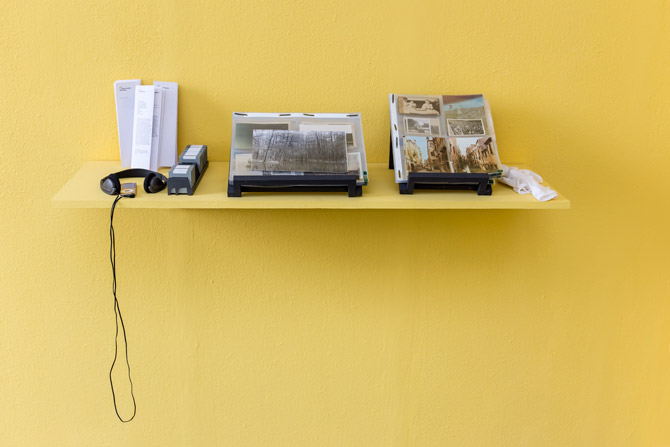
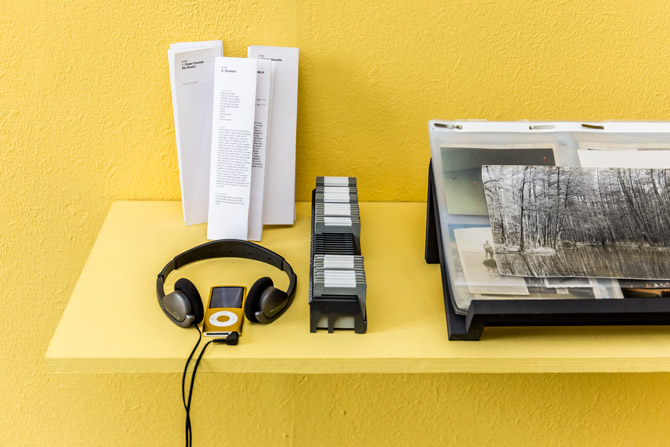
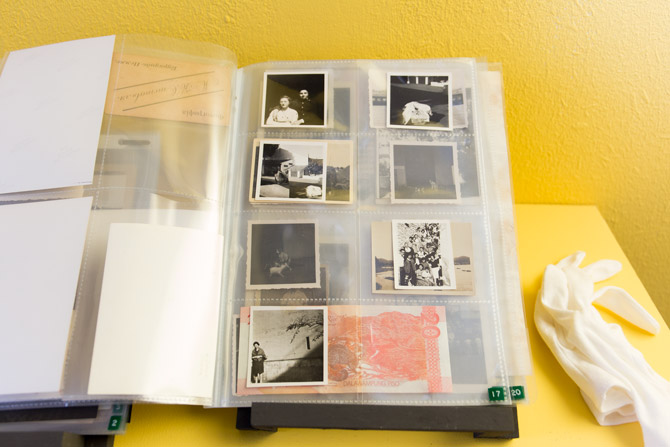
Photos: © Ana de Almeida & Stephanie Misa
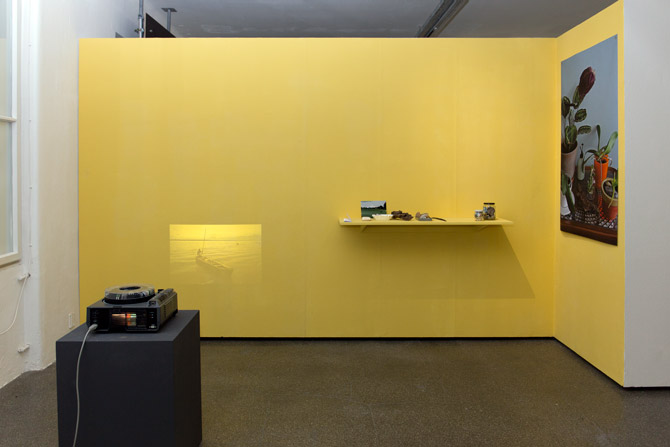
Untitled (Yellow) (2017 PT)
Wall, yellow paint, memorabilia, diashow, stereo sound
A cooperation between Ana de Almeida (PT/AT) and Stephanie Misa (PH/AT) . This is a project about landscape as formal and informal disposition of elements. Coordinates. An arrangement, a hierarchy: borders and de-limitations, transpositions and transgressions, frames and their inside-outside, margins, and of course landscape — of the geographical, political, personal, and emotional nature. Edouard Glissant’s Traité du Tout-Monde. (Poétique IV), calls it archipelagic thinking, a group of islands that lends its topography to an alternative imaginary: a reassessment of the insularity of bound cultures, of nation-states, and the heaviness of “continental thought”. The archipelago is an alternative imaginary, one that posits that identity could be as a conglomeration of islands (composed of many, yet is one). Identity formation, embodiment, complex colonial histories, evolution, interconnectedness, diaspora and change — Oh to dispell the oppressive idea of nationalistic wholeness!
MARIT WOLTERS
“Not new,
but true:
everything’s
connected.
![]()
#ARCHITECTURE
#ARTS-BASED RESEARCH #BODY #INSTALLATION #LANGUAGE #PERFORMANCE #SCULPTURE #SPACE
BIO.
Marit Wolters (b. 1985) lives in Vienna, Austria. After studying Fine Arts with Monika Brandmeier and Brigitte Kowanz she mainly works with sculpture and installation. Her works examine the aesthetic potential of architectural materials, processes and structures and their interaction with social and ecological systems. With shows internationally she was honored with several awards including the Erste Bank Extra-Value Art Award and the Syn-Award for interdisciplinary research.
Marit Wolters (b. 1985) lives in Vienna, Austria. After studying Fine Arts with Monika Brandmeier and Brigitte Kowanz she mainly works with sculpture and installation. Her works examine the aesthetic potential of architectural materials, processes and structures and their interaction with social and ecological systems. With shows internationally she was honored with several awards including the Erste Bank Extra-Value Art Award and the Syn-Award for interdisciplinary research.


Photos: © Marit Wolters
Sliding (2021)
Marble powder, acrylic, steel
This work, from a series of three, resulted from a two months stay in Salzburg. The region in the Alps used to be very active geologically. The works were inspired by the shaping and erosion of the surrounding mountains, especially by the effect of glaciers, that grind heavy rocks into thin powder on their way across the land.


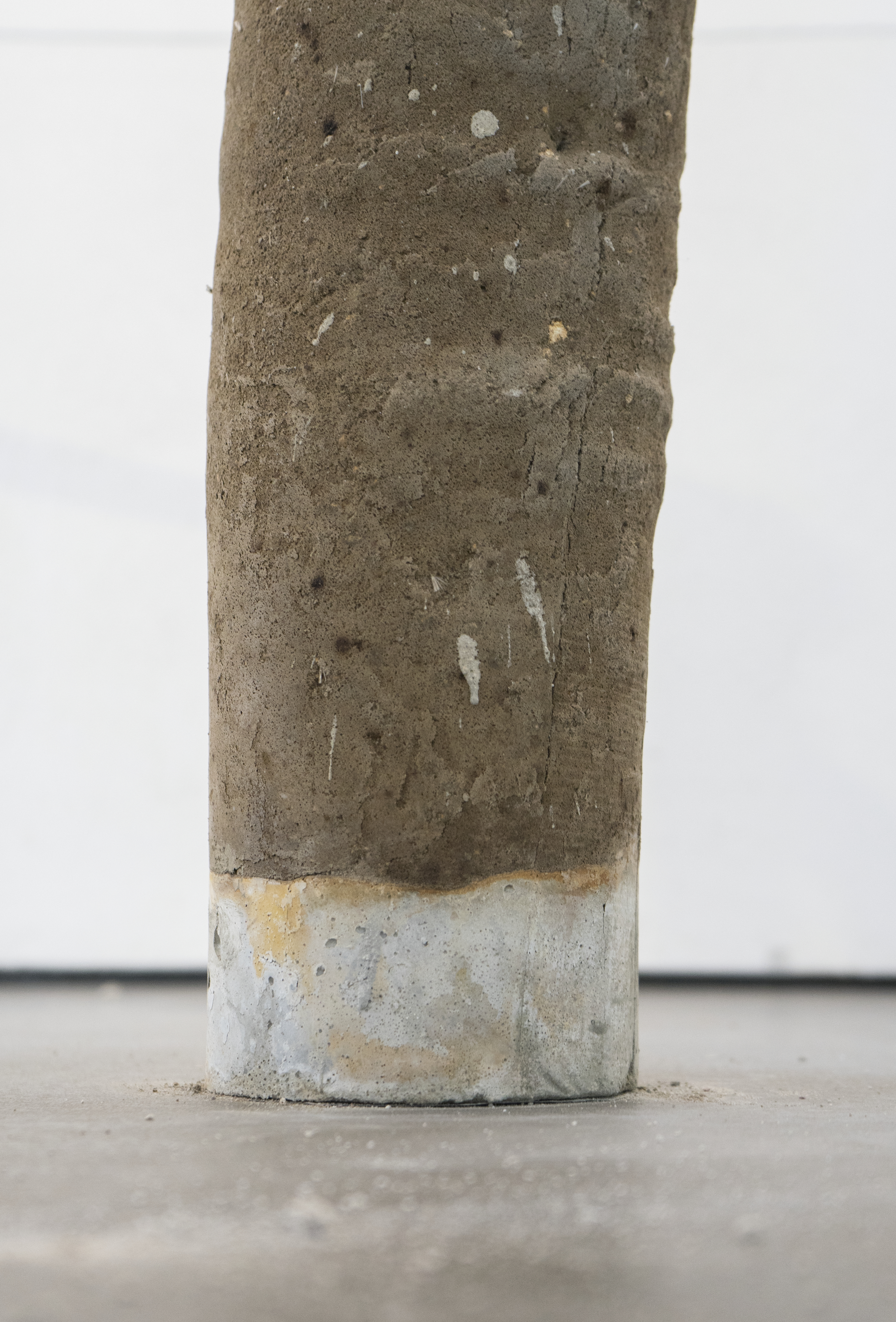
Home Grounds (2017)
Aerated concrete and soil from Bauhaus locations
This group of sculptures is inspired by aerated concrete, the main structural building material of Haus Gropius, and examines specific characteristics of this construction material such as sound and visual appearance. When mixed in the studio the material quickly increases its volume by one hundred percent or more. The chemical reaction leads to gas-emissions that create a foam like structure in the material. The stubby concrete cylinders visually break with the expectations of standardized concrete. In contrast to the smooth and hard surfaces of the walls of the house, they seem rather fragile and sensitive. By using materials from the three Bauhaus sites (Kornhaus, Stahlhaus, and the Meisterhäuser) the sculptures relate directly to the place of their origin.


Photos: © Marit Wolters
We both know hearts can change (2019)
Rubble, air-dry clay, aluminium
The sculptures portray the construction, destruction and re-construction process of the megacity of
Beijing by using rubble from different sites around the city and adding architectural structures of ceramic that were inspired by buildings around the city.