

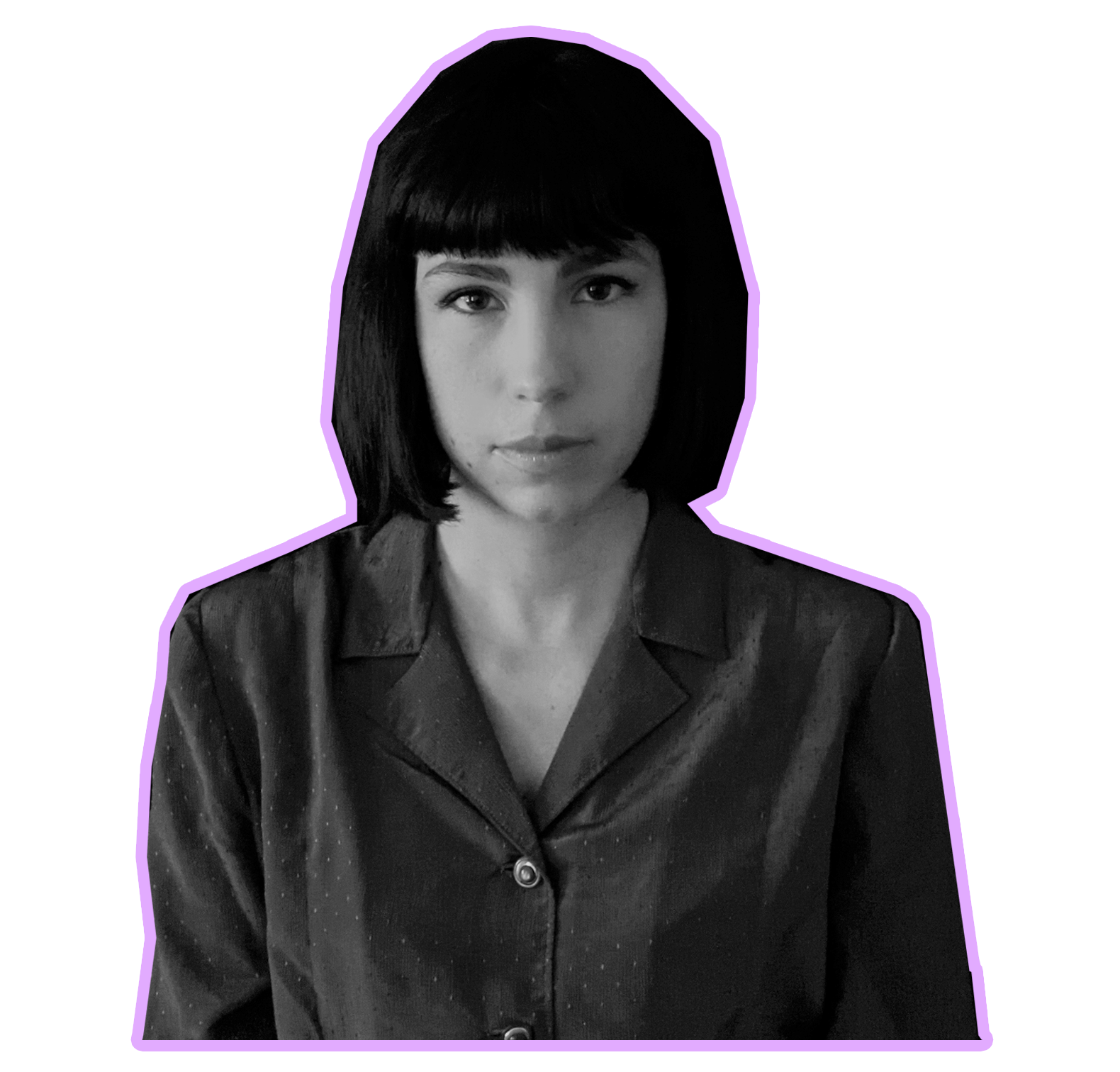
ANA DE ALMEIDA
“Ficou
a ver
passar
navios.”
#ARTS-BASED RESEARCH #ARCHITECTURE #COMMONS #INSTALLATION #SPACE #MULTIMEDIA #IDENTITY #PERFORMANCE
#NEO-COLONIAL #VIDEO #GENDER
BIO. Ana de Almeida (b.1987) is an artist and author from Lisbon, currently based in Vienna. She is a member of the artists’
collective dienstag abendof
of VBKÖ and of the Interndinner collective against precarization of work in the cultural field. Her artistic practice addresses memory and remembering processes, narrative constructions that connect space and subject, and plurispatial and multilayered narratives in general.
Ana de Almeida is currently a Ph.D. candidate at the Academy of Fine Arts of Vienna, pursuing a doctoral thesis about the production of images in the 1974—1989 inter-revolutionary space between the Carnation and the Velvet Revolutions.
Ana de Almeida is currently a Ph.D. candidate at the Academy of Fine Arts of Vienna, pursuing a doctoral thesis about the production of images in the 1974—1989 inter-revolutionary space between the Carnation and the Velvet Revolutions.
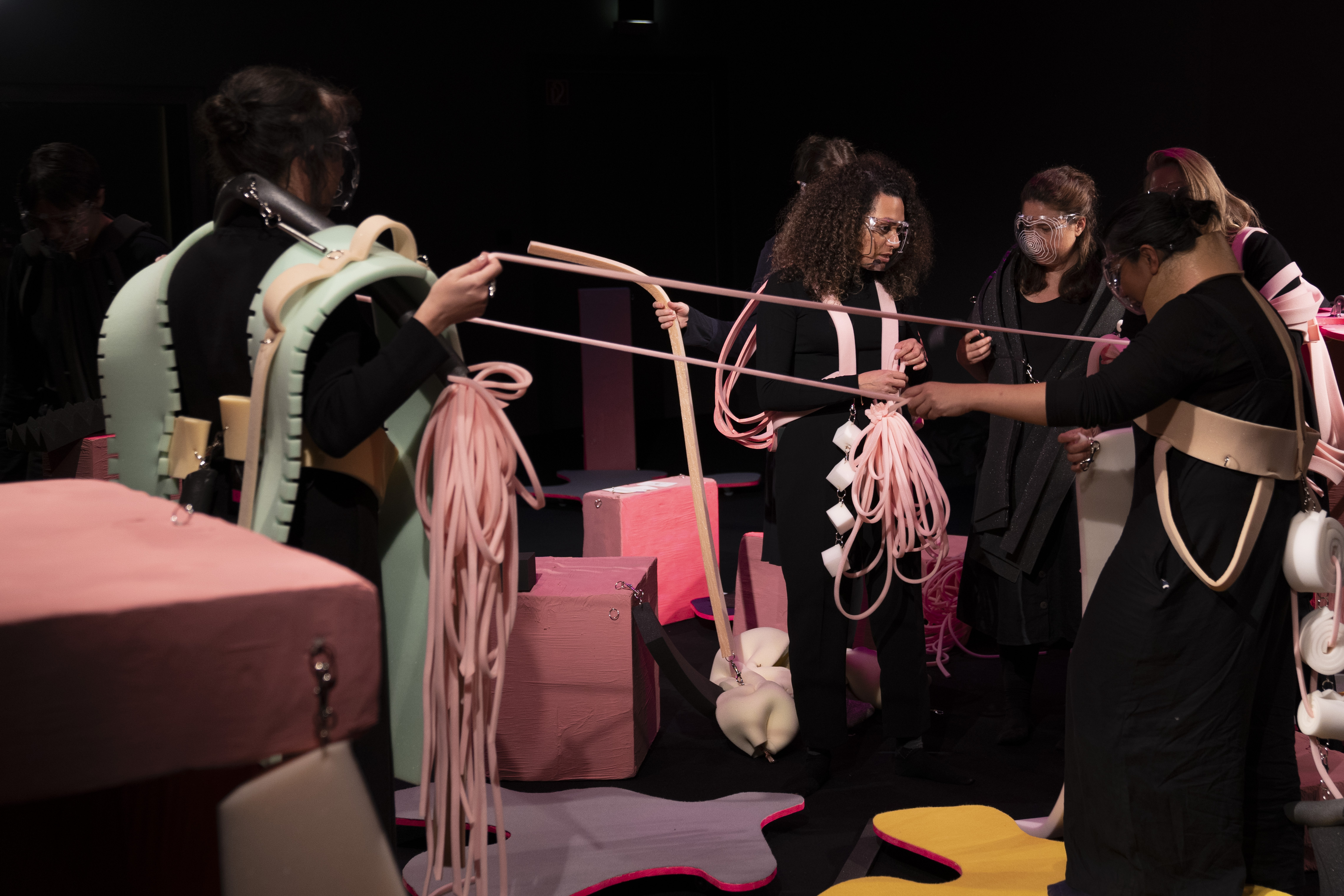
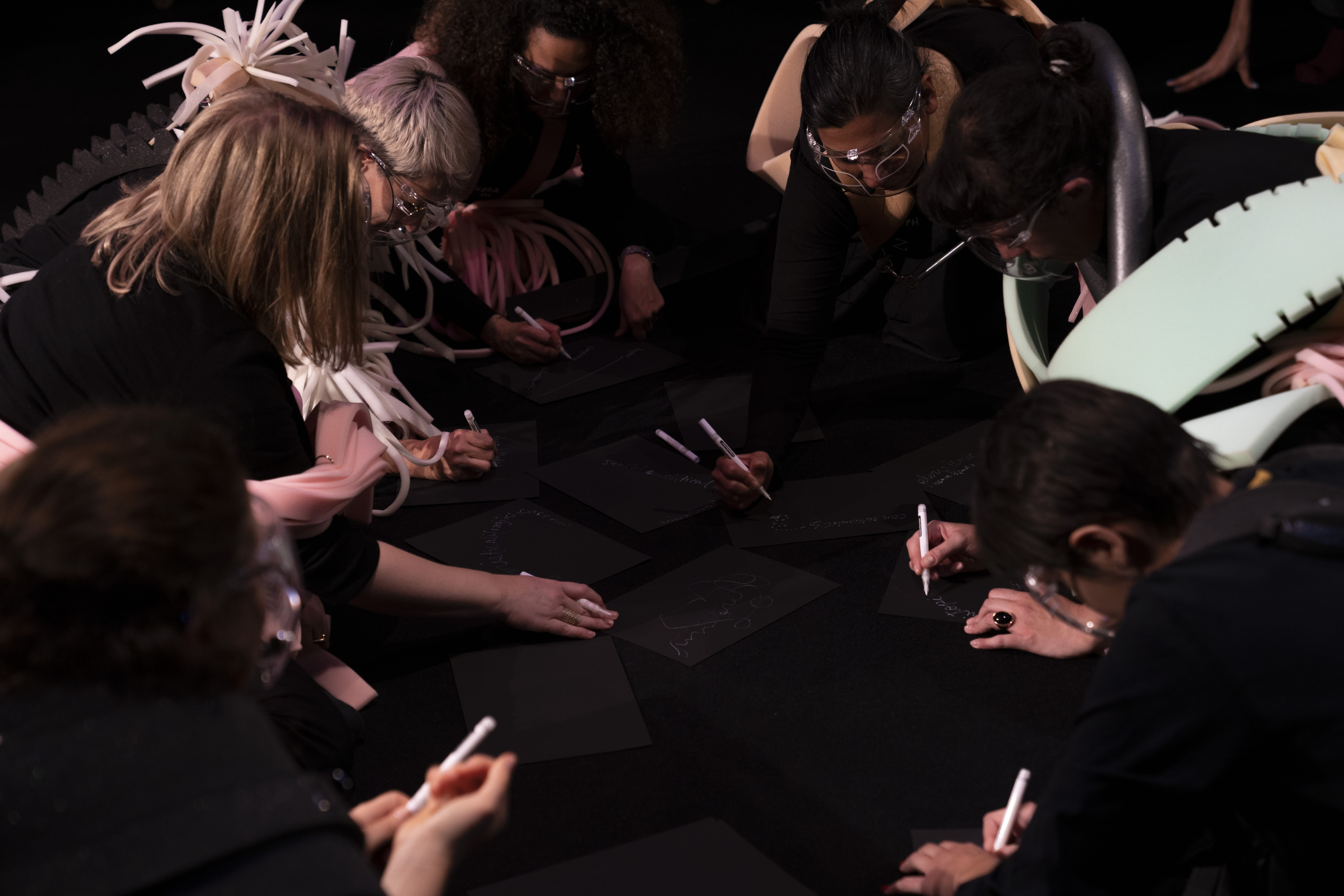
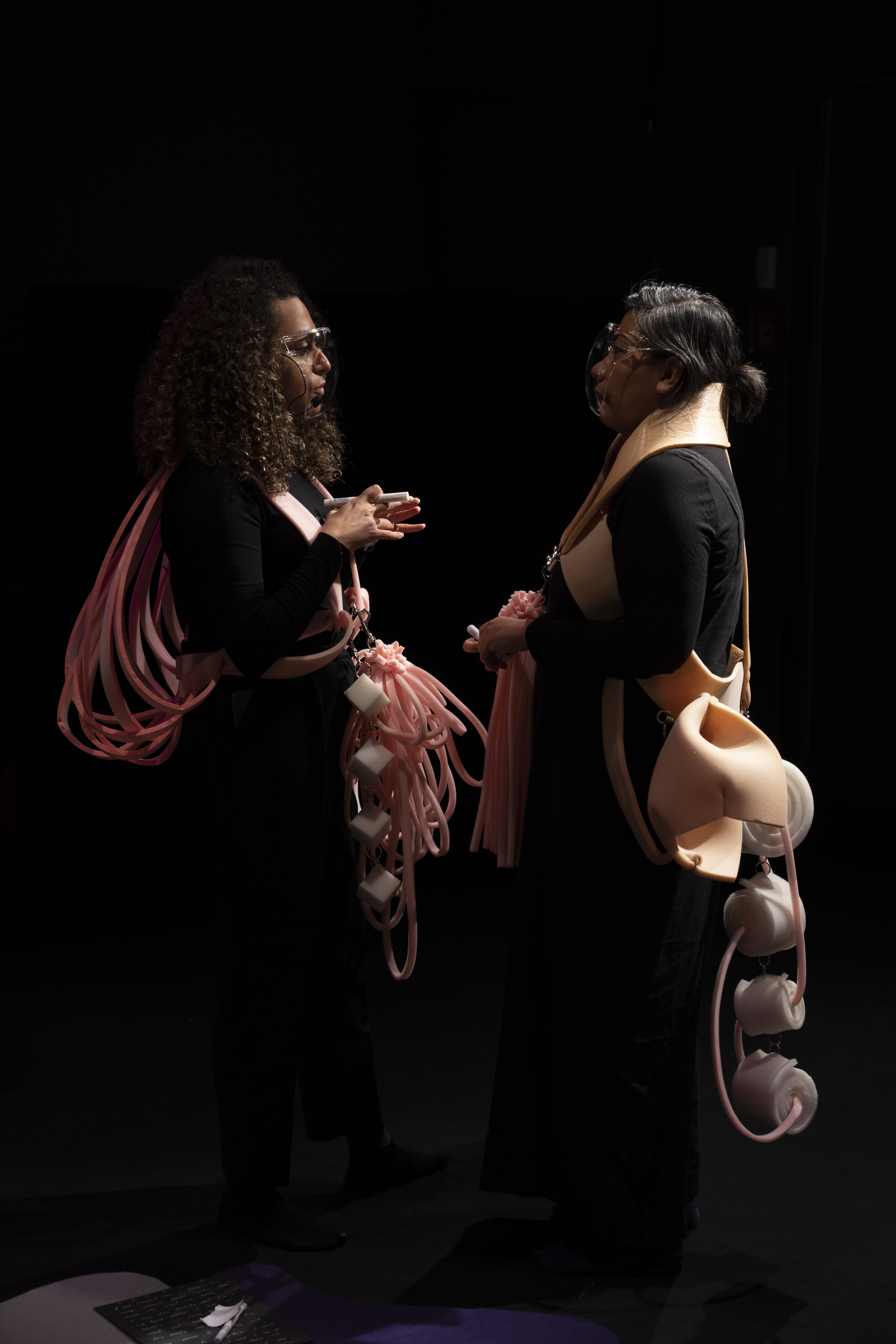

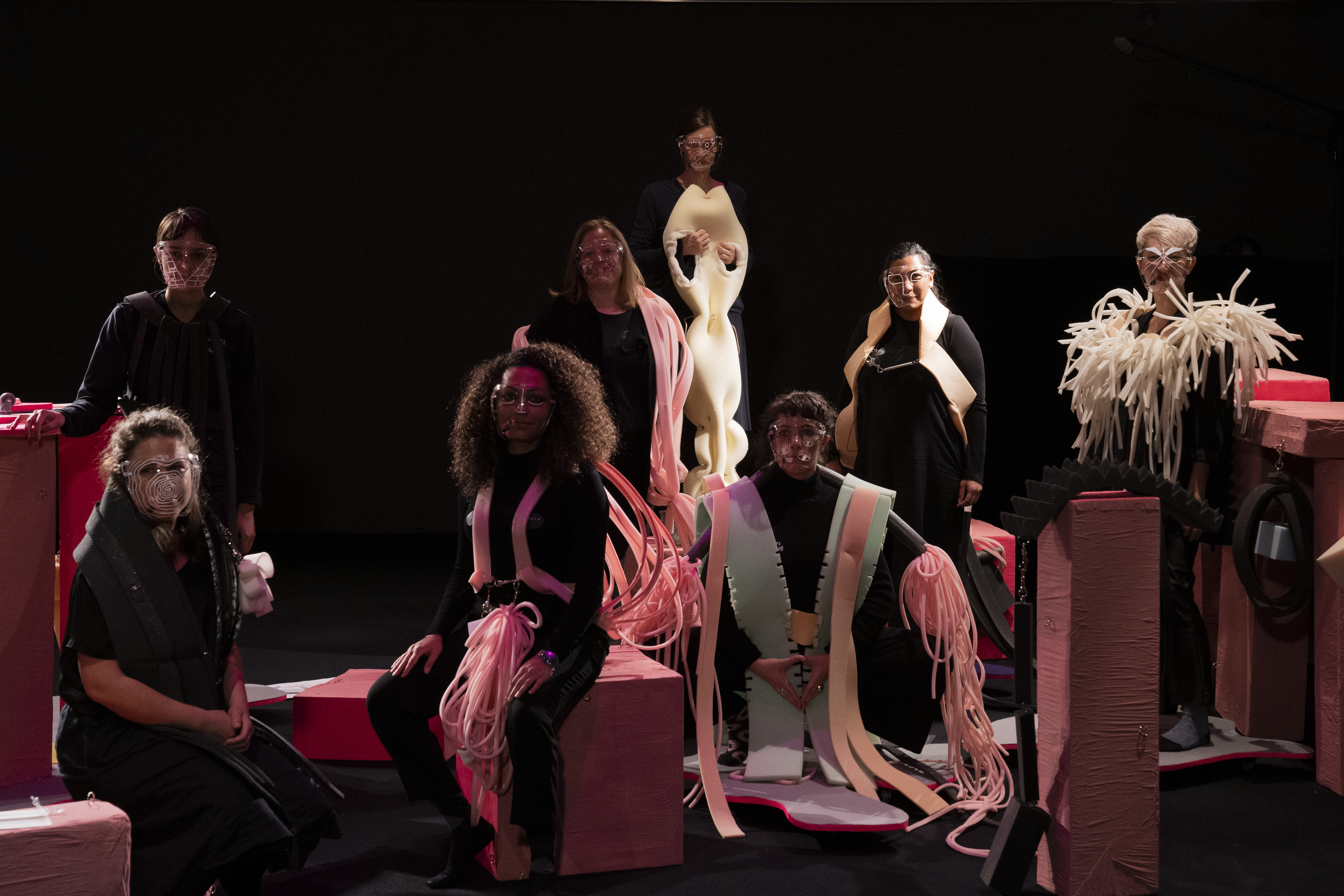
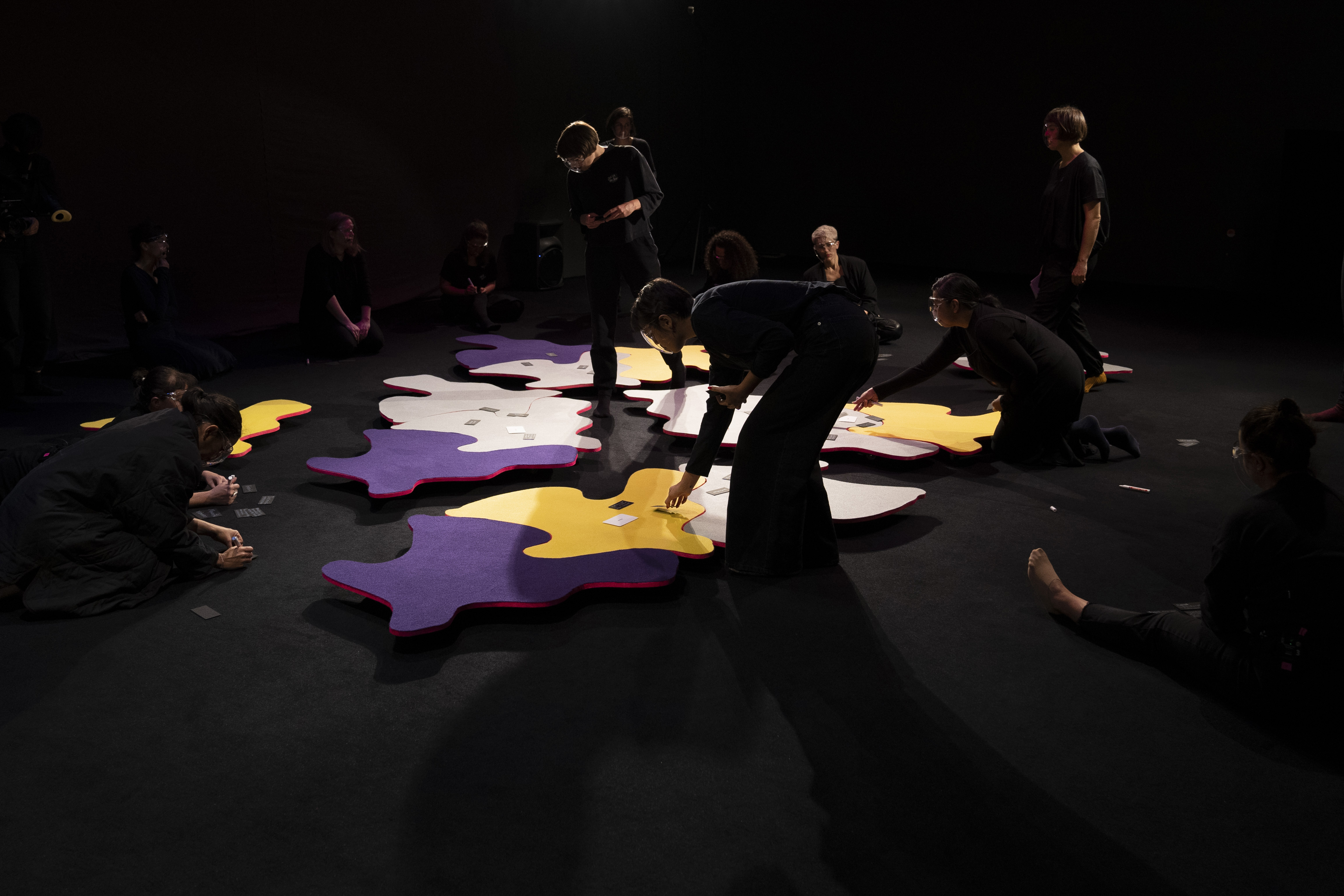
Ana de Almeida, Alicja Rogalskaand & Vanja Smiljanic
NOVA. Future thoughts on surviving together (2020 AT)
Live Action Role Play
In the future, gender inequality was erased. Nova is a multitude of newly born, radically inclusive and self-managed communities. Heterogeneous in their forms of commoning and social organization, Nova share a vow to never let oppression in any form rise again. Nova. Future thoughts on surviving together is a feminist futurist LARP - Live Action Role Play by Ana de Almeida, Alicja Rogalska and Vanja Smiljanić; directed towards feminist and queer-feminist activists based in Vienna. NOVA is a day of speculative gaming aimed at sharing survival strategies, exercising solidarity and intersectionality, creating solidarity networks and forming new alliances between different emancipatory movements. Together, we created a piece of feminist political fiction - a work in progress and a world free of patriarchal oppression in the making.
With: VBKÖ, Saloon Wien, Kunst & Kind, Latinxs Unidxs, Kültür Gemma, Cine Collective, Mala Sirena, female:pressure.


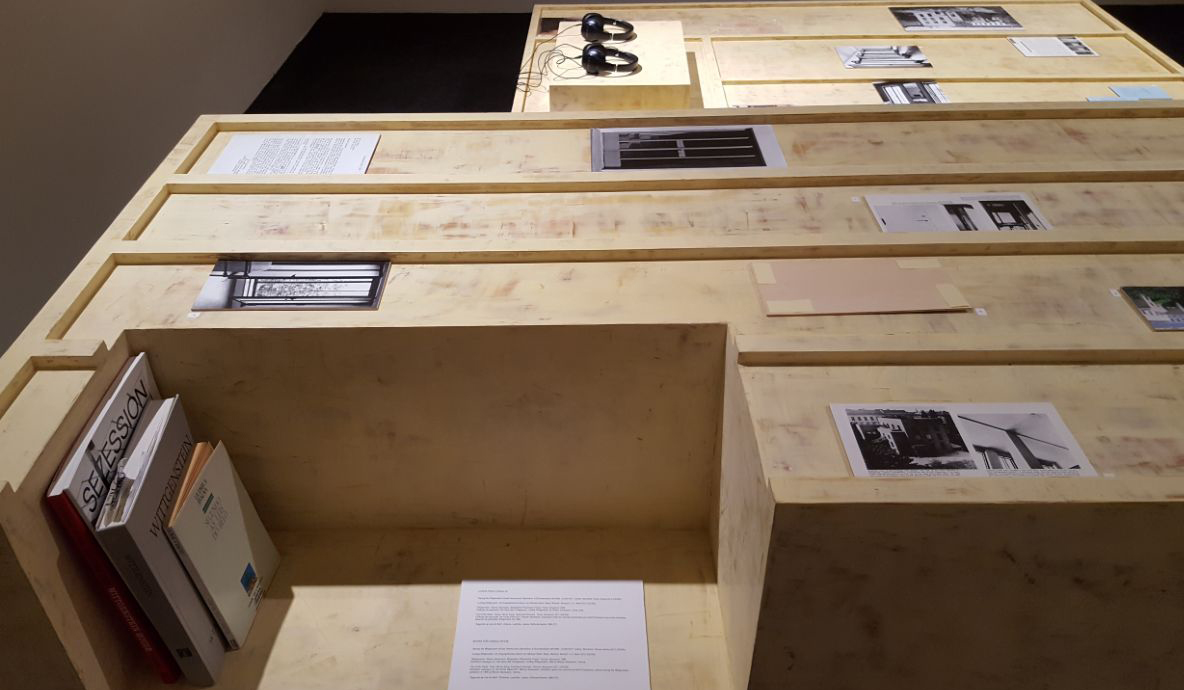
A Casa / The House The flat / Die Fläche (2018 PT)
MDF, stucco-lustro, stereo sound 42'5'' looped
Likewise a sculpture, A Casa (The House) shares the aesthetic and architectonic language of the House Wittgenstein in Vienna. The two volumes are a transposition and folding down of two of its architectonic elements: a window and the vestibule door. They serve as display for documental material such as letters and photos and incorporate an audio piece with interviews led by the artist. The surface is covered by stucco-lustro, a coating technique proliferating in Vienna on the turn to the 20th century, similar to how could the original coating of the walls of the House Wittgenstein have looked like before they were painted white after World War II. The highlighting of the stucco-lustro architectonic detail points out to a fundamental discovery for the understanding of the house as aesthetic experiment in which the house interiors, composed by materials which evoke extreme hardness, seem to dematerialize through the highly reflecting properties of the stucco walls.

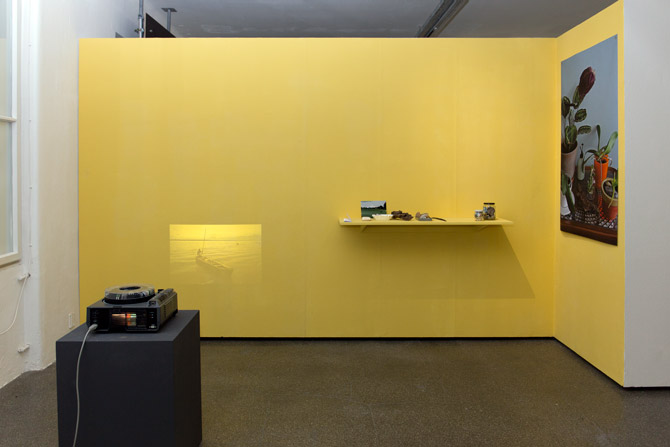
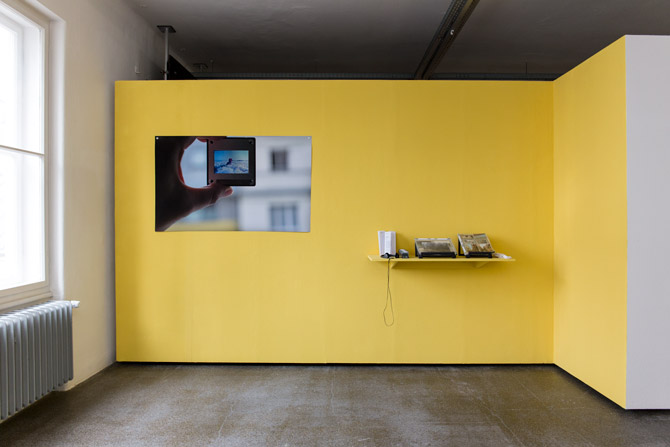
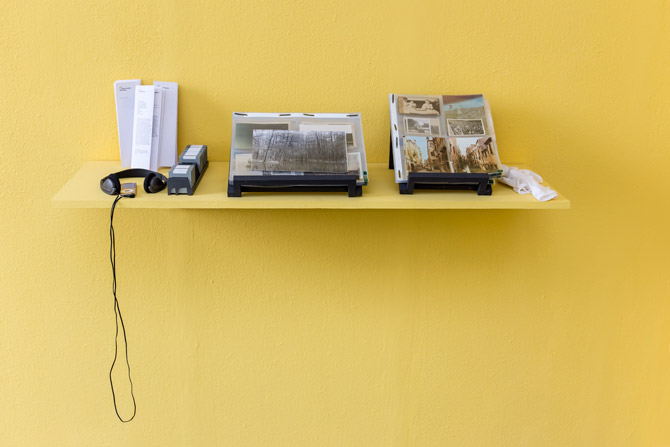
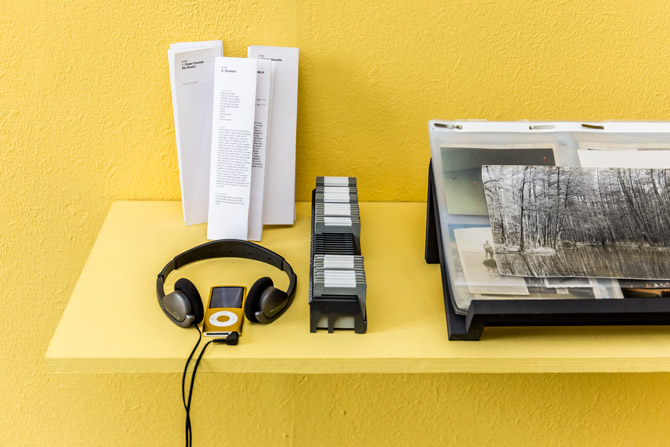
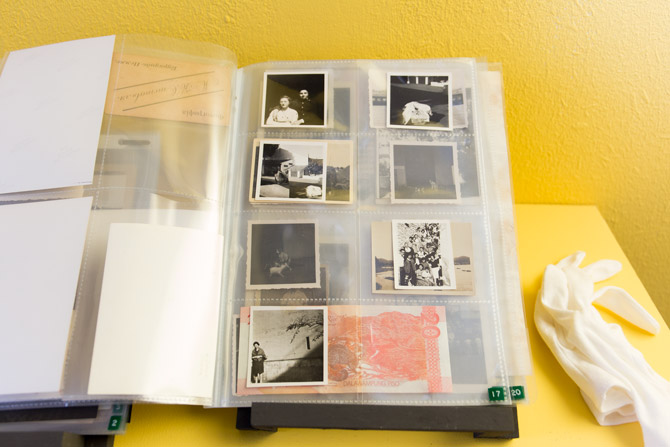
Photos: © Ana de Almeida & Stephanie Misa
Untitled (Yellow) (2017 PT)
Wall, yellow paint, memorabilia, diashow, stereo sound
A cooperation between Ana de Almeida (PT/AT) and Stephanie Misa (PH/AT) . This is a project about landscape as formal and informal disposition of elements. Coordinates. An arrangement, a hierarchy: borders and de-limitations, transpositions and transgressions, frames and their inside-outside, margins, and of course landscape — of the geographical, political, personal, and emotional nature. Edouard Glissant’s Traité du Tout-Monde. (Poétique IV), calls it archipelagic thinking, a group of islands that lends its topography to an alternative imaginary: a reassessment of the insularity of bound cultures, of nation-states, and the heaviness of “continental thought”. The archipelago is an alternative imaginary, one that posits that identity could be as a conglomeration of islands (composed of many, yet is one). Identity formation, embodiment, complex colonial histories, evolution, interconnectedness, diaspora and change — Oh to dispell the oppressive idea of nationalistic wholeness!

NAOMI RINCÓN GALLARDO
“Home
is where my
art beats”
#ARTS-BASED RESEARCH #COMMONS #INSTALLATION #MULTIMEDIA #IDENTITY #NEO-COLONIAL #VIDEO #GENDER
BIO. Naomi Rincón Gallardo (1979) is a visual artist/researcher currently living and working in Mexico City. Her mythical/political fabulations address the creation of counter-worlds in neo-colonial settings. From a cuir/decolonial perspective she integrates her interests in speculative fiction, theater games, music videos and vernacular festivities and crafts. Alongside her artistic work, she has been involved in institutional and non-institutional educational settings and community projects, both teaching and coordinating. She completed her PhD degree at the Academy of Fine Arts Vienna. She is currently supported as a Miembro del Sistema Nacional de Creadores de Arte 2019.
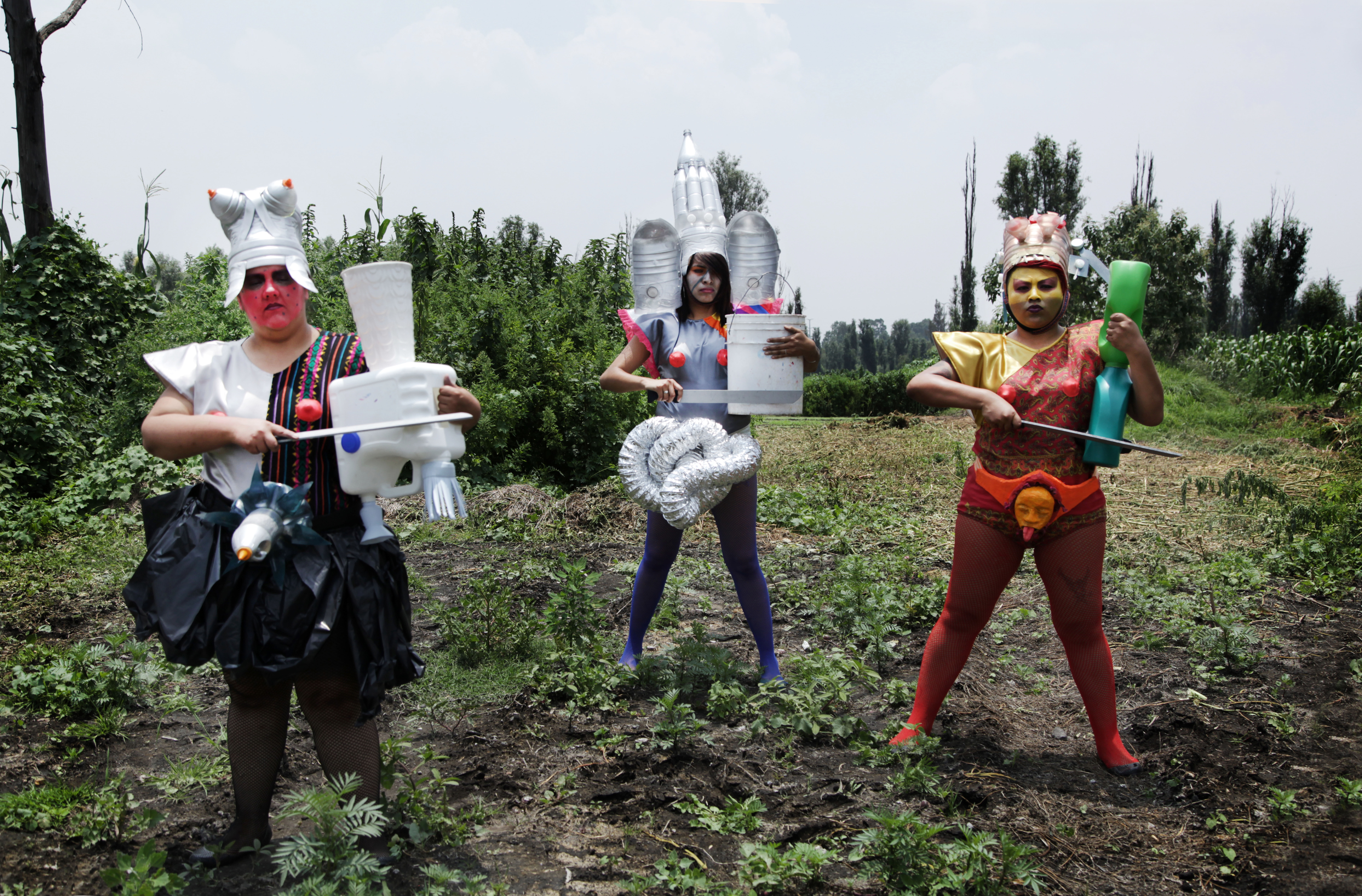
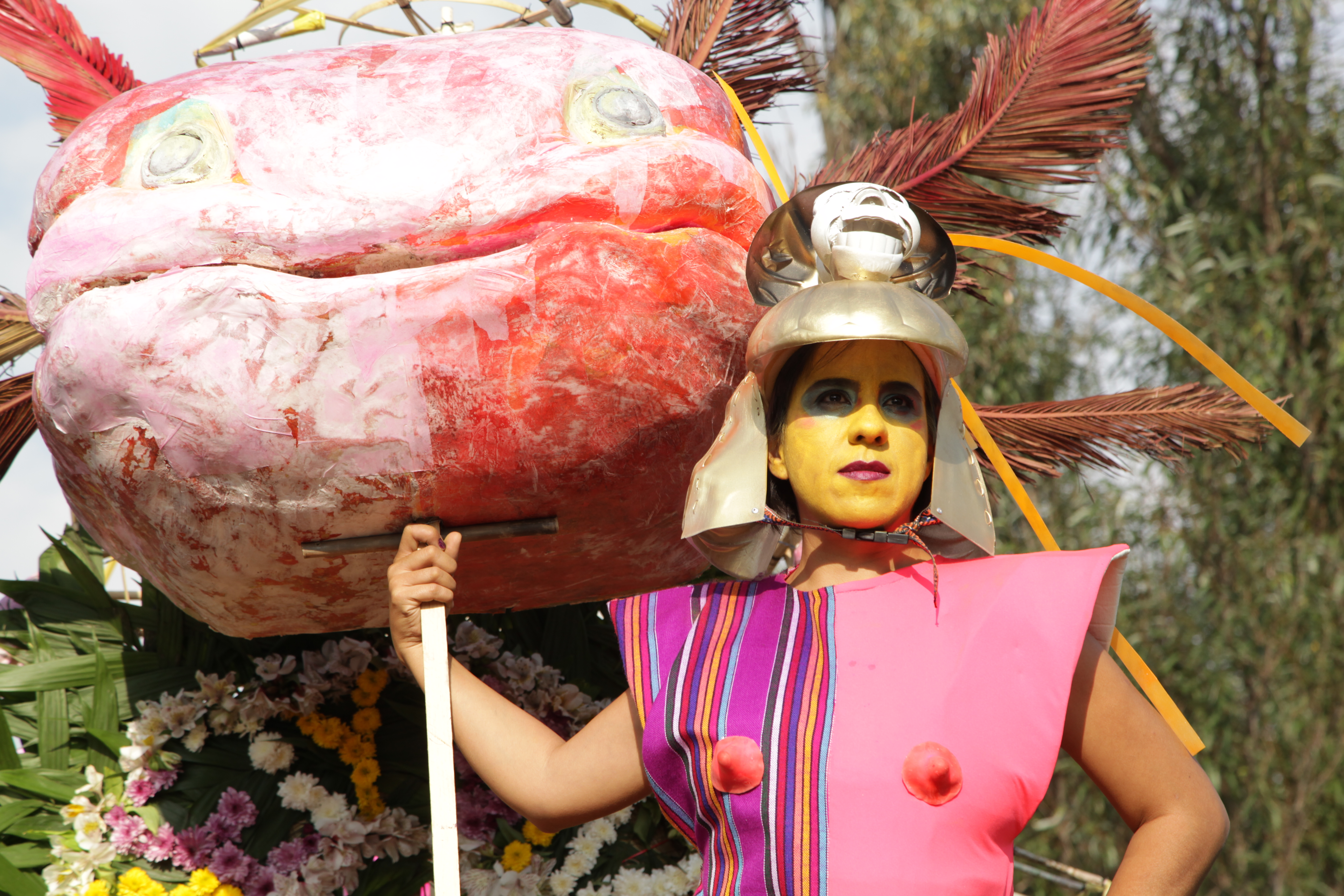
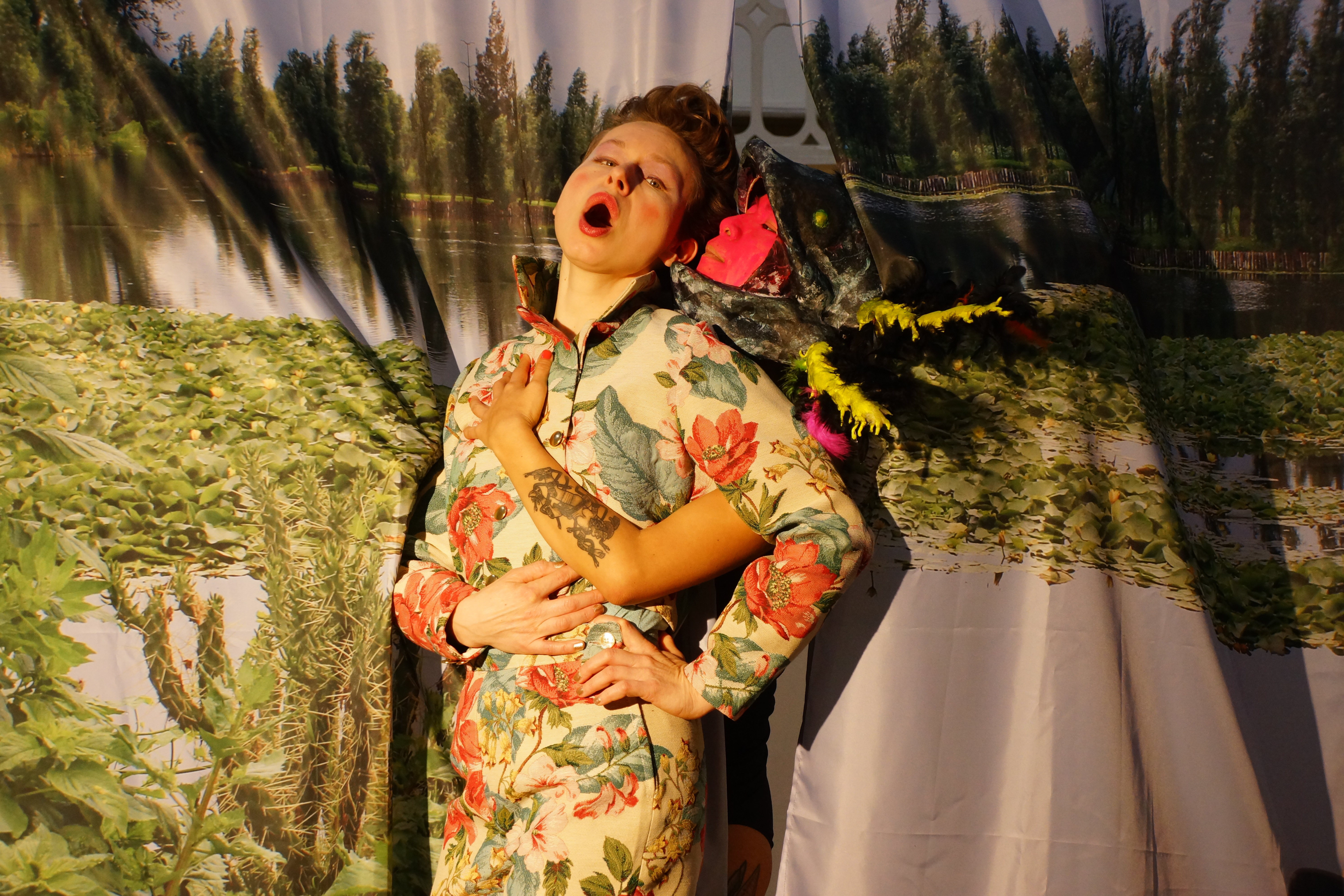
Photo: © Naomi Rincón Gallardo
The Formaldehyde Trip (2017)
Video/Performance
The Formaldehyde Trip imagines murdered Mixtec environmental activist, Bety Cariño (1973-2010) in her politically-surrealist trans-temporal journey through the underworld, where she finds pluriversal companions formed by Mesoamerican deities, witches and animals who joinher and care for her in order to make her legacy proliferate. Her journey is a process of becoming Coyolxauhqui, the Mexico, goddess of moon who embodies the powers of nighttime and who, according to Gloria Anzaldúa, has the faculty to recover from severe harm by putting her fragmented body together again –a faculty that Anzaldúa came to call Coyolxauhqui imperative - an axolotl preserved in formaldehyde plays the role of a story teller, a native educated guide, the object of desire/research of Alexander Von Humboldt, a multiplied dildo, a healing capsule, and a ghostly creature who travels through historical and contemporary forms of extractivism.
Heavy Blood (2018)
Video
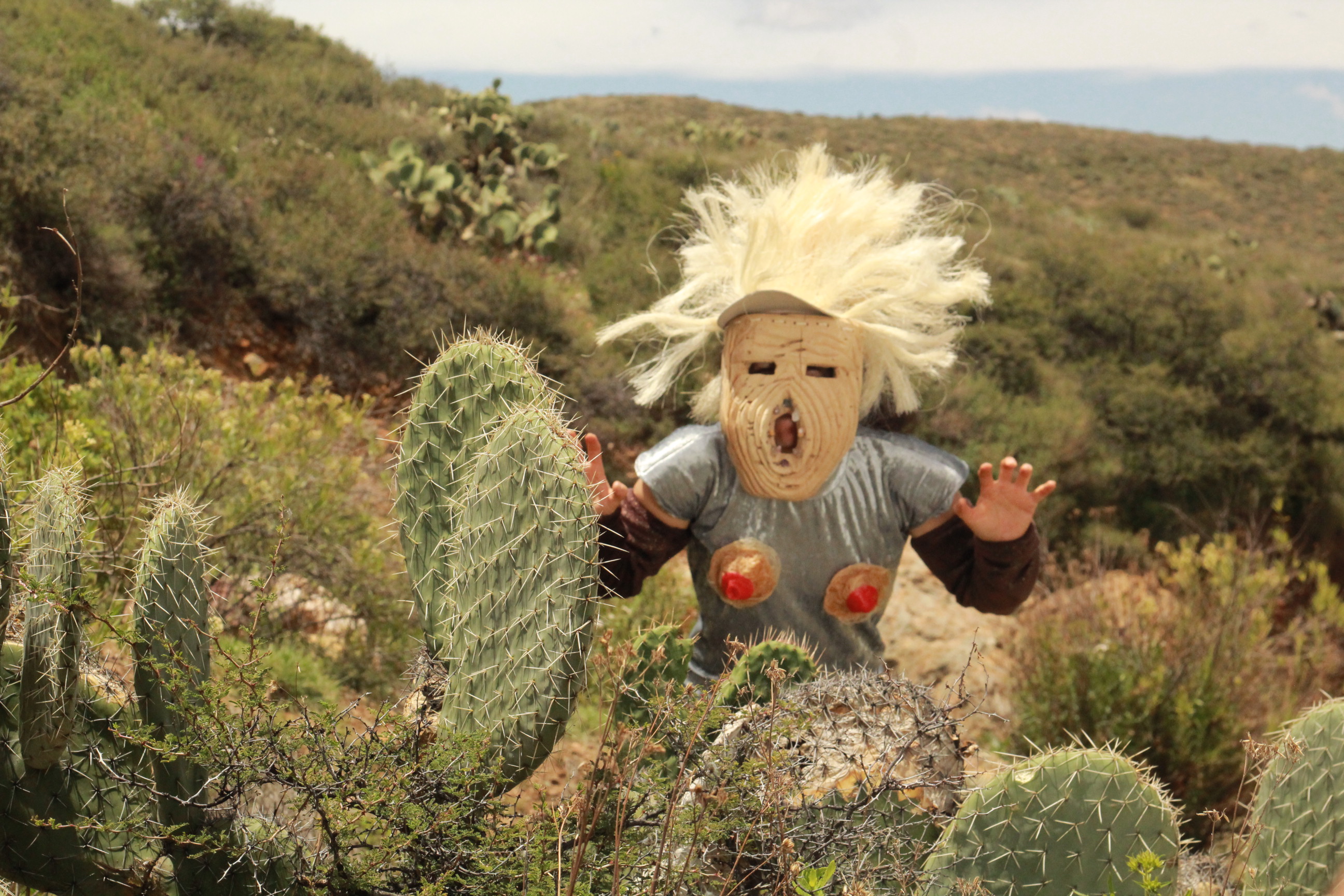
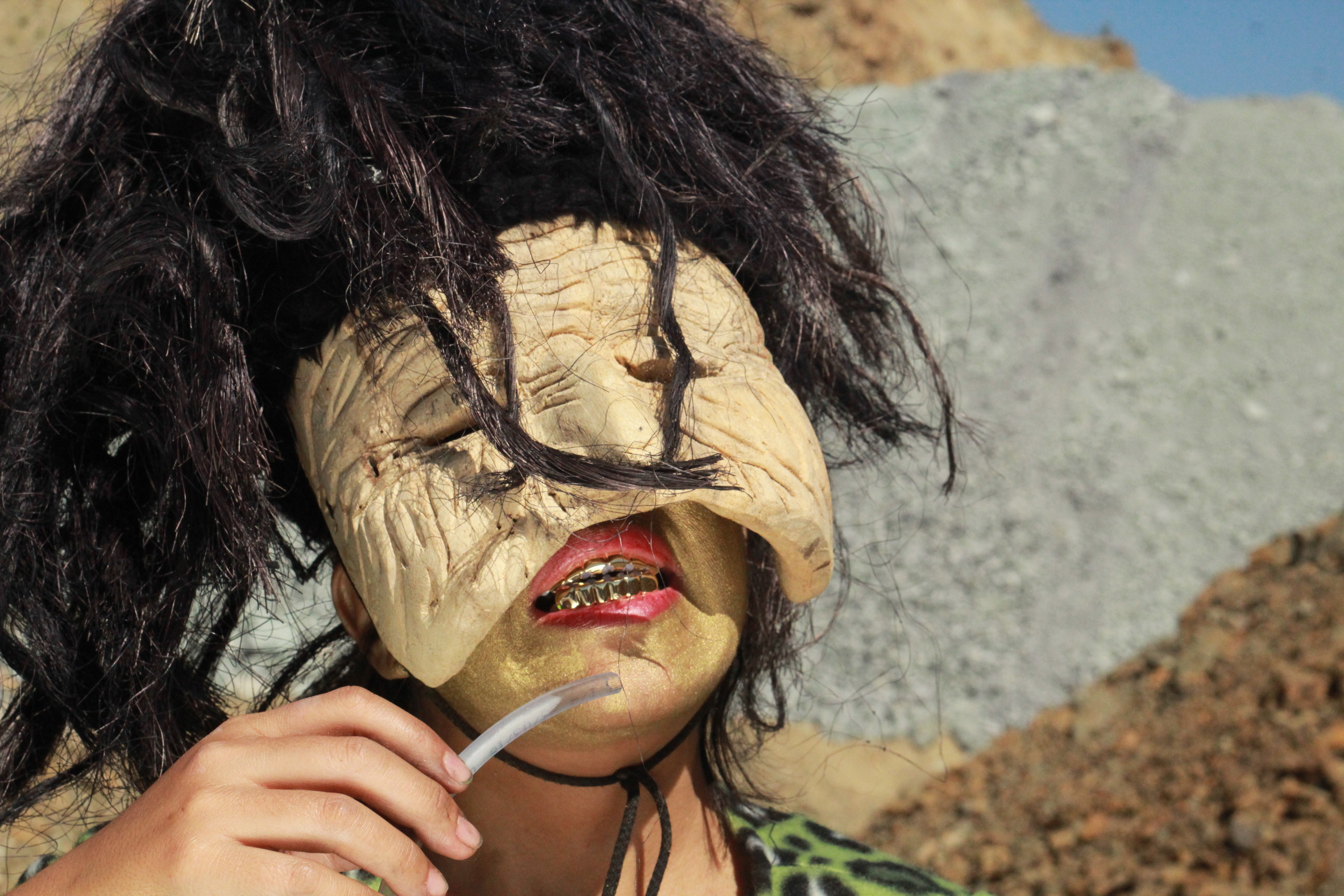
The devastated landscape of an open-pit mine in Vetagrande Zacatecas hosts ghostly creatures designing obstacles against progress. A miner and a phone sex worker’s proletarian lungs work under the demand of affective and mechanic performances for labor and pleasure. A disoriented extinct hummingbird looks for the nectar of flowers in a mining area, dwelling among crushed rocks and corrosive air. A lady with copper teeth that resembles Nahua destructive deity Tlantepuzilama, roars her non-human laments inside a cave. A gang of Mesoamerican voracious vagina-dentata-like creatures enjoy themselves and fulfill their toxic cravings, ingesting politics of inequality. Unwanted and desiring, they are trained for survival under harsh circumstances. But they want something more than survival. They want to play loud, they want to play too hard, in ecstasy.
Opossum Resilience (2019)
Video
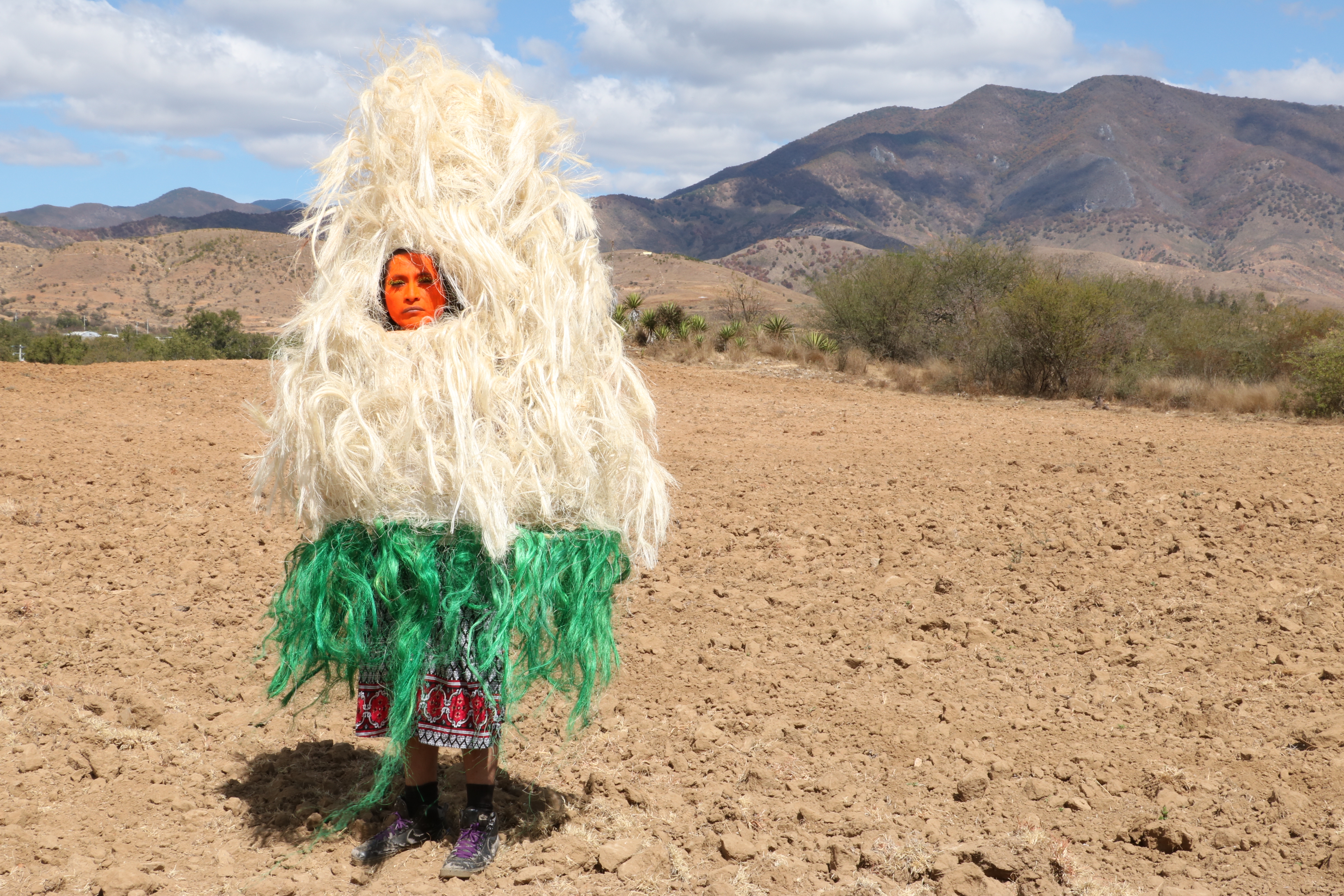
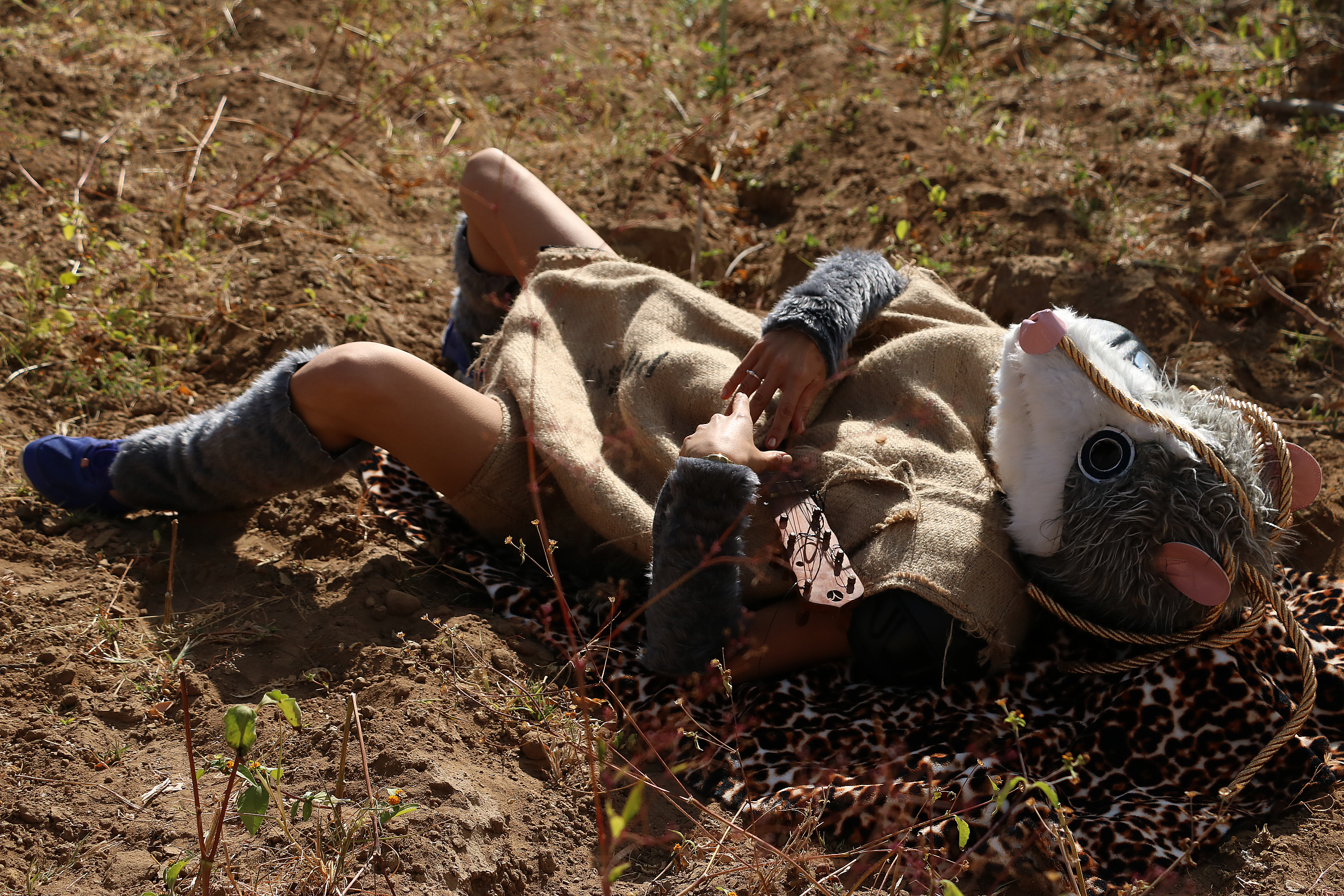
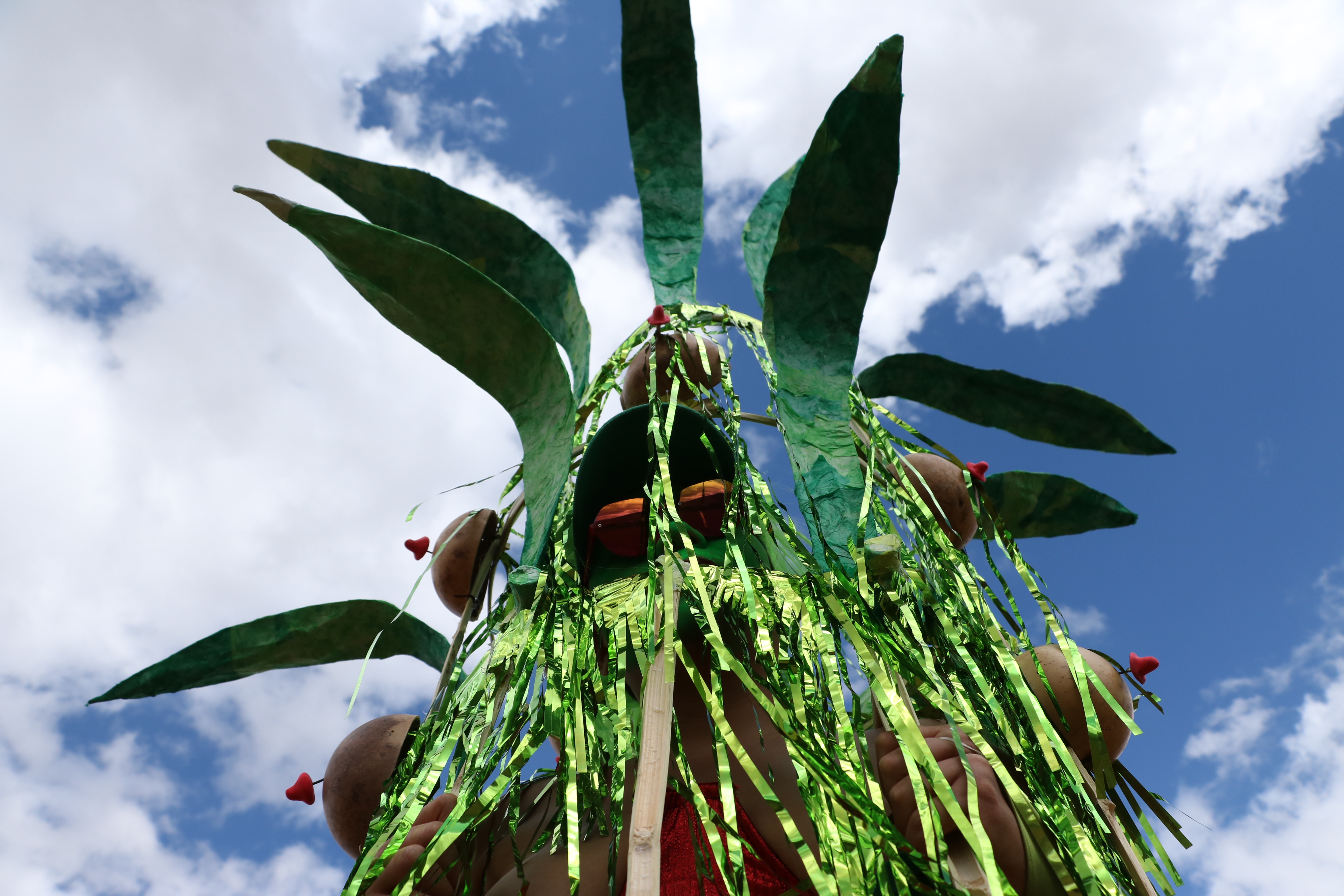
Opossum Resilience is inspired on a series of encounters and an interview I had with a Zapotec female land defender, for whom I use the pseudonym Lady Reed in order to conceal her real name. This place-based fabulation grounded in the valley of Oaxaca, Mexico, bastardizes Mesoamerican myths around four figures: a Hill, an Agave, an Opossum and Lady Reed. Lady Reed is a mythical Mixtec character who helps the opossum to cut the agave leaves in order to get its sugary alcoholic sap. Opossum Resilience overlaps the time of creation with a contemporary socio-environmental conflict around the imposition of a mining project in an Indigenous Territory. This third part of the trilogy summons the powers of festivity and inebriation; and imagines an opossum providing an activist with the mythical powers to play dead and then revive.