


ANA DE ALMEIDA
“Ficou
a ver
passar
navios.”
#ARTS-BASED RESEARCH #ARCHITECTURE #COMMONS #INSTALLATION #SPACE #MULTIMEDIA #IDENTITY #PERFORMANCE
#NEO-COLONIAL #VIDEO #GENDER
BIO. Ana de Almeida (b.1987) is an artist and author from Lisbon, currently based in Vienna. She is a member of the artists’
collective dienstag abendof
of VBKÖ and of the Interndinner collective against precarization of work in the cultural field. Her artistic practice addresses memory and remembering processes, narrative constructions that connect space and subject, and plurispatial and multilayered narratives in general.
Ana de Almeida is currently a Ph.D. candidate at the Academy of Fine Arts of Vienna, pursuing a doctoral thesis about the production of images in the 1974—1989 inter-revolutionary space between the Carnation and the Velvet Revolutions.
Ana de Almeida is currently a Ph.D. candidate at the Academy of Fine Arts of Vienna, pursuing a doctoral thesis about the production of images in the 1974—1989 inter-revolutionary space between the Carnation and the Velvet Revolutions.
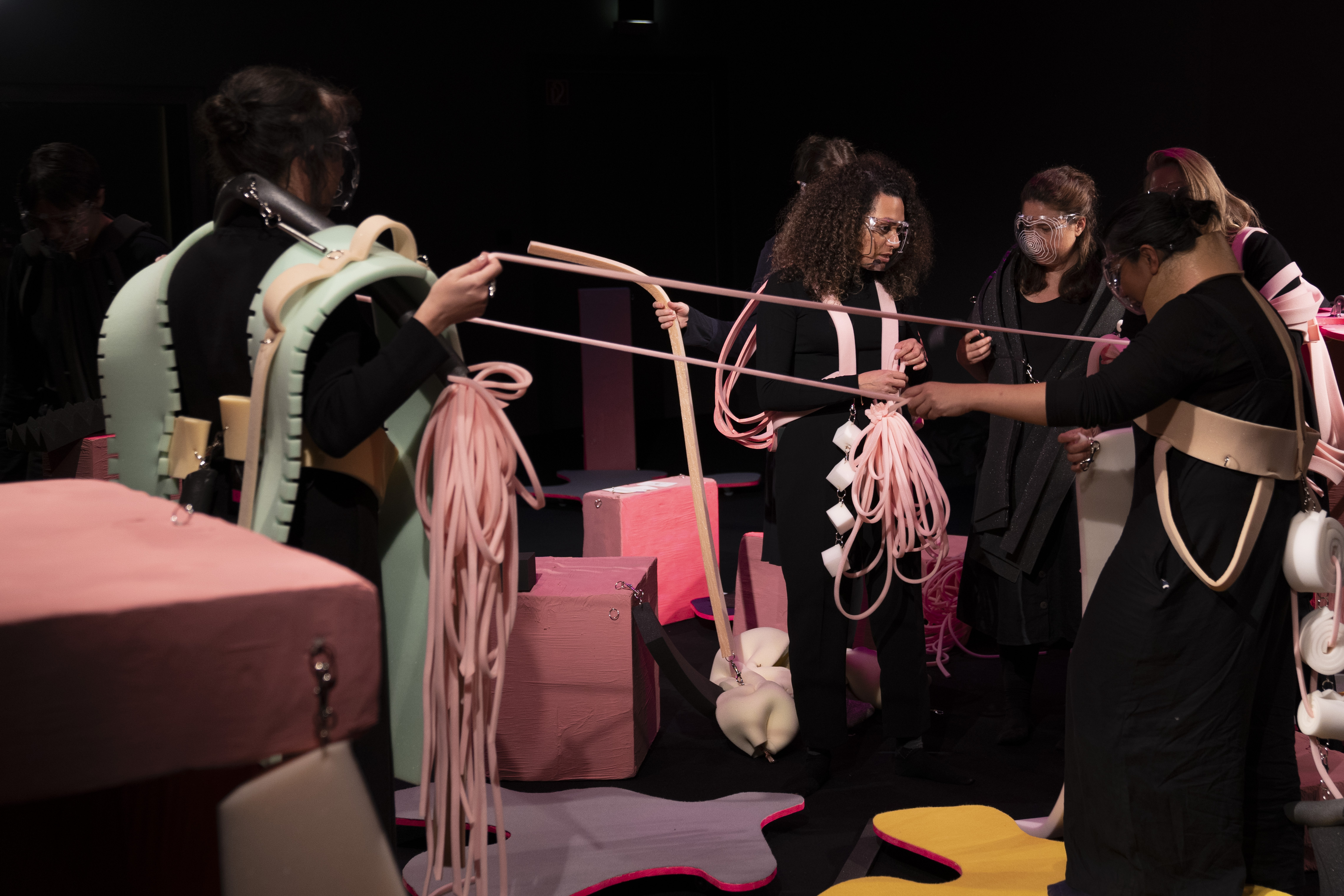
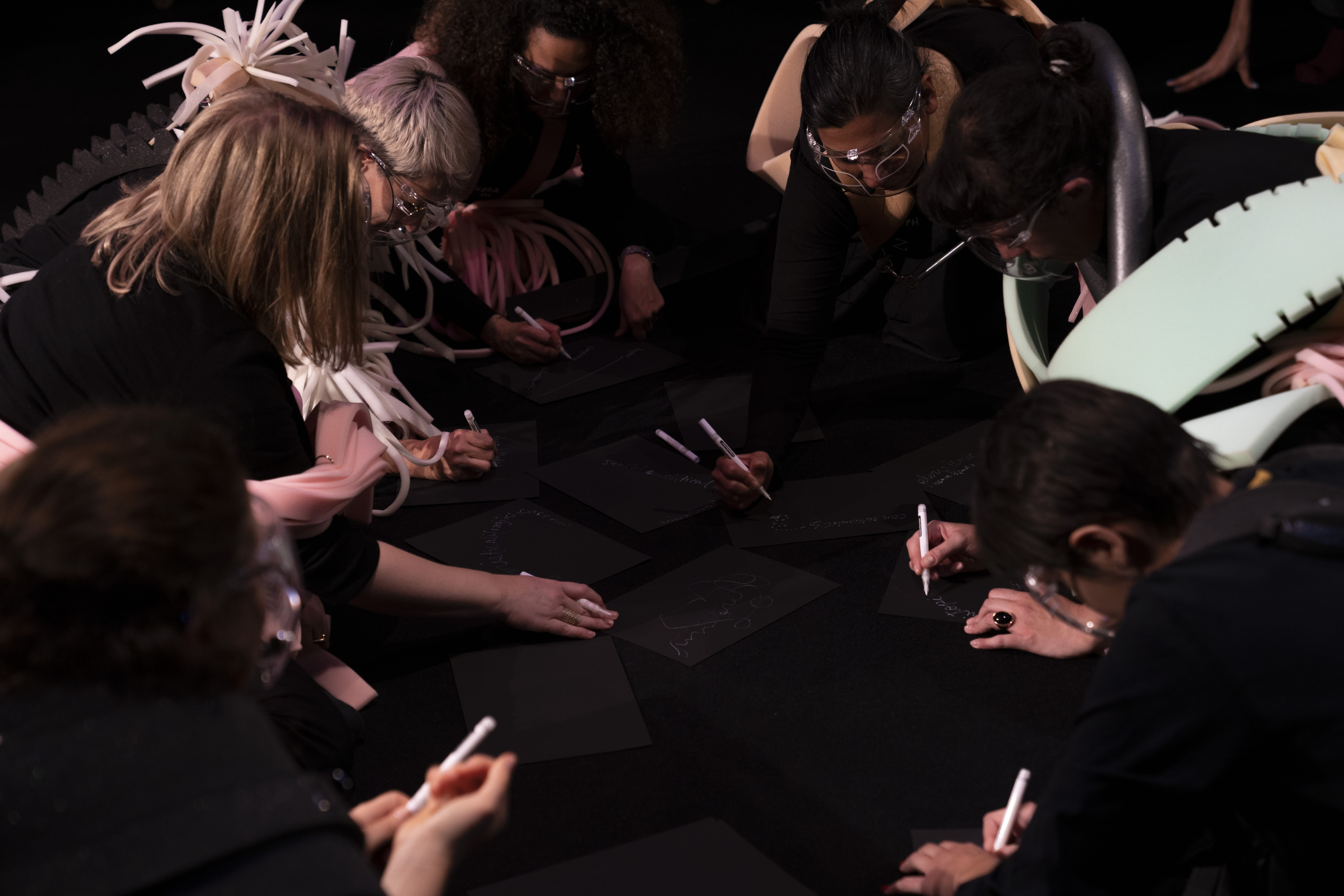
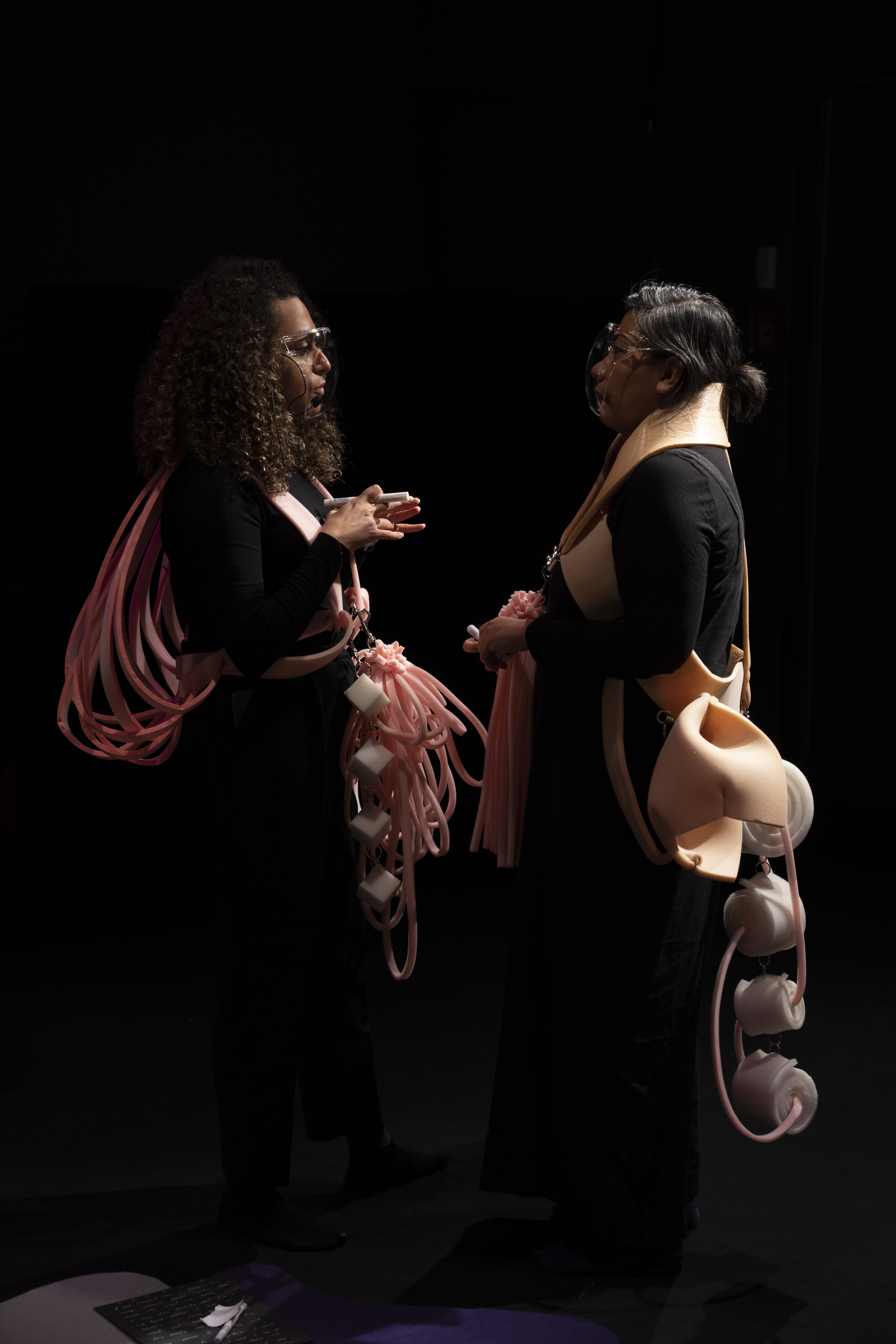

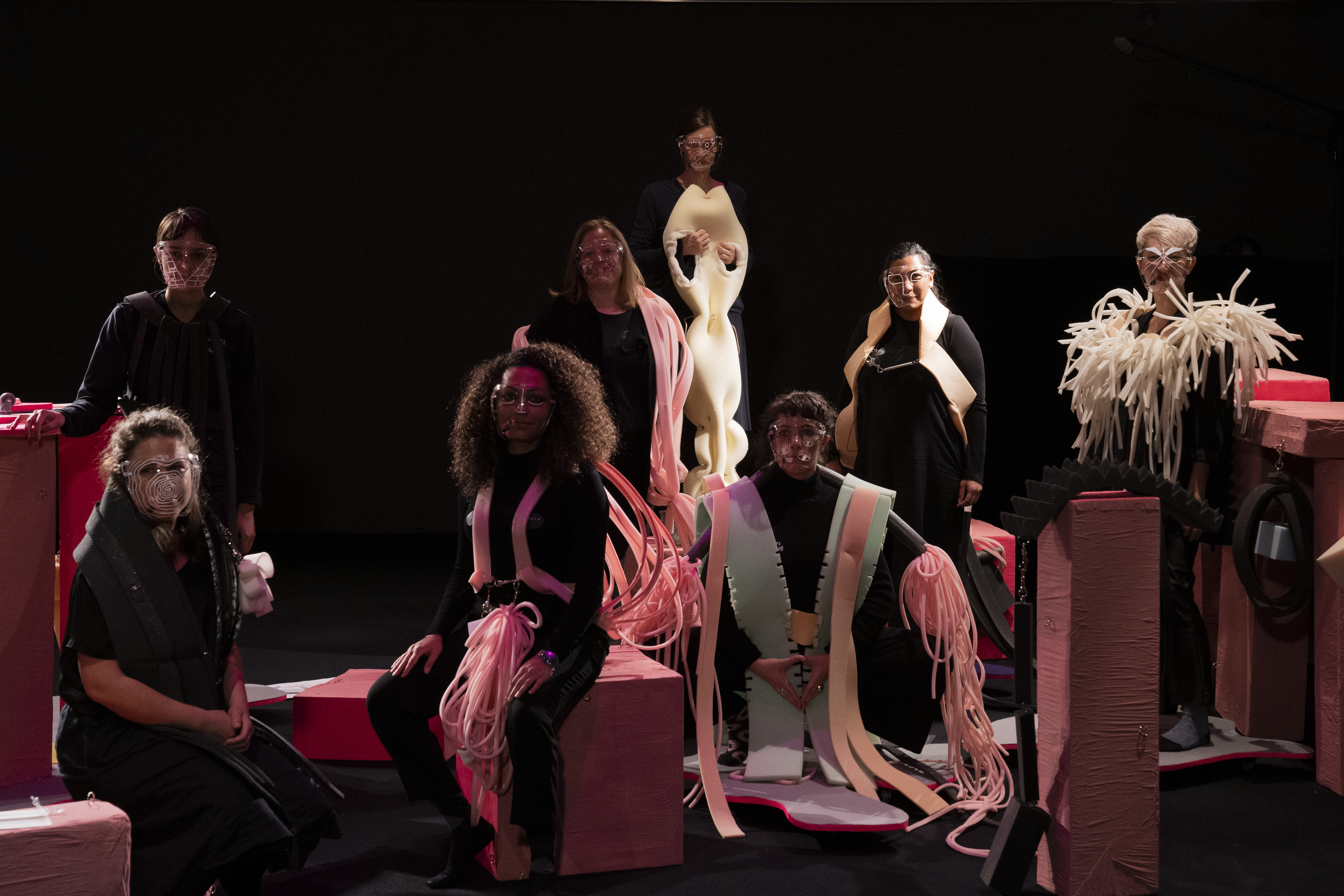
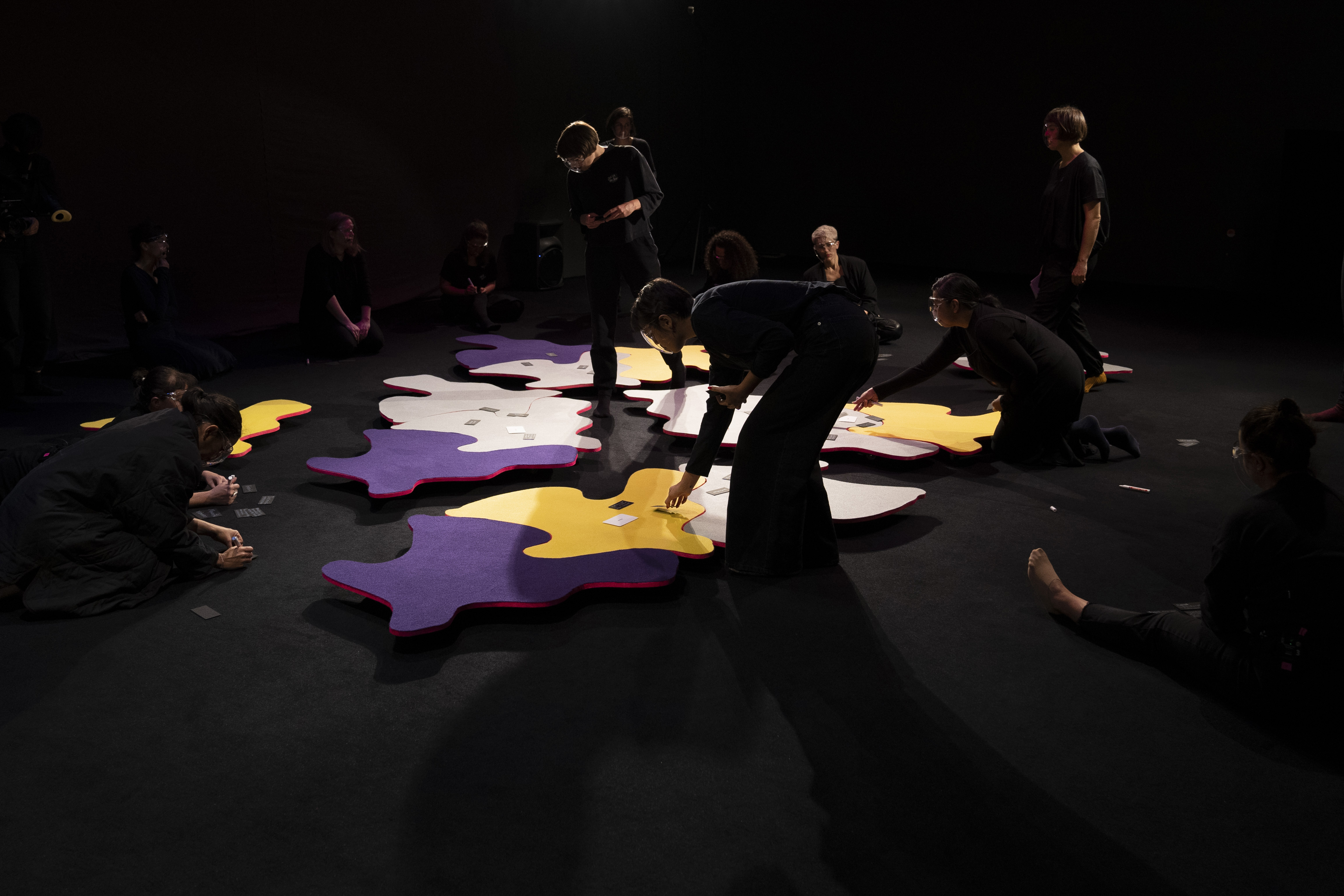
Ana de Almeida, Alicja Rogalskaand & Vanja Smiljanic
NOVA. Future thoughts on surviving together (2020 AT)
Live Action Role Play
In the future, gender inequality was erased. Nova is a multitude of newly born, radically inclusive and self-managed communities. Heterogeneous in their forms of commoning and social organization, Nova share a vow to never let oppression in any form rise again. Nova. Future thoughts on surviving together is a feminist futurist LARP - Live Action Role Play by Ana de Almeida, Alicja Rogalska and Vanja Smiljanić; directed towards feminist and queer-feminist activists based in Vienna. NOVA is a day of speculative gaming aimed at sharing survival strategies, exercising solidarity and intersectionality, creating solidarity networks and forming new alliances between different emancipatory movements. Together, we created a piece of feminist political fiction - a work in progress and a world free of patriarchal oppression in the making.
With: VBKÖ, Saloon Wien, Kunst & Kind, Latinxs Unidxs, Kültür Gemma, Cine Collective, Mala Sirena, female:pressure.


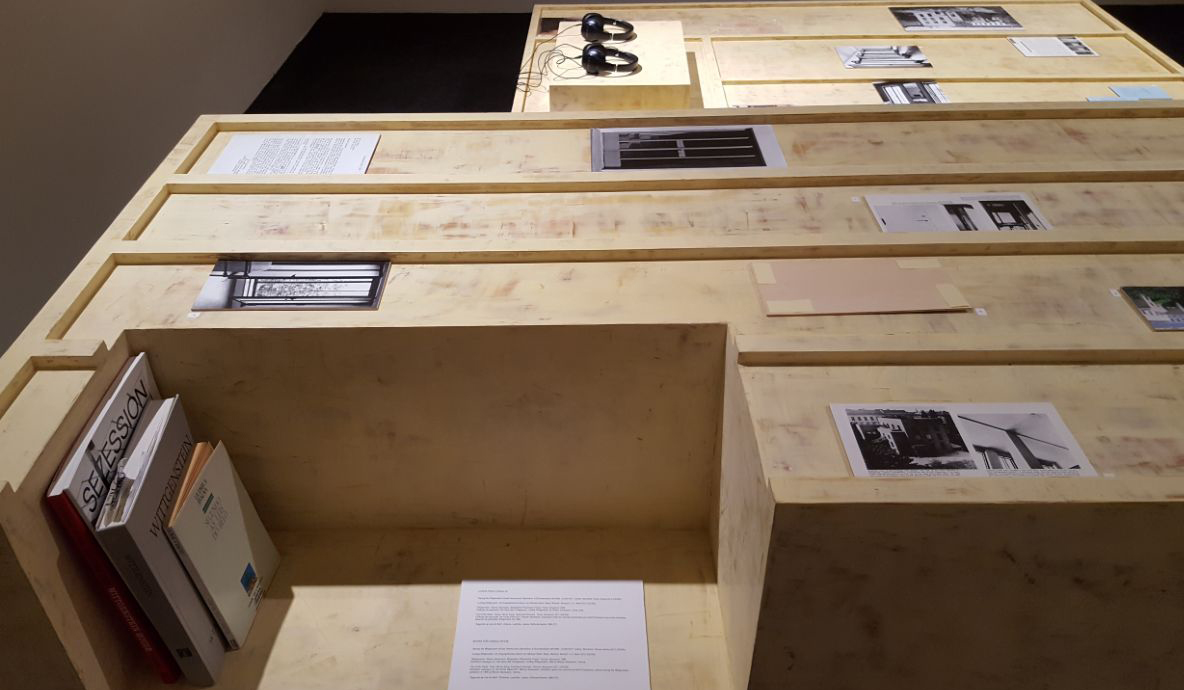
A Casa / The House The flat / Die Fläche (2018 PT)
MDF, stucco-lustro, stereo sound 42'5'' looped
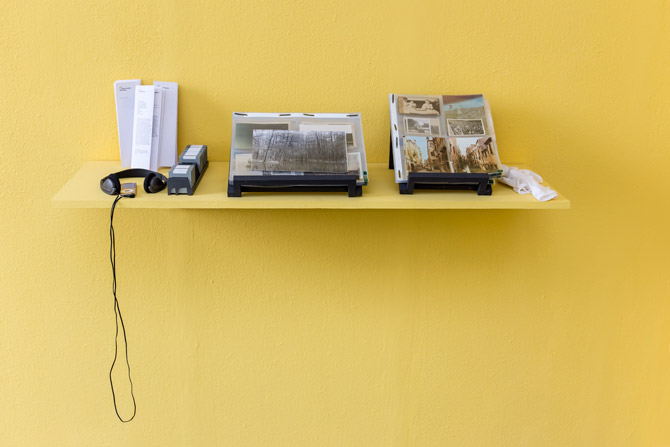
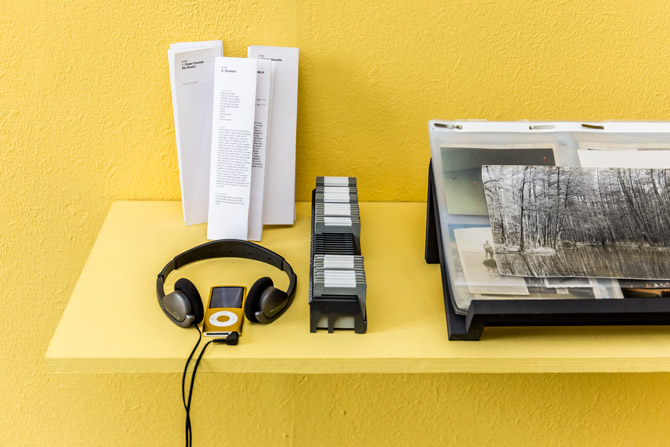
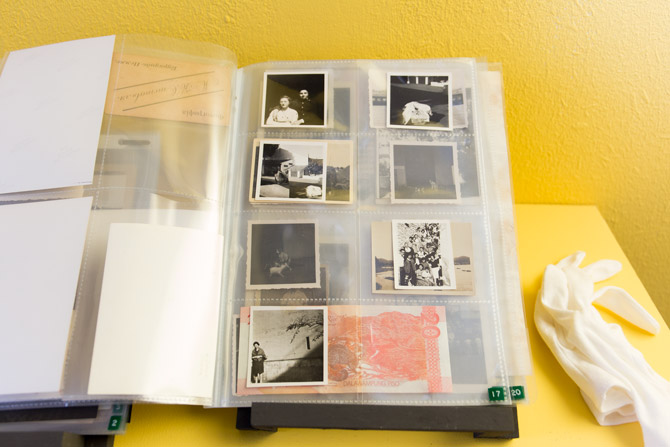
Likewise a sculpture, A Casa (The House) shares the aesthetic and architectonic language of the House Wittgenstein in Vienna. The two volumes are a transposition and folding down of two of its architectonic elements: a window and the vestibule door. They serve as display for documental material such as letters and photos and incorporate an audio piece with interviews led by the artist. The surface is covered by stucco-lustro, a coating technique proliferating in Vienna on the turn to the 20th century, similar to how could the original coating of the walls of the House Wittgenstein have looked like before they were painted white after World War II. The highlighting of the stucco-lustro architectonic detail points out to a fundamental discovery for the understanding of the house as aesthetic experiment in which the house interiors, composed by materials which evoke extreme hardness, seem to dematerialize through the highly reflecting properties of the stucco walls.

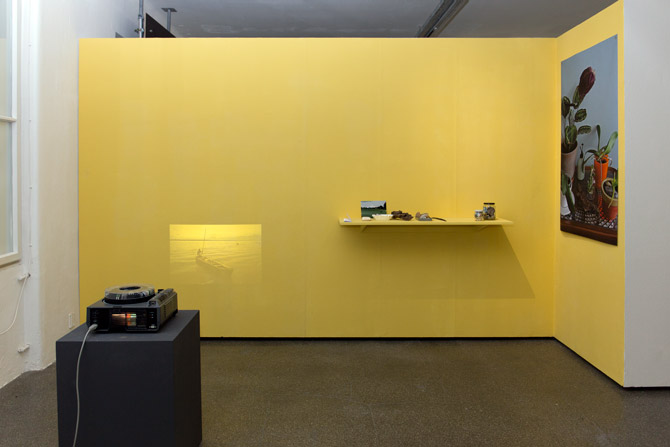
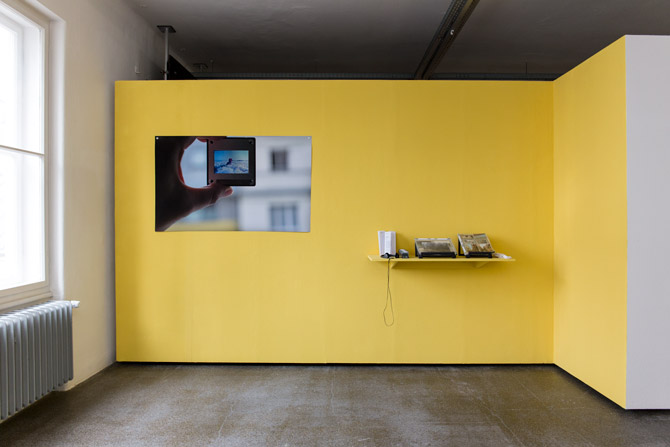
Photos: © Ana de Almeida & Stephanie Misa
Untitled (Yellow) (2017 PT)
Wall, yellow paint, memorabilia, diashow, stereo sound
A cooperation between Ana de Almeida (PT/AT) and Stephanie Misa (PH/AT) . This is a project about landscape as formal and informal disposition of elements. Coordinates. An arrangement, a hierarchy: borders and de-limitations, transpositions and transgressions, frames and their inside-outside, margins, and of course landscape — of the geographical, political, personal, and emotional nature. Edouard Glissant’s Traité du Tout-Monde. (Poétique IV), calls it archipelagic thinking, a group of islands that lends its topography to an alternative imaginary: a reassessment of the insularity of bound cultures, of nation-states, and the heaviness of “continental thought”. The archipelago is an alternative imaginary, one that posits that identity could be as a conglomeration of islands (composed of many, yet is one). Identity formation, embodiment, complex colonial histories, evolution, interconnectedness, diaspora and change — Oh to dispell the oppressive idea of nationalistic wholeness!
NATALIE DEEWAN
MULTIMEDIA ARTIS

“Internet
war
gestern!“
#ARCHITECTURE #INTERACTIVE #COMMONS #GENDER #LANGUAGE #INSTALLATION #PHOTOGRAPHY #SPACE
BIO. Natalie Deewan (*1978 in Vienna, Austria, studied French & philosophy in Vienna & Paris) works as artist with signs of different kinds. She is subvertising signs in the urban, rural & virtual space (Vienna vacancy anagrams; Graffiti Recycling & Coded Quotes; Pixendorf is spelled out) & finds Language Solutions all along the way. She is dealing in Pure, Real, Applied & Collective Literature (with a faible for lipograms & montage), Typography (Heterotypia Font Family) & deesign. In 2018, she teamed up with native signer Atilla Gum for bilingual talks involving sign language. Since 2005, she runs a curry restaurant (Der Wiener Deewan) on a pay-as-you-wish basis, together with Afzaal Deewan.
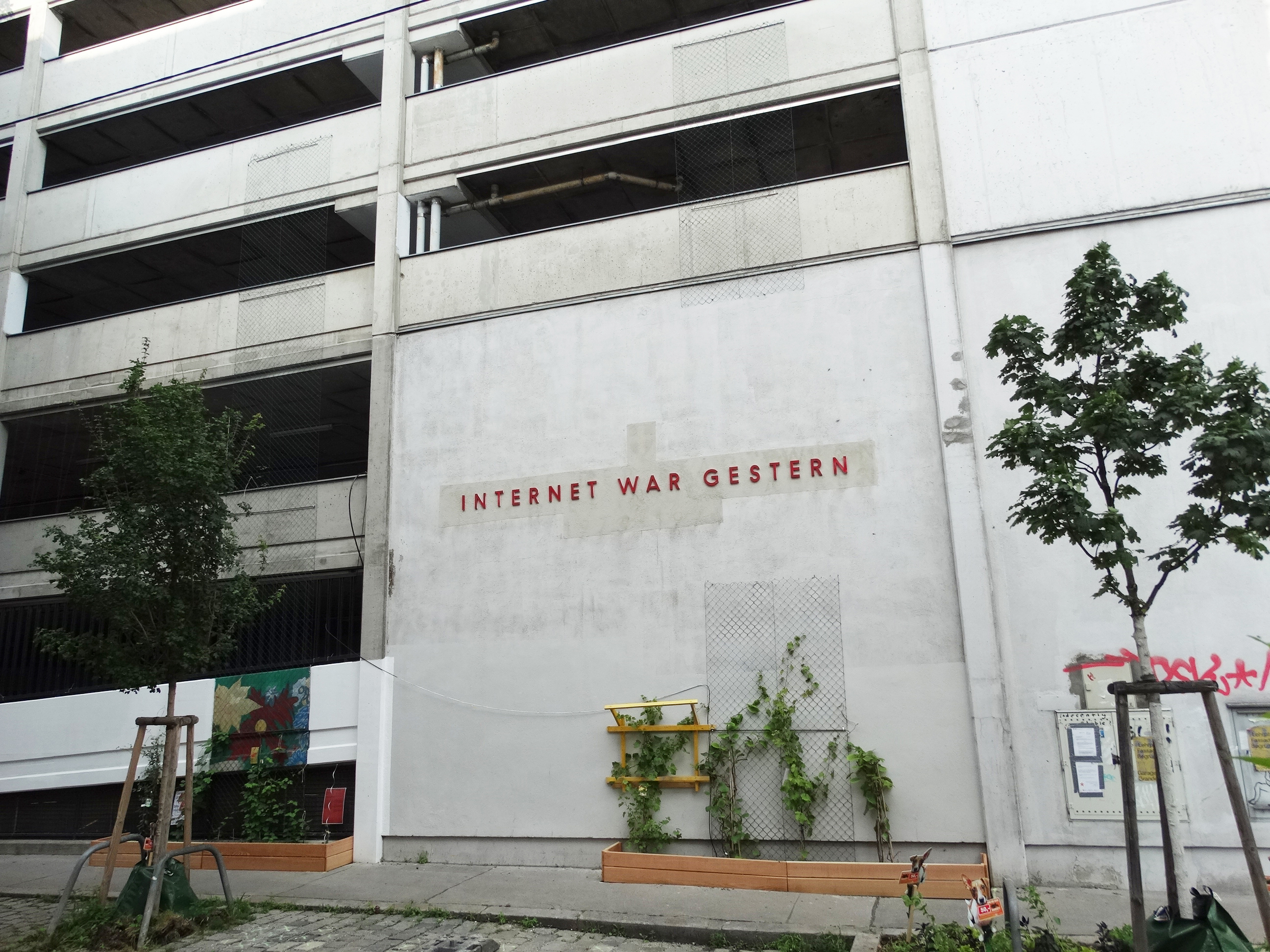
Internet war gestern (Internet was yesterday) / Leerstandsanagramm (vacancy anagram) (2020)
Installation in public space
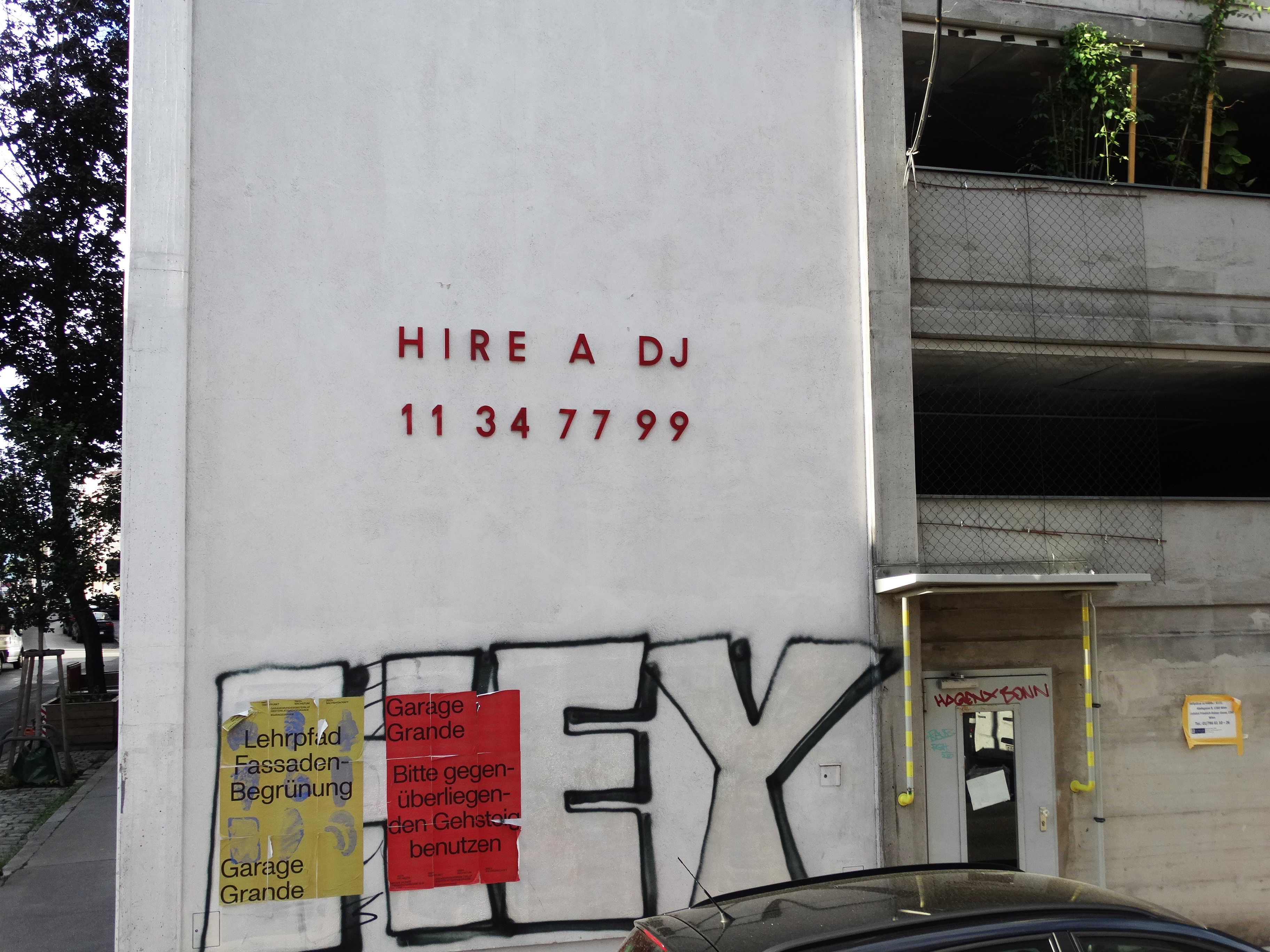
A vacant garage in Vienna's 16th district opens its 2500m2 space for interim use by the neighbourhood, including greening of façades, urban gardening, beekeeping, yoga classes, workshops for children, etc. The initiators of "GARAGE GRANDE" approached me for the transformation of the now defunct sign in classic red lettering on the formerly communal building: "GARAGE DER STADT WIEN ERRICHTET IN DEN JAHREN 1973-1974".
Using the complete set of letters, including the dash between the years (for the Ä), I produced an anagram which was mounted on all 3 sides of the building: INTERNET WAR GESTERN (= internet was yesterday, "slogan") – DIE DACHGÄRTEN (= the rooftop gardens, "title") – HIRE A DJ 11 34 77 99 ("ad").
This vacancy anagram is the 8th in a series started in 2017 that was carried out in Vienna, half of which are still visible / readable today. 23 examples of vacancy anagrams are published in the postcard booklet "Nach Geschäftsschluss. Wiener Leerstandsanagramme" (2017).

Finkenschieber (Finches' abacus) - a Statistical Sculpture (2020)
Sculpture
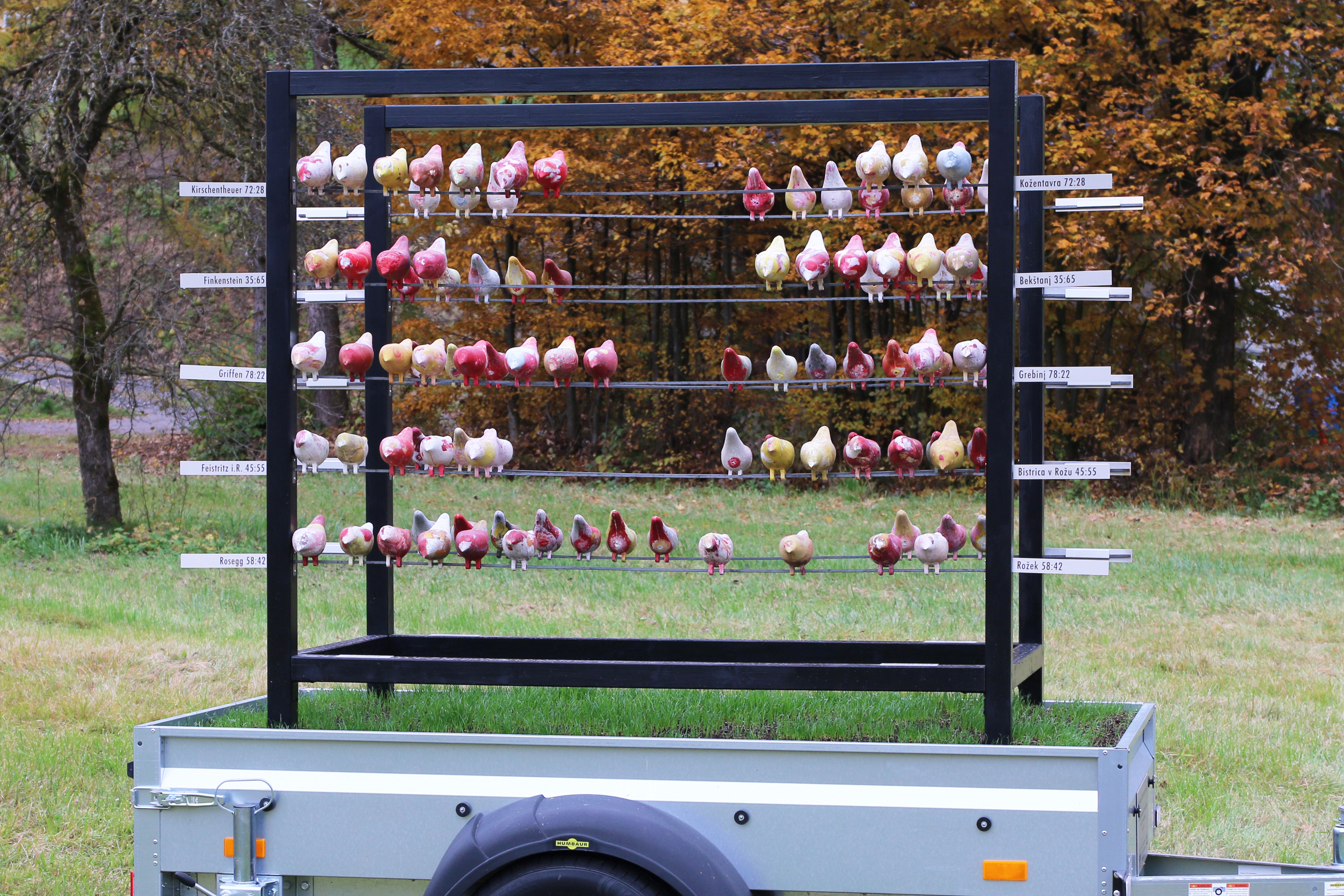
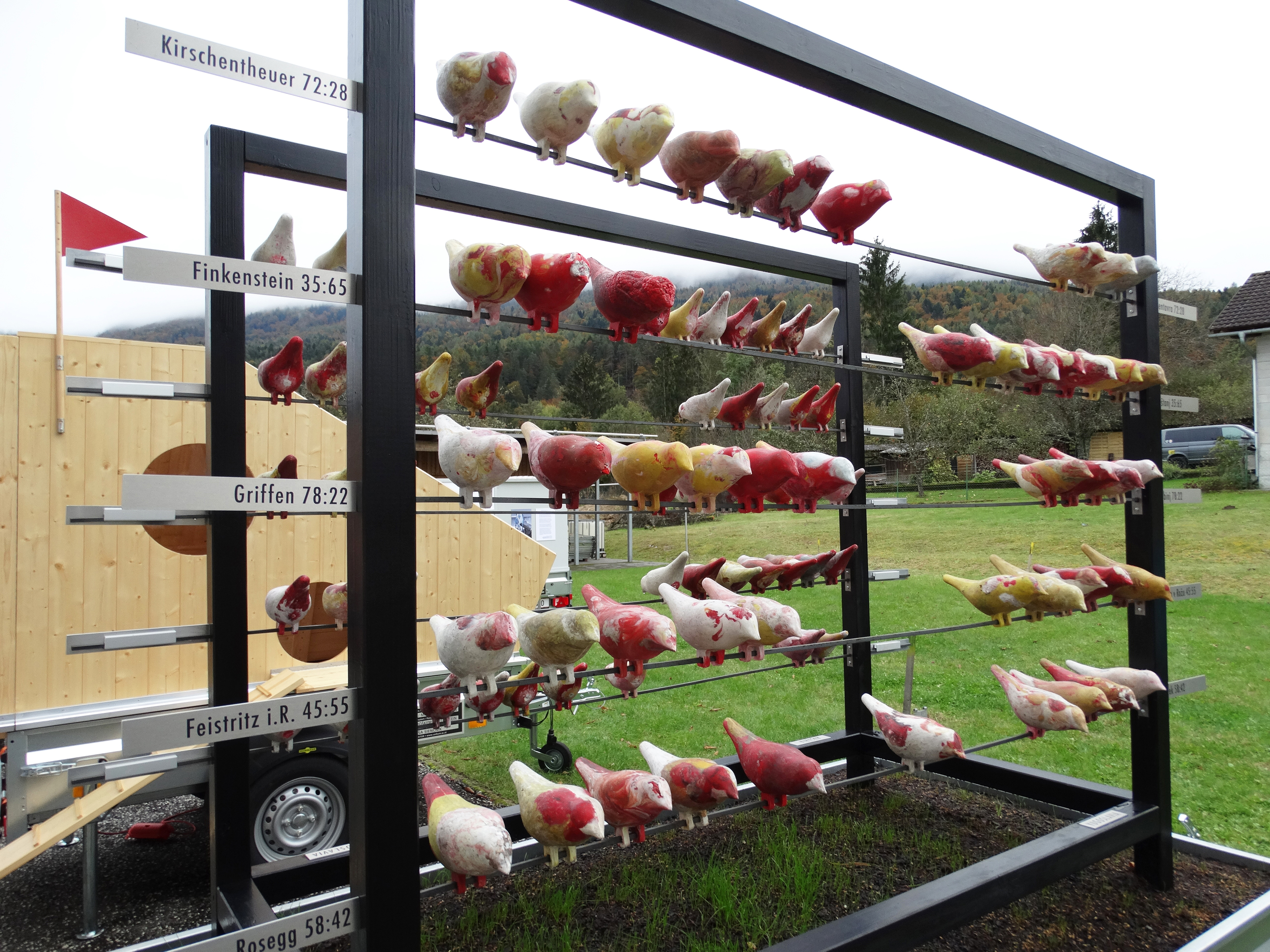
The Finches' abacus is a Statistical Sculpture on the Carinthian Plebiscite of 1920. It consists of 100 birds made from recycled plastic in the Carinthian colours red, white and yellow (also the colours of the goldfinch) that sit on 10 metal bars in 2 wooden frames, reminding of an abacus. They visualize the results of the referendum in 10 communes of Southern Carinthia. Each finch represents 10 % of the votes, e.g. 6 finches sitting on the Austrian side vs. 4 finches sitting on the Yugoslavian side visualise the relation of approx. 60 : 40 % of the votes. This abacus draws upon the historic Vienna method of Pictorial Statistics, extends it into an interactive tool in 3D and ironizes it at the same time with the use of „100 mixed individuals“. Those unique birds were manufactured by Vahida Ramujkić and Tijana Cvetković of the plastic recycling cooperative Minipogon in Belgrade, who uses open source technology, within the international Precious Plastic movement, to build their machines.

Photos: © Natalie Deewan
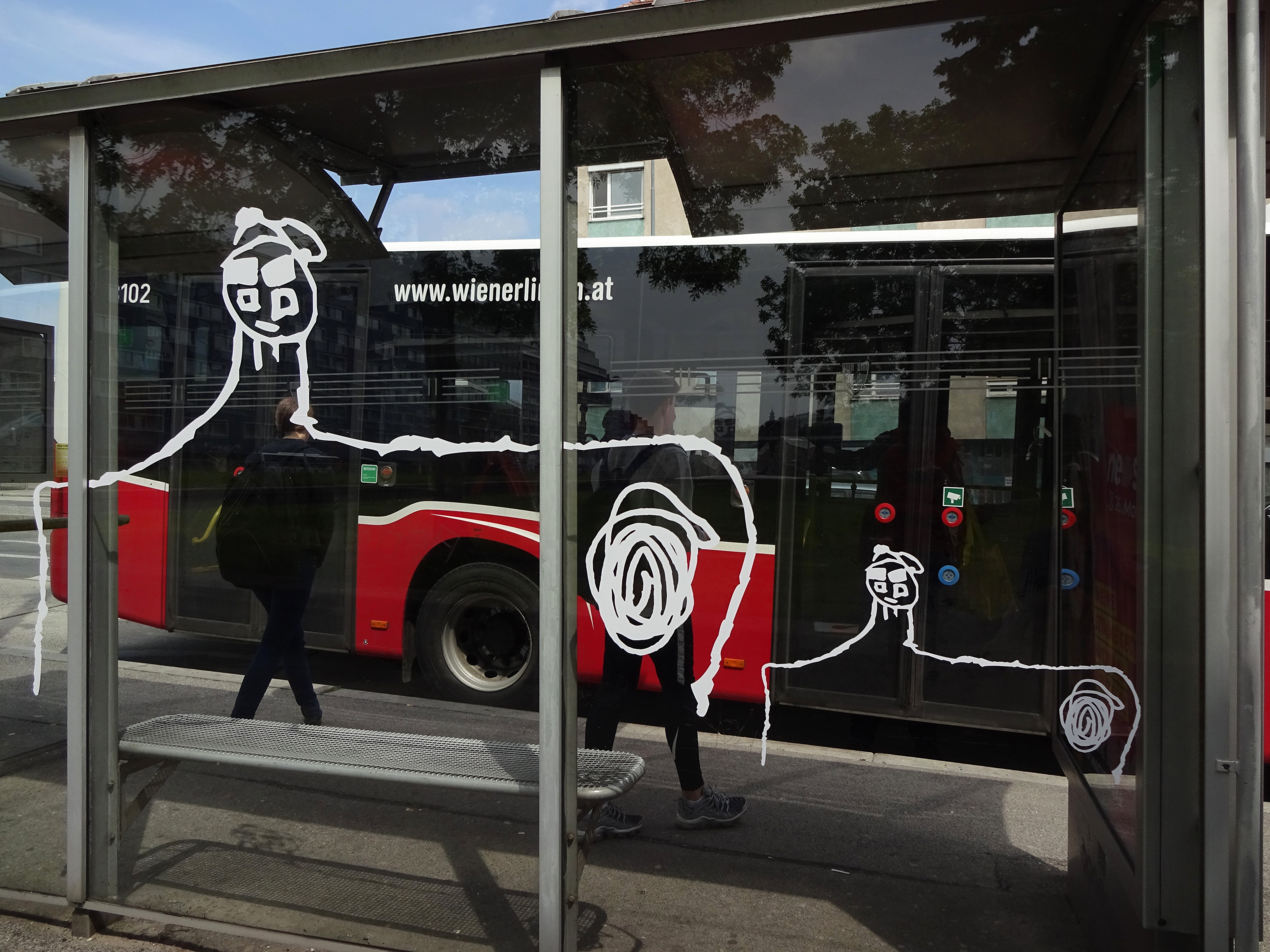
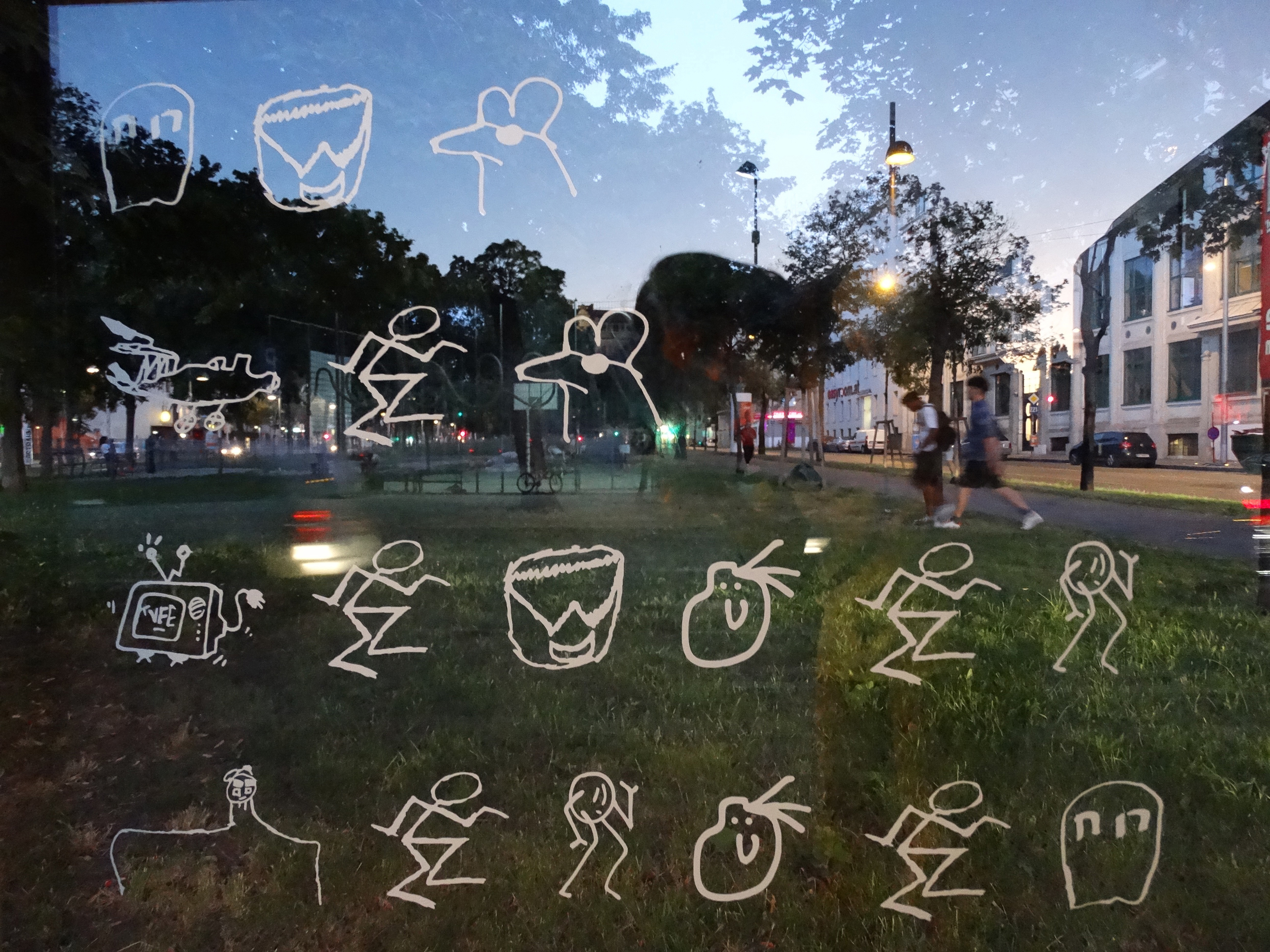
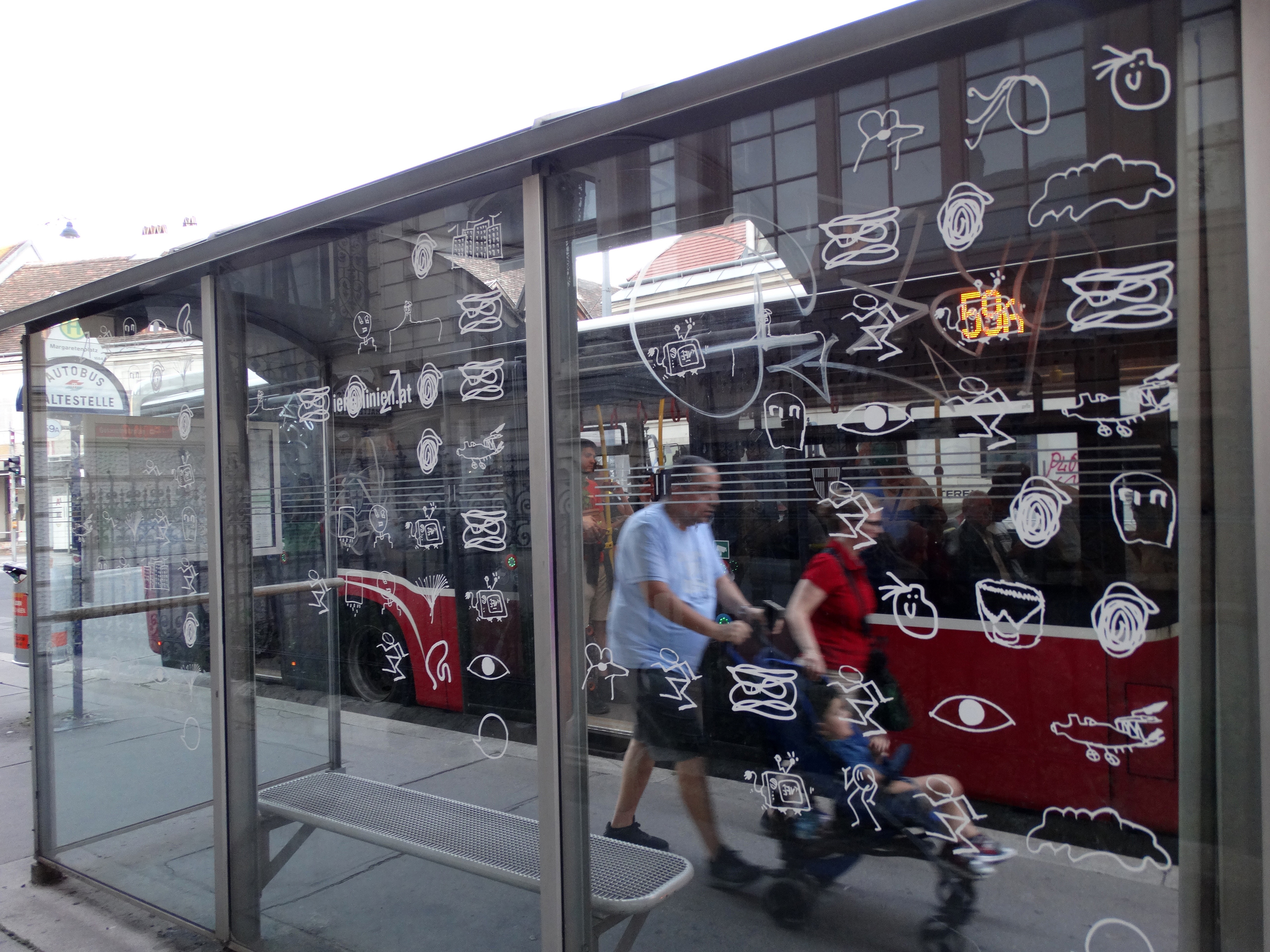
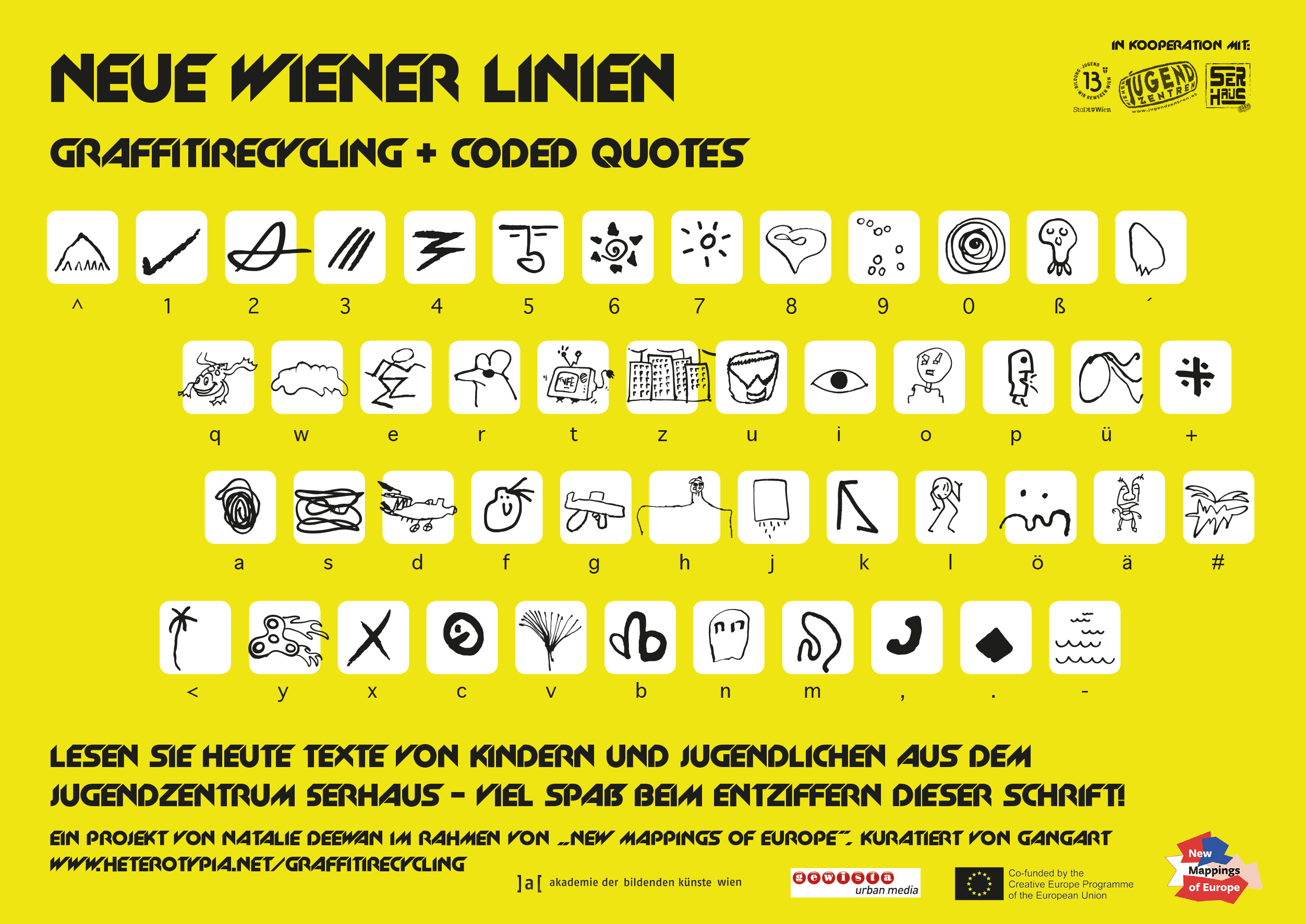
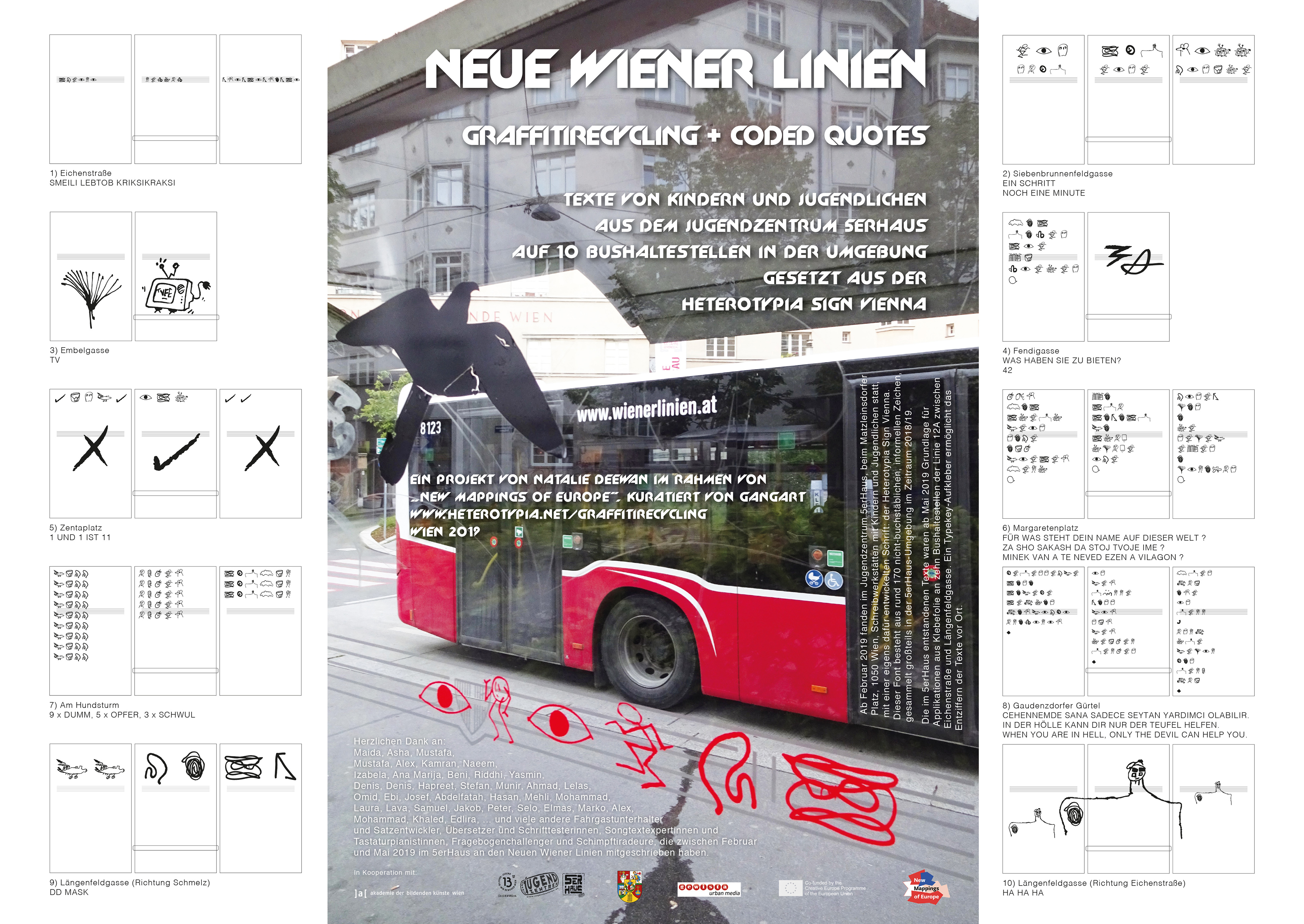
Neue Wiener Linien – Graffiti recycling & Coded quotes (2019)
Installation in public space; font
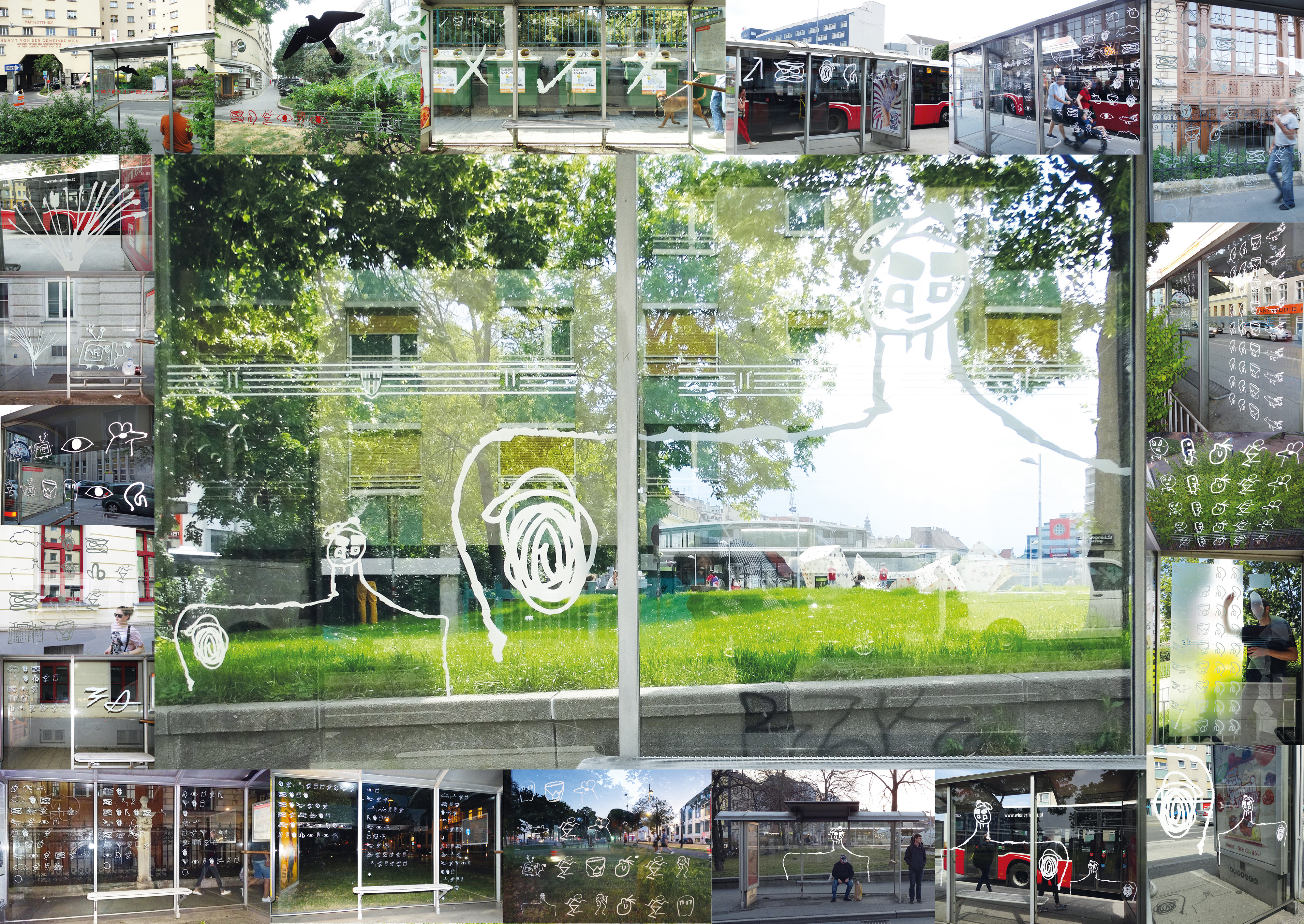
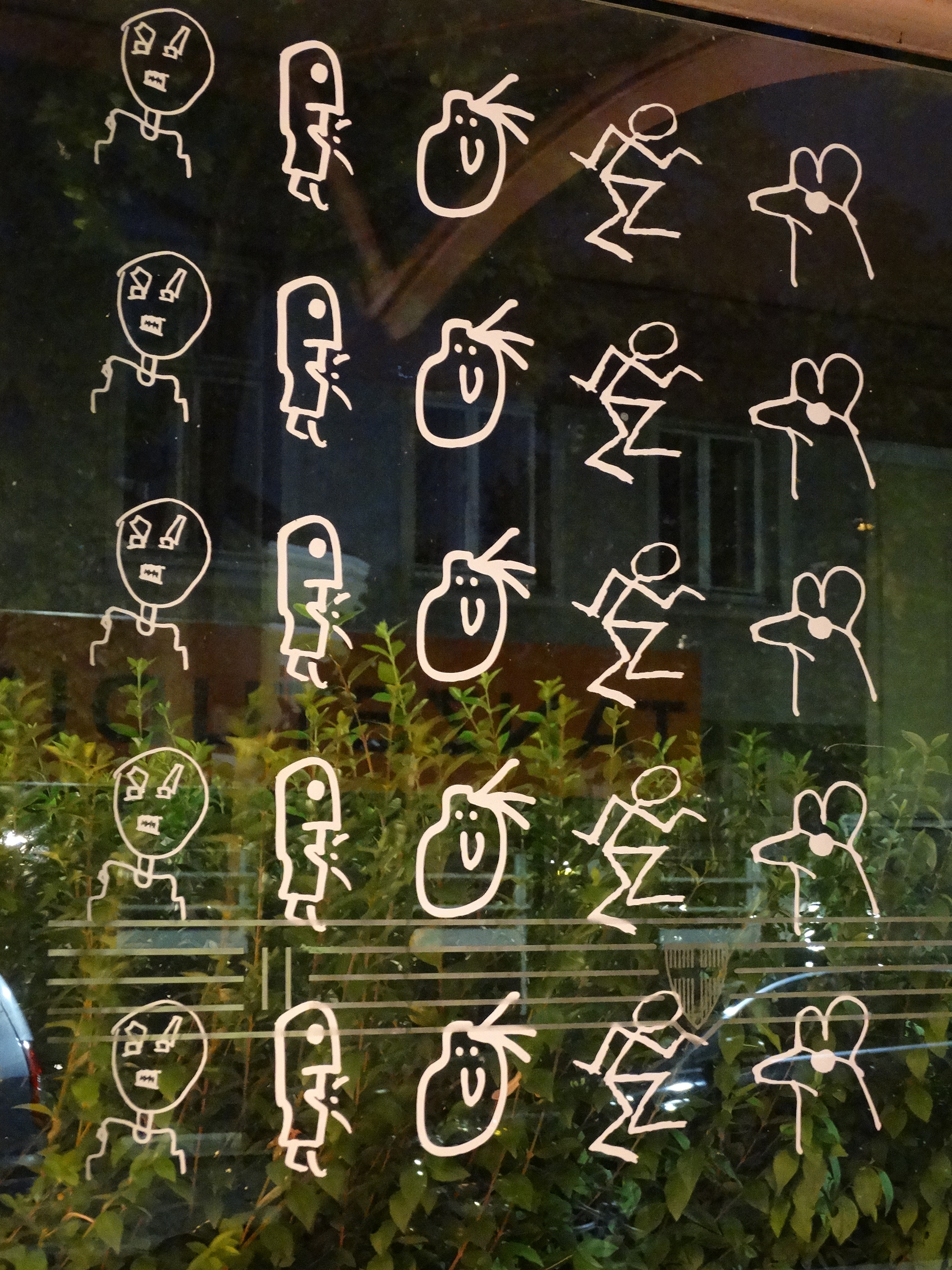
During 3 months, i spent many evenings in a youth center in 5th district trying to get kids involved in a graffiti recycling project. Kids were uninterested in collecting = photographing signs on the streets, but were willing to type some words or sentences with this peculiar font on site. This new member of the heterotypia font family assembles 189 informal graphic signs from Viennese walls of 2018/19, each assigned to a letter on the typekey, which allows to decode the written messages. A selection of these „Coded Quotes“ incl. typekey was applied then with adhesive foil on 10 bus stop walls around the youth center and remained there for around 9 months. While some of these large scale applications displayed only few words, others had a sentence translated in 3 languages: Turkish/German/English or Macedonian/German/Hungarian, like modern-day Rosetta stops. The title refers to the public transport company “Wiener Linien“ (= Vienna lines).