

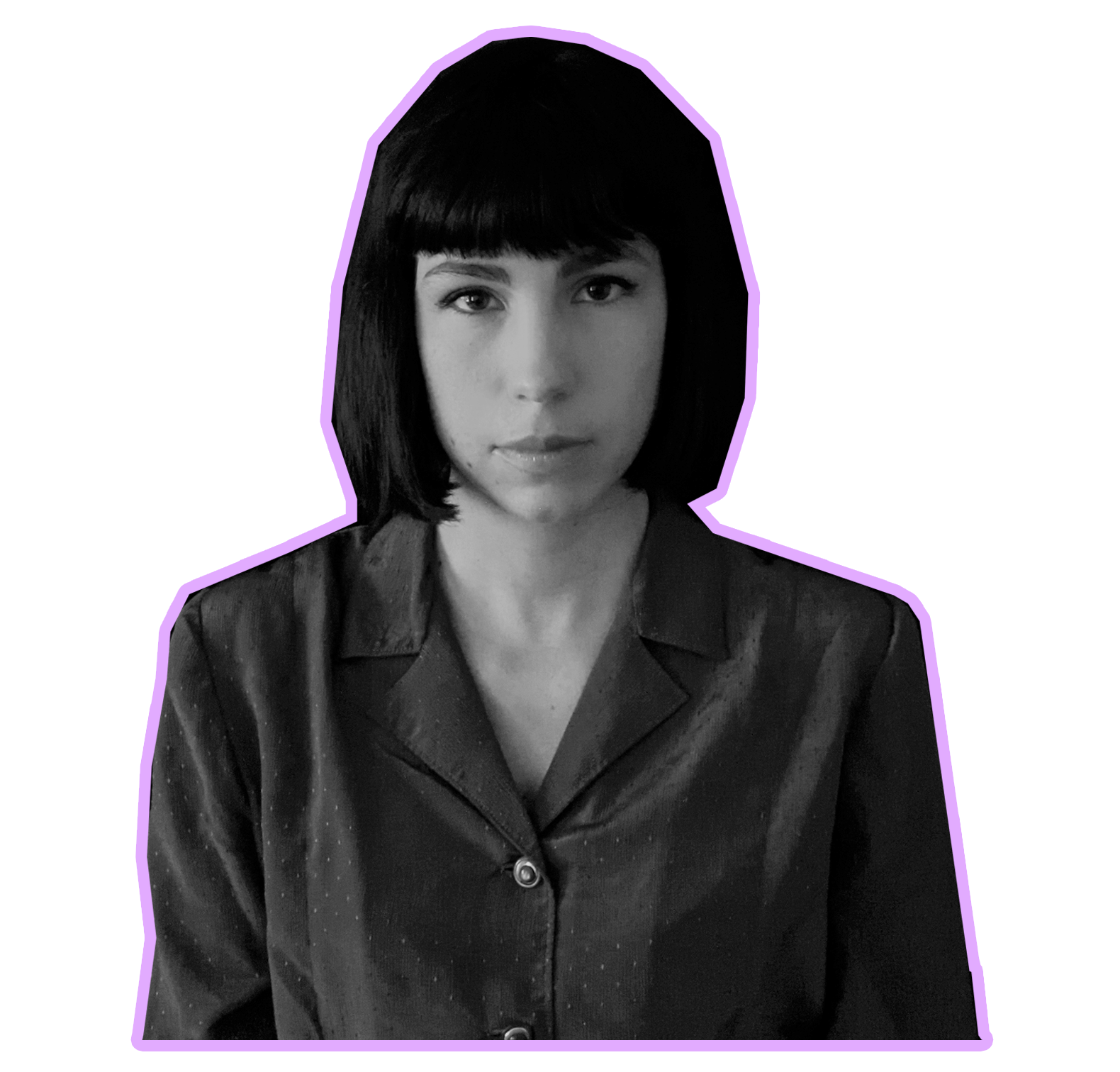
ANA DE ALMEIDA
“Ficou
a ver
passar
navios.”
#ARTS-BASED RESEARCH #ARCHITECTURE #COMMONS #INSTALLATION #SPACE #MULTIMEDIA #IDENTITY #PERFORMANCE
#NEO-COLONIAL #VIDEO #GENDER
BIO. Ana de Almeida (b.1987) is an artist and author from Lisbon, currently based in Vienna. She is a member of the artists’
collective dienstag abendof
of VBKÖ and of the Interndinner collective against precarization of work in the cultural field. Her artistic practice addresses memory and remembering processes, narrative constructions that connect space and subject, and plurispatial and multilayered narratives in general.
Ana de Almeida is currently a Ph.D. candidate at the Academy of Fine Arts of Vienna, pursuing a doctoral thesis about the production of images in the 1974—1989 inter-revolutionary space between the Carnation and the Velvet Revolutions.
Ana de Almeida is currently a Ph.D. candidate at the Academy of Fine Arts of Vienna, pursuing a doctoral thesis about the production of images in the 1974—1989 inter-revolutionary space between the Carnation and the Velvet Revolutions.
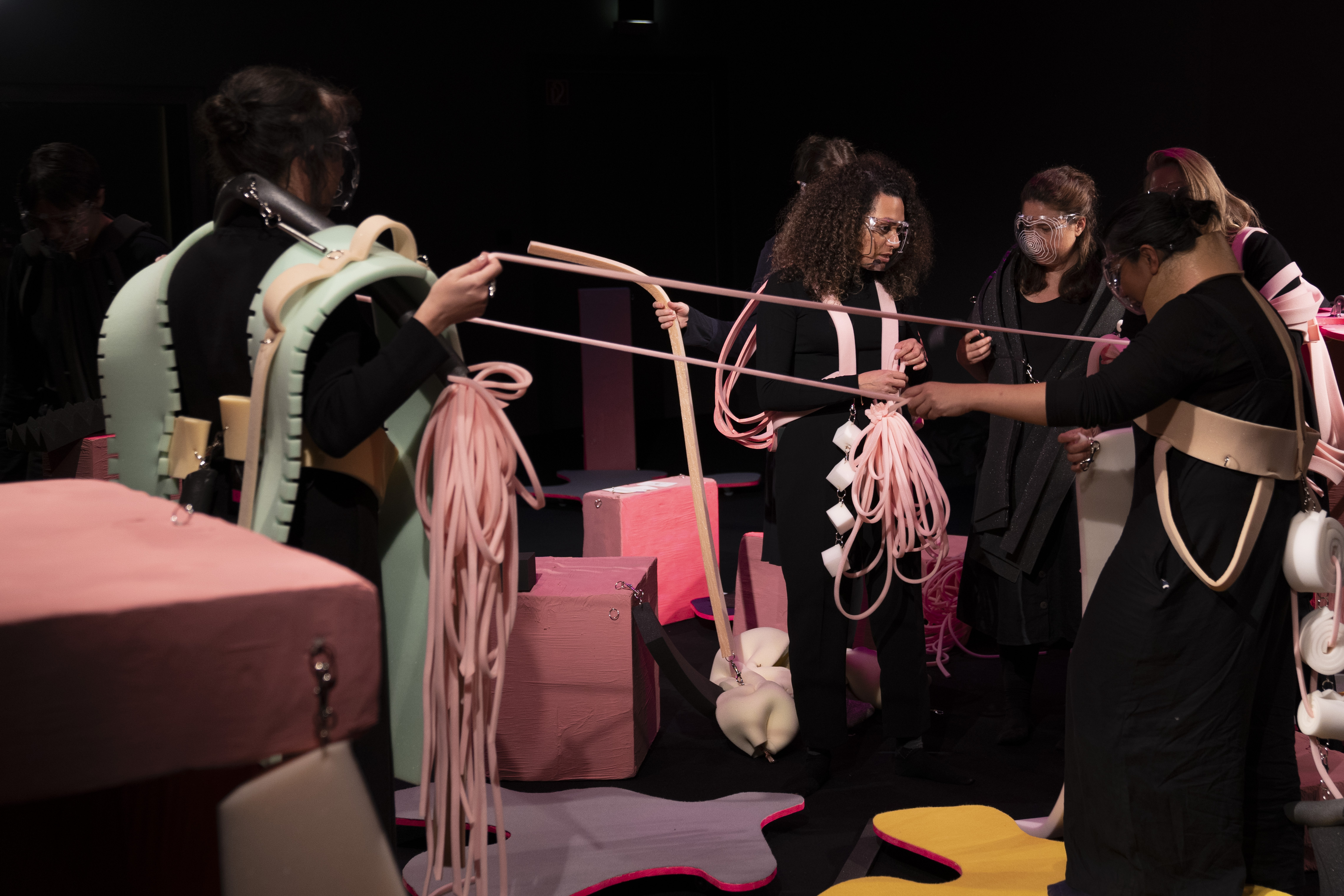
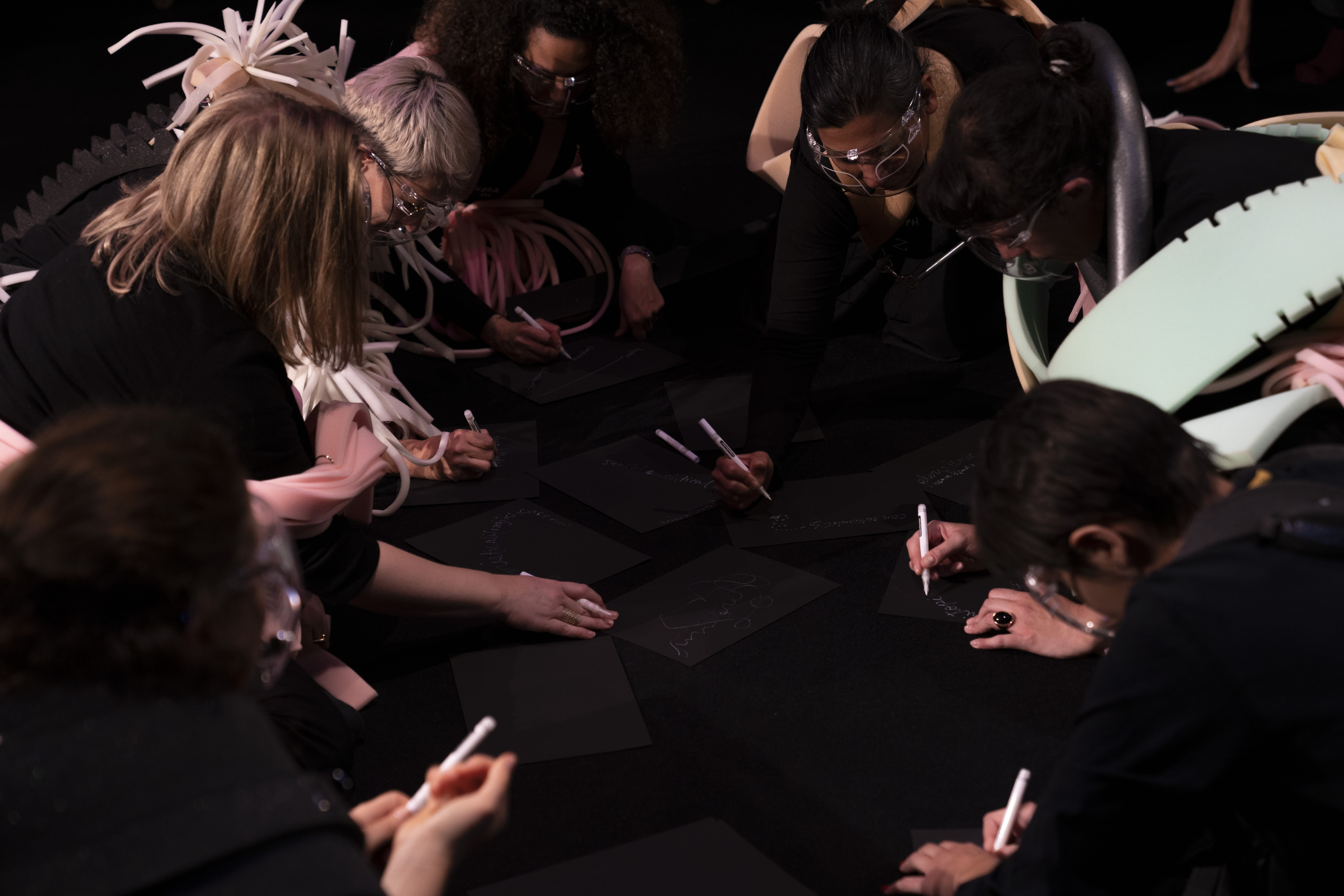
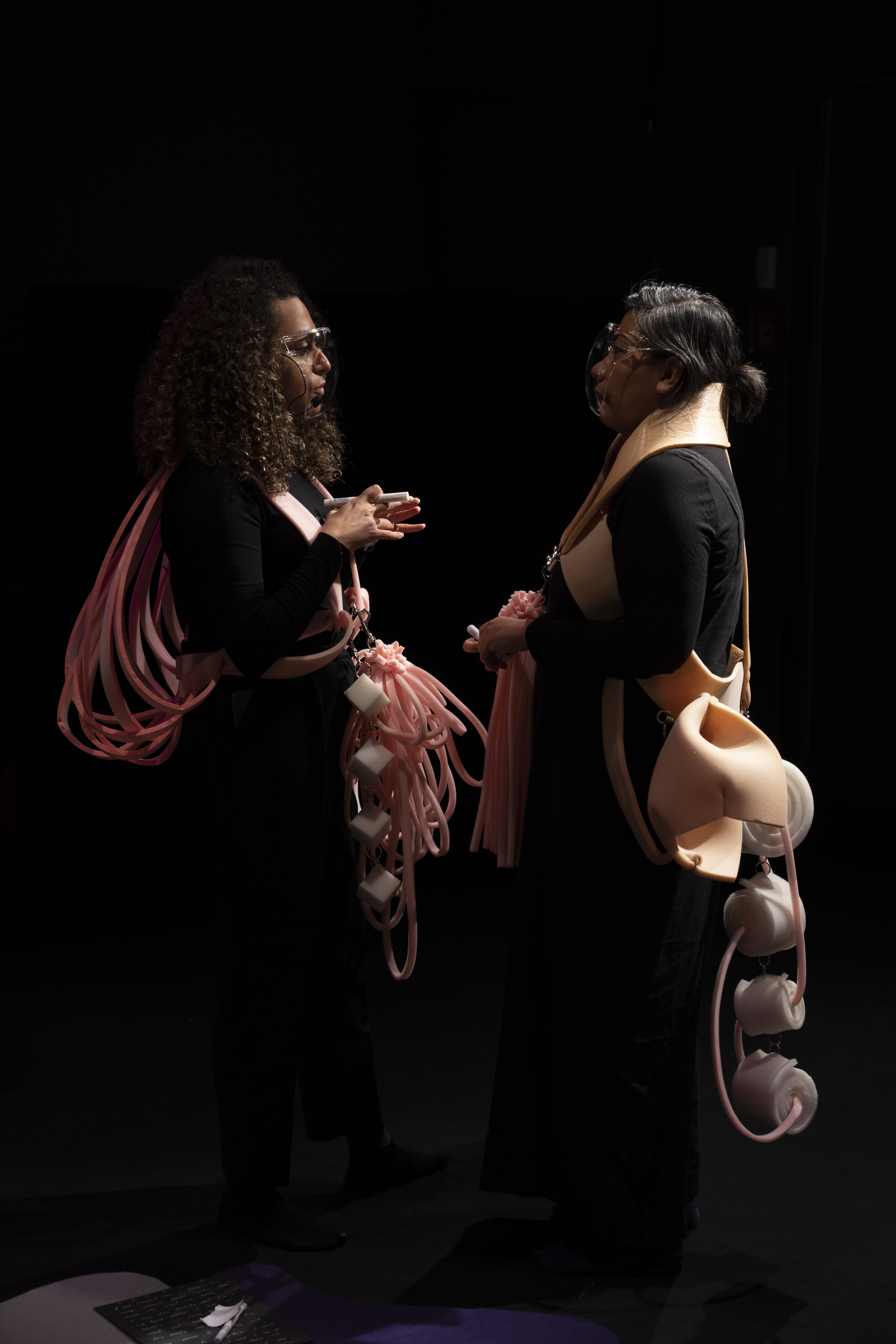

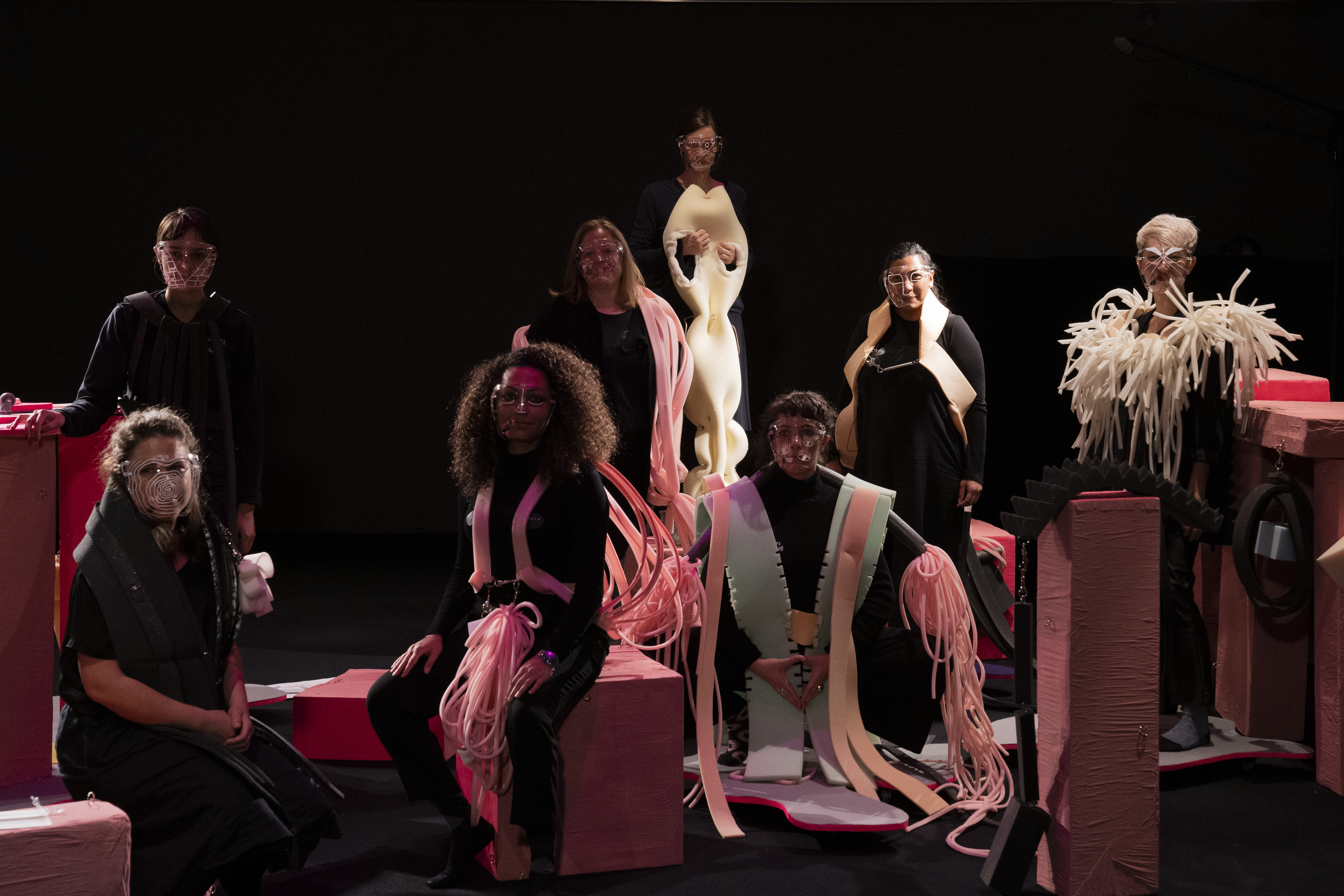
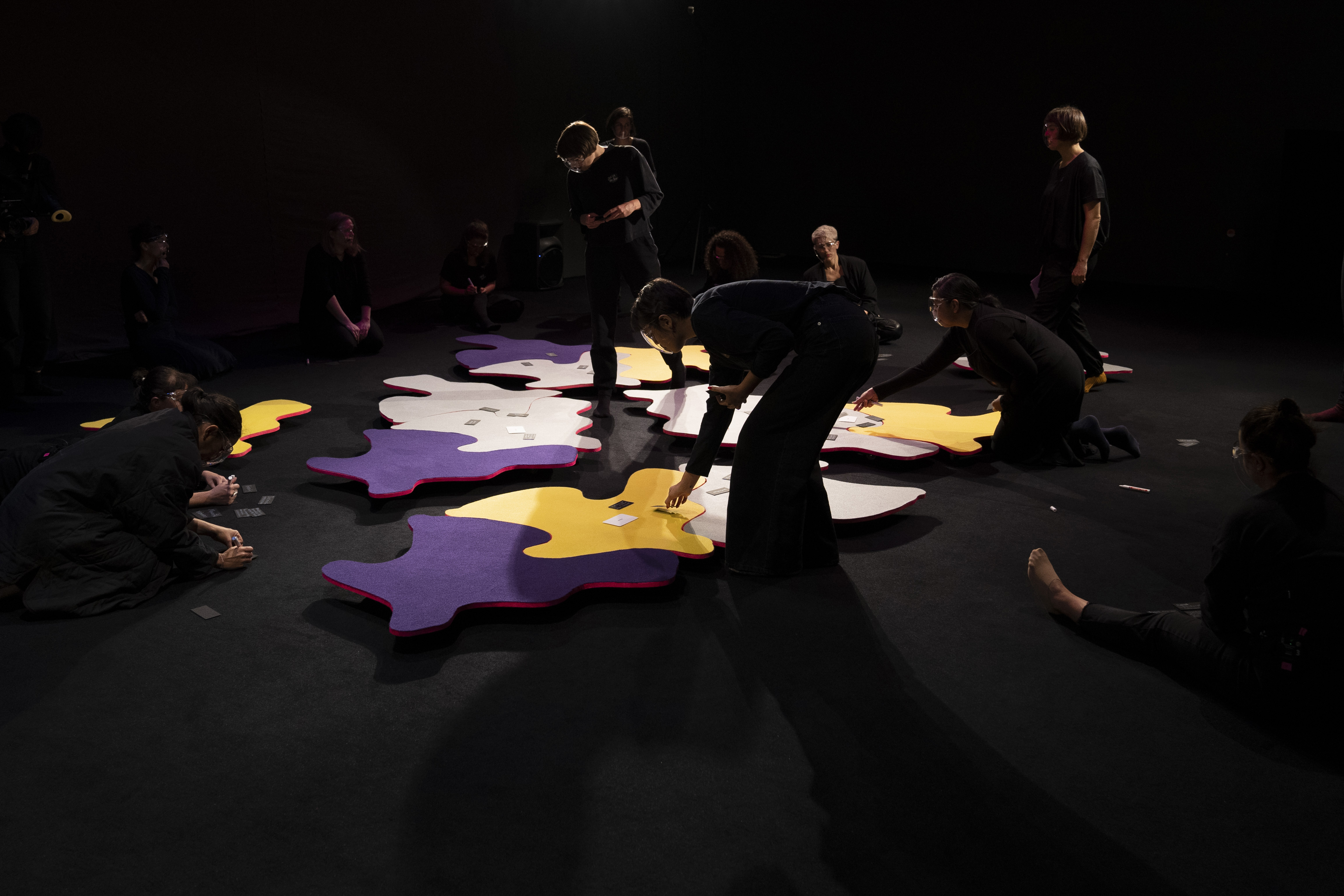
Ana de Almeida, Alicja Rogalskaand & Vanja Smiljanic
NOVA. Future thoughts on surviving together (2020 AT)
Live Action Role Play
In the future, gender inequality was erased. Nova is a multitude of newly born, radically inclusive and self-managed communities. Heterogeneous in their forms of commoning and social organization, Nova share a vow to never let oppression in any form rise again. Nova. Future thoughts on surviving together is a feminist futurist LARP - Live Action Role Play by Ana de Almeida, Alicja Rogalska and Vanja Smiljanić; directed towards feminist and queer-feminist activists based in Vienna. NOVA is a day of speculative gaming aimed at sharing survival strategies, exercising solidarity and intersectionality, creating solidarity networks and forming new alliances between different emancipatory movements. Together, we created a piece of feminist political fiction - a work in progress and a world free of patriarchal oppression in the making.
With: VBKÖ, Saloon Wien, Kunst & Kind, Latinxs Unidxs, Kültür Gemma, Cine Collective, Mala Sirena, female:pressure.


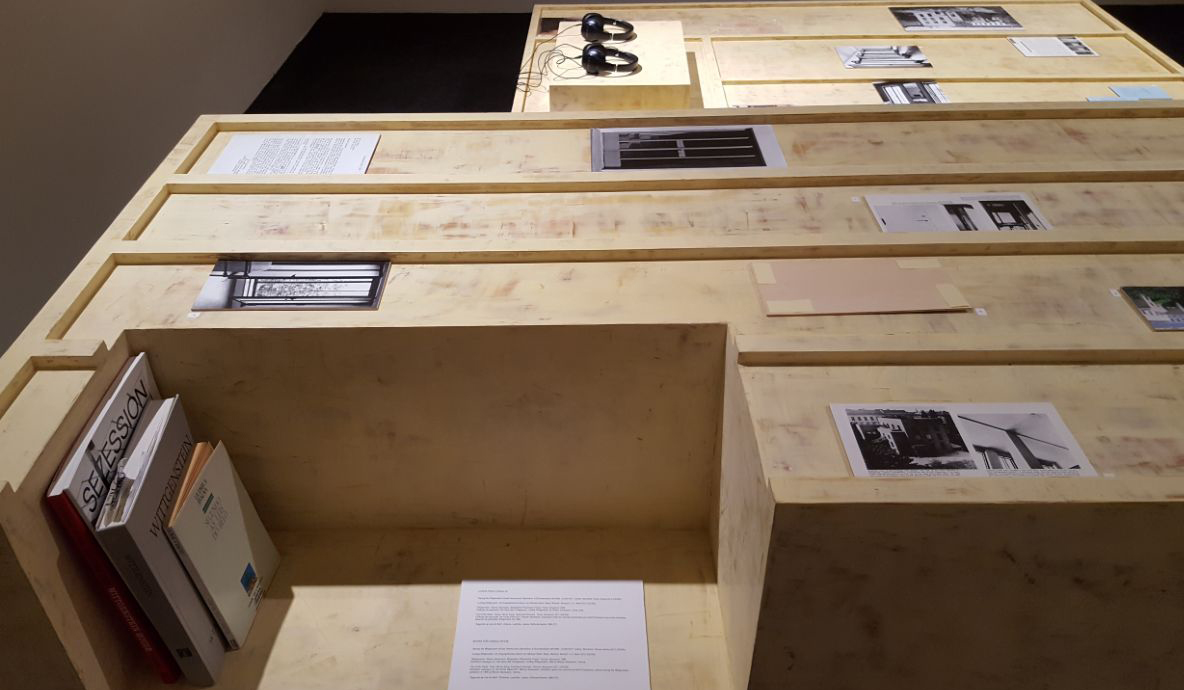
A Casa / The House The flat / Die Fläche (2018 PT)
MDF, stucco-lustro, stereo sound 42'5'' looped
Likewise a sculpture, A Casa (The House) shares the aesthetic and architectonic language of the House Wittgenstein in Vienna. The two volumes are a transposition and folding down of two of its architectonic elements: a window and the vestibule door. They serve as display for documental material such as letters and photos and incorporate an audio piece with interviews led by the artist. The surface is covered by stucco-lustro, a coating technique proliferating in Vienna on the turn to the 20th century, similar to how could the original coating of the walls of the House Wittgenstein have looked like before they were painted white after World War II. The highlighting of the stucco-lustro architectonic detail points out to a fundamental discovery for the understanding of the house as aesthetic experiment in which the house interiors, composed by materials which evoke extreme hardness, seem to dematerialize through the highly reflecting properties of the stucco walls.

Photos: © Ana de Almeida & Stephanie Misa
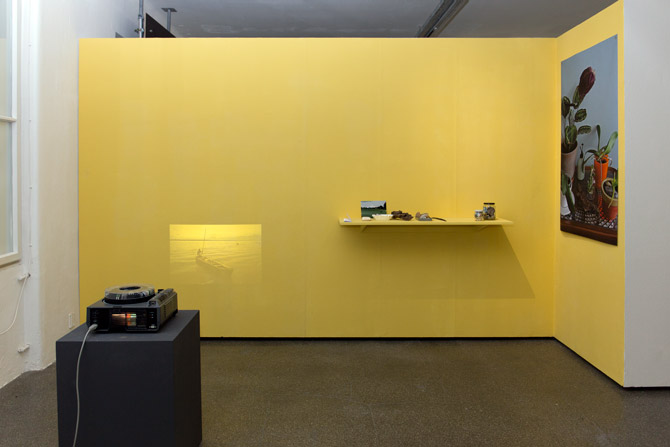
Untitled (Yellow) (2017 PT)
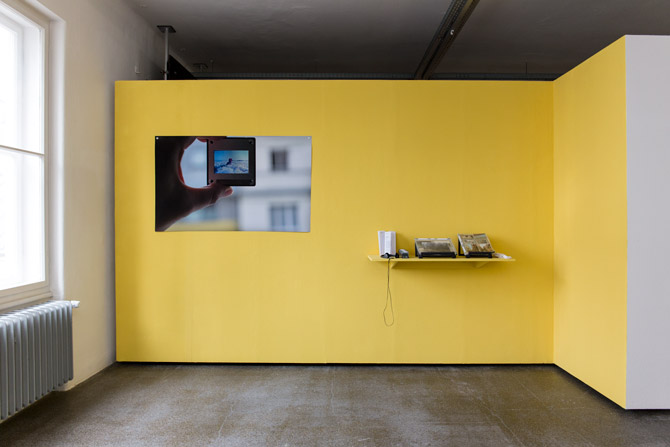
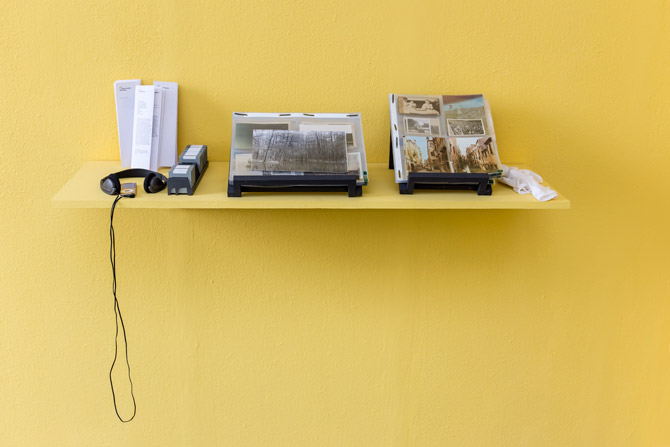
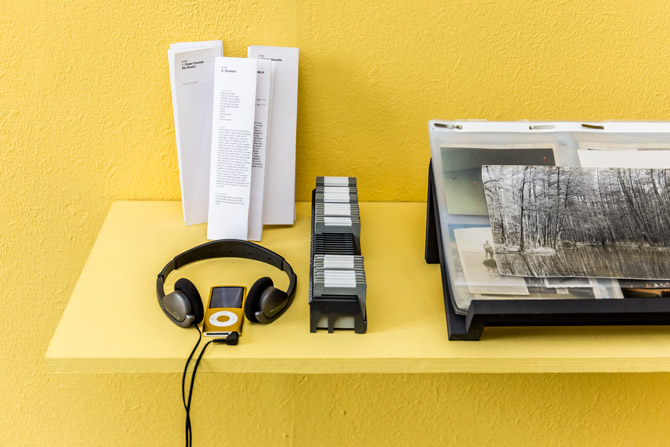
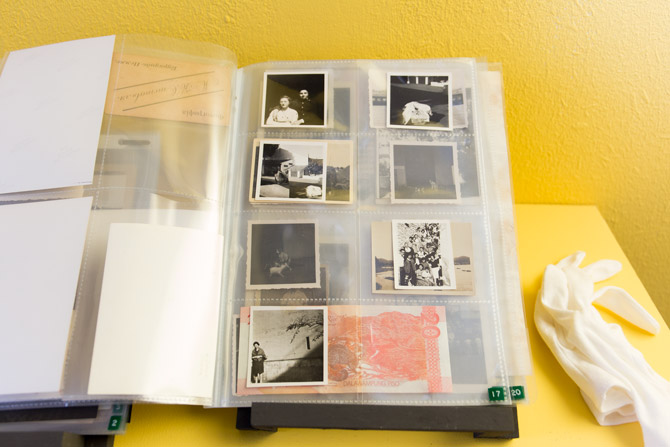
Wall, yellow paint, memorabilia, diashow, stereo sound
A cooperation between Ana de Almeida (PT/AT) and Stephanie Misa (PH/AT) . This is a project about landscape as formal and informal disposition of elements. Coordinates. An arrangement, a hierarchy: borders and de-limitations, transpositions and transgressions, frames and their inside-outside, margins, and of course landscape — of the geographical, political, personal, and emotional nature. Edouard Glissant’s Traité du Tout-Monde. (Poétique IV), calls it archipelagic thinking, a group of islands that lends its topography to an alternative imaginary: a reassessment of the insularity of bound cultures, of nation-states, and the heaviness of “continental thought”. The archipelago is an alternative imaginary, one that posits that identity could be as a conglomeration of islands (composed of many, yet is one). Identity formation, embodiment, complex colonial histories, evolution, interconnectedness, diaspora and change — Oh to dispell the oppressive idea of nationalistic wholeness!
NICOLE SABELLA
“If you can’t sense it, it’s not my revolution.”

#AUGMENTED REALITY #BODY #DIGITAL #INSTALLATION #INTERACTIVE #PHOTOGRAPHY #VIDEO #VIRTUAL REALITY #EXISTENTIAL
BIO.
Nicole Sabella is an artist, cultural scientist and art educatrix engaging in performative strategies that are strongly informed by queer feminist thinking and collaborative practices. Through them she investigates the sociopolitical bonds between body, language, voice, sound, and space, and the way they unfold in constantly changing constellations or “choreo:spheres“. Her work is driven by the basic forces of rhythm, humor and failure (nowadays known as glitch), often assembling or dissolving into analog:digital performative sound installations.
Technology is her friend and foe.


TENTECHULAR DIS:PLEASURES #2: Omotatatatatat (2021)
Interactive Sound Installation
As part of the installation & performance series TENTECHULAR DIS:PLEASURES (since 2019), “Omotatatatatat” dived further into “tentechular” qualities of sound: a portmanteau of “tentacular” ( a sensual form of relating to human and non-human beings as presented by Donna Haraway in her book Staying with the Trouble (2016) )- and “technological”.
With the help of childhood fetishes of shamelessly zeitgeisty appeal (neon yellow anti-stress rubber balls), visitors were able to experience affective impressions along the fine line between comfort and discomfort, closeness and distance, body and technology at the interface of analog and digital spaces and materialities.
Based on formerly analog voice material, the space was filled with ever-changing generative voice patterns of SirenX that were created by using the open source programming language Pure Data (PD). Visitors were invited to interact with the stress balls by exploring different qualities of touch. Be it plucking, squeezing, or petting. While touching the objects, they started a co-compositional process: incorporated piezo microphones with selected attached materials responded to the touch with additional sounds.


Photos: © Nora Jacobs
SirenX (2019 - ongoing)
Performance
SirenX are an analog:digital entity that seek to queer the social reception of voice by means of categories such as gender, origin, species, age, etc. They obsess about the physical reproduction of electronic sound effects.
Within the sound installation TENTECHULAR DIS:PLEASURES #3, SirenX invited the audience to explore means of joint vibrational communication.
Based on caterpillar sounds like clacking, chirping, whistling, burping, drumming or scratching, SirenX translated those noises into sounds and frequencies audible to the human ear:
OMOTATATAT
WUWUWU
PURRRRRR
BZZBZZBZZ
CHOMCHOM
TENTEKTEK
They formed a loose score within the exhibition space and served as an invit
ation to sound along.
Outside the opening hours of the exhibition, the SirenXCaterpillar Vibrations were accessible via QR-code on the windowpane, providing a link to the sound samples on Soundcloud.


Photos: © Studio Fjeld
TENTECHULAR DIS:PLEASURES #3: Gib mir ein F, SirenX (Give me an F, SirenX) (2021)
Mixed media installation & live performance
Based on an encounter with a small, hairy, yellow caterpillar called Calliteara pudibunda on Hundertwasserallee in Salzburg, the installation "Gib mir ein F, SirenX" (Give me an F, SirenX) explores the possibilities of vibrational communication between human and non-human actors.
Caterpillars communicate via vibrations that are largely imperceptible to the human ear. Using sophisticated recording and analysis equipment, bioacousticians have so far been able to identify the following typical caterpillar sounds: they clack and chirp with their chewing tools, emit whistling and burp-like sounds, or produce drumming and scratching noises with their anal oars.
The SirenXCaterpillar Vibrations - caterpillar sounds translated by SirenX into sounds audible to the human ear - form a loose score and serve as an invitation to sound along and engage in an interspecies vibrational exchange. The installation consists of two video screens with video material providing visual rhythms, a digital photo frame with a corresponding qr-code linked to sound samples on soundcloud for an individual sound-along outside exhibition opening hours, and a speaker for the sound score.