


ANA DE ALMEIDA
“Ficou
a ver
passar
navios.”
#ARTS-BASED RESEARCH #ARCHITECTURE #COMMONS #INSTALLATION #SPACE #MULTIMEDIA #IDENTITY #PERFORMANCE
#NEO-COLONIAL #VIDEO #GENDER
BIO. Ana de Almeida (b.1987) is an artist and author from Lisbon, currently based in Vienna. She is a member of the artists’
collective dienstag abendof
of VBKÖ and of the Interndinner collective against precarization of work in the cultural field. Her artistic practice addresses memory and remembering processes, narrative constructions that connect space and subject, and plurispatial and multilayered narratives in general.
Ana de Almeida is currently a Ph.D. candidate at the Academy of Fine Arts of Vienna, pursuing a doctoral thesis about the production of images in the 1974—1989 inter-revolutionary space between the Carnation and the Velvet Revolutions.
Ana de Almeida is currently a Ph.D. candidate at the Academy of Fine Arts of Vienna, pursuing a doctoral thesis about the production of images in the 1974—1989 inter-revolutionary space between the Carnation and the Velvet Revolutions.
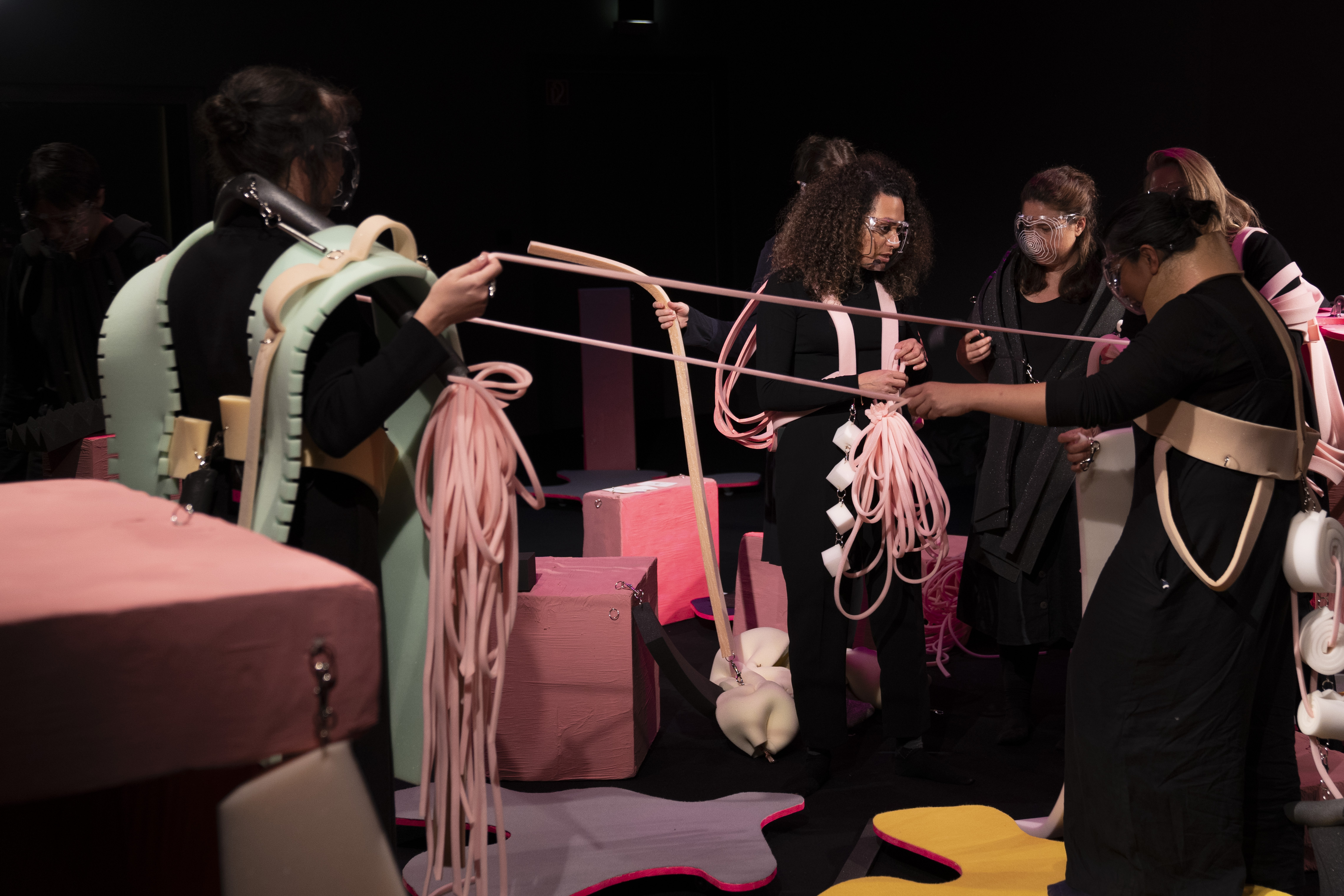
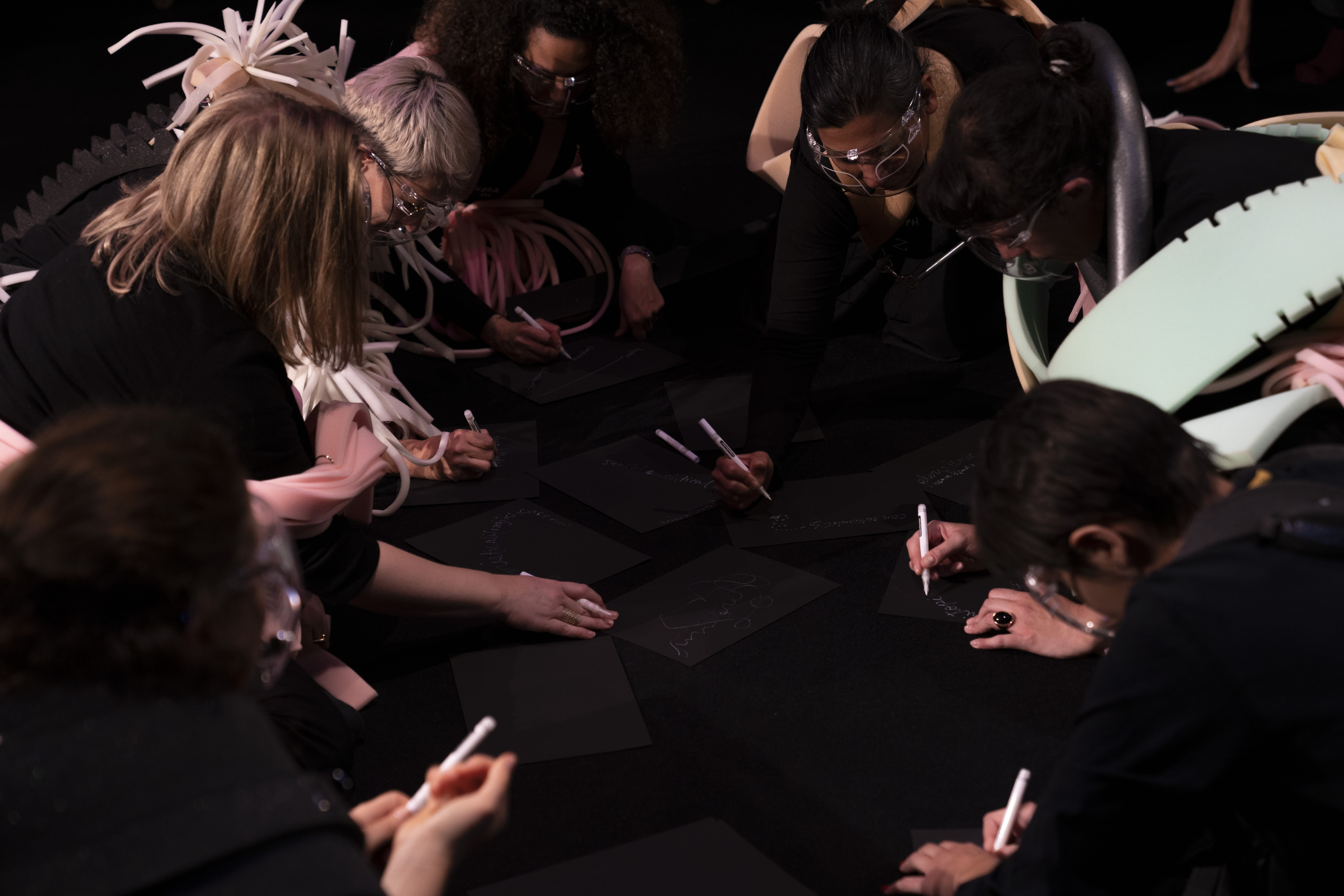
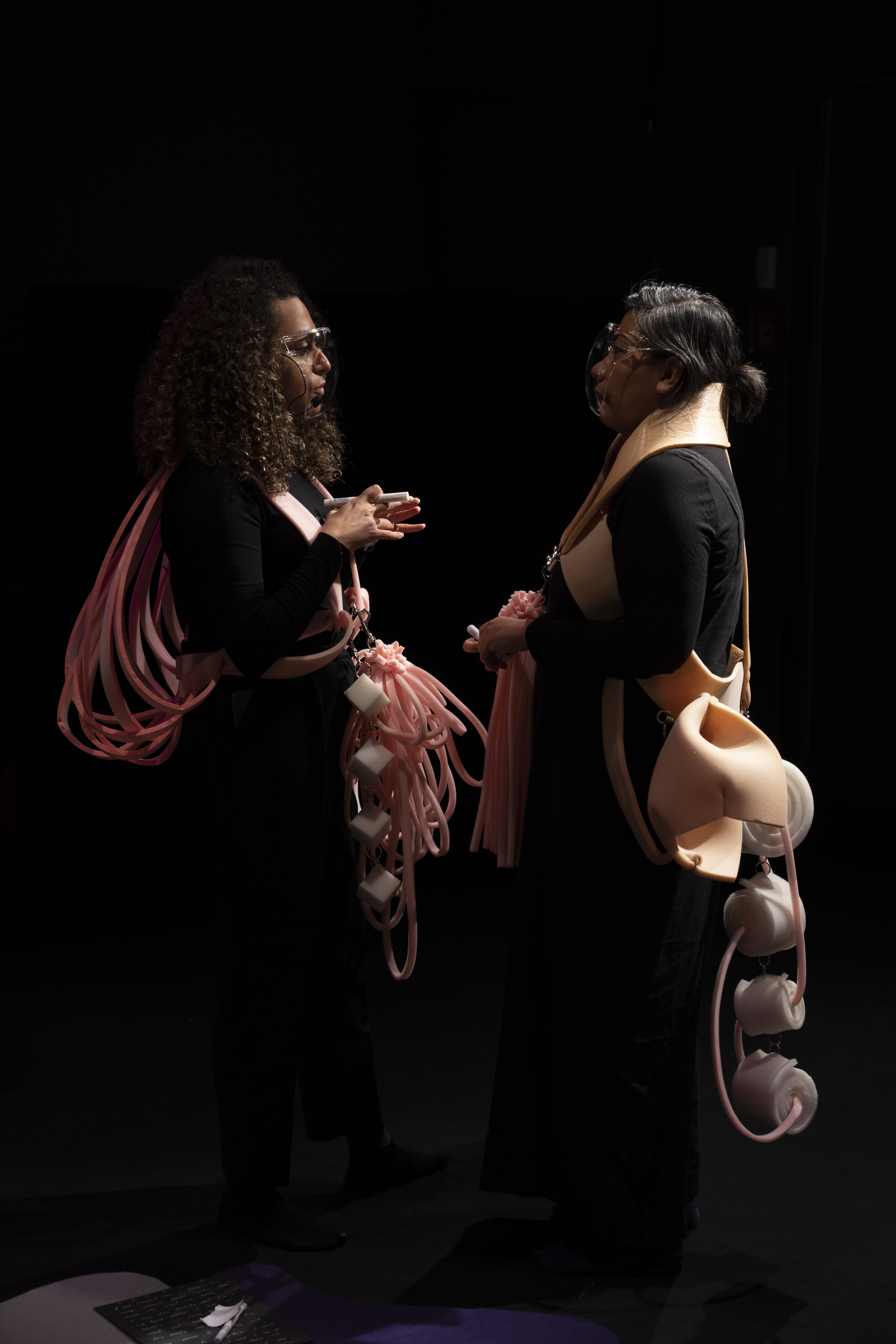

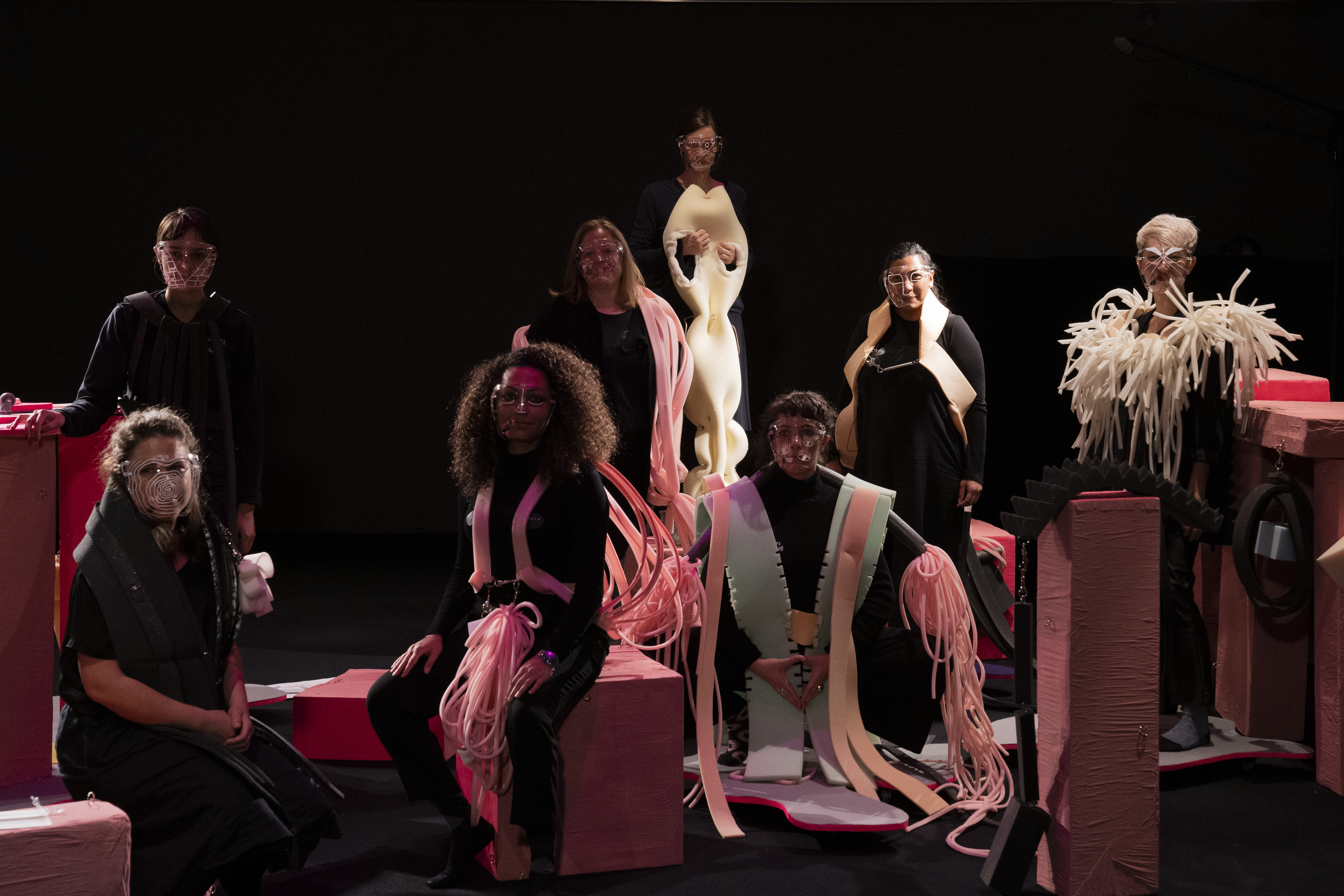
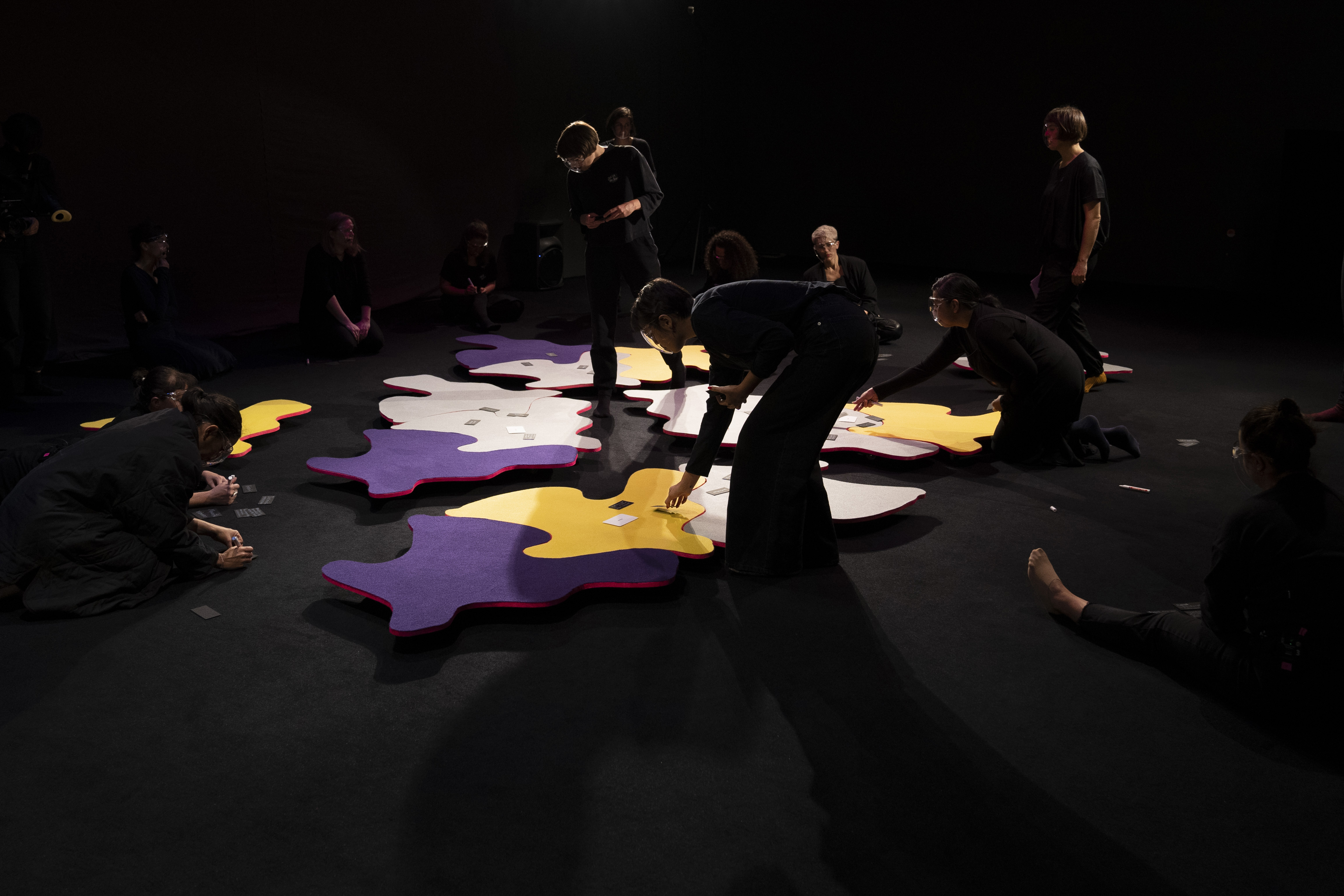
Ana de Almeida, Alicja Rogalskaand & Vanja Smiljanic
NOVA. Future thoughts on surviving together (2020 AT)
Live Action Role Play
In the future, gender inequality was erased. Nova is a multitude of newly born, radically inclusive and self-managed communities. Heterogeneous in their forms of commoning and social organization, Nova share a vow to never let oppression in any form rise again. Nova. Future thoughts on surviving together is a feminist futurist LARP - Live Action Role Play by Ana de Almeida, Alicja Rogalska and Vanja Smiljanić; directed towards feminist and queer-feminist activists based in Vienna. NOVA is a day of speculative gaming aimed at sharing survival strategies, exercising solidarity and intersectionality, creating solidarity networks and forming new alliances between different emancipatory movements. Together, we created a piece of feminist political fiction - a work in progress and a world free of patriarchal oppression in the making.
With: VBKÖ, Saloon Wien, Kunst & Kind, Latinxs Unidxs, Kültür Gemma, Cine Collective, Mala Sirena, female:pressure.


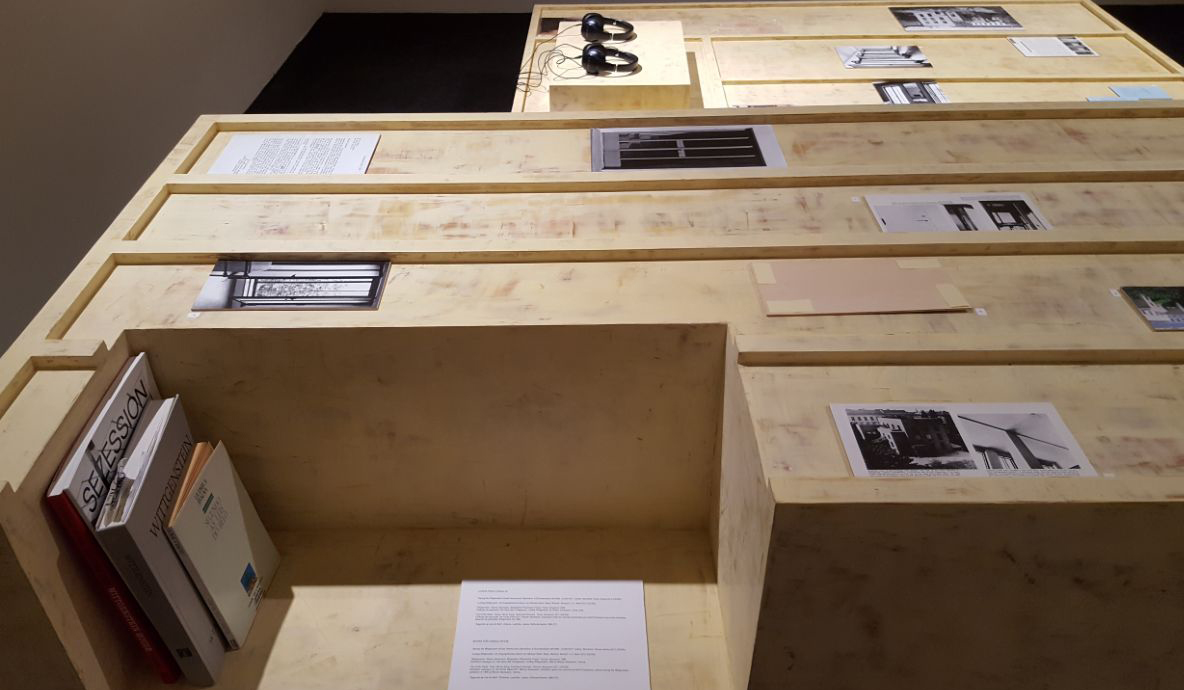
A Casa / The House The flat / Die Fläche (2018 PT)
MDF, stucco-lustro, stereo sound 42'5'' looped
Likewise a sculpture, A Casa (The House) shares the aesthetic and architectonic language of the House Wittgenstein in Vienna. The two volumes are a transposition and folding down of two of its architectonic elements: a window and the vestibule door. They serve as display for documental material such as letters and photos and incorporate an audio piece with interviews led by the artist. The surface is covered by stucco-lustro, a coating technique proliferating in Vienna on the turn to the 20th century, similar to how could the original coating of the walls of the House Wittgenstein have looked like before they were painted white after World War II. The highlighting of the stucco-lustro architectonic detail points out to a fundamental discovery for the understanding of the house as aesthetic experiment in which the house interiors, composed by materials which evoke extreme hardness, seem to dematerialize through the highly reflecting properties of the stucco walls.

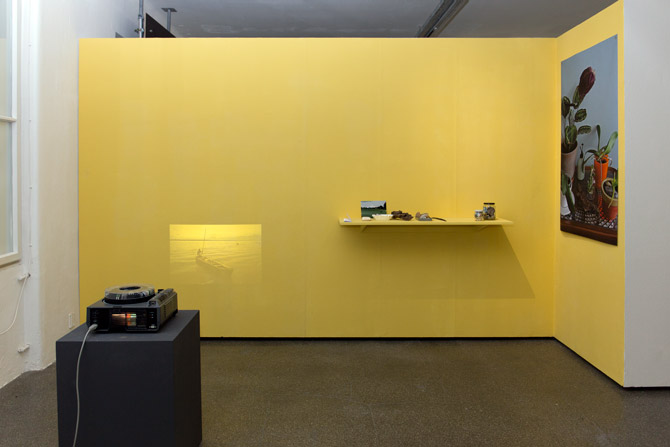
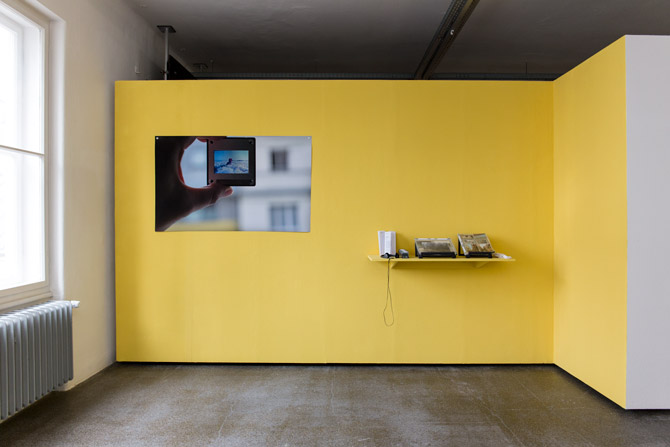
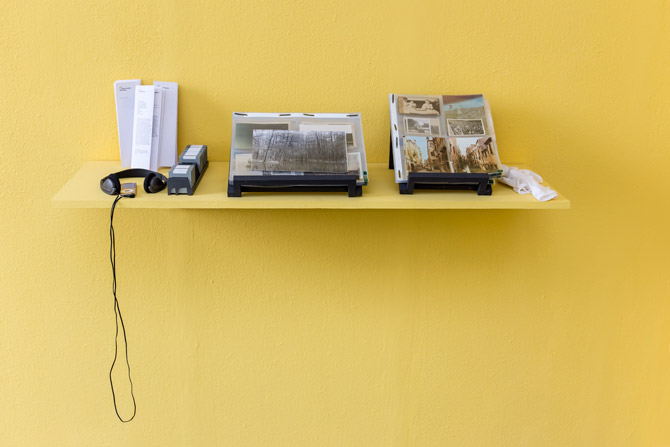
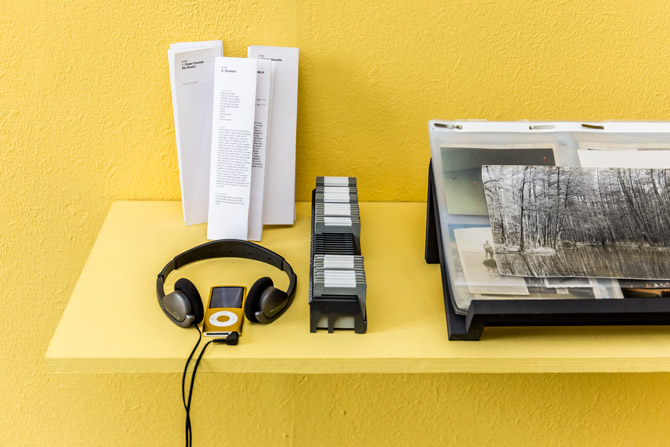
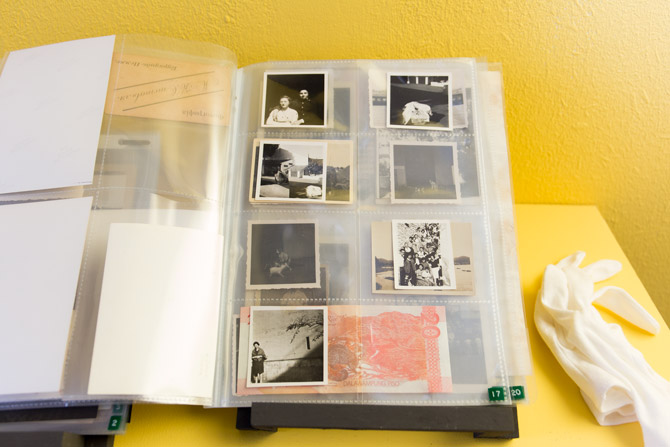
Photos: © Ana de Almeida & Stephanie Misa
Untitled (Yellow) (2017 PT)
Wall, yellow paint, memorabilia, diashow, stereo sound
A cooperation between Ana de Almeida (PT/AT) and Stephanie Misa (PH/AT) . This is a project about landscape as formal and informal disposition of elements. Coordinates. An arrangement, a hierarchy: borders and de-limitations, transpositions and transgressions, frames and their inside-outside, margins, and of course landscape — of the geographical, political, personal, and emotional nature. Edouard Glissant’s Traité du Tout-Monde. (Poétique IV), calls it archipelagic thinking, a group of islands that lends its topography to an alternative imaginary: a reassessment of the insularity of bound cultures, of nation-states, and the heaviness of “continental thought”. The archipelago is an alternative imaginary, one that posits that identity could be as a conglomeration of islands (composed of many, yet is one). Identity formation, embodiment, complex colonial histories, evolution, interconnectedness, diaspora and change — Oh to dispell the oppressive idea of nationalistic wholeness!
NICOLETA AUERSPERG
“Alles, was sich im Bereich menschlicher Angelegenheiten abspielt
![]()

- jedes
Ereignis,
Geschehnis,
jedes
Faktum
- könnte auch anders sein, und dieser Kontingenz sind keine Grenzen gesetzt.“
(Hannah Arendt)
#INSTALLATION #SPACE
#SCULPTURE #MATERIAL
BIO. Nicoleta Auersperg *1991, Buenos Aires has studied TransArt at the University of Applied Arts, Textual Sculpture at the Academy of Fine Arts, Vienna and in the Glass department at Rietveld Academie Amsterdam. Nicoleta Auersperg‘s work continuously (re-)explores the question of form-finding. She is concerned with its ambiguity, not only as a sculptural but also a societal process. In her artistic practice she investigates the character, qualities and origins of specific materials and social phenomena. Amidst ever more pervasive virtuality, Auersperg’s works return us to a place of sustained examination of and reflection on the very ‘matter’ surrounding us and our role or potential within it.

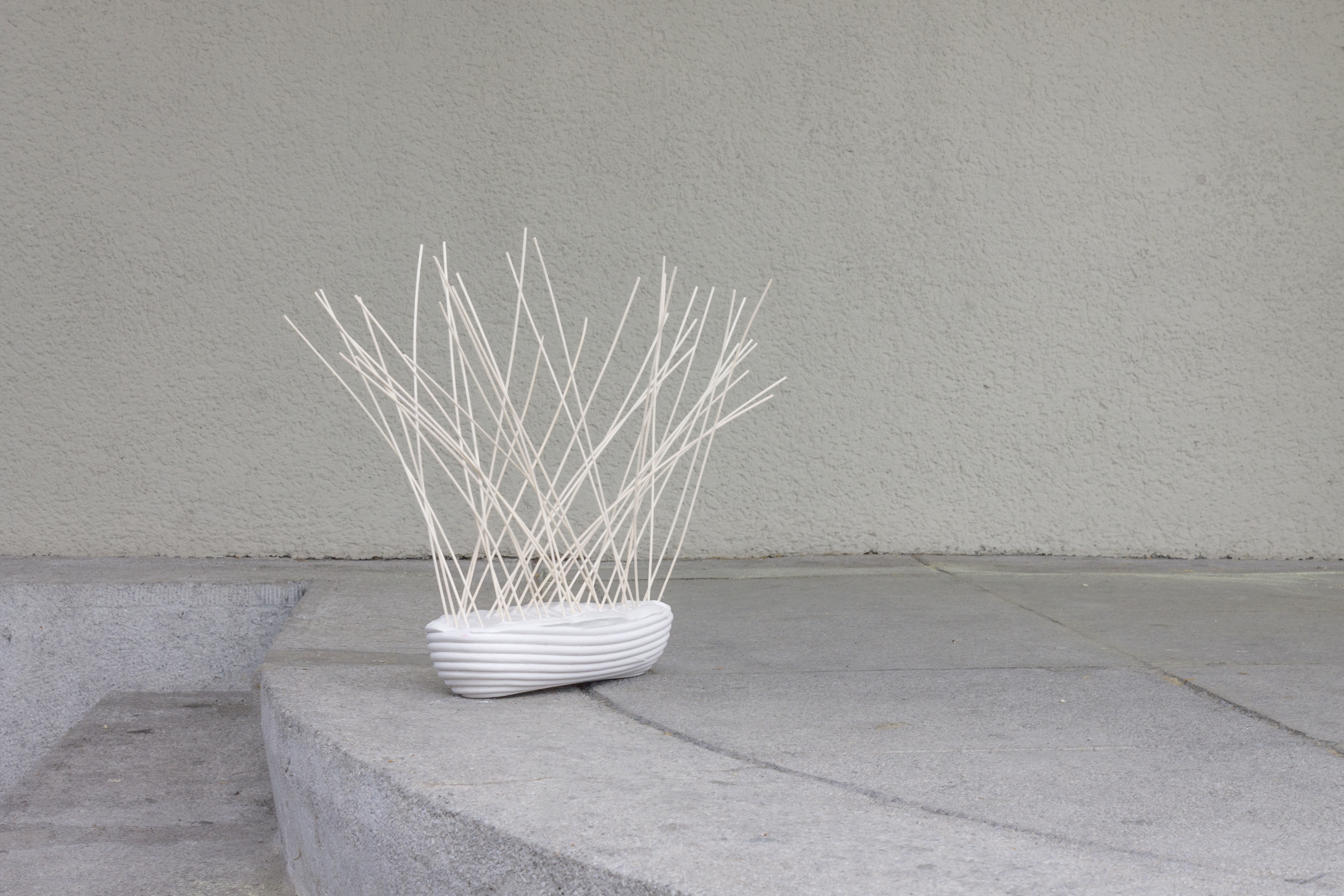
Photo: © Naomi Rincón Gallardo
Leave to rise (2020)
Sculpture
Leave to rise is a series of sculptures that takes up the Covid-19 Lockdown phenomena of excessive bread baking. Yeast became a scarce good only available at selective bakeries. Dough rising baskets, special baskets made out of wicker in which the dough is left to rise, were sold out. Instagram was full of proud people smiling next to their bread creations. It seems that in times where „staying at home“ became common sense people started to think of rye, spelt and sour dough. But what remains when the not so „system-relevant“ part of us gets send into short-time work by the state and the additional time is not able to be spent with the usual leisure distractions? The digital? Taking part in the transformative process of leavening and watching dough getting bigger and bigger may be an effective way to feel oneself as a productive individual. Furthermore it trains the impatient ones of us in patience — a skill highly useful during Lockdown.

Photo: © Naomi Rincón Gallardo
Besetzer (2019)
Sculpture
As if the material were still hot, the glass body sits on its platform. The process of shaping seems to be ongoing. As usual for many of my works I translate process into static sculptures. The series Besetzer is part of the exhibition hot to the touch that dealt with the phenomenon of defensive architecture in the public sphere.
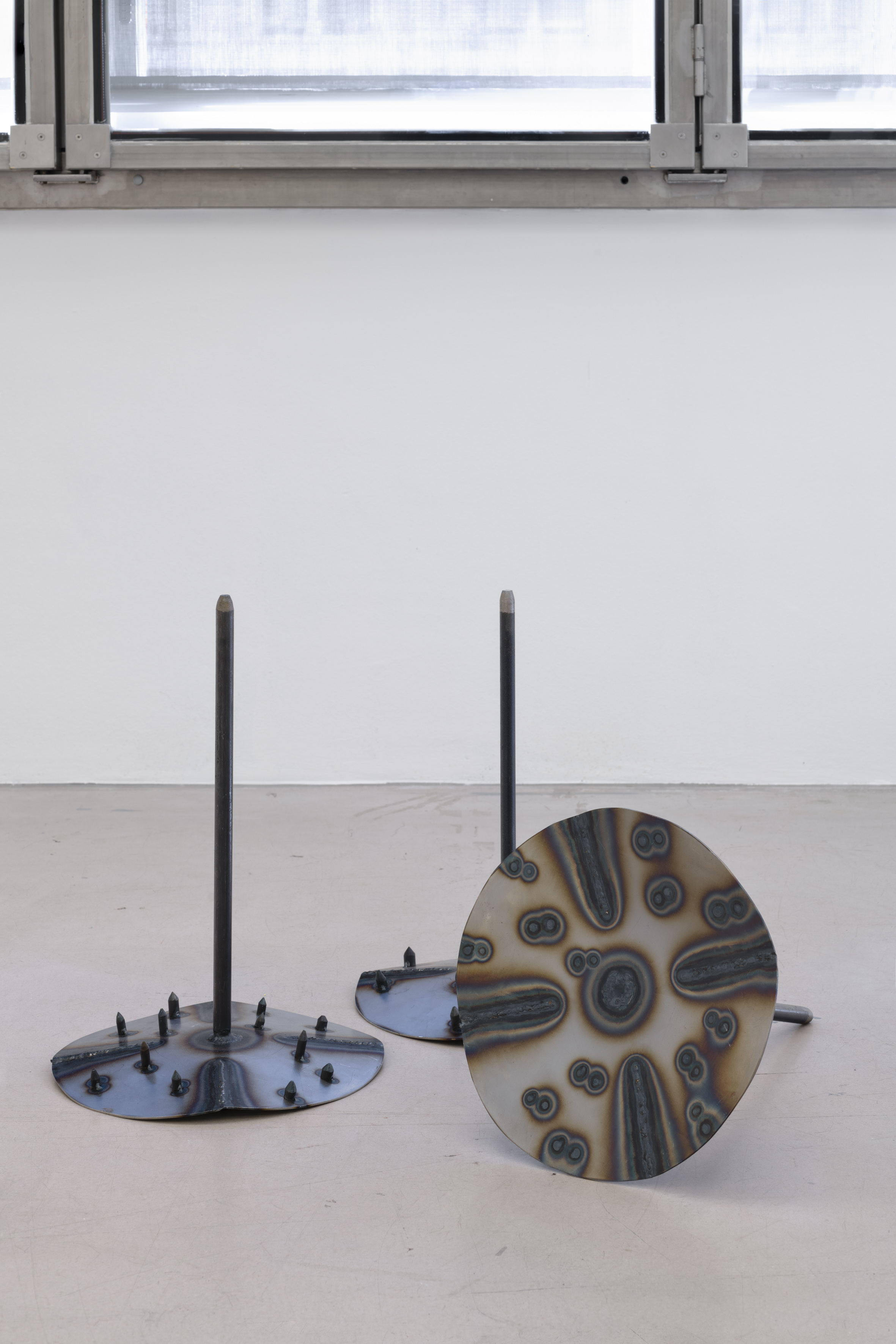
Photo: © Naomi Rincón Gallardo
Einbein (2019)
Sculpture
The design and architecture of public space always mirrors a social-political status quo: Benches with armrests may look convenient at first sight but hinder people of lying down, metal sheets with pyramids put on door steps may look as an aesthetical feature but discourage people from sitting down and having a rest, metal bars put up in public corners prevent homeless people tosettle themselves. These are examples of a phenomenon that is known as defensive architecture.
The objects Einbein are useable sculptures, transportable seating objects that become „activated“ by the beholder. By doing so the defensive part- the welded spikes, faces downwards and becomes eliminated.