

ANA DE ALMEIDA
“Ficou
a ver
passar
navios.”
#ARTS-BASED RESEARCH #ARCHITECTURE #COMMONS #INSTALLATION #SPACE #MULTIMEDIA #IDENTITY #PERFORMANCE
#NEO-COLONIAL #VIDEO #GENDER
BIO. Ana de Almeida (b.1987) is an artist and author from Lisbon, currently based in Vienna. She is a member of the artists’
collective dienstag abendof
of VBKÖ and of the Interndinner collective against precarization of work in the cultural field. Her artistic practice addresses memory and remembering processes, narrative constructions that connect space and subject, and plurispatial and multilayered narratives in general.
Ana de Almeida is currently a Ph.D. candidate at the Academy of Fine Arts of Vienna, pursuing a doctoral thesis about the production of images in the 1974—1989 inter-revolutionary space between the Carnation and the Velvet Revolutions.
Ana de Almeida is currently a Ph.D. candidate at the Academy of Fine Arts of Vienna, pursuing a doctoral thesis about the production of images in the 1974—1989 inter-revolutionary space between the Carnation and the Velvet Revolutions.
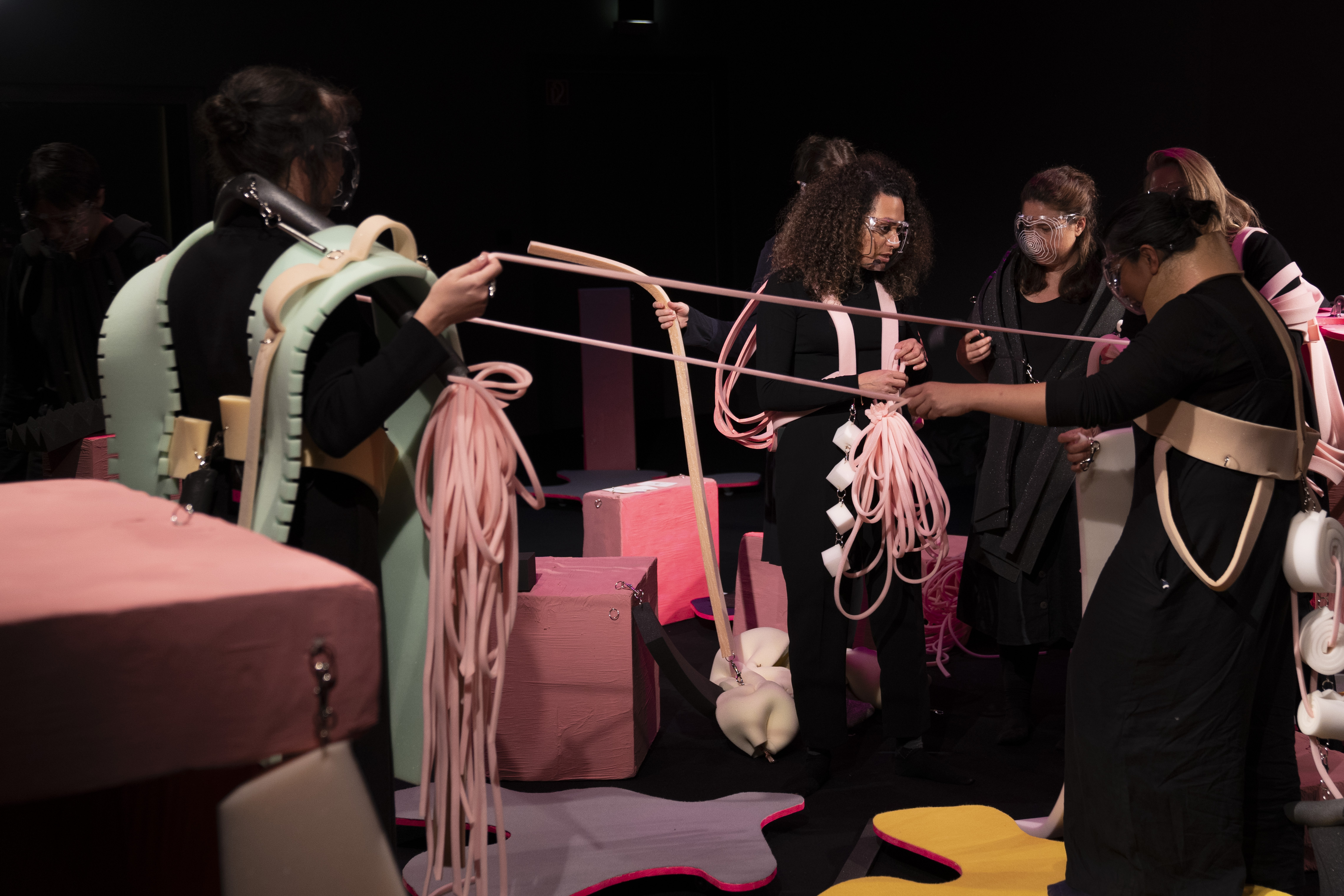
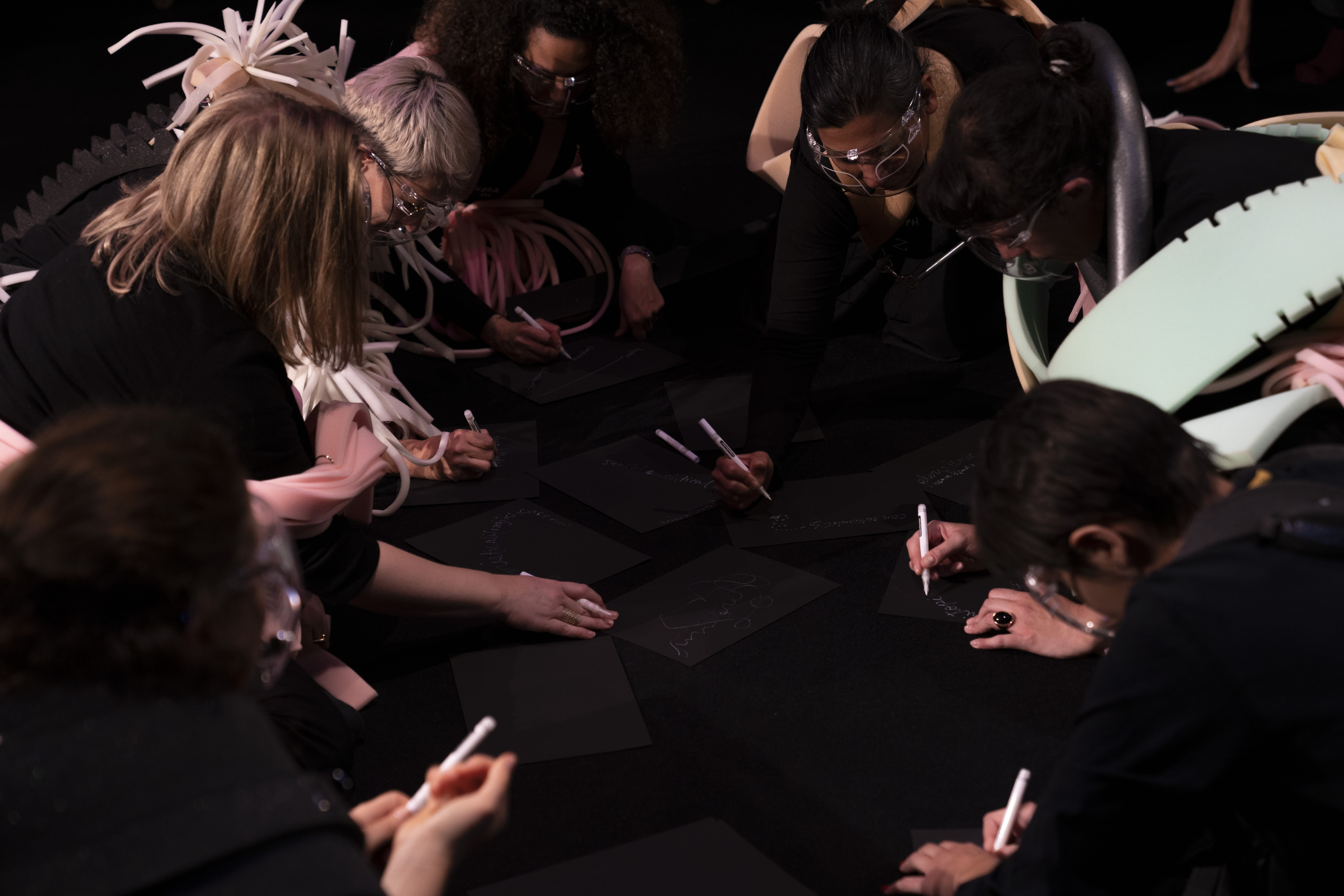
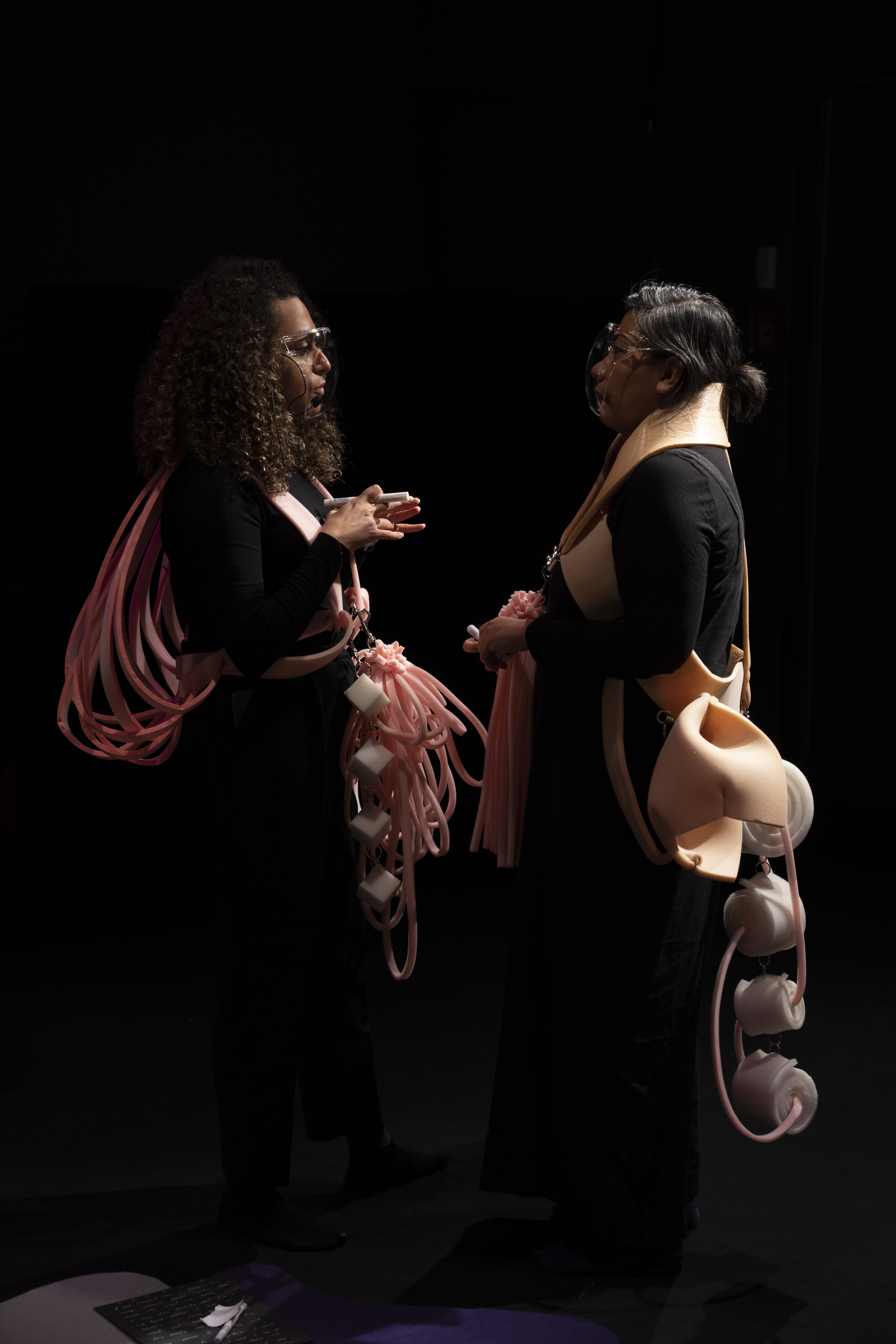

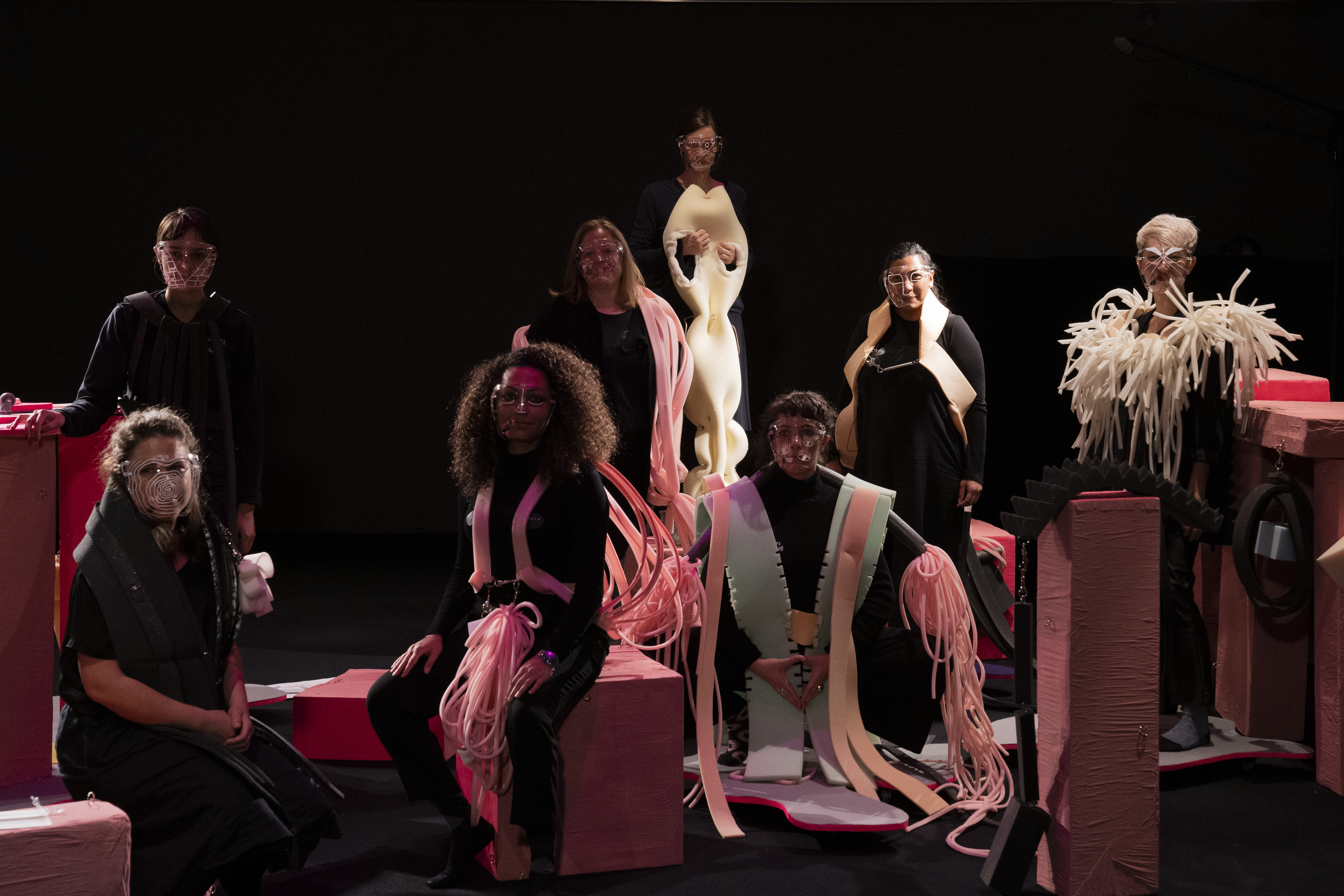
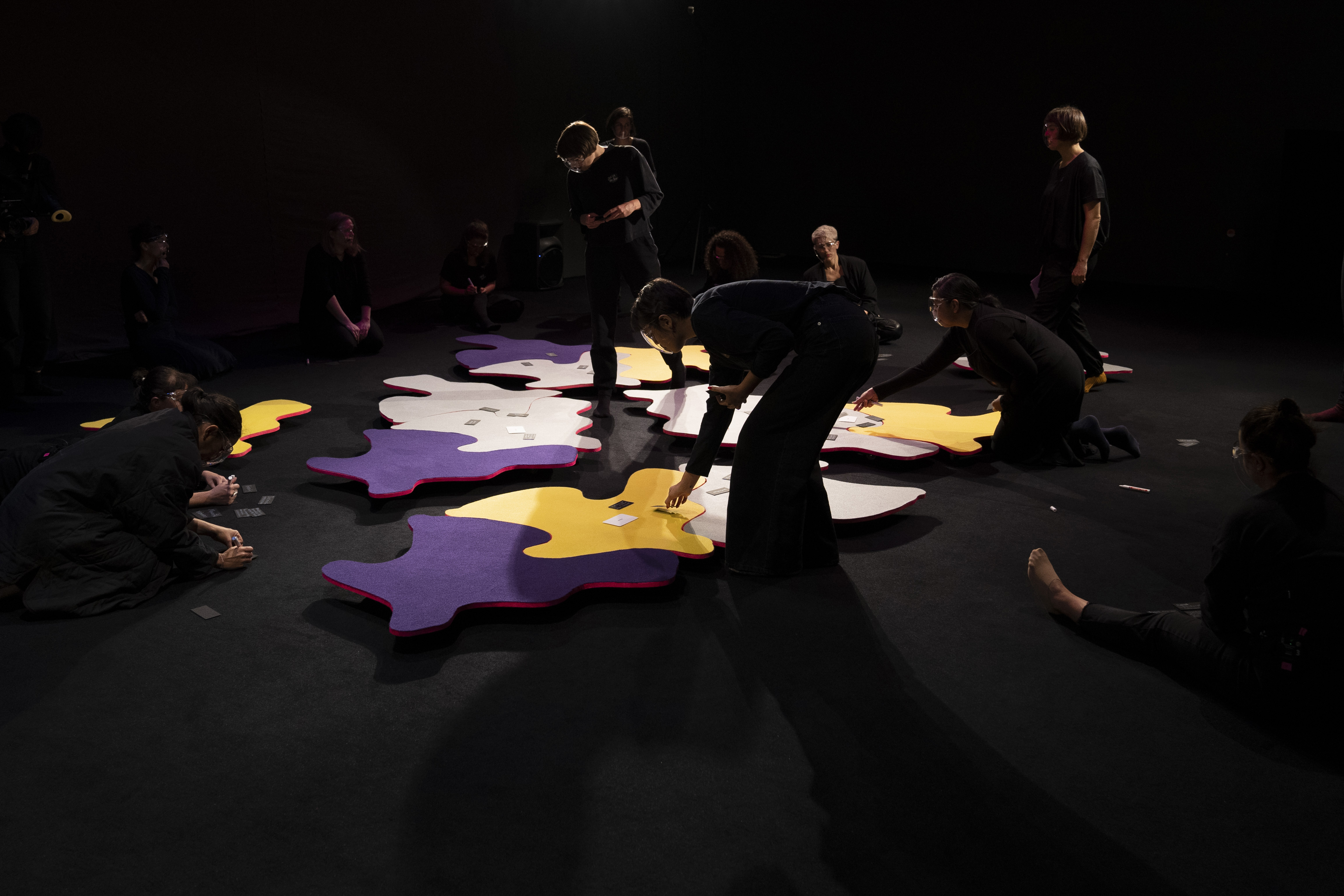
Ana de Almeida, Alicja Rogalskaand & Vanja Smiljanic
NOVA. Future thoughts on surviving together (2020 AT)
Live Action Role Play
In the future, gender inequality was erased. Nova is a multitude of newly born, radically inclusive and self-managed communities. Heterogeneous in their forms of commoning and social organization, Nova share a vow to never let oppression in any form rise again. Nova. Future thoughts on surviving together is a feminist futurist LARP - Live Action Role Play by Ana de Almeida, Alicja Rogalska and Vanja Smiljanić; directed towards feminist and queer-feminist activists based in Vienna. NOVA is a day of speculative gaming aimed at sharing survival strategies, exercising solidarity and intersectionality, creating solidarity networks and forming new alliances between different emancipatory movements. Together, we created a piece of feminist political fiction - a work in progress and a world free of patriarchal oppression in the making.
With: VBKÖ, Saloon Wien, Kunst & Kind, Latinxs Unidxs, Kültür Gemma, Cine Collective, Mala Sirena, female:pressure.


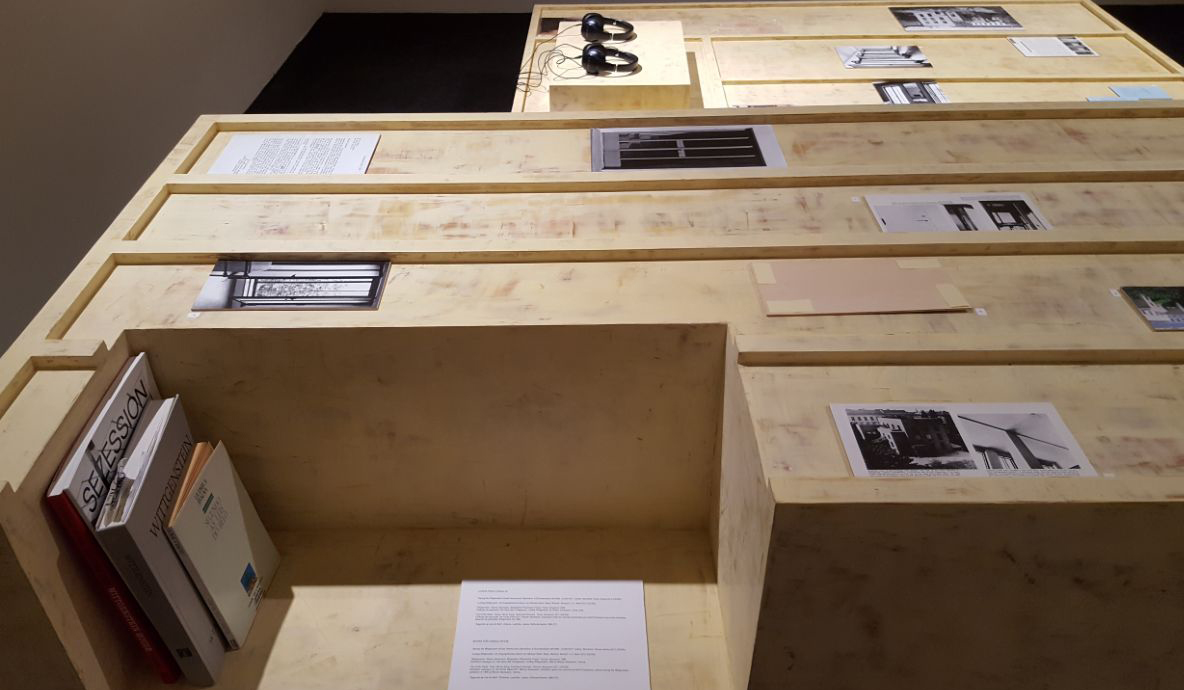
A Casa / The House The flat / Die Fläche (2018 PT)
MDF, stucco-lustro, stereo sound 42'5'' looped
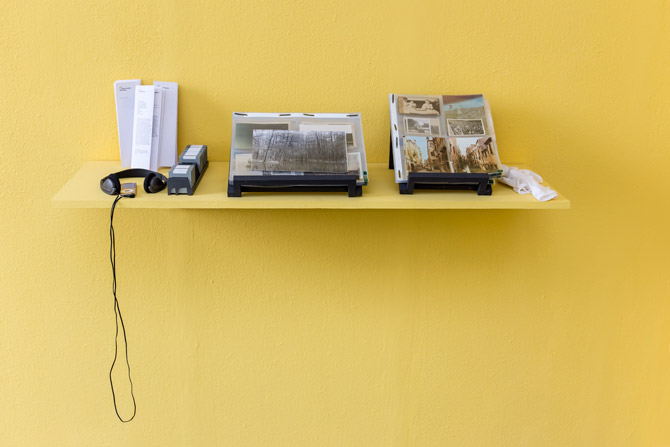
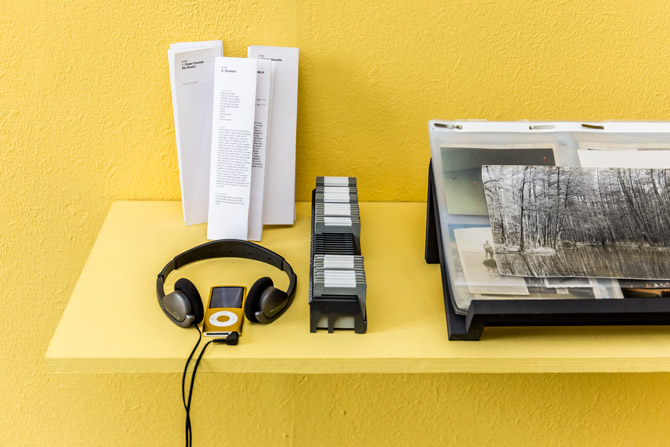
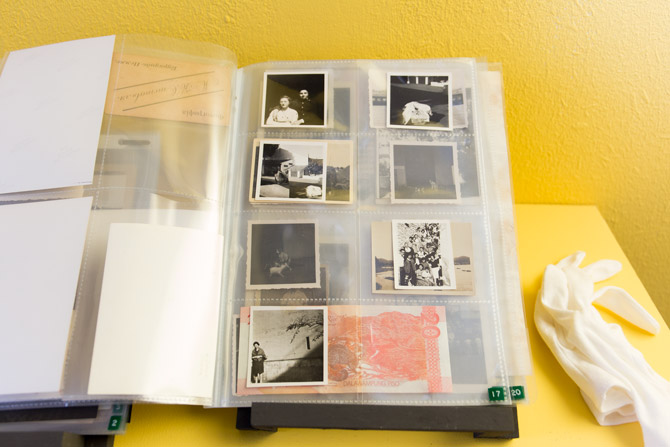
Likewise a sculpture, A Casa (The House) shares the aesthetic and architectonic language of the House Wittgenstein in Vienna. The two volumes are a transposition and folding down of two of its architectonic elements: a window and the vestibule door. They serve as display for documental material such as letters and photos and incorporate an audio piece with interviews led by the artist. The surface is covered by stucco-lustro, a coating technique proliferating in Vienna on the turn to the 20th century, similar to how could the original coating of the walls of the House Wittgenstein have looked like before they were painted white after World War II. The highlighting of the stucco-lustro architectonic detail points out to a fundamental discovery for the understanding of the house as aesthetic experiment in which the house interiors, composed by materials which evoke extreme hardness, seem to dematerialize through the highly reflecting properties of the stucco walls.

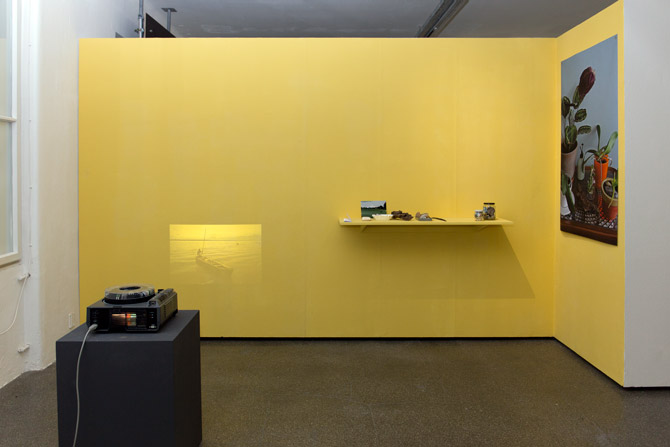
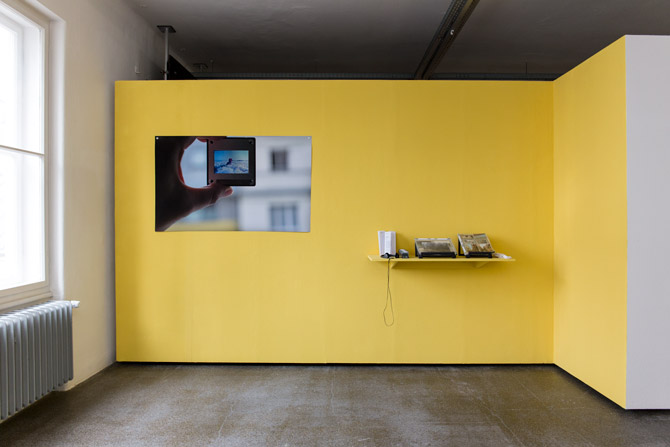
Photos: © Ana de Almeida & Stephanie Misa
Untitled (Yellow) (2017 PT)
Wall, yellow paint, memorabilia, diashow, stereo sound
A cooperation between Ana de Almeida (PT/AT) and Stephanie Misa (PH/AT) . This is a project about landscape as formal and informal disposition of elements. Coordinates. An arrangement, a hierarchy: borders and de-limitations, transpositions and transgressions, frames and their inside-outside, margins, and of course landscape — of the geographical, political, personal, and emotional nature. Edouard Glissant’s Traité du Tout-Monde. (Poétique IV), calls it archipelagic thinking, a group of islands that lends its topography to an alternative imaginary: a reassessment of the insularity of bound cultures, of nation-states, and the heaviness of “continental thought”. The archipelago is an alternative imaginary, one that posits that identity could be as a conglomeration of islands (composed of many, yet is one). Identity formation, embodiment, complex colonial histories, evolution, interconnectedness, diaspora and change — Oh to dispell the oppressive idea of nationalistic wholeness!

ROSIE BENN
“ In this world of
apparent order,
unruly moments
also take place.
Where
these
edges fray and curl
might be the reason why
we feel like going on at all.
”
#INSTALLATION #FABULATION #PERFORMANCE #SCULPTURE
BIO. Rosie Benn-Squire is a transdisciplinary artist and researcher based in Vienna whose work is inspired by dialogical aesthetics, critical theory, and queer ecologies. Her practice explores environmental discourses through non-linear narratives. The work navigates regenerative approaches, applying the technique of collage to various mediums such as drawing, performance, video or situational works which seek alternative cosmologies and kinships.
For Rosie, art is a process with which epistemologies can be poetically and holistically engaged. In which supposed mess, with the right tending to, can make space for complex meanings and absurd truths.
For Rosie, art is a process with which epistemologies can be poetically and holistically engaged. In which supposed mess, with the right tending to, can make space for complex meanings and absurd truths.
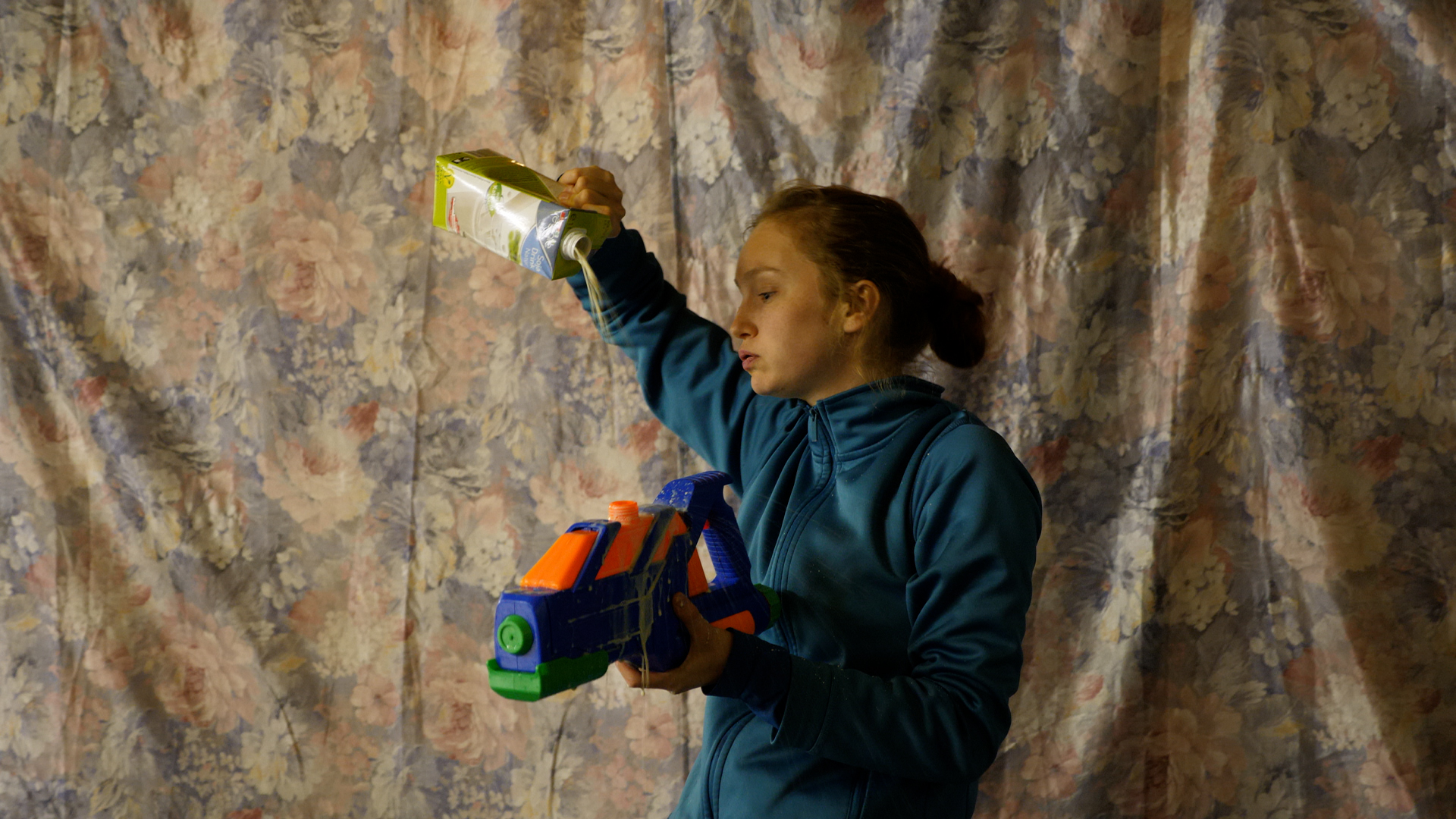
What’s easier to train, a cat or a human?
(2020)
Lecture-Performance
The Lecture-Performance explores ethical paradoxes encountered when raising cats. A backyard garden ecosystem and cat food packaging are analysed concerning cultural and legal constructions of so-called animal and human interrelations.
Props are used as cues to trigger stories about the ontology of everyday artefacts and objects. Excerpts include the on-site artistic research and interviews conducted with alternative food production and living together projects in vegan agriculture, forest gardening and animal sanctuary.
Elements of strain and contradiction are embraced rather than hidden when delving into this personal interpretation of the current ecological and social crisis. Investigating the experience of mutual struggle in re-training, how ones habits, contradictions and dependencies can be a lens for societal matters.
‘If this is an awful mess...then wouldn’t something less messy make a mess of trying to describe it?’
John Law, After Method: mess in social science research

Photo: © Johanna Folkmann
The State of the Observer (2017)
Research Video
Rosie Benn & Johanna Folkmann
Sound by Gregor Glavanovitz & Sebastian Pfeiffhofer
Reflecting on different statuses of observing. In the context of an open source project like CERN, where do the boundaries begin and end for this scientific setting and its team?
How can the scene for a production of knowledge be portrayed and how did our interchanging role as Artist and Tourist at CERN affect this?
Can we think of technology as an isolated product of genius engineering or does the exploitative rabbit in the magician’s hat (Hornborg, 2017) put a strain on the paradoxical entanglement of progress?
How might we position ourselves concerning our own practice in art, science and everyday routine within a complex system of cultural contradictions? (Decter, 2013).
All of which are stickily entangled in the artifact network and globalised industry (Hornborg, 2016).
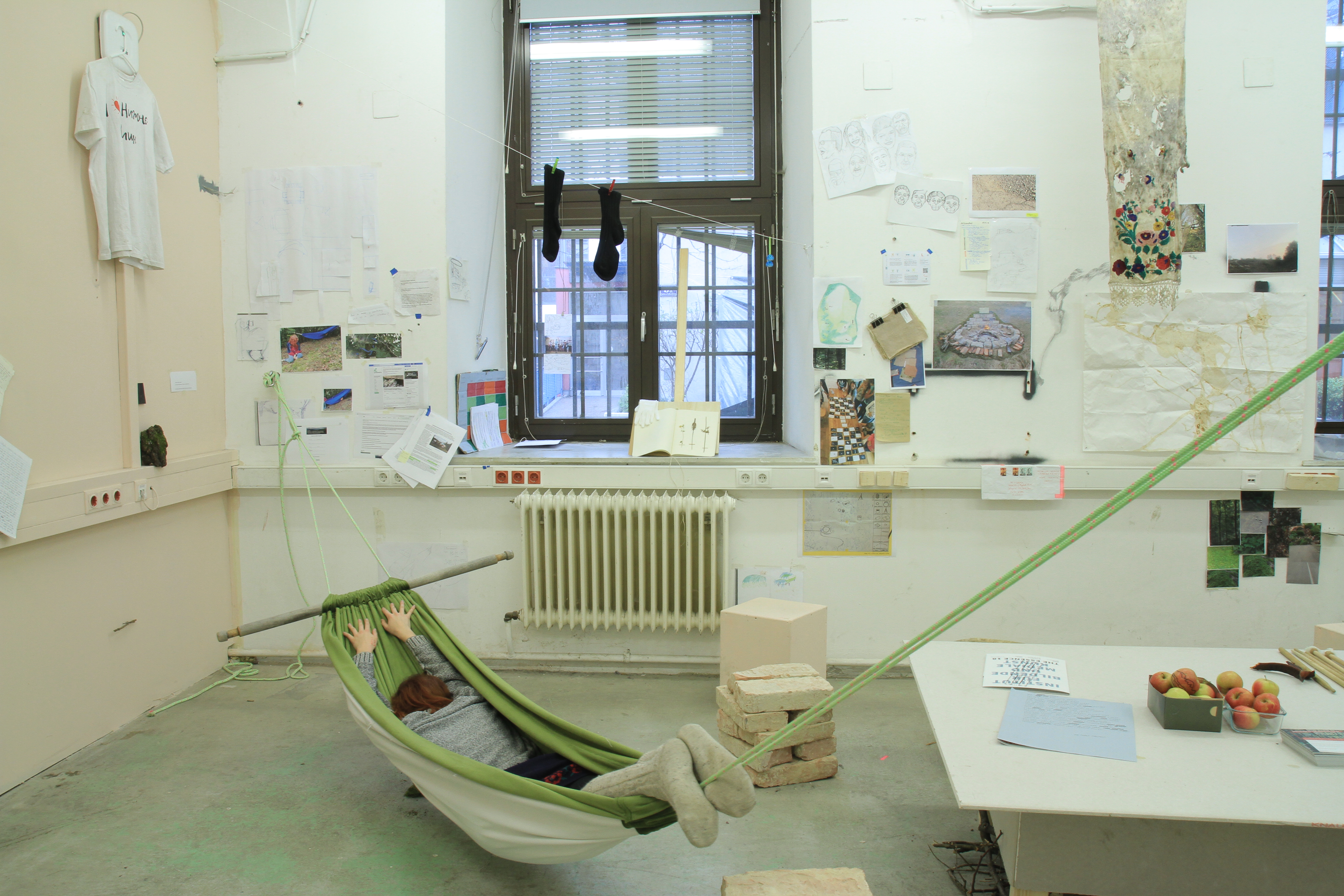
How to make a sanctuary out of a shit situation? In life and environmental politics (2018-19)
Tool for contemplation
I started with a plan to make a zip wire in response to a ski resort dilemma. However, heartbroken, my weary body couldn’t keep up. After wrestling with ropes and metal clips the result proved quite lame. So, I surrendered to my floppy heart and took a different pace.
Residing in a mossy space, in which a tool for contemplation developed, one for tuning in and out. Through the hammock window others described to me what they saw. An ant passing by, weaving in and out of the mossy humps and hills along the ground. We spoke about what it must be like to be so small, and if we were another animal, which we would like to be. A boy said he would like to be a bat so that he could fly around at night when no one was around. What the hell does this have to do with environmental politics?
Well, it taught me that on a very basic level, sometimes when you take an action that feels right for you, the right people come. What if we had the chance to take more time looking through hammock windows?