

ANA DE ALMEIDA
“Ficou
a ver
passar
navios.”
#ARTS-BASED RESEARCH #ARCHITECTURE #COMMONS #INSTALLATION #SPACE #MULTIMEDIA #IDENTITY #PERFORMANCE
#NEO-COLONIAL #VIDEO #GENDER
BIO. Ana de Almeida (b.1987) is an artist and author from Lisbon, currently based in Vienna. She is a member of the artists’
collective dienstag abendof
of VBKÖ and of the Interndinner collective against precarization of work in the cultural field. Her artistic practice addresses memory and remembering processes, narrative constructions that connect space and subject, and plurispatial and multilayered narratives in general.
Ana de Almeida is currently a Ph.D. candidate at the Academy of Fine Arts of Vienna, pursuing a doctoral thesis about the production of images in the 1974—1989 inter-revolutionary space between the Carnation and the Velvet Revolutions.
Ana de Almeida is currently a Ph.D. candidate at the Academy of Fine Arts of Vienna, pursuing a doctoral thesis about the production of images in the 1974—1989 inter-revolutionary space between the Carnation and the Velvet Revolutions.
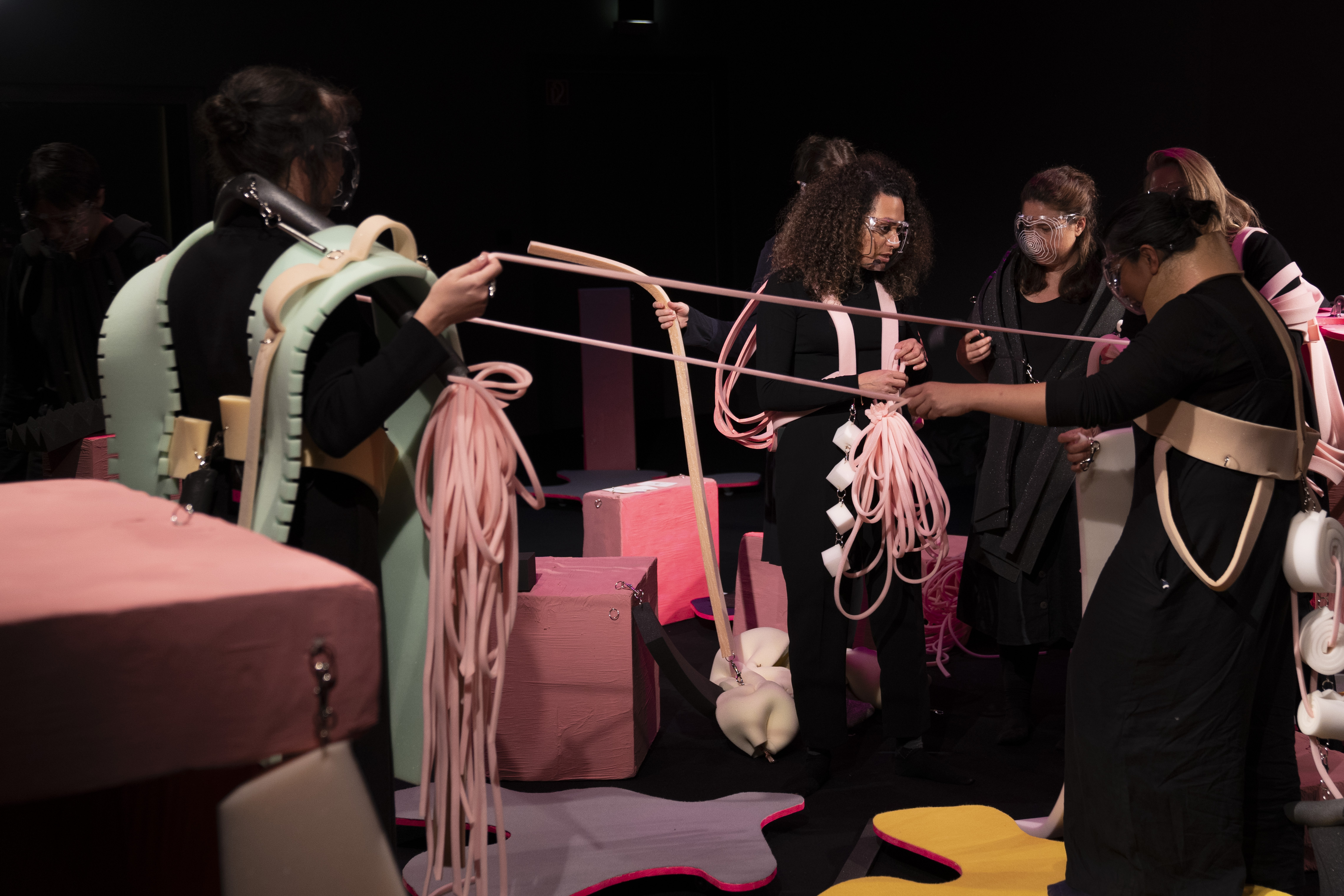
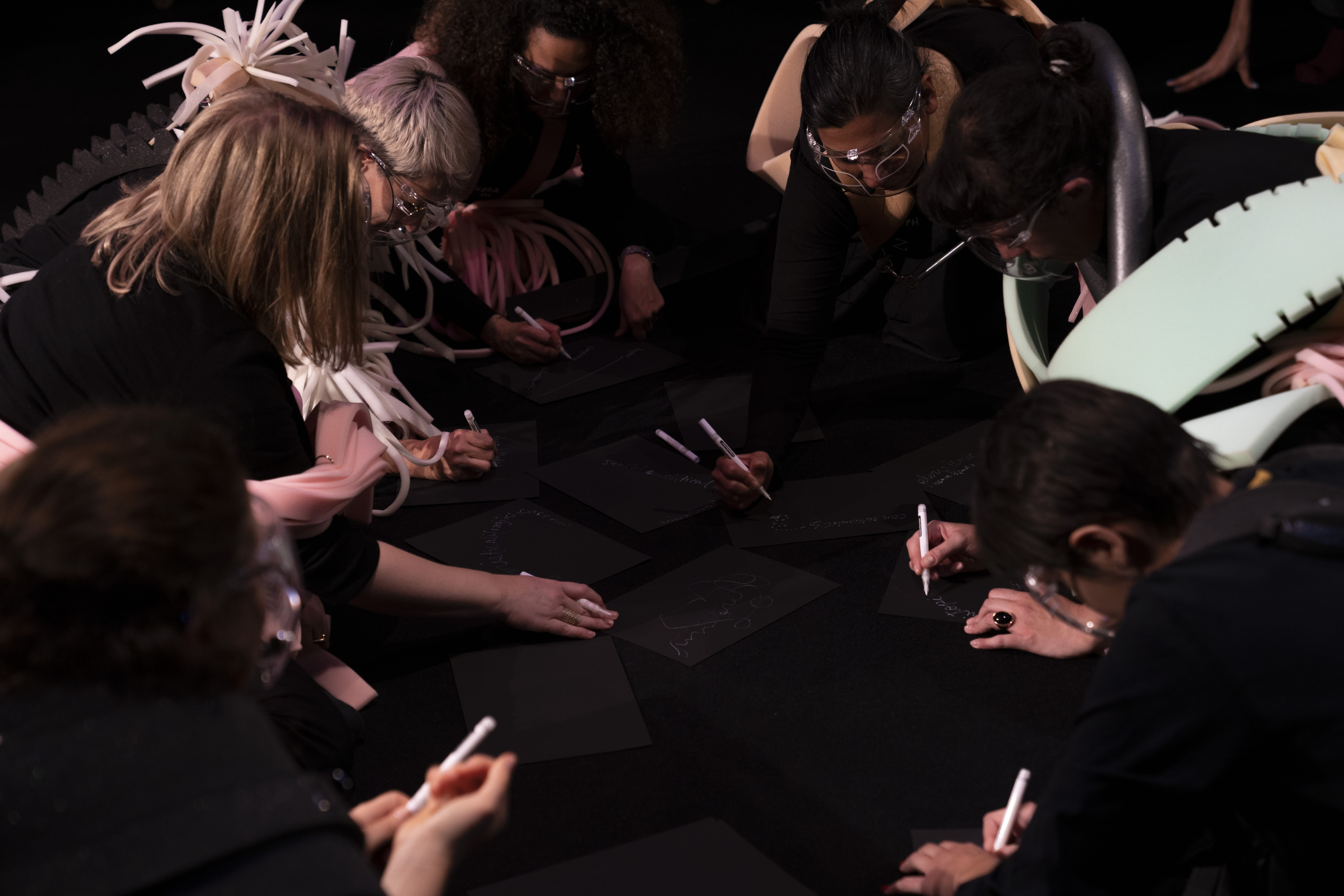
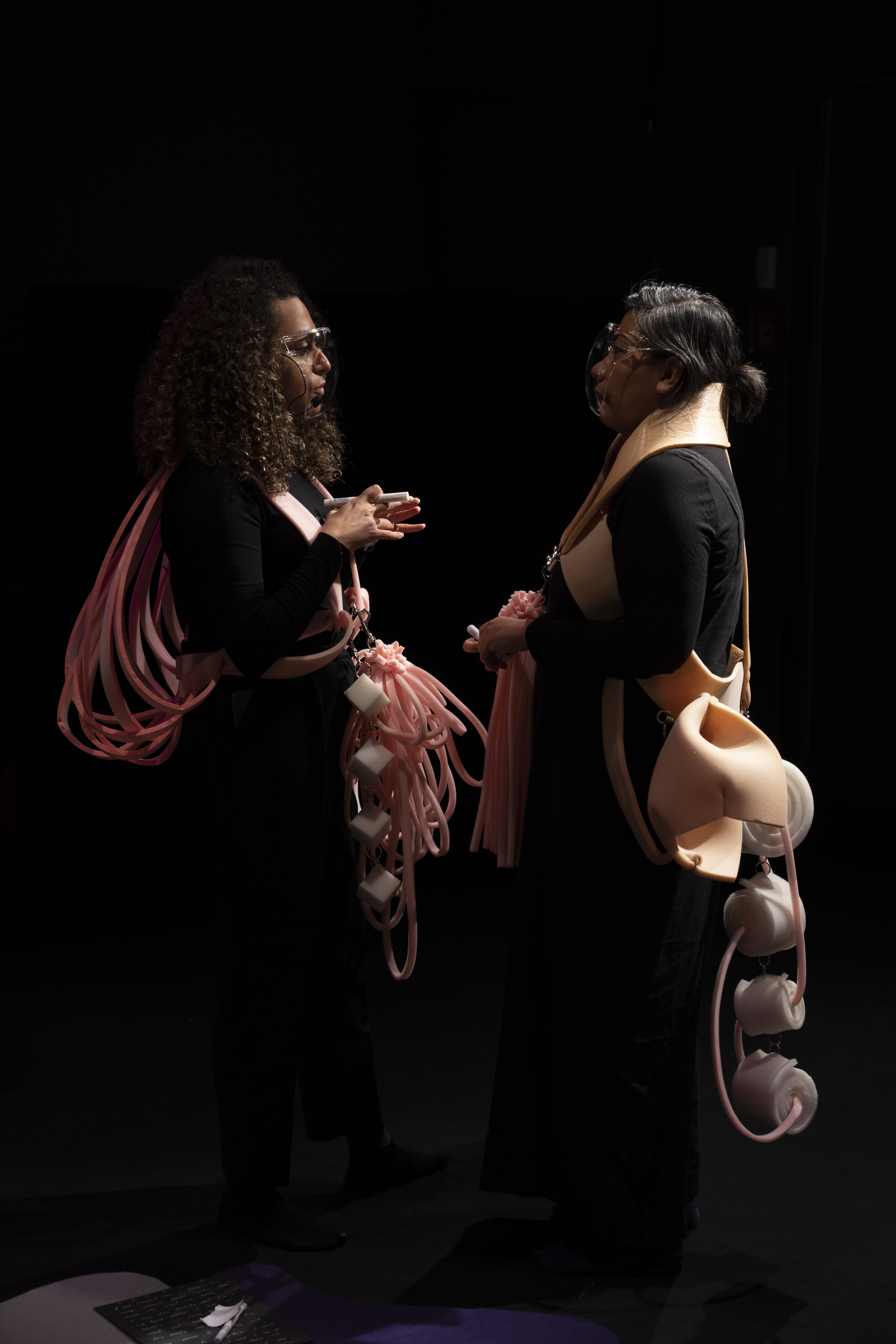

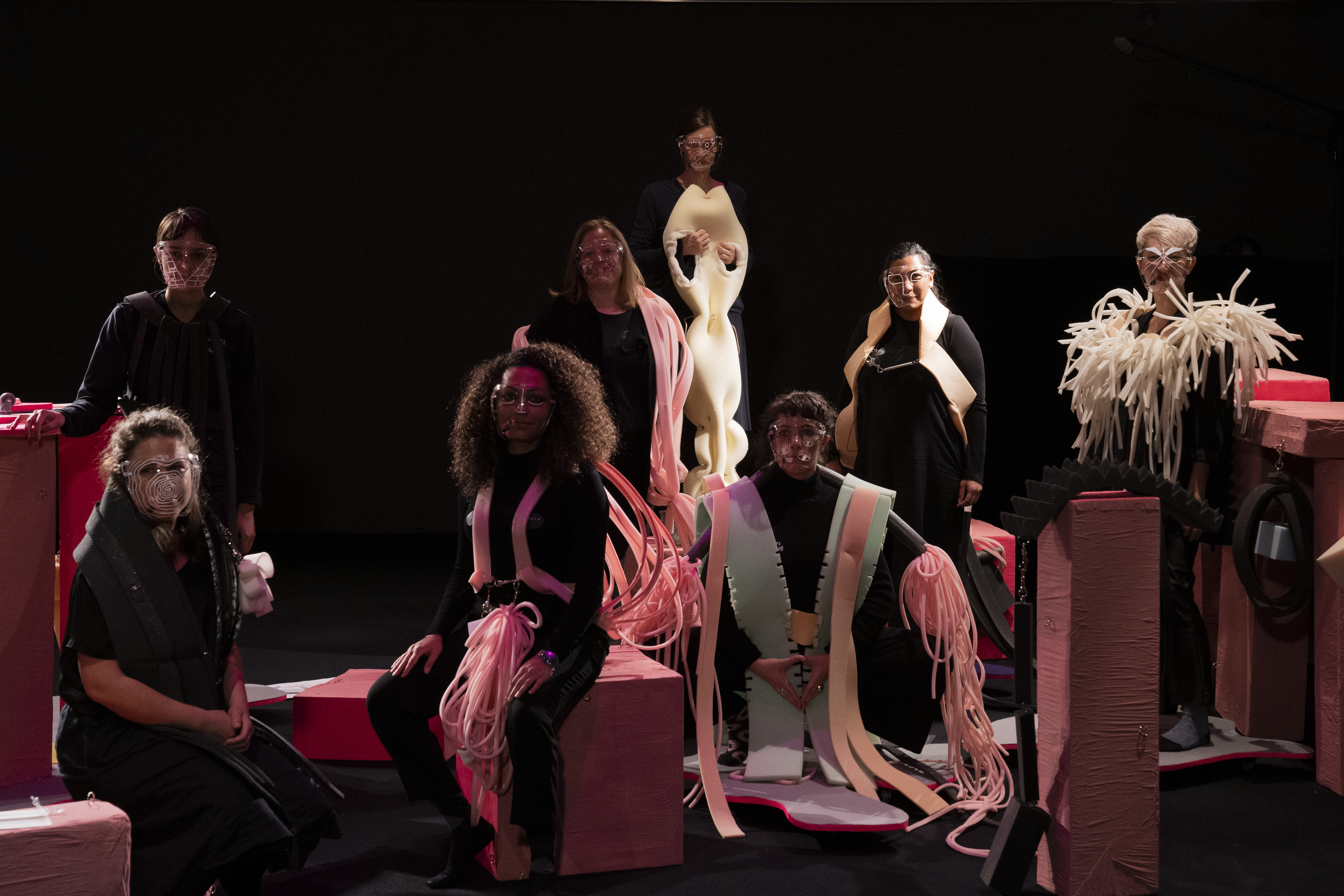
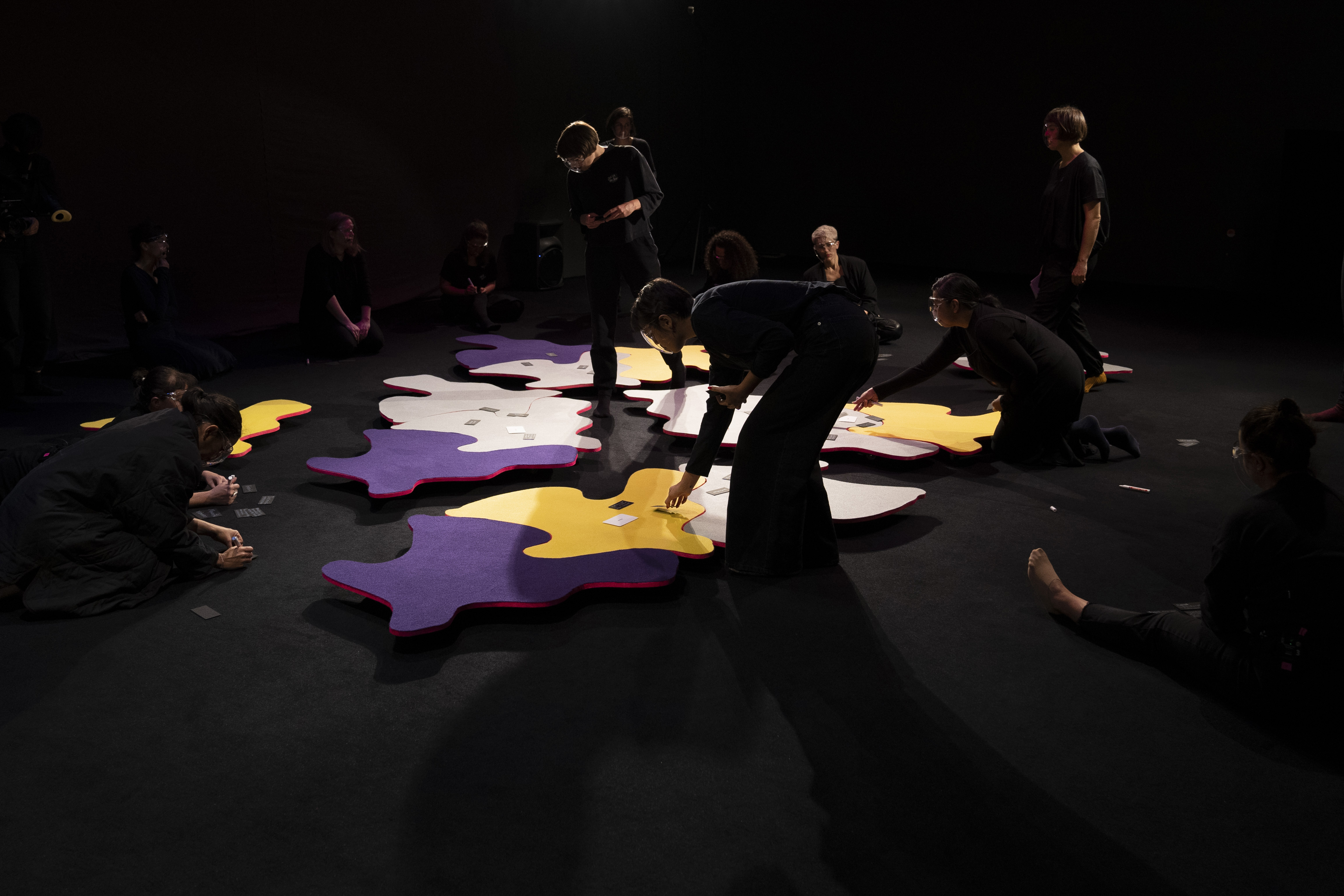
Ana de Almeida, Alicja Rogalskaand & Vanja Smiljanic
NOVA. Future thoughts on surviving together (2020 AT)
Live Action Role Play
In the future, gender inequality was erased. Nova is a multitude of newly born, radically inclusive and self-managed communities. Heterogeneous in their forms of commoning and social organization, Nova share a vow to never let oppression in any form rise again. Nova. Future thoughts on surviving together is a feminist futurist LARP - Live Action Role Play by Ana de Almeida, Alicja Rogalska and Vanja Smiljanić; directed towards feminist and queer-feminist activists based in Vienna. NOVA is a day of speculative gaming aimed at sharing survival strategies, exercising solidarity and intersectionality, creating solidarity networks and forming new alliances between different emancipatory movements. Together, we created a piece of feminist political fiction - a work in progress and a world free of patriarchal oppression in the making.
With: VBKÖ, Saloon Wien, Kunst & Kind, Latinxs Unidxs, Kültür Gemma, Cine Collective, Mala Sirena, female:pressure.


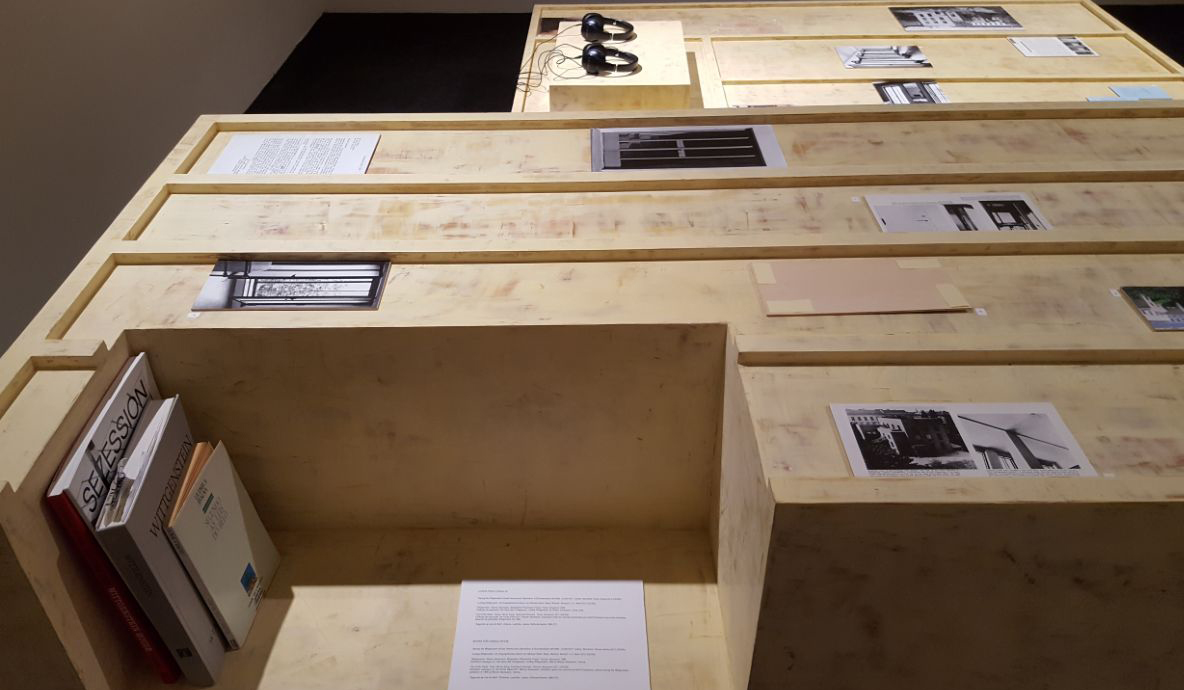
A Casa / The House The flat / Die Fläche (2018 PT)
MDF, stucco-lustro, stereo sound 42'5'' looped
Likewise a sculpture, A Casa (The House) shares the aesthetic and architectonic language of the House Wittgenstein in Vienna. The two volumes are a transposition and folding down of two of its architectonic elements: a window and the vestibule door. They serve as display for documental material such as letters and photos and incorporate an audio piece with interviews led by the artist. The surface is covered by stucco-lustro, a coating technique proliferating in Vienna on the turn to the 20th century, similar to how could the original coating of the walls of the House Wittgenstein have looked like before they were painted white after World War II. The highlighting of the stucco-lustro architectonic detail points out to a fundamental discovery for the understanding of the house as aesthetic experiment in which the house interiors, composed by materials which evoke extreme hardness, seem to dematerialize through the highly reflecting properties of the stucco walls.

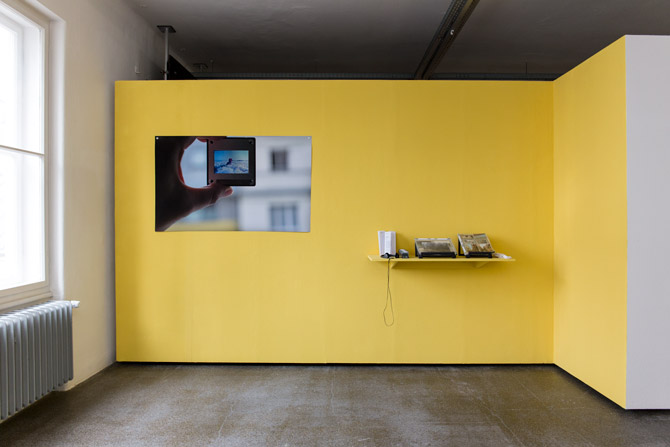
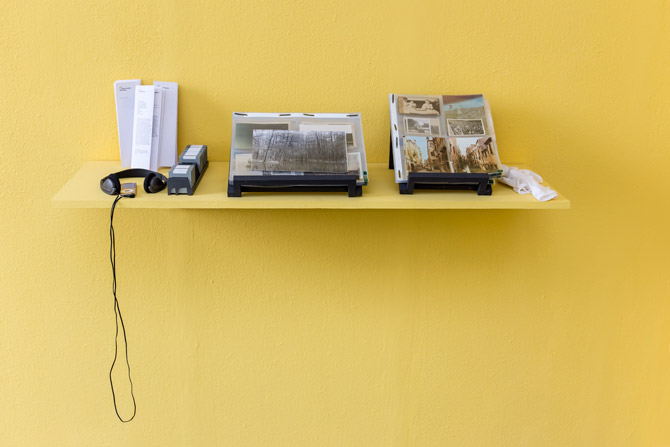
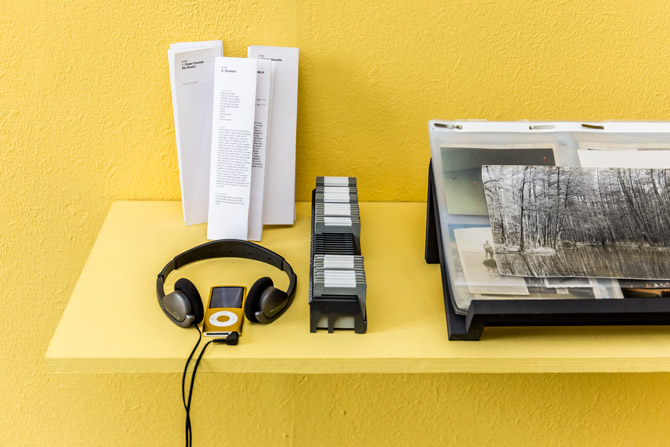
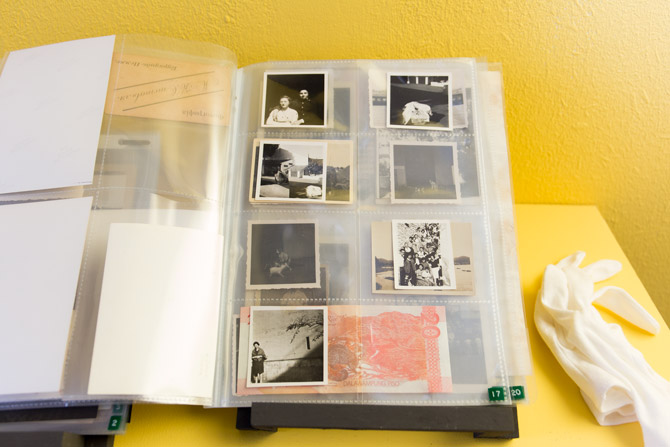
Photos: © Ana de Almeida & Stephanie Misa
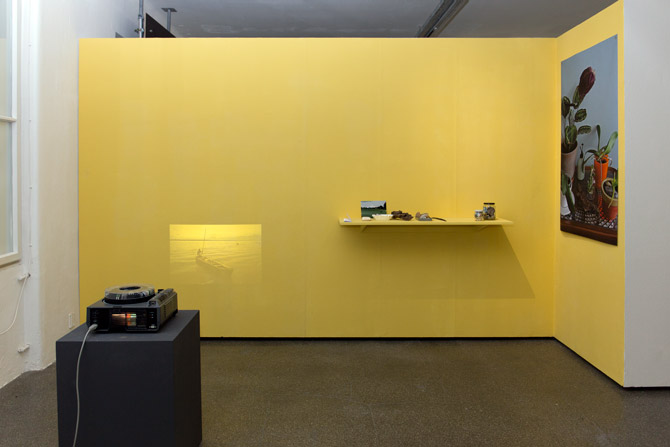
Untitled (Yellow) (2017 PT)
Wall, yellow paint, memorabilia, diashow, stereo sound
A cooperation between Ana de Almeida (PT/AT) and Stephanie Misa (PH/AT) . This is a project about landscape as formal and informal disposition of elements. Coordinates. An arrangement, a hierarchy: borders and de-limitations, transpositions and transgressions, frames and their inside-outside, margins, and of course landscape — of the geographical, political, personal, and emotional nature. Edouard Glissant’s Traité du Tout-Monde. (Poétique IV), calls it archipelagic thinking, a group of islands that lends its topography to an alternative imaginary: a reassessment of the insularity of bound cultures, of nation-states, and the heaviness of “continental thought”. The archipelago is an alternative imaginary, one that posits that identity could be as a conglomeration of islands (composed of many, yet is one). Identity formation, embodiment, complex colonial histories, evolution, interconnectedness, diaspora and change — Oh to dispell the oppressive idea of nationalistic wholeness!
VERENA TSCHERNER

#ANIMATION #AUGMENTED REALITY #DIGITAL #INSTALLATION #BODY #INTERACTIVE #MULTIMEDIA #SOUND #VIDEO
BIO. Born in Tyrol, Verena Tscherner moved to Vienna shortly after her graduation. She studied at the university of music (MDW) in Vienna and graduated in 2014. From October 2018 to June 2019 she made her photo-diploma at School Friedl Kubelka, school for artistic photography. Since October 2019 Tscherner studies digital art, class Ruth Schnell, at the University of Applied Arts Vienna. She lives and works as a freelance artist in Vienna.


Photos: © Joerg Auzinger
Watch video here
Fit In (2019)
Interactive video installation
The world is running in circles. The world is running in such circles, that you could think that history is repeating itself, over and over again. At the same time, technical progress and digital exchange are unstoppable and pick up speed, minute by minute. Humans strive to follow this speed by boosting their bodies with endorphins, which they release by excessively practicing diverse types of sport. They want to be able to meet the challenge of this increasing tempo and prevent the possibility of falling off the rushing train of technical progress. More and more people nowadays are looking for physical exercise, to perfect themselves, in hope to establish the optimal conditions, to keep up with this enormous pace of the world– in fact, to shine.



Photos: © Zoe Opratko
Mirror, Mirror... (2020)
interactive installation and performance
The interactive installation Mirror, Mirror… is based partially on the fairy tale of Snow White, and partially on the Greek myth of Narcissus, who conducts a concrete examination of his own virtual image. The original idea was to produce an interactive video installation in real space. However, due to the Covid-19 crisis, this was converted into an online performance.
Do user profiles on social networks blur reality too much?
Can the separation of this real-digital “fusion” be restored?
Can a concrete interaction with one’s own body in partnership with its digitally-created mirror image lead to an intensified awareness of the physical body?




Photos: © Verena Tscherner, Ana Loureiro
Photography
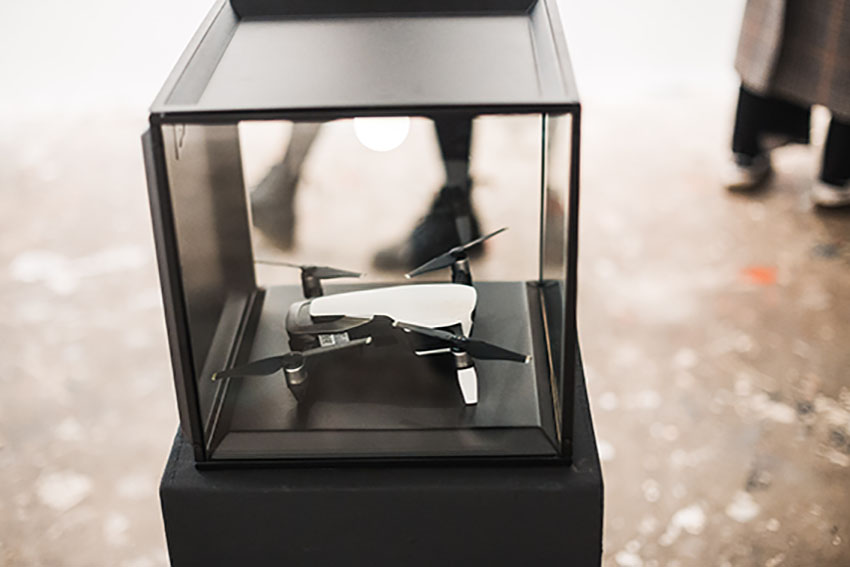
Since the digital revolution has already been carried out, and technical devices like smartphones, camera drones or the internet are part of our daily lives, one could refer to our era as post–digital. This brings up the question as to how much Agamben could have anticipated the further development of the gesture in 1996. My art project “The Gestures of the Post Digital Age” wants to examine these exact queries.
Furthermore, I’m asking myself what the rise of digital devices means for our daily body language, our daily gestures, and whether or not these “post–digital gestures”, which are broadened again and again through the introduction of new devices, inhere a certain coding that relates them closely to Agambens characterization of a gesture.