

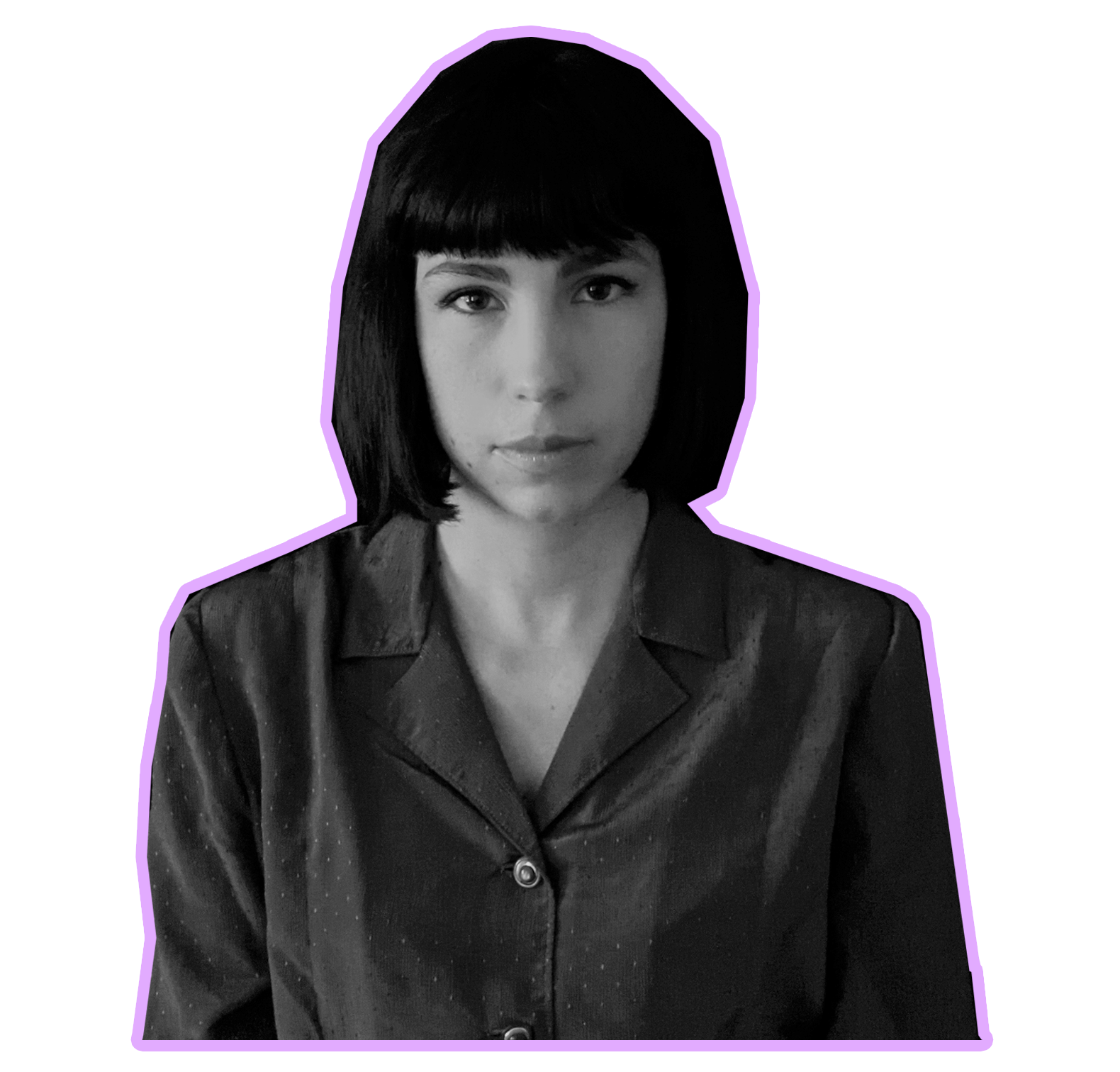
ANA DE ALMEIDA
“Ficou
a ver
passar
navios.”
#ARTS-BASED RESEARCH #ARCHITECTURE #COMMONS #INSTALLATION #SPACE #MULTIMEDIA #IDENTITY #PERFORMANCE
#NEO-COLONIAL #VIDEO #GENDER
BIO. Ana de Almeida (b.1987) is an artist and author from Lisbon, currently based in Vienna. She is a member of the artists’
collective dienstag abendof
of VBKÖ and of the Interndinner collective against precarization of work in the cultural field. Her artistic practice addresses memory and remembering processes, narrative constructions that connect space and subject, and plurispatial and multilayered narratives in general.
Ana de Almeida is currently a Ph.D. candidate at the Academy of Fine Arts of Vienna, pursuing a doctoral thesis about the production of images in the 1974—1989 inter-revolutionary space between the Carnation and the Velvet Revolutions.
Ana de Almeida is currently a Ph.D. candidate at the Academy of Fine Arts of Vienna, pursuing a doctoral thesis about the production of images in the 1974—1989 inter-revolutionary space between the Carnation and the Velvet Revolutions.

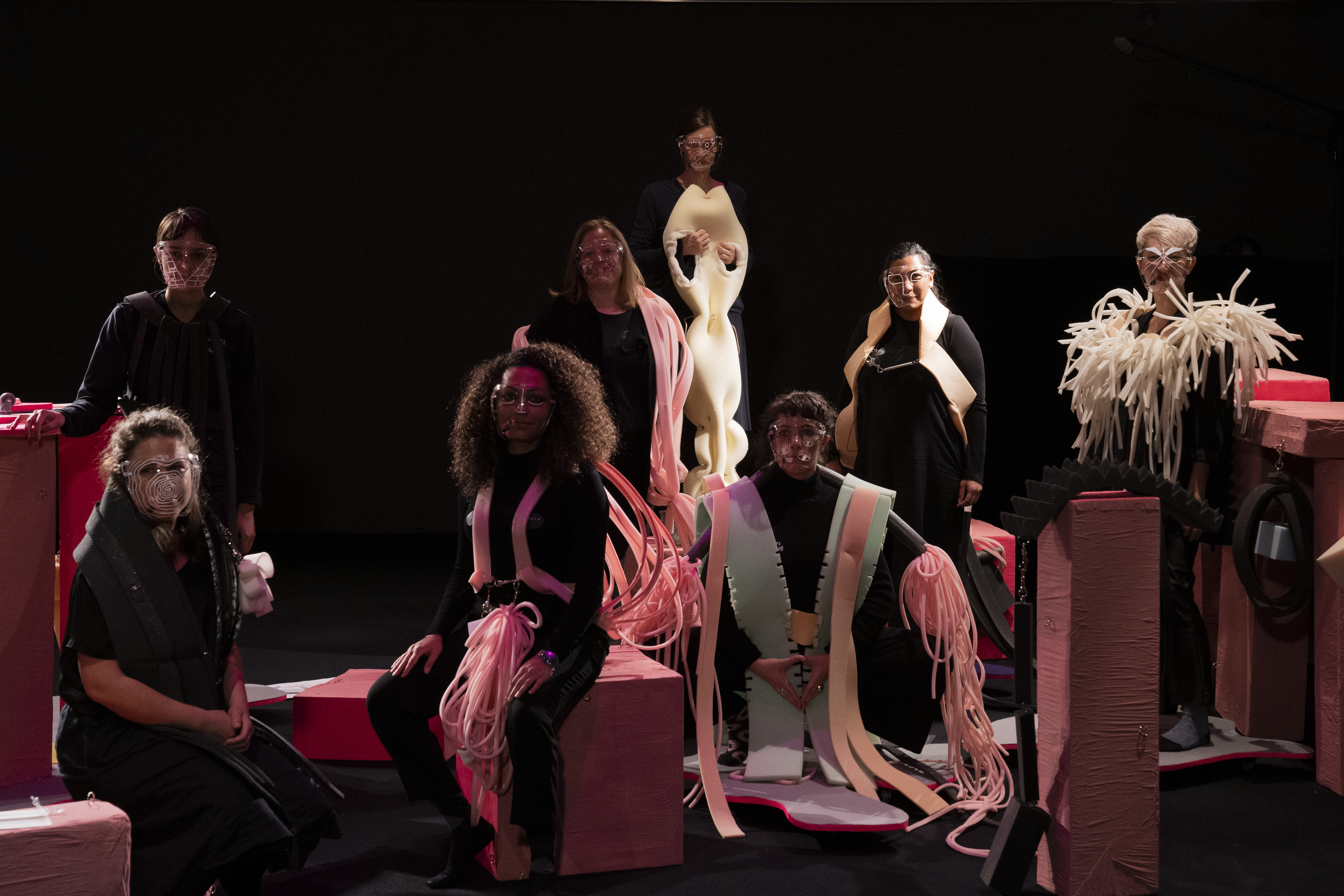
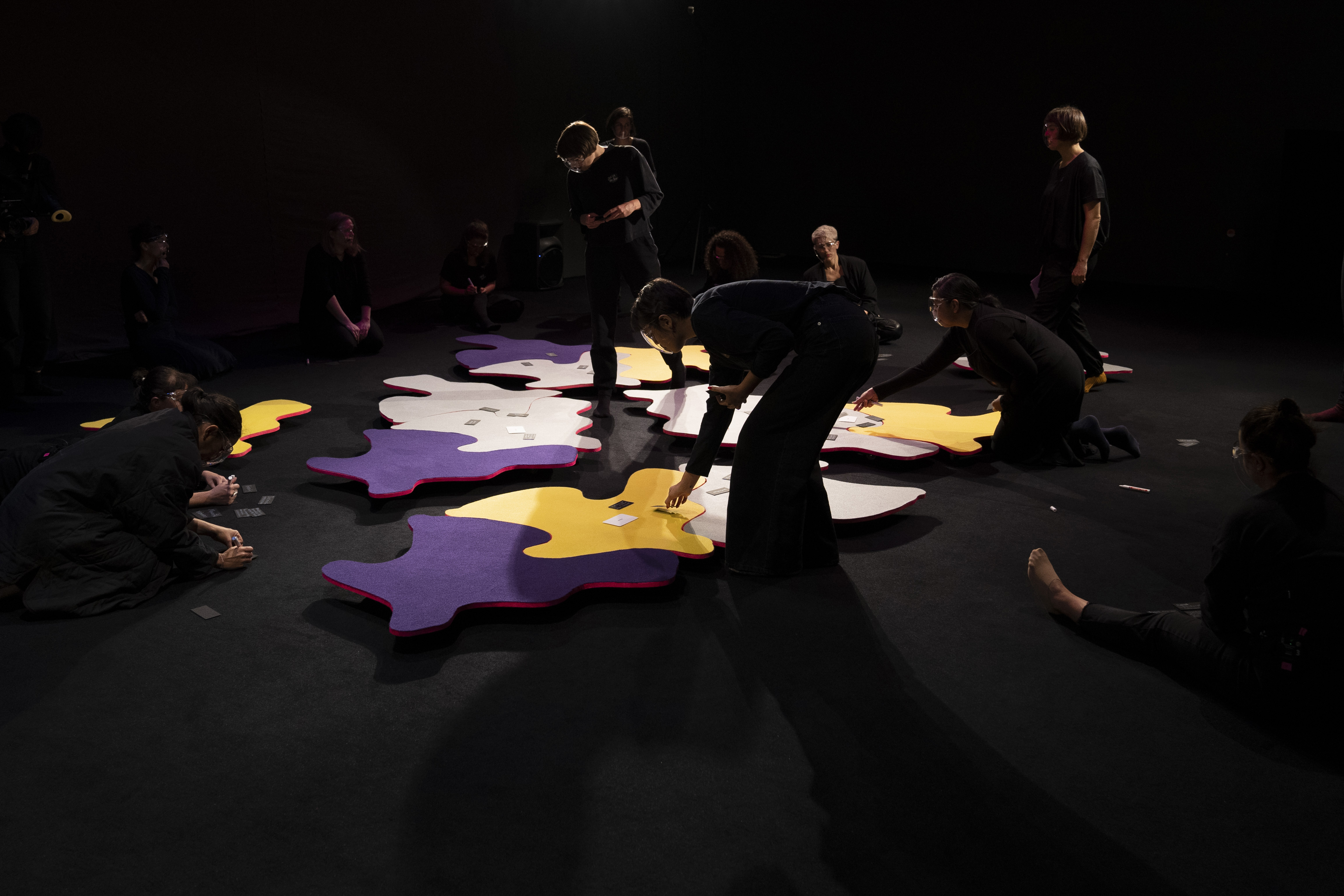
Ana de Almeida, Alicja Rogalskaand & Vanja Smiljanic
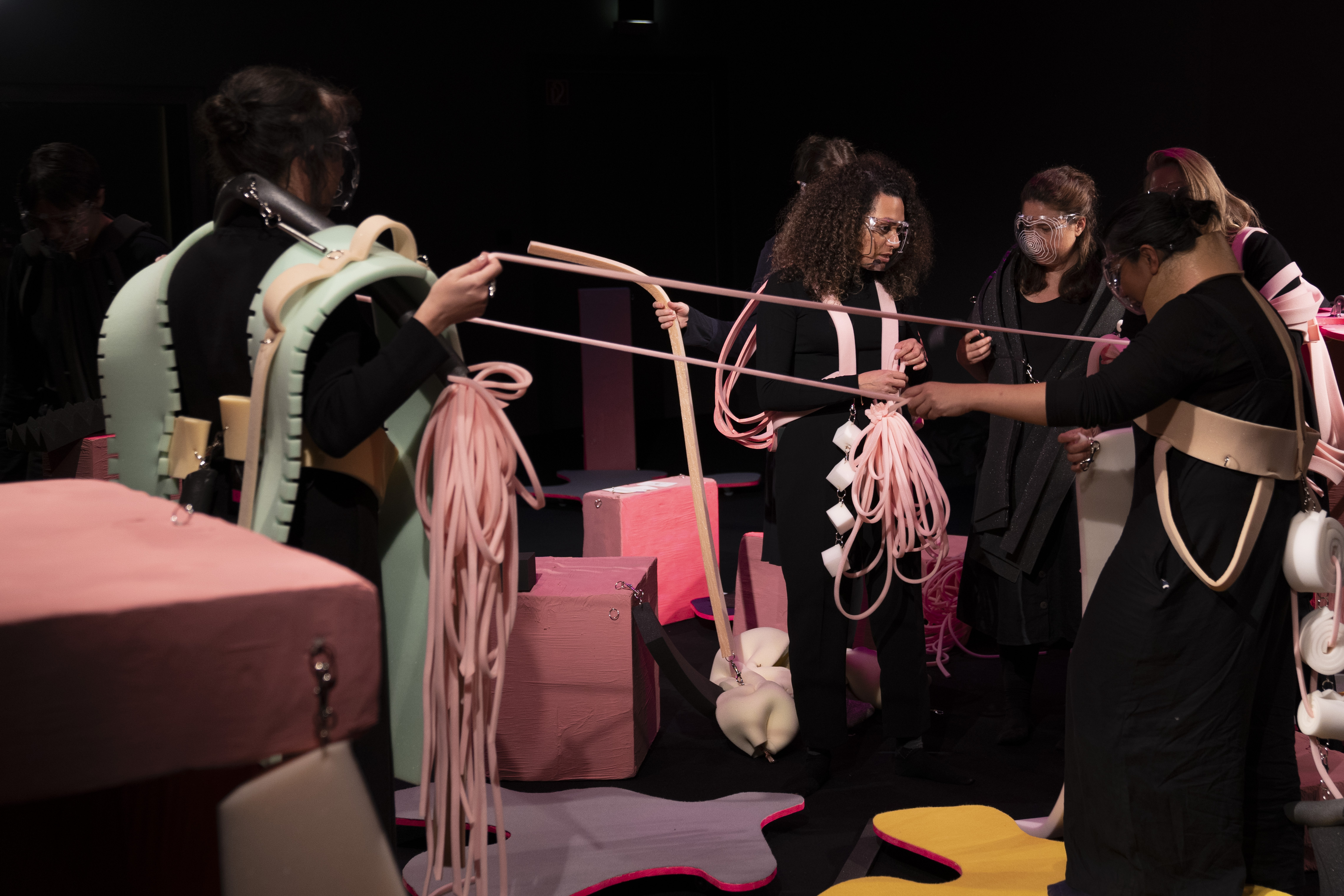
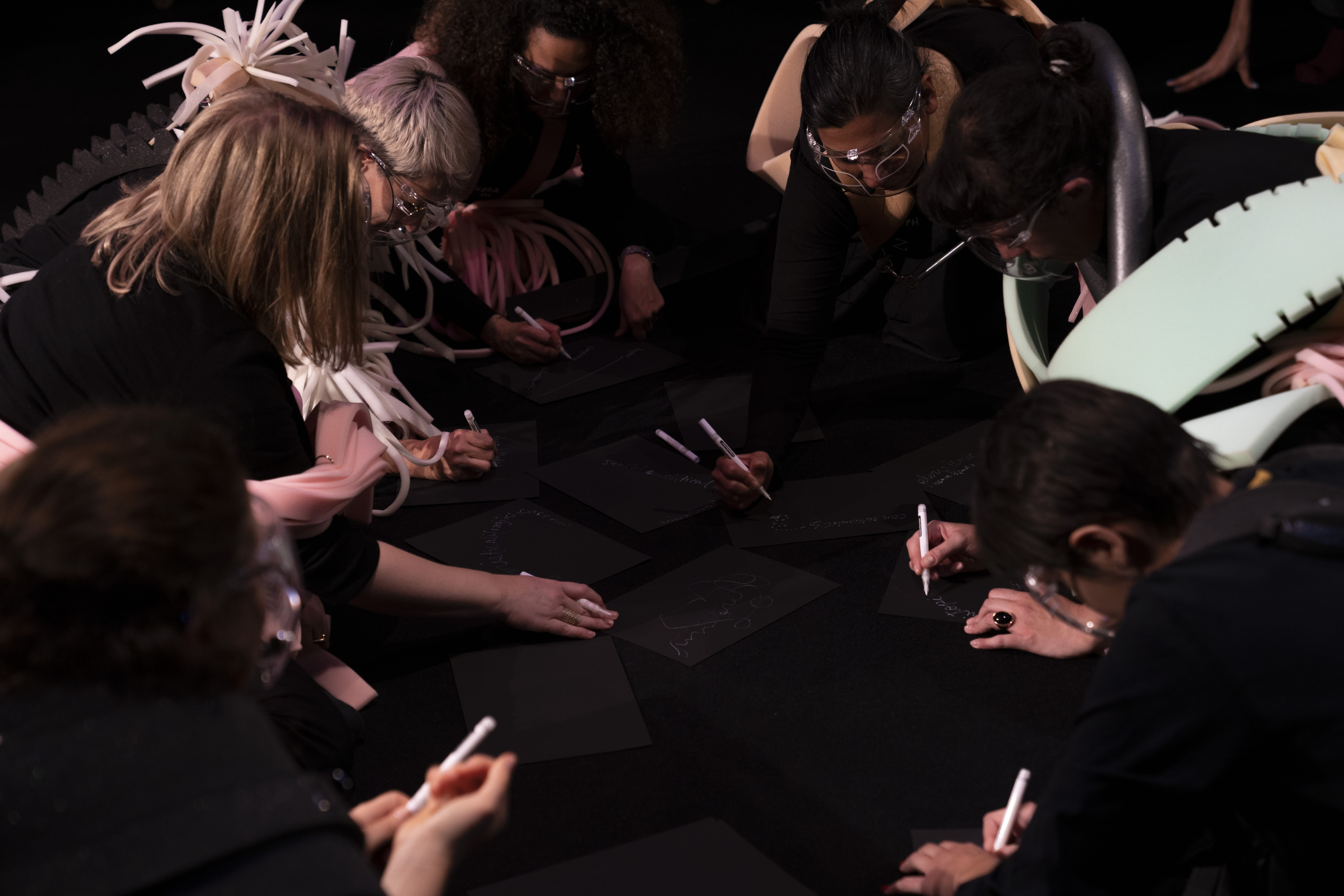
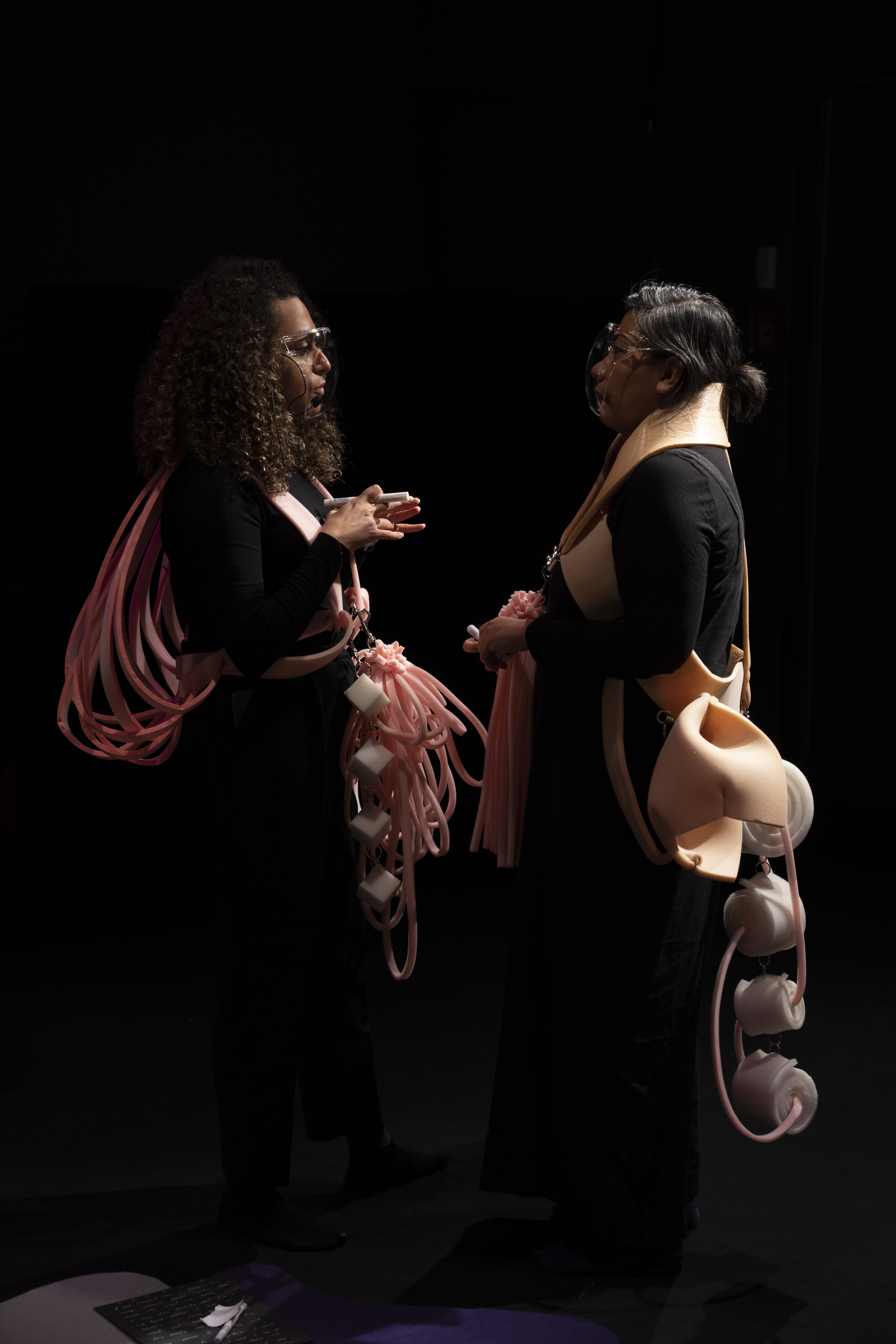
NOVA. Future thoughts on surviving together (2020 AT)
Live Action Role Play
In the future, gender inequality was erased. Nova is a multitude of newly born, radically inclusive and self-managed communities. Heterogeneous in their forms of commoning and social organization, Nova share a vow to never let oppression in any form rise again. Nova. Future thoughts on surviving together is a feminist futurist LARP - Live Action Role Play by Ana de Almeida, Alicja Rogalska and Vanja Smiljanić; directed towards feminist and queer-feminist activists based in Vienna. NOVA is a day of speculative gaming aimed at sharing survival strategies, exercising solidarity and intersectionality, creating solidarity networks and forming new alliances between different emancipatory movements. Together, we created a piece of feminist political fiction - a work in progress and a world free of patriarchal oppression in the making.
With: VBKÖ, Saloon Wien, Kunst & Kind, Latinxs Unidxs, Kültür Gemma, Cine Collective, Mala Sirena, female:pressure.


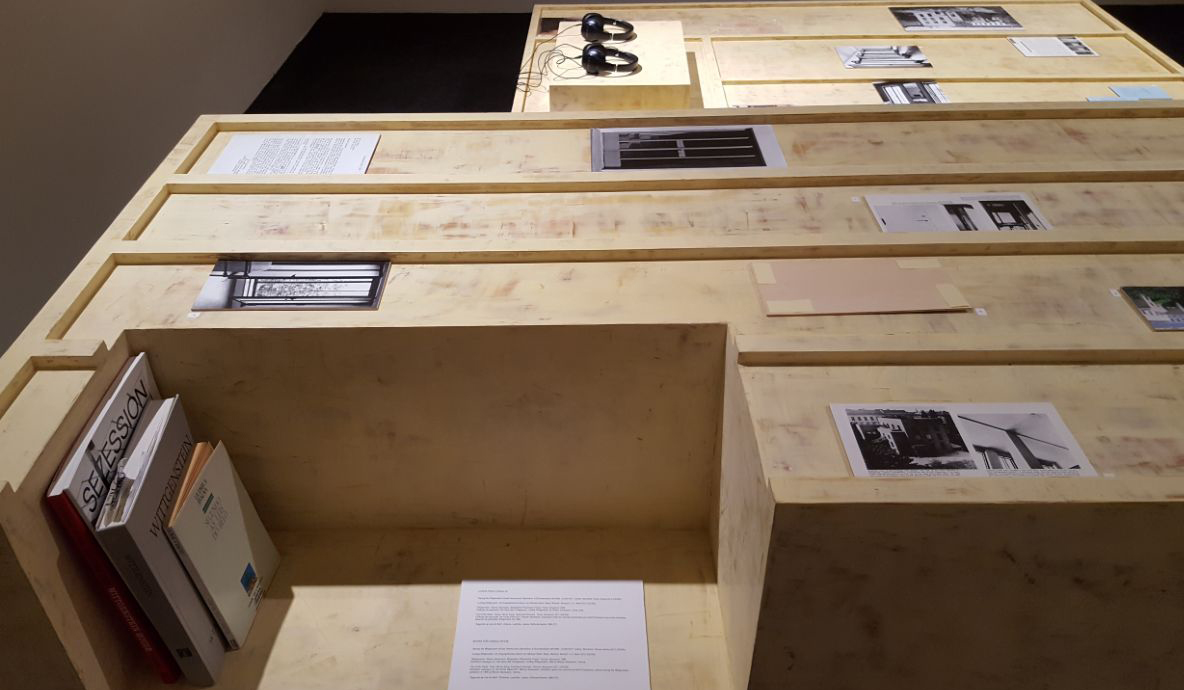
A Casa / The House The flat / Die Fläche (2018 PT)
MDF, stucco-lustro, stereo sound 42'5'' looped
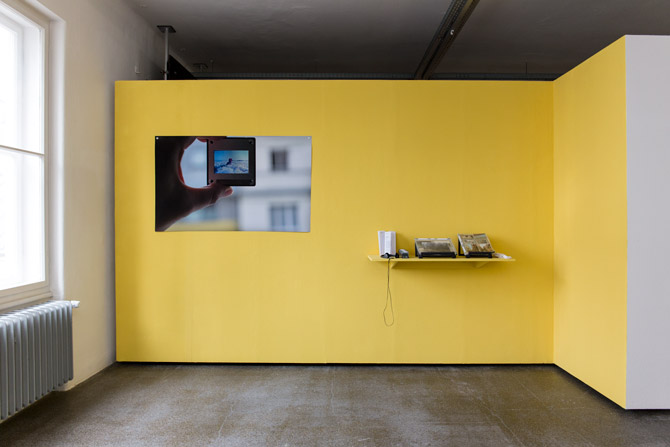
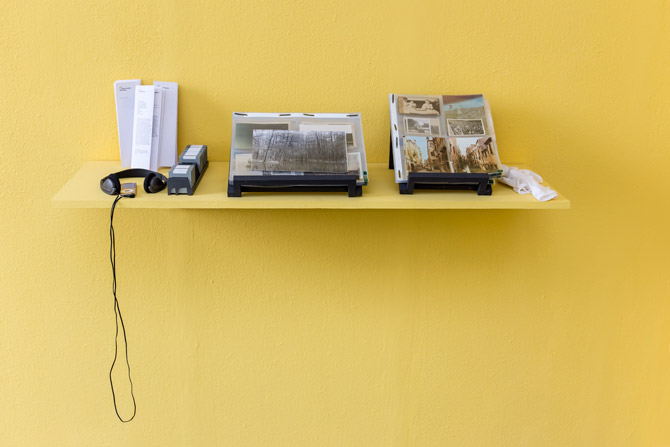
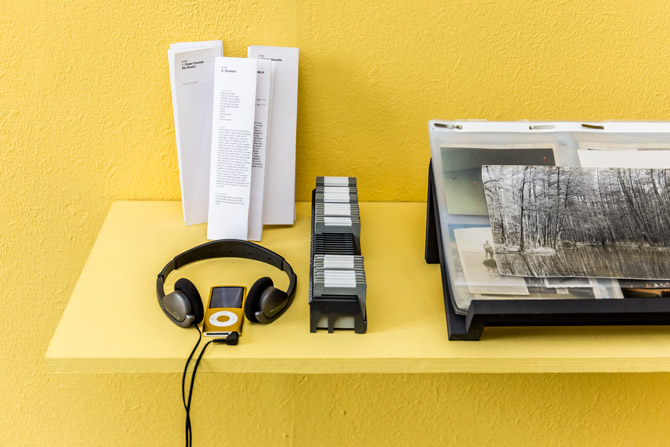
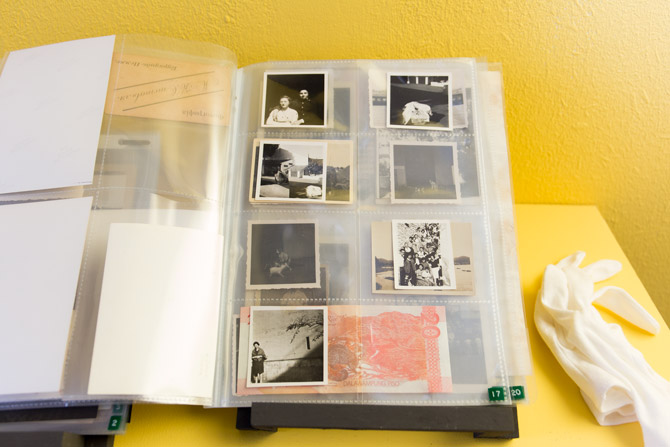
Likewise a sculpture, A Casa (The House) shares the aesthetic and architectonic language of the House Wittgenstein in Vienna. The two volumes are a transposition and folding down of two of its architectonic elements: a window and the vestibule door. They serve as display for documental material such as letters and photos and incorporate an audio piece with interviews led by the artist. The surface is covered by stucco-lustro, a coating technique proliferating in Vienna on the turn to the 20th century, similar to how could the original coating of the walls of the House Wittgenstein have looked like before they were painted white after World War II. The highlighting of the stucco-lustro architectonic detail points out to a fundamental discovery for the understanding of the house as aesthetic experiment in which the house interiors, composed by materials which evoke extreme hardness, seem to dematerialize through the highly reflecting properties of the stucco walls.

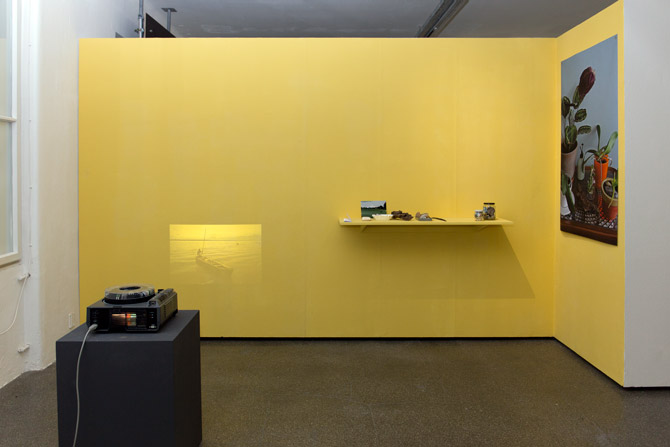
Photos: © Ana de Almeida & Stephanie Misa
Untitled (Yellow) (2017 PT)
Wall, yellow paint, memorabilia, diashow, stereo sound
A cooperation between Ana de Almeida (PT/AT) and Stephanie Misa (PH/AT) . This is a project about landscape as formal and informal disposition of elements. Coordinates. An arrangement, a hierarchy: borders and de-limitations, transpositions and transgressions, frames and their inside-outside, margins, and of course landscape — of the geographical, political, personal, and emotional nature. Edouard Glissant’s Traité du Tout-Monde. (Poétique IV), calls it archipelagic thinking, a group of islands that lends its topography to an alternative imaginary: a reassessment of the insularity of bound cultures, of nation-states, and the heaviness of “continental thought”. The archipelago is an alternative imaginary, one that posits that identity could be as a conglomeration of islands (composed of many, yet is one). Identity formation, embodiment, complex colonial histories, evolution, interconnectedness, diaspora and change — Oh to dispell the oppressive idea of nationalistic wholeness!
DANIELA ZEILINGER
“Shut your
![]() eyes
eyes

and
see.”
- James Joyce, Ulysses
#ONTOLOGY #PAINTING #PHOTOGRAPHY
BIO. Daniela Zeilinger (1976* Linz/Austria) is a visual artist based in Vienna. Her work is situated at the intersection of different disciplines, in particular painting and photography. Ontological reflections on photographic and painterly pictorial spaces regarding the real/virtual, form a central motif. Her works – analogue photographic prints – oscillate between image and imagination, photography and painting, iconic and indexical. Zeilinger studied at Academy of Fine Arts Vienna, Kunsthochschule Berlin Weissensee and UDK Berlin, as well as psychology, philosophy and theatre studies at University of Vienna. 2020 she received the State scholarship for Artisitic Photography.
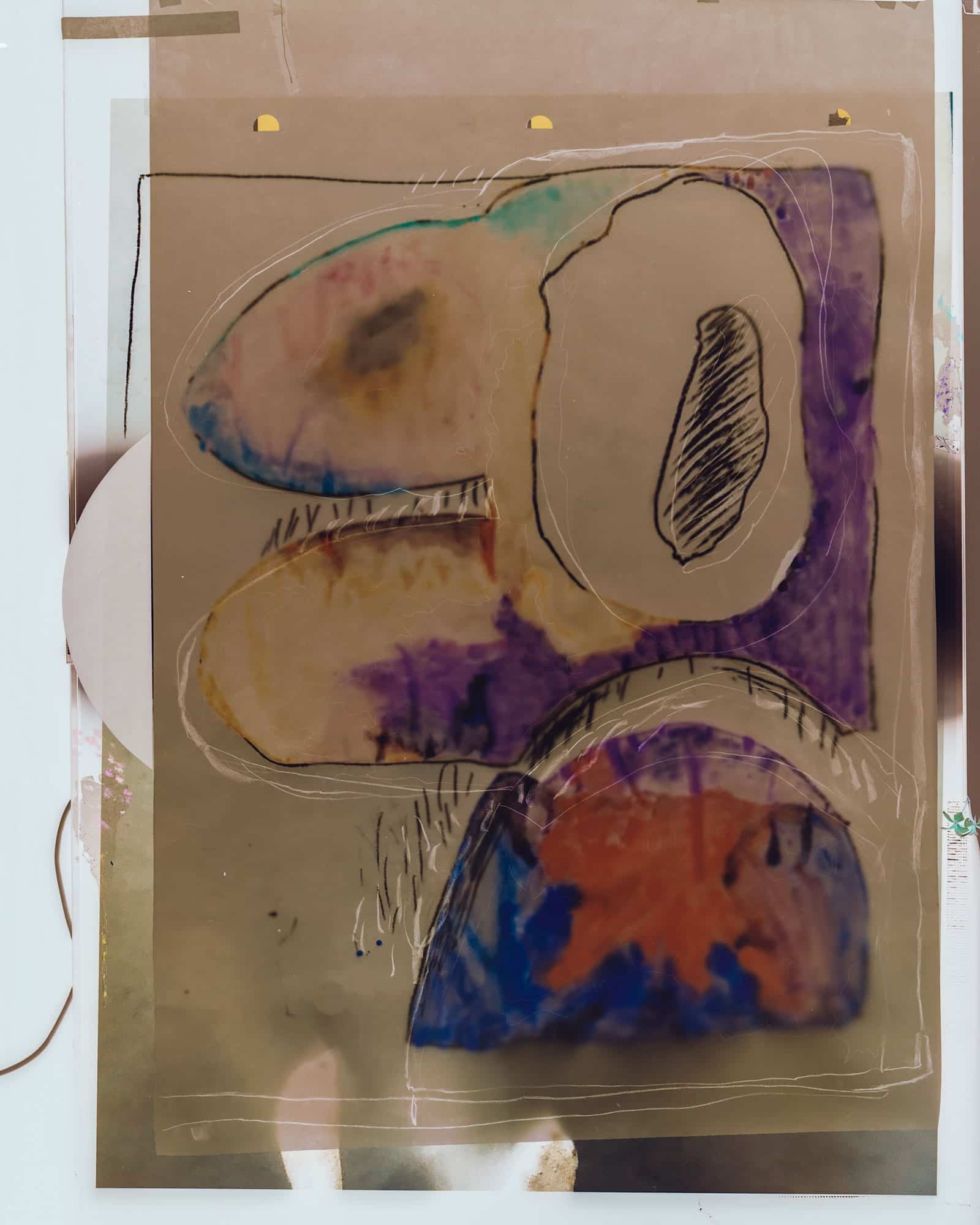
Wo ist die Realität? Wo haben Sie die? (2022)
Bro, Analogue C-Print from slide, 190 x 150 cm; Haiku #1-14, direct exposure from laptop screen on self-coated Bergger paper, drawing, watercolour, 20 x 25 cm cm
A wide variety of light-dependent techniques here merge into hybrid constellations that tell of the existence of multiple realities. The image sparks an investigative gaze in terms of indexicality; an attempt to separate the different levels from one another and to trace them back to actualities. But the image does not disintegrate. Instead, it references the numerous agents and ancillary techniques involved in its creation: the artist's body, the display of a laptop, colorful pigments, and so on. Some of the elements have been translated from positive to negative and vice versa, therefore implementing several contradictory realities that coexist in a singular image space. Like the layers of geological formations, from which we can read the age of rocks, the earth, and time itself, we try to look down into the ground of the photographic works and, loosely following Heinz von Foerster, ask ourselves: where is the one reality? Where are the many realities? (Sophie Publig)


Photos: © Janine Schranz
Blend Together (2022)
Blu, Analogue C-Print from slide, 190 x 150 cm; Siam & Ray, Analogue C-Prints from slide, 20 x 25 cm
The exhibition "Blend Together" by Janine Schranz and Daniela Zeilinger, presented at Mz* Balthazar's Laboratory as part of this year's Foto Wien, follows on thematically from the joint exhibition "Passepartout," on view at hoast in Vienna in 2021. Whereas last year's attention was focused on processes of selecting, cropping and fading out, this time the focus is on situations of transparency and blending. While at hoast the focus was on techniques of inclusion and exclusion within a given architecture or within the image field, the exhibition at Mz* Balthazar's will examine possibilities of communication between inside and outside, from artwork to artwork, and between real space and image space. (Michael Wonnerth-Magnusson)


Photos: © Andrew Phelps
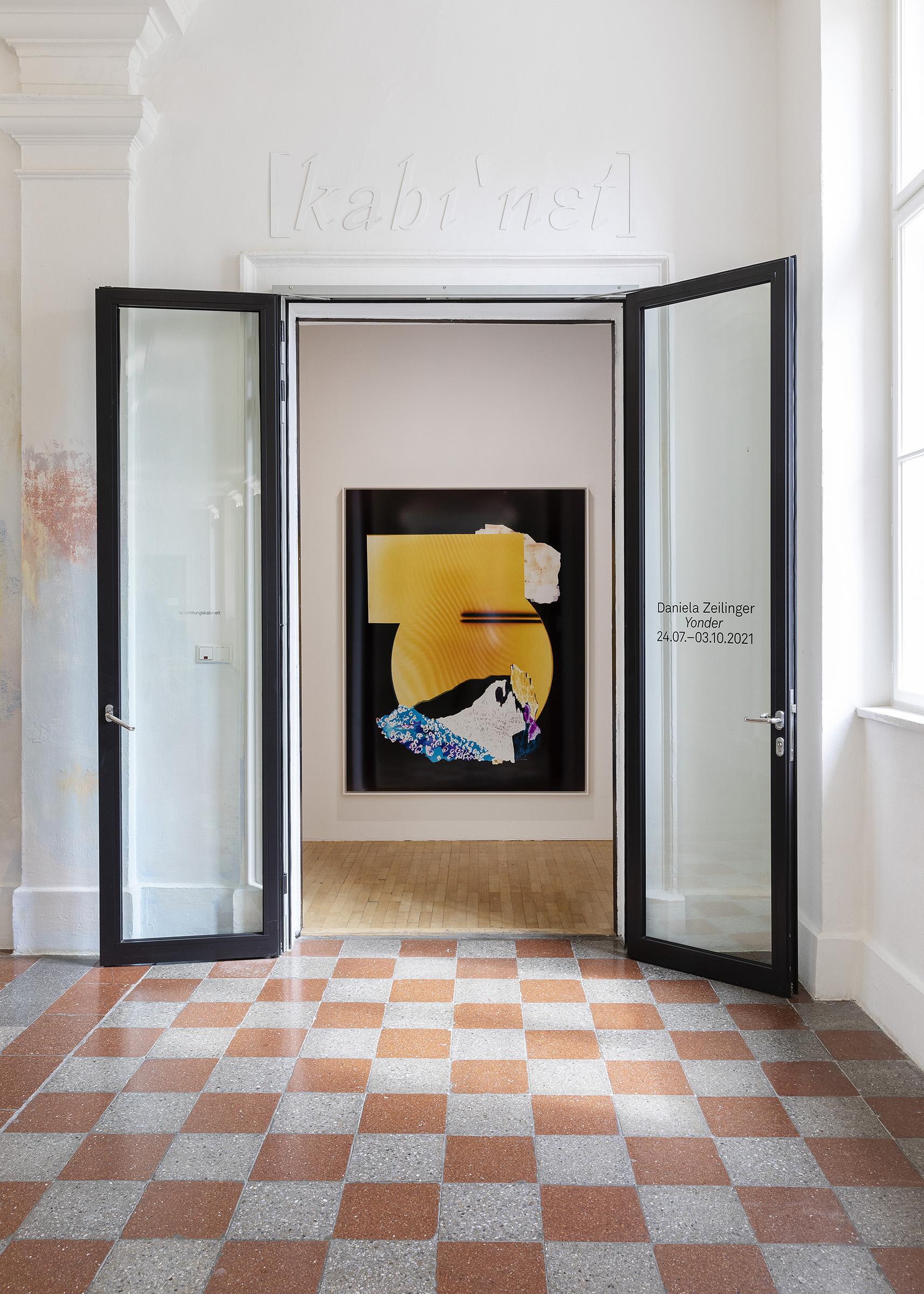
Yonder (2021)
Analogue C-Prints from slide, 190 x 150 cm; Analogue C-Prints from slide, 20 x 25 cm
Yonder, an English word, has several meanings. It is a place that is distant, but still within sight. This term is the point of reference for Daniela Zeilinger in her recent series of works. In her process as much as in the resulting images the most important aspect to take away may be questions of time and memory as enacted in these compositions. The immediacy of photography is met with the painstakingness of painting, where here a sort of poetic hybrid compresses these opposites into a unified whole, that is itself simultaneously a meditation on and an intervention against time. Yonder is neither here nor there, also it is between here and there, but always somewhere else, not quite fixed. However, yonder is always in relation to where one is. The works in this exhibition are thus anchored very much in the artist’s metaphysical musings, but also very much anchored on her own body and self, which in the end, fixes and grounds her work within a concrete splendor. (Seamus Kealy)