

ERIKA FARINA
“Textile work
is an act of
resistance.”
#ARTS-BASED RESEARCH #BODY #ECOLOGY #FABULATION #GENDER #INSTALLATION #TEXTILE

BIO. Erika Farina (she/her) is a Vienna-based textile artist and musician. Initially trained as a tailor, she gained
professional experience working with several Austrian fashion labels. Her practice spans costume design, installation
and participatory projects, with a particular interest in translating cultural, digital, and media content into textile
processes.Under the alias FRNRKE, she collaborates with musician and producer A_Phan on an alt-pop electronic music
project. Farina is currently studying art and art education at the University of Applied Arts Vienna.
Photos: © Manuel Cyrill Bachinger
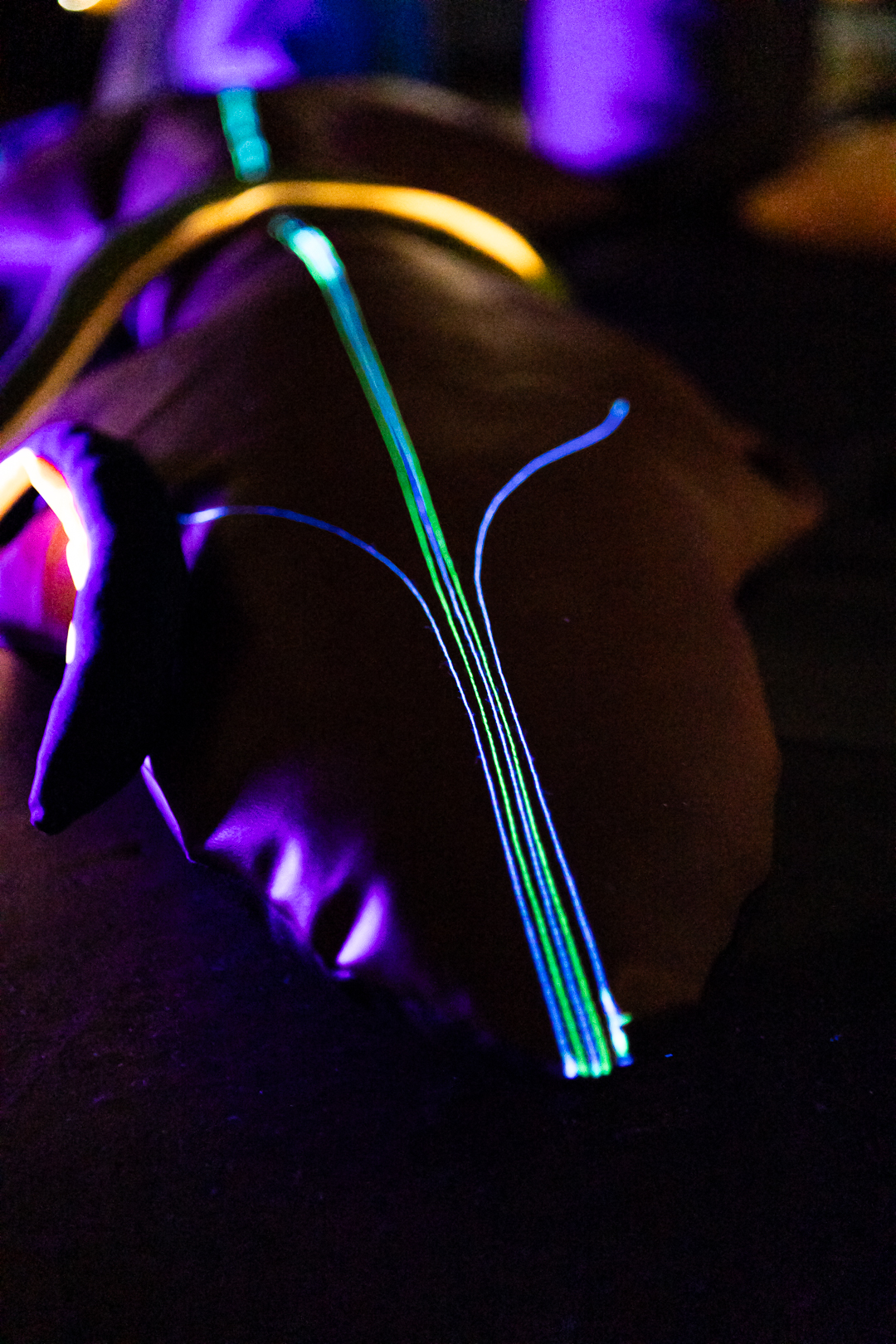
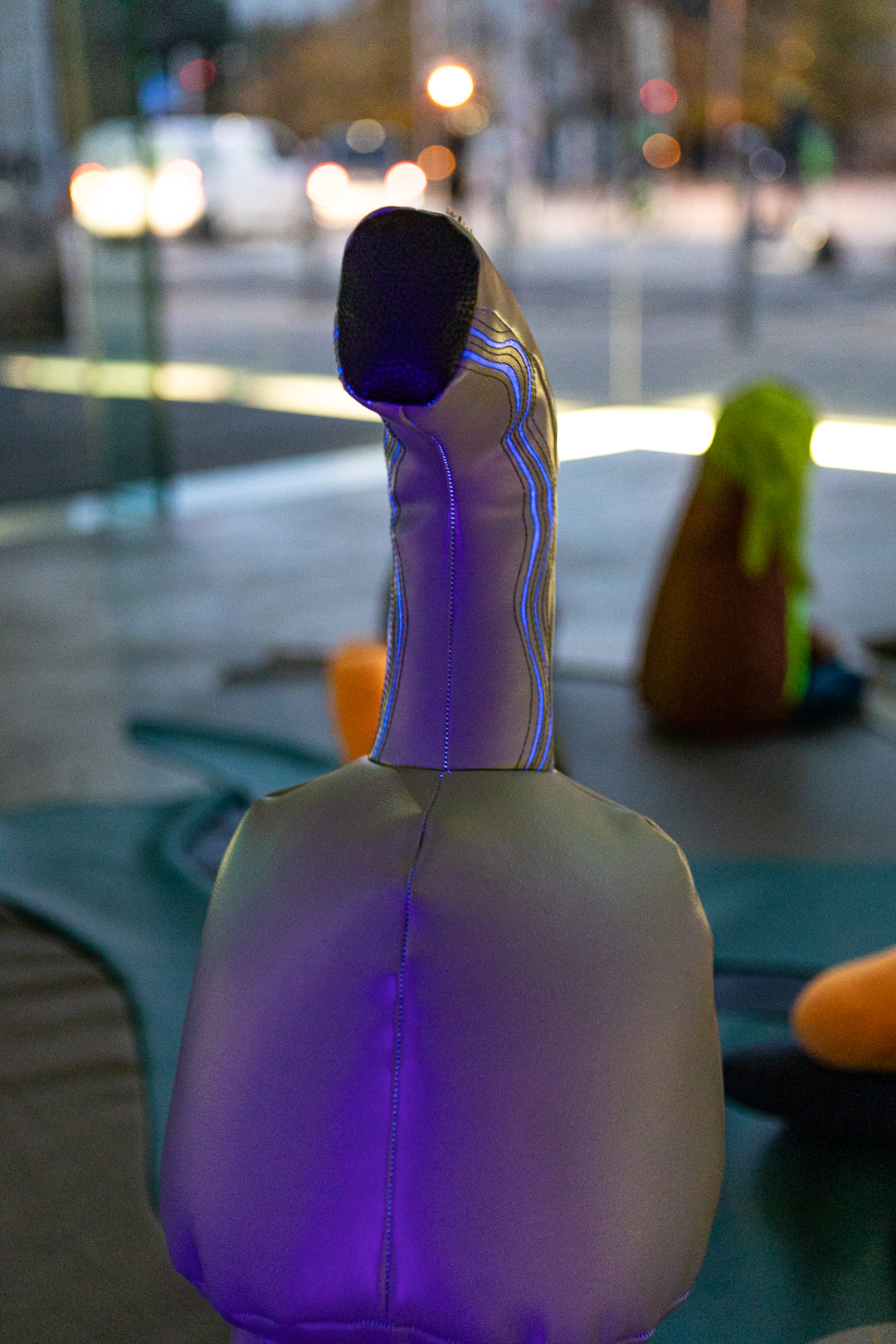
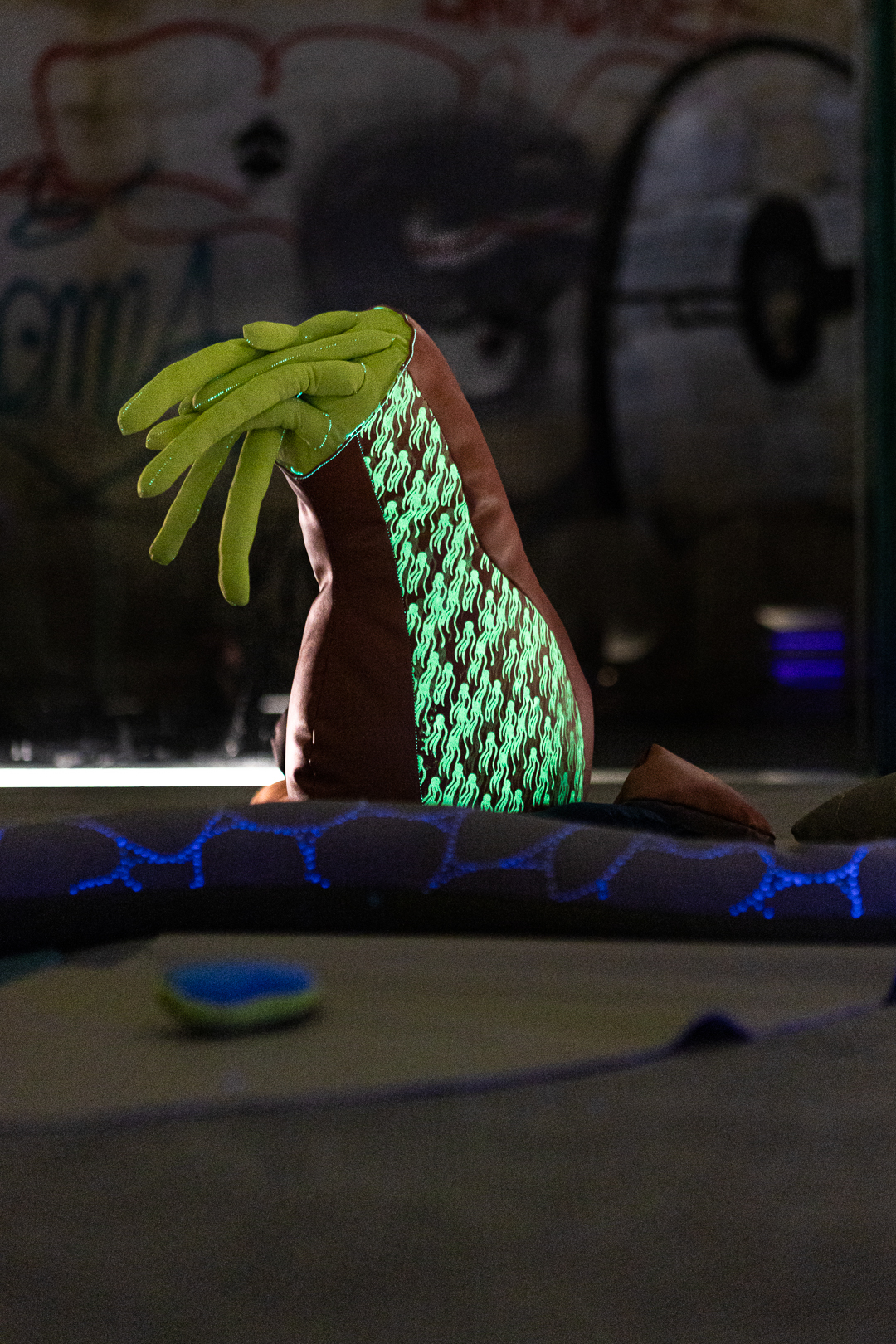
Symbionts (2022-2024)
Mixed Media Installation
The installation is a speculative multispecies landscape. In this space, boundaries between species, territory, and kinship are fluid and reimagined.The project is inspired by feminist philosopher Donna Haraway‘s concept of tentacularity which she uses in her book Staying with the Trouble: Making Kin in the Chthulucene (2016), as a metaphor to emphasize the complex, non-linear, and interwoven relationships that define life on Earth. The tentacle, as a figure, suggests a web of interconnected lines, movements, and flows that extend beyond human-centered modes of understanding the world.
Photos: © Erika Farina
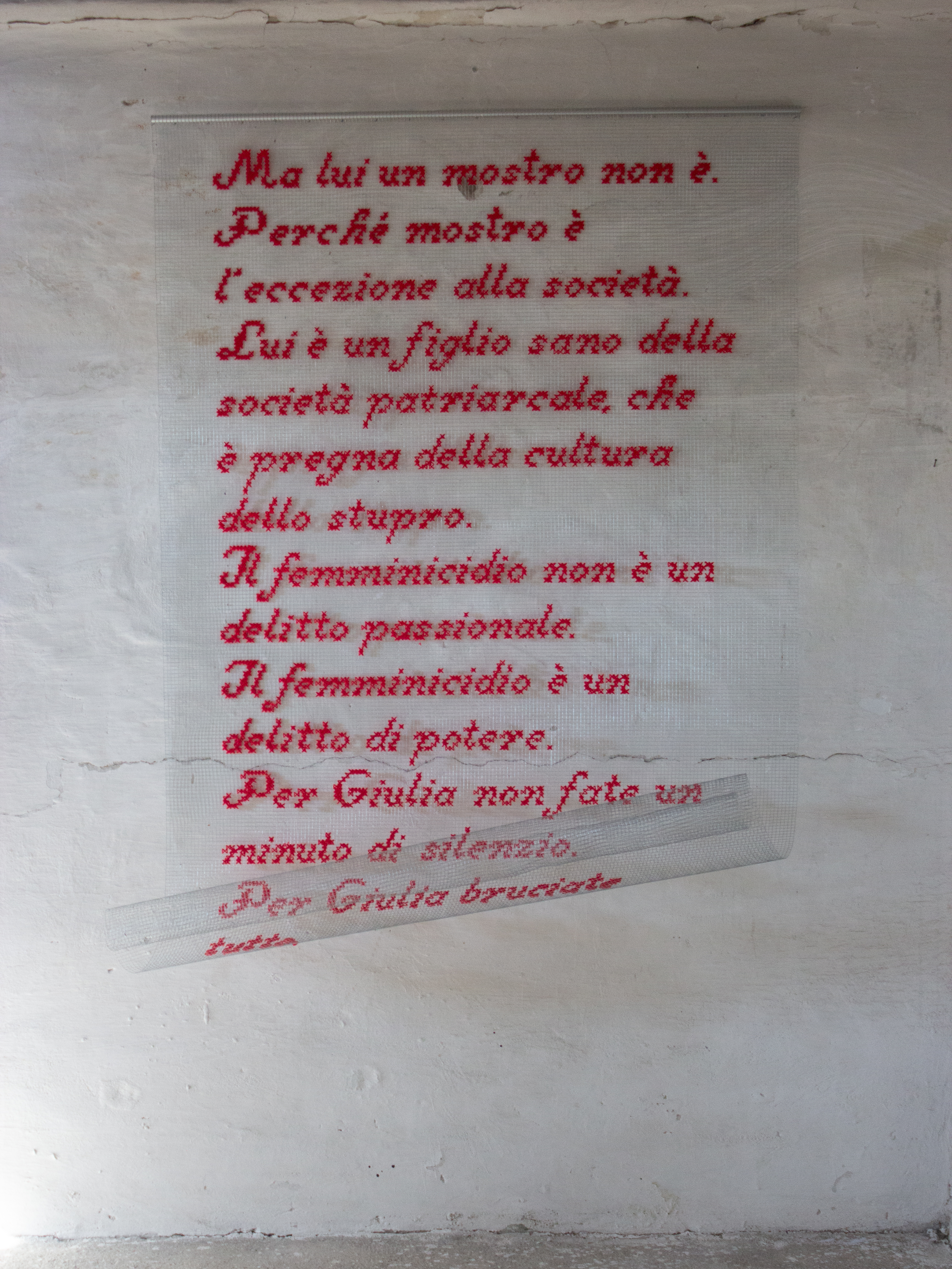
Ma lui un mostro non é (2024)
Embroidery on metal grid
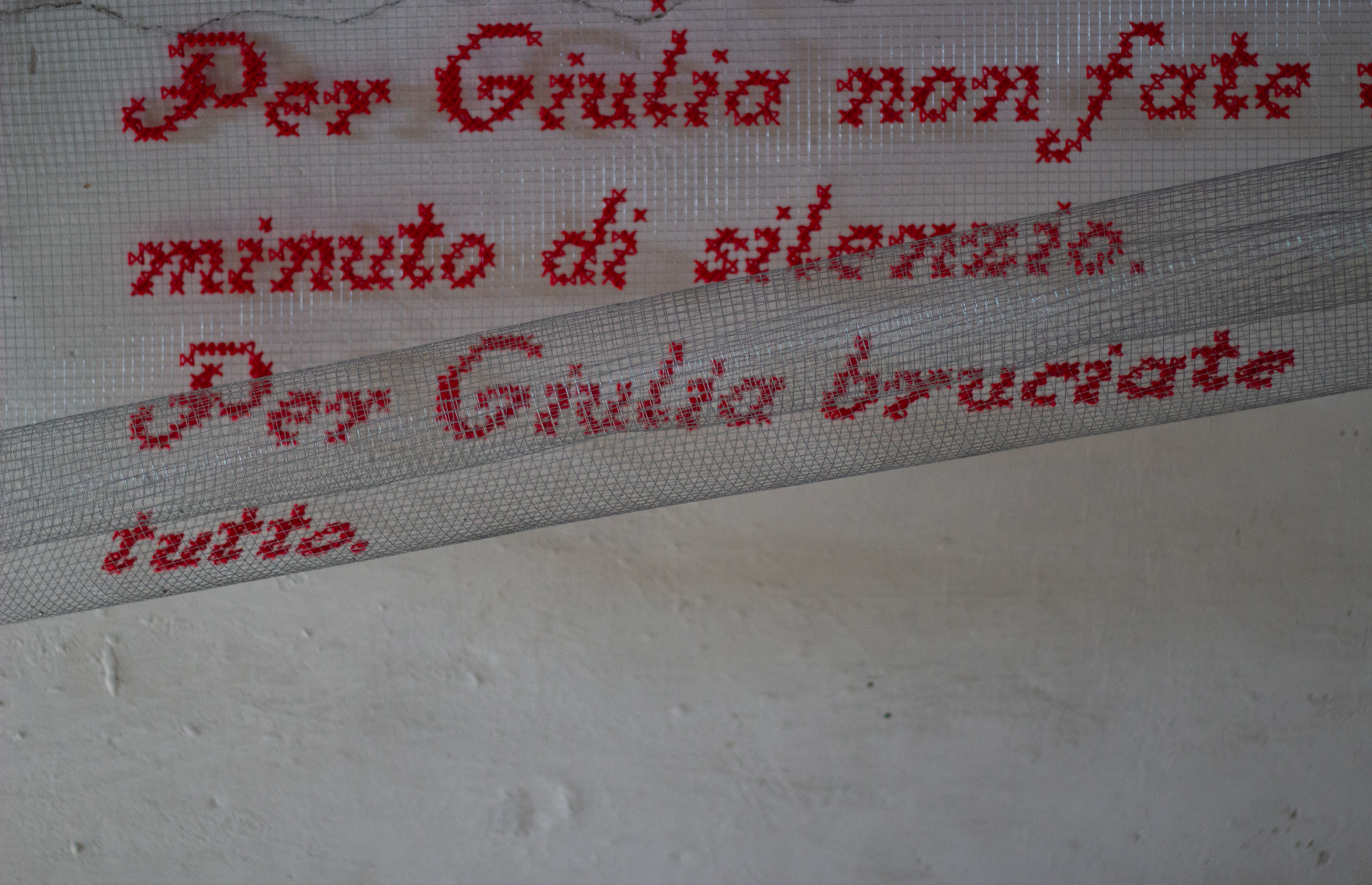
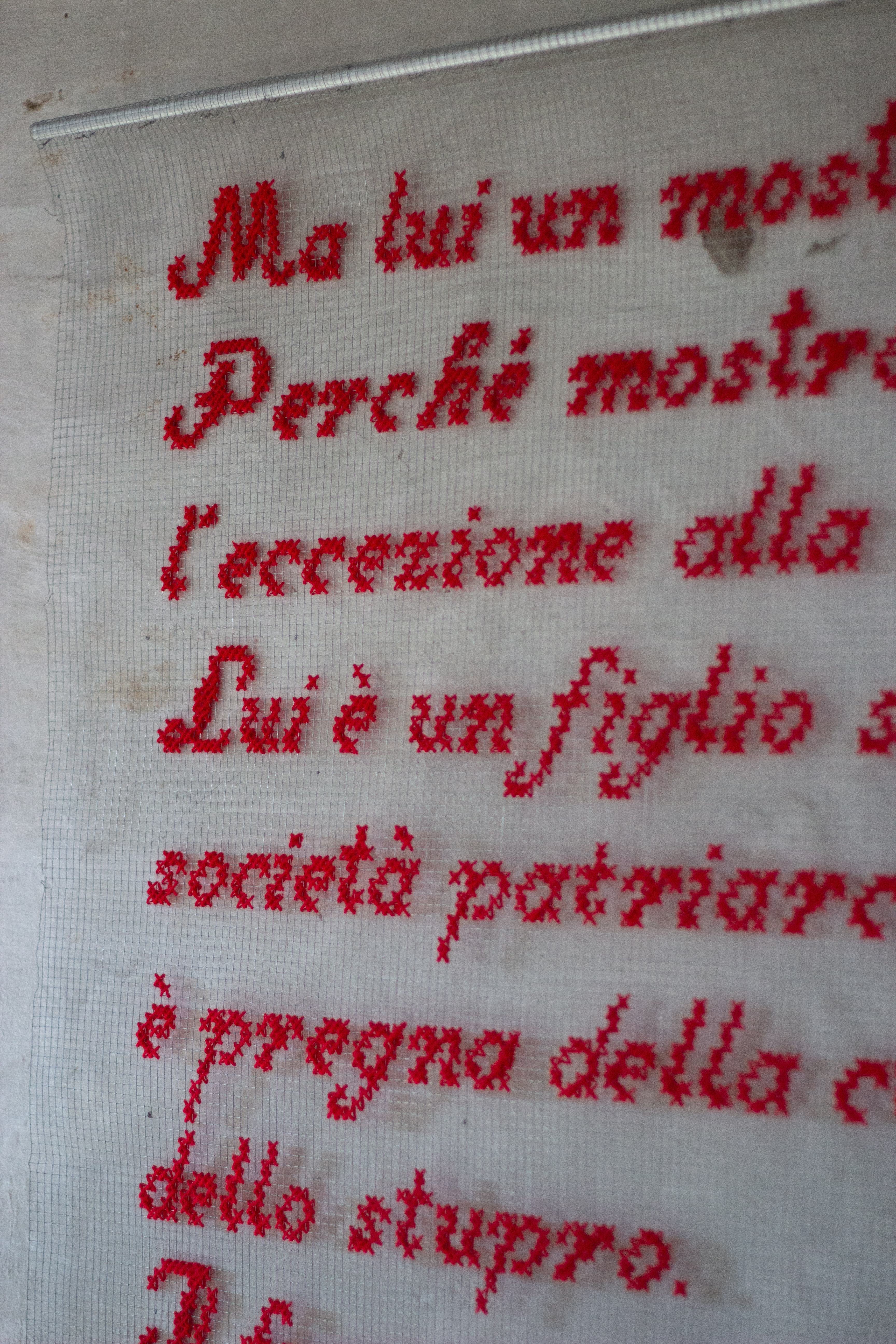
With reference to Guerrilla Embroidery and Katharina Cibulka’s Solange Project, the embroidery Ma lui un mostro non è. was stitched onto a metal grid. The work recalls an oversized Spruchtuch, a cloth traditionally bearing embroidered sayings. The text derives from a speech by Elena Cecchettin on the Italian TV program Dritto e Rovescio (Nov 19, 2023). Elena Cecchettin is the sister of Giulia Cecchettin, who was murdered on Nov 11, 2023 by her ex-boyfriend Filippo Turetta, a case that sparked widespread outrage in Italy. In her speech, Cecchettin rejected the portrayal of the perpetrator as a monster, framing femicide instead as a product of patriarchal society and rape culture. Following her intervention, she faced heavy criticism, her words dismissed as performance and her appearance judged as inappropriate, responses that exemplify how discourse on femicide and women’s rights is handled in Italy by many politicians and the mainstream media. By translating these words into embroidery, the work reclaims the Spruchtuch as a political medium. Cecchettin’s speech insists that femicide must be named within its cultural context to be actively confronted. More info: https://fondazionegiulia.org/
Dickpic (2025)
Woven cotton garn
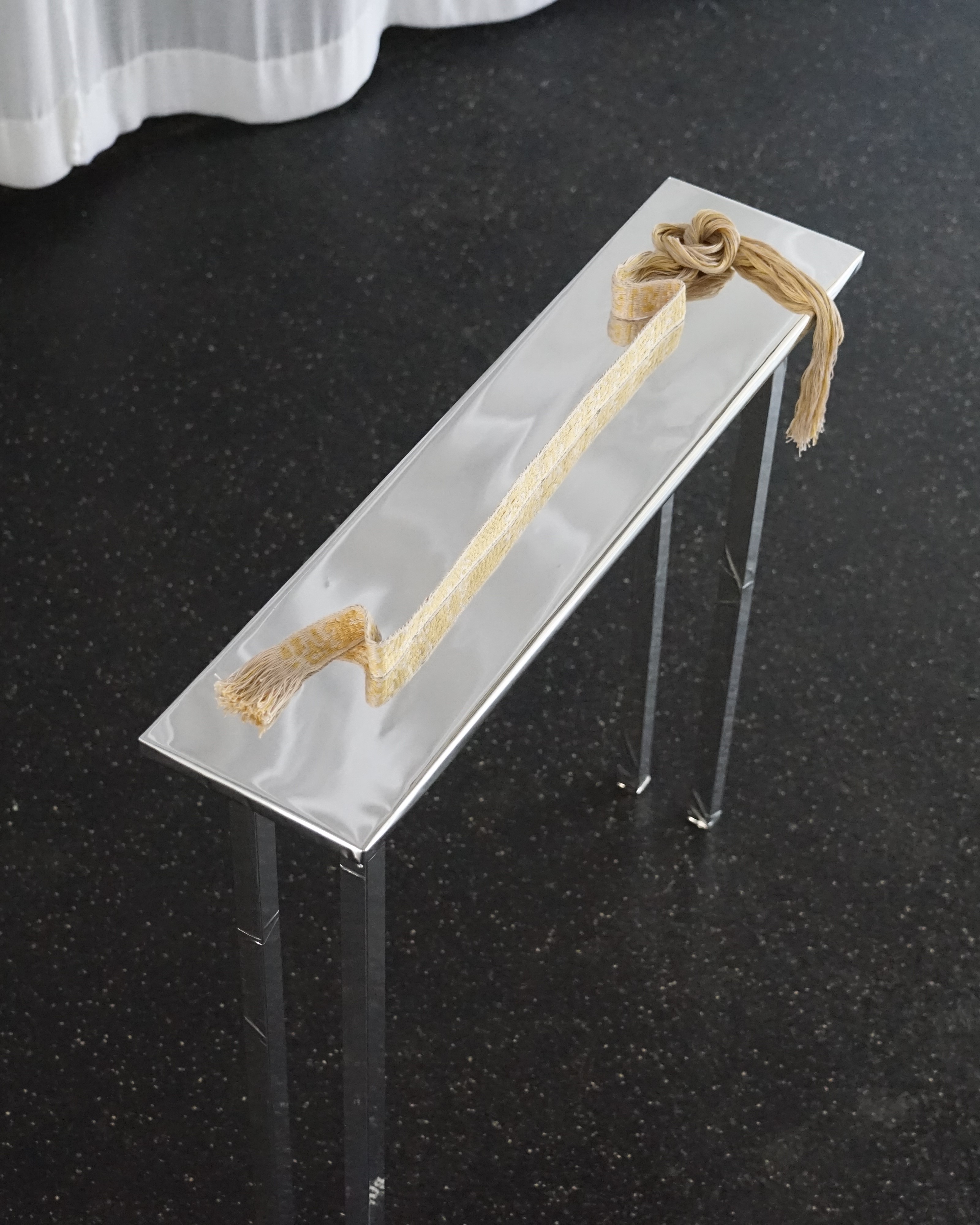
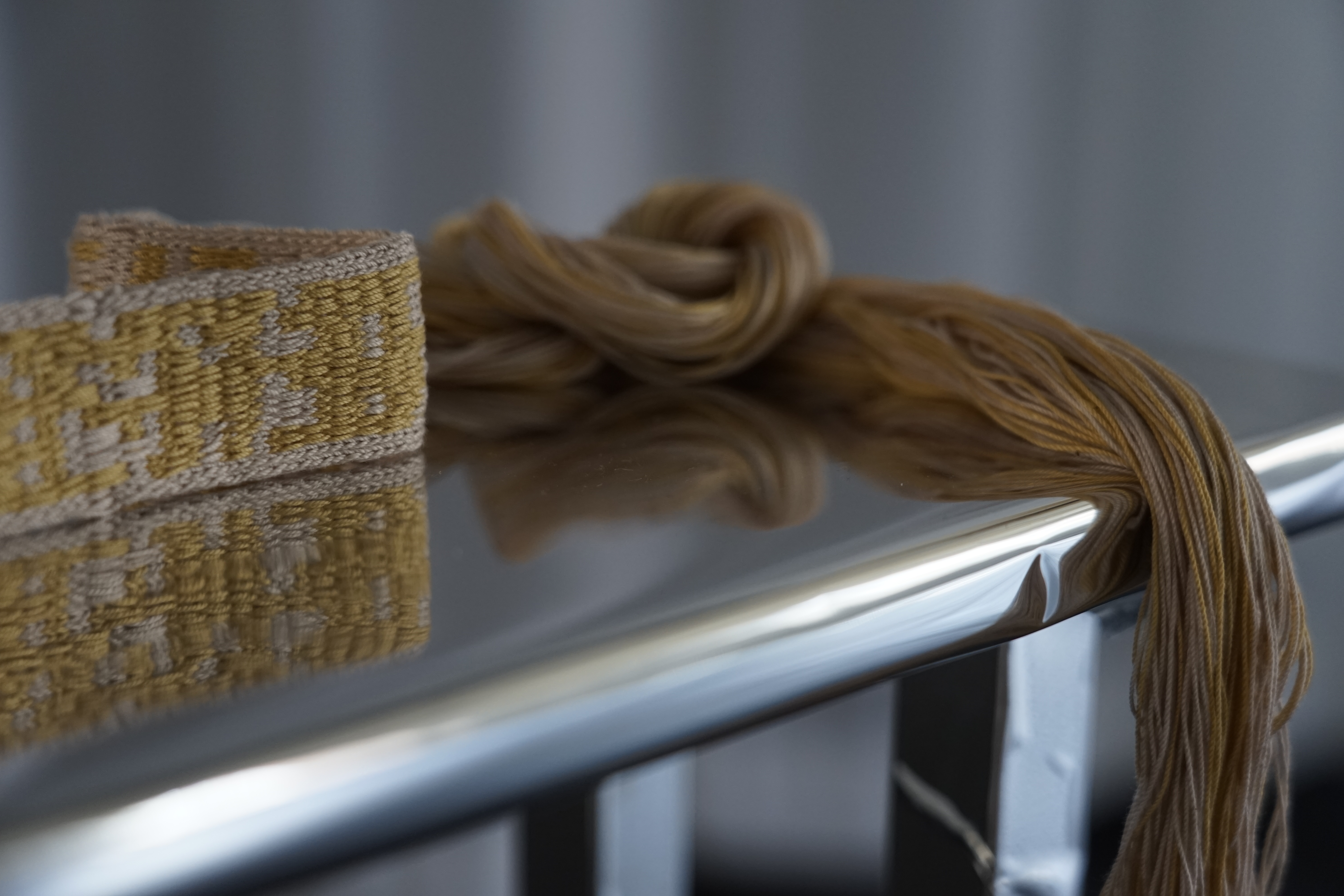
Women* have made decisive contributions to the creation and development of the internet. Nevertheless, they are disproportionately targeted by hate, harassment, and sexualized violence in digital spaces. Unwanted sexual comments and the unsolicited sending of “dick pics” (penis images) are part of everyday digital life for many, with perpetrators rarely facing legal consequences. According to a 2017 YouGov study from the United Kingdom, 40% of women* aged 18 to 36 have received a dick pic without having asked for it. The work Dickpic responds to this form of digital assault. The woven band, produced using the traditional technique of tablet weaving, translates the binary code of a penis image JPEG file into a slow, tactile process. What is usually instantaneous, invasive, and ephemeral is rendered labor-intensive, visible, and permanent. The entitled, power-driven act of sending an unsolicited penis image is here appropriated and recoded. Sexualized aggression is stripped of its immediacy and transformed through craft, reclaiming agency through time, skill, and material knowledge. In Austria, the unsolicited sending of “dick pics” has been criminalized since September 2025.