

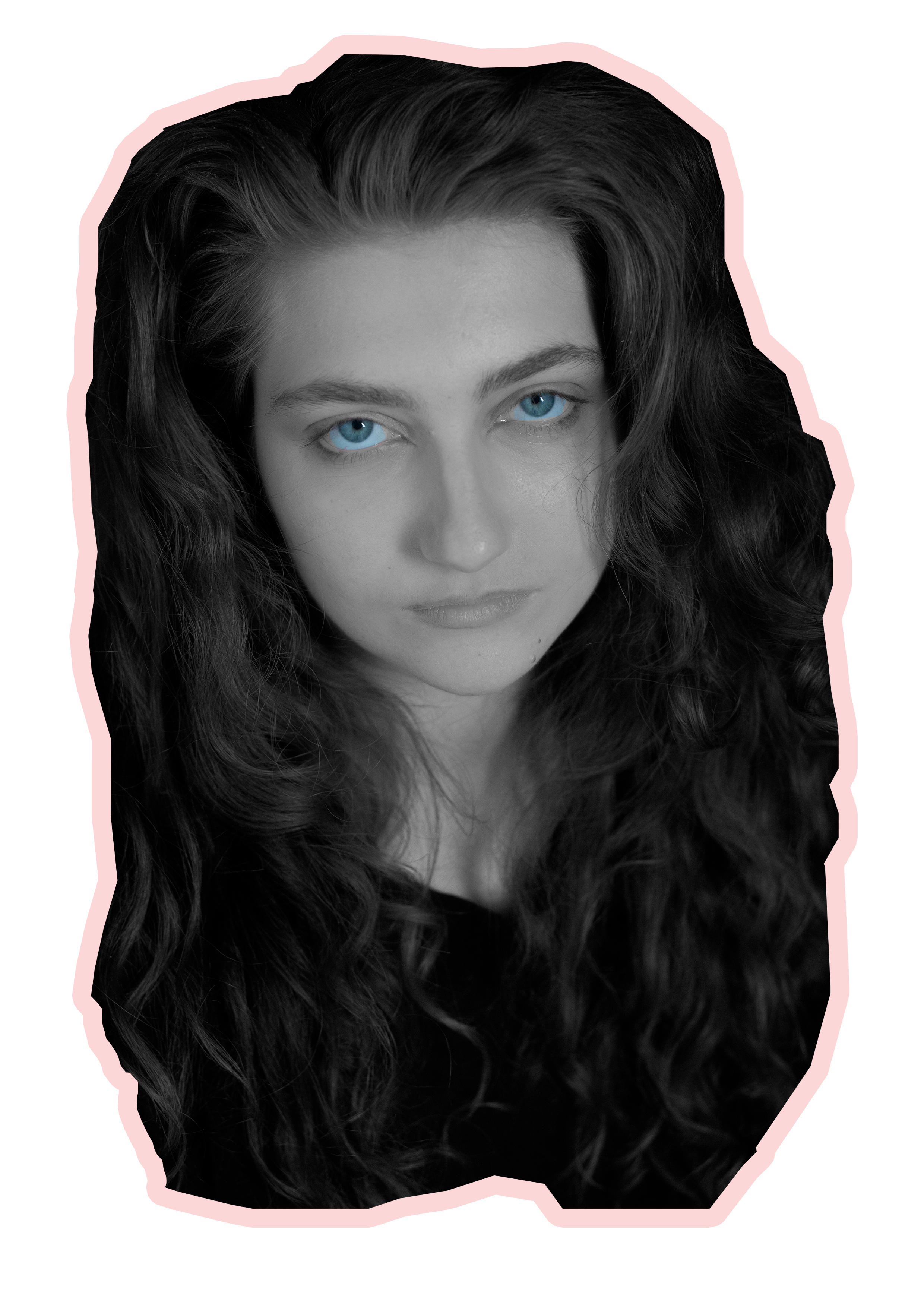
MARGO DUBOVSKA
“Neutrality
benefits
the
aggressor
#ARTS-BASED RESEARCH #IDENTITY #INSTALLATION #SCULPTURE
BIO.
Margo Dubovska is a Kyiv-born artist, currently based in Vienna. Dubovska works primarily with sculptures addressing current political issues through the lens of personal experiences, her political & social backgrounds. Through experimenting with materiality, she encodes experiences of dealing with anger,
grief, despair, and loss into fragile, tense, uncanny structures - objects and sculptures. In 2021, Margo Dubovska started her studies at the University of Applied Arts Vienna and is currently studying Transmedia Art (prof. Jakob Lena Knebl). Next to her artistic practice, Dubovska co-founded Vienna-based event
series Kriegsbilder and is co-curating its program, focusing on introducing Ukrainian cultural and political contexts by organising hybrid events, showcasing works by contemporary Ukrainian artists.
Margo Dubovska is a Kyiv-born artist, currently based in Vienna. Dubovska works primarily with sculptures addressing current political issues through the lens of personal experiences, her political & social backgrounds. Through experimenting with materiality, she encodes experiences of dealing with anger,
grief, despair, and loss into fragile, tense, uncanny structures - objects and sculptures. In 2021, Margo Dubovska started her studies at the University of Applied Arts Vienna and is currently studying Transmedia Art (prof. Jakob Lena Knebl). Next to her artistic practice, Dubovska co-founded Vienna-based event
series Kriegsbilder and is co-curating its program, focusing on introducing Ukrainian cultural and political contexts by organising hybrid events, showcasing works by contemporary Ukrainian artists.
mail instagram
Photos: © Margo Dubovska
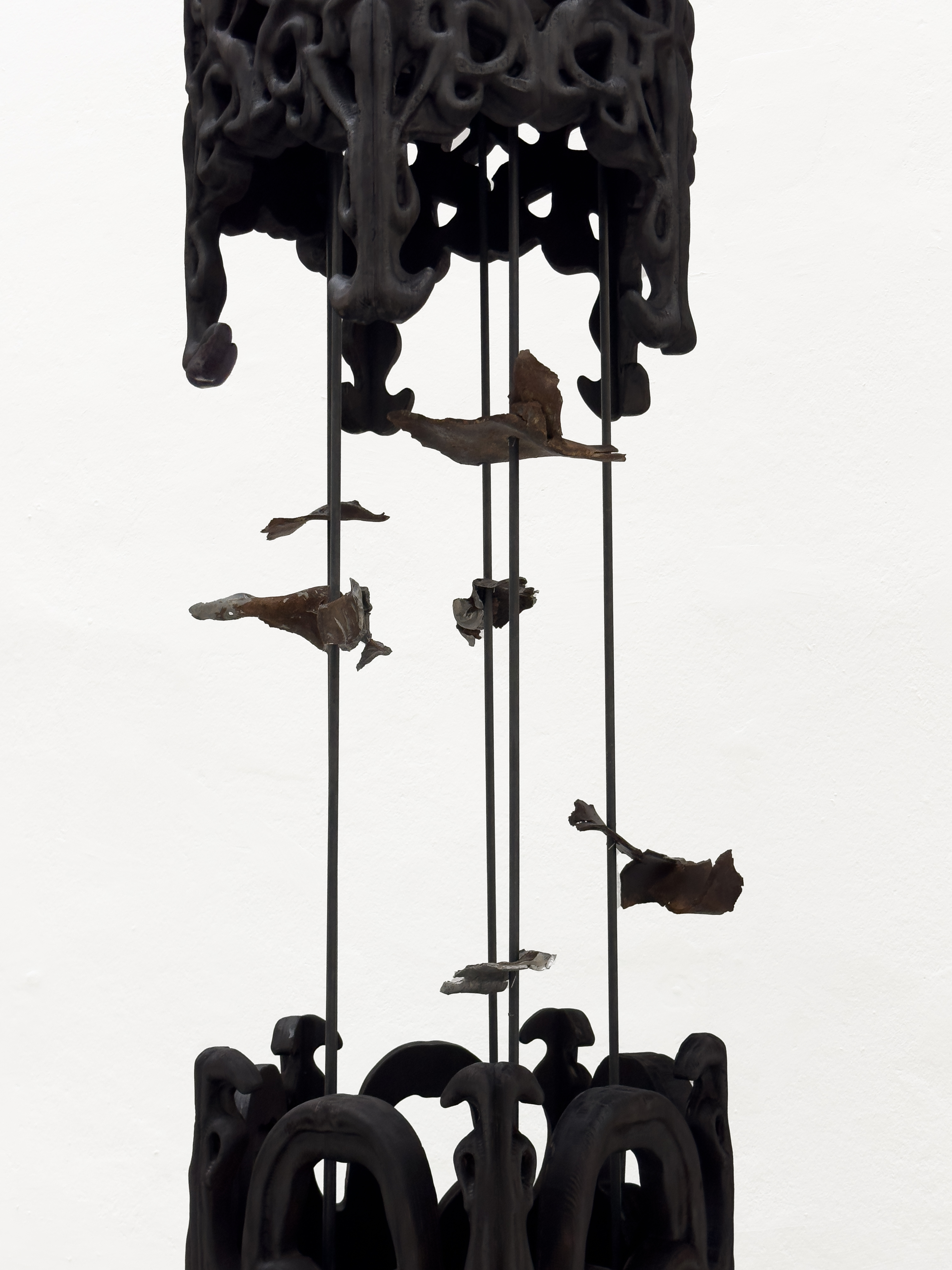
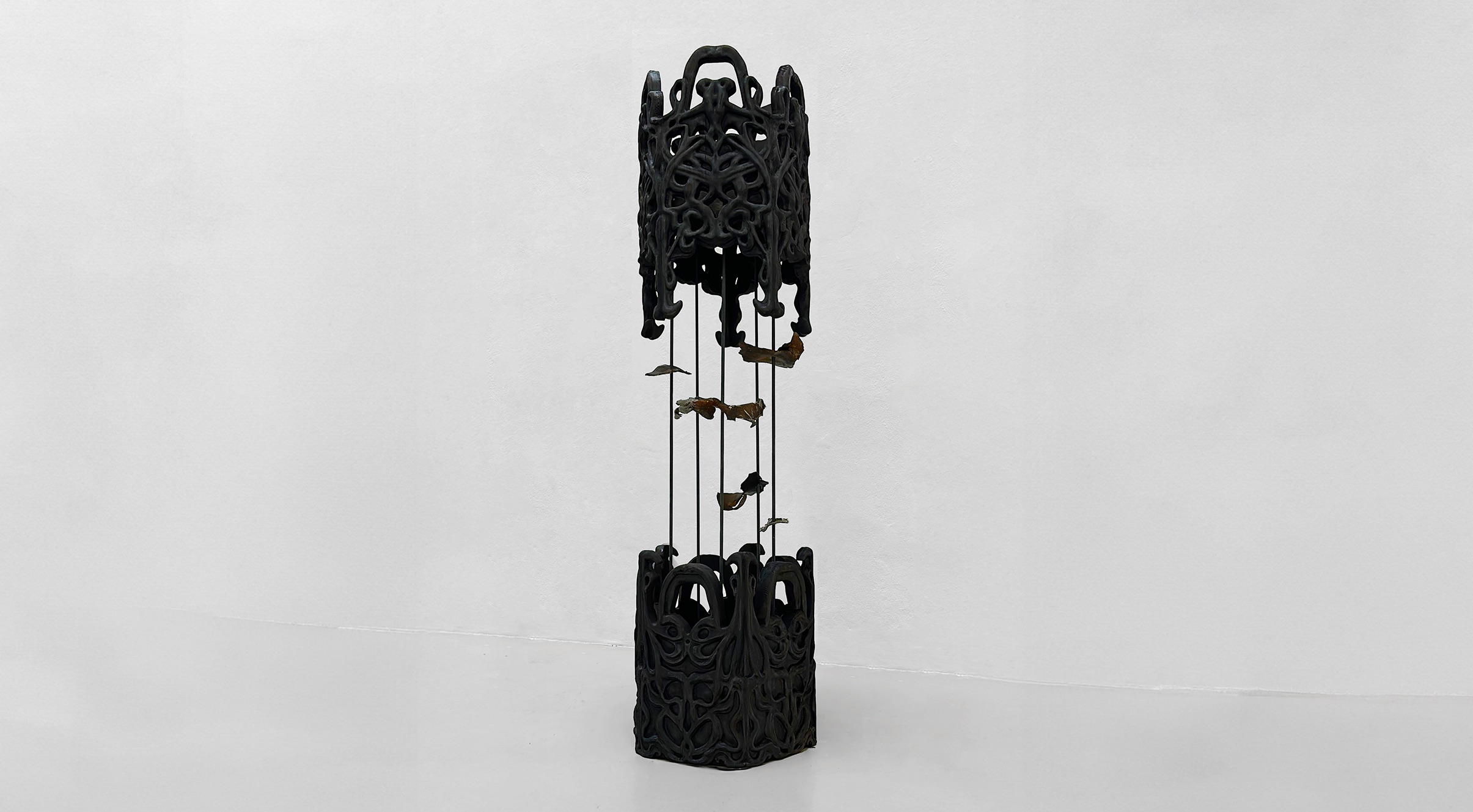
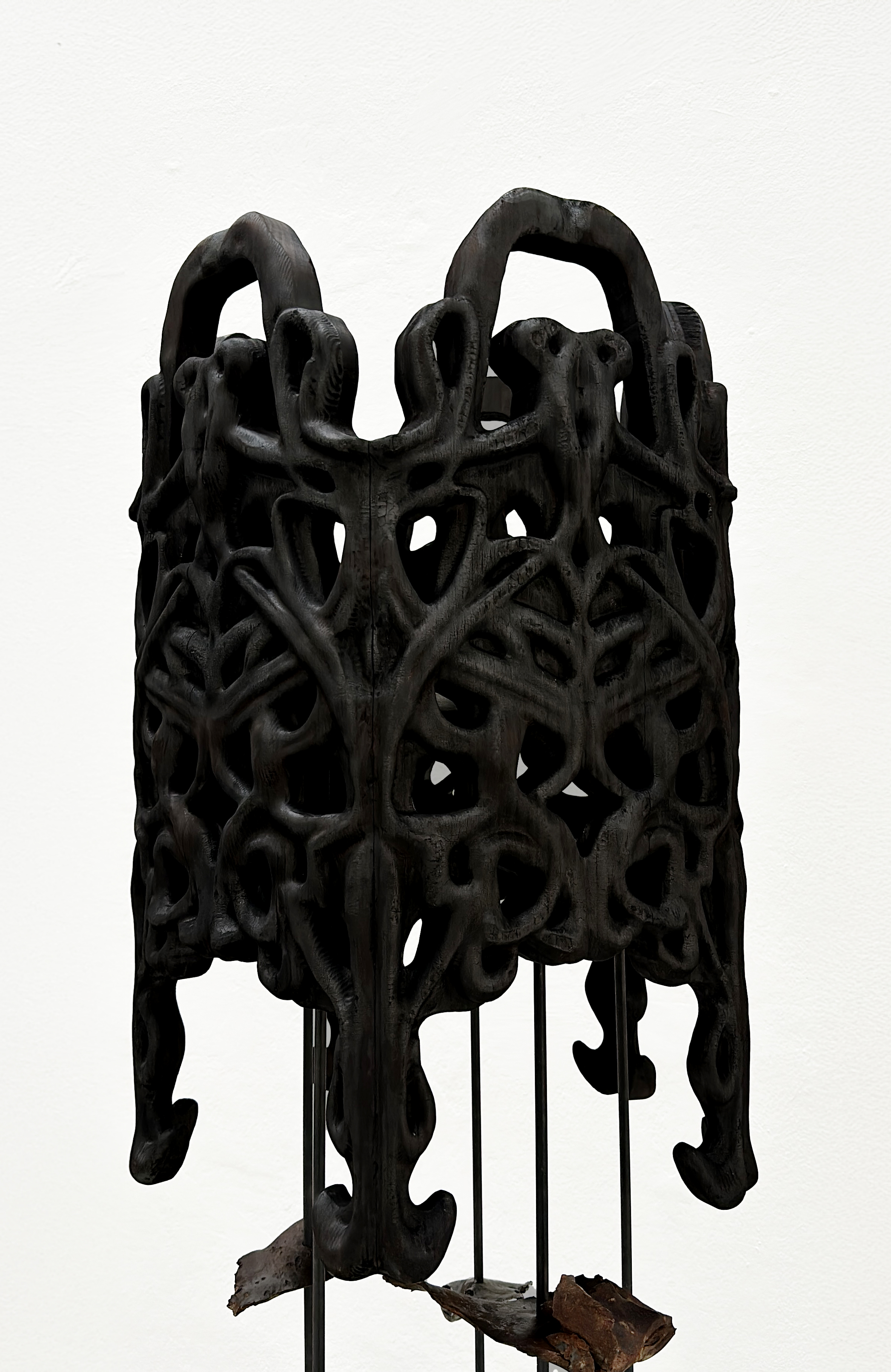
KN-23 lullaby (2025)
Kinetic sculpture
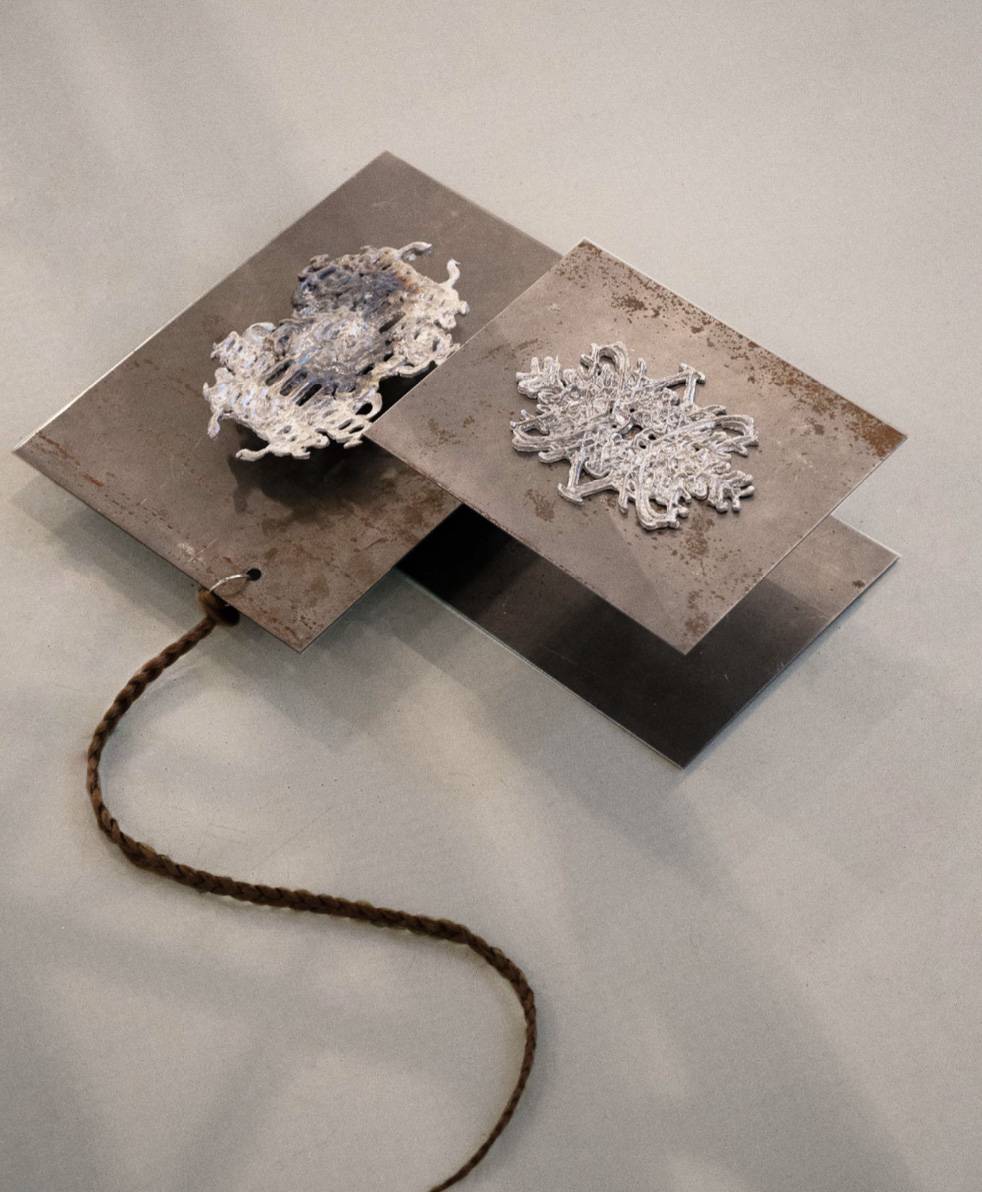
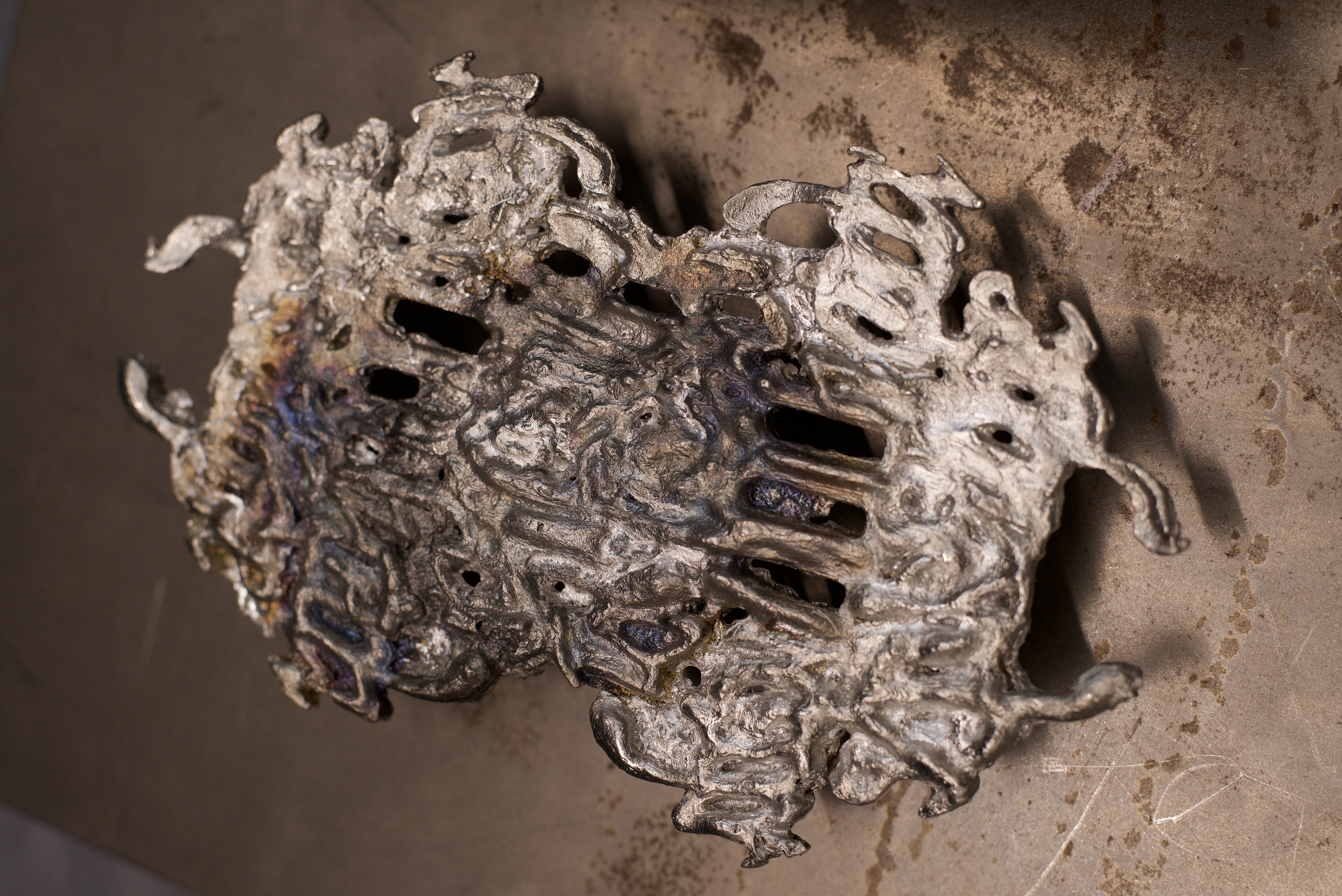
The work “KN-23 lullaby” carries the name of a ballistic missile produced in North Korea and actively used
by Russia in the war in Ukraine. The sculpture itself is inspired by carousel-shaped music boxes that help children fall asleep. More figurative elements, like horses or ballerinas, are replaced with debris from a Russian missile, now trapped in a peaceful dance. The debris I collected next to my home after surviving a Russian ballistic shelling. Carved ornaments are made through the process of type customization and refer to the functional components and visual appearance of a missile.
Photos: © Margo Dubovska
My blood boils for choices not my own (2024)
Installation
An installation reflecting on the topic of russian imperialism through the lens of self-identification via language. Personal messages, thoughts, and notes are written in various languages (Ukrainian, Russian, and English) and encrypted into tin casted sculptures by customising the type and installed on iron pedestals. By encoding personal narratives, I am referring to the loss/search for identity as a result of russian propaganda within post-USSR countries and the imperialistic narratives that spread
after the Soviet Union’s collapse (as well as a long history of repressions based on the use of the Ukrainian language), which I experienced growing up in Ukraine. Until the age of 18, I spoke Russian. I hated this part of me that I did not choose; I hated this part that was blinded by the narratives of the oppressor, which now has me in a chokehold. Since the topic of russian imperialism is rarely brought up in art and research fields, I aim to voice experiences that were silenced, hidden behind the utopian shield of “brotherly nations”, as well as neatly wrapped in shiny paper for nations seen as “minorities” that have been successfully marginalised within Russia as well.
Photos: © Margo Dubovska
“To the one I was not let to become” (2023)
Object
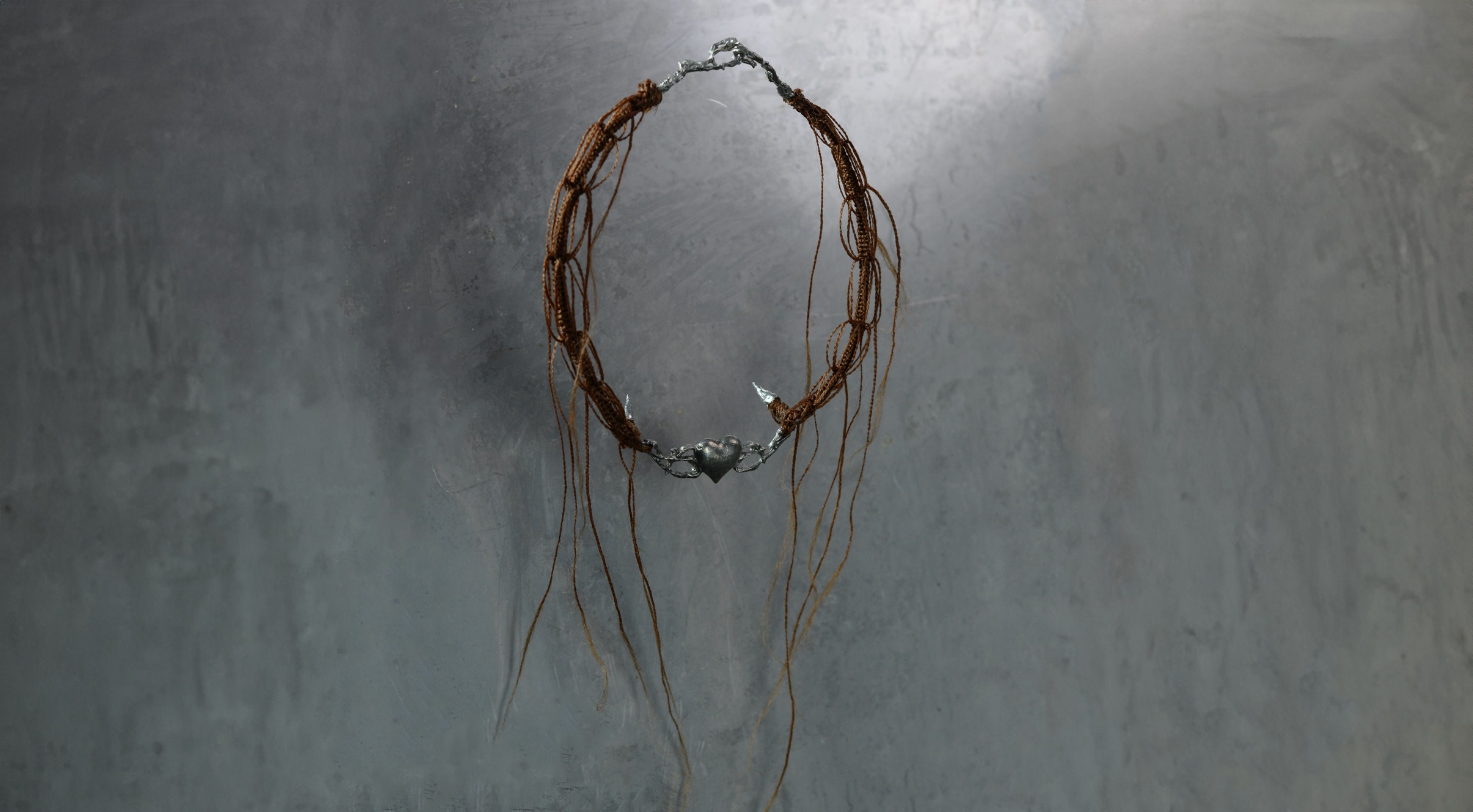
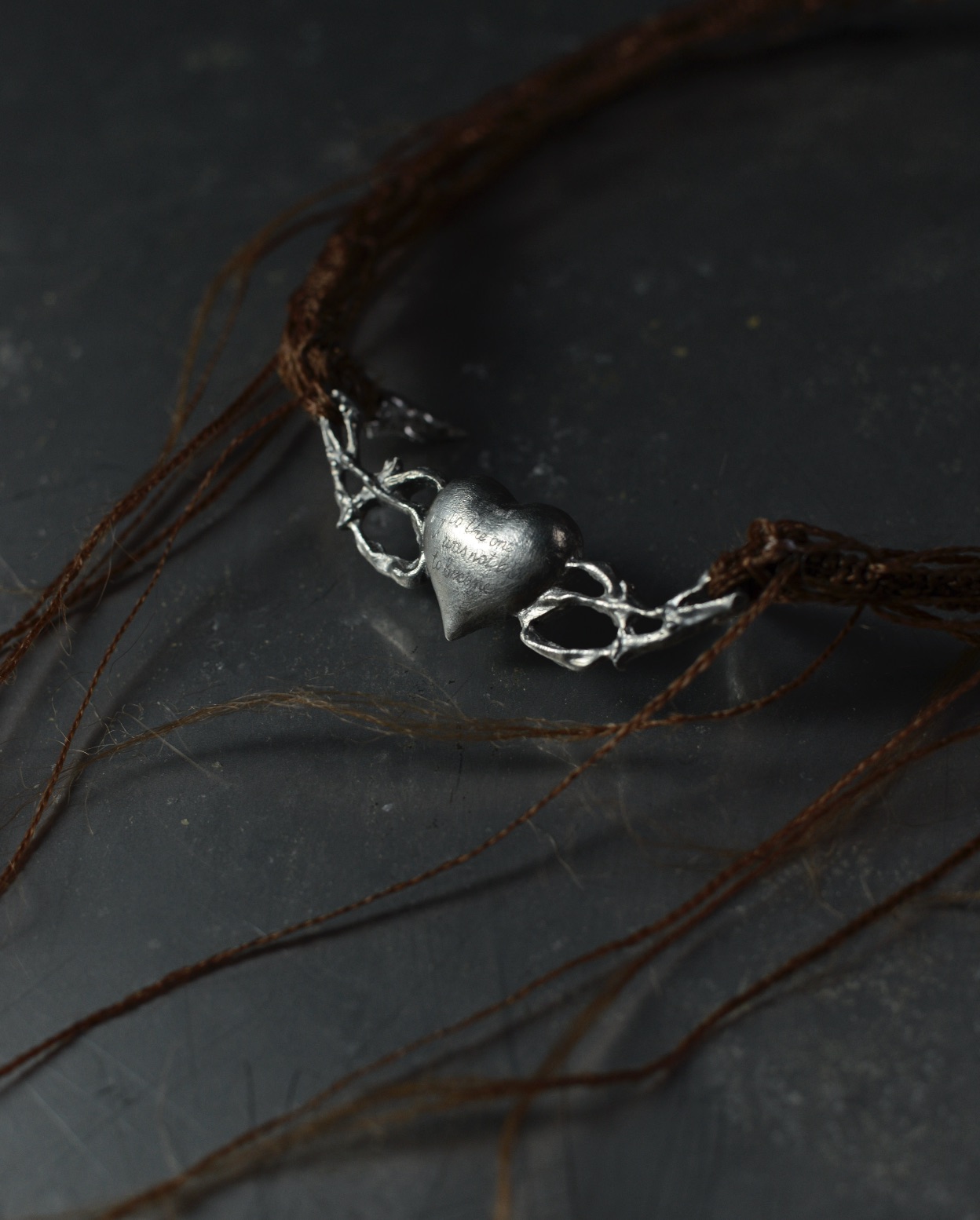
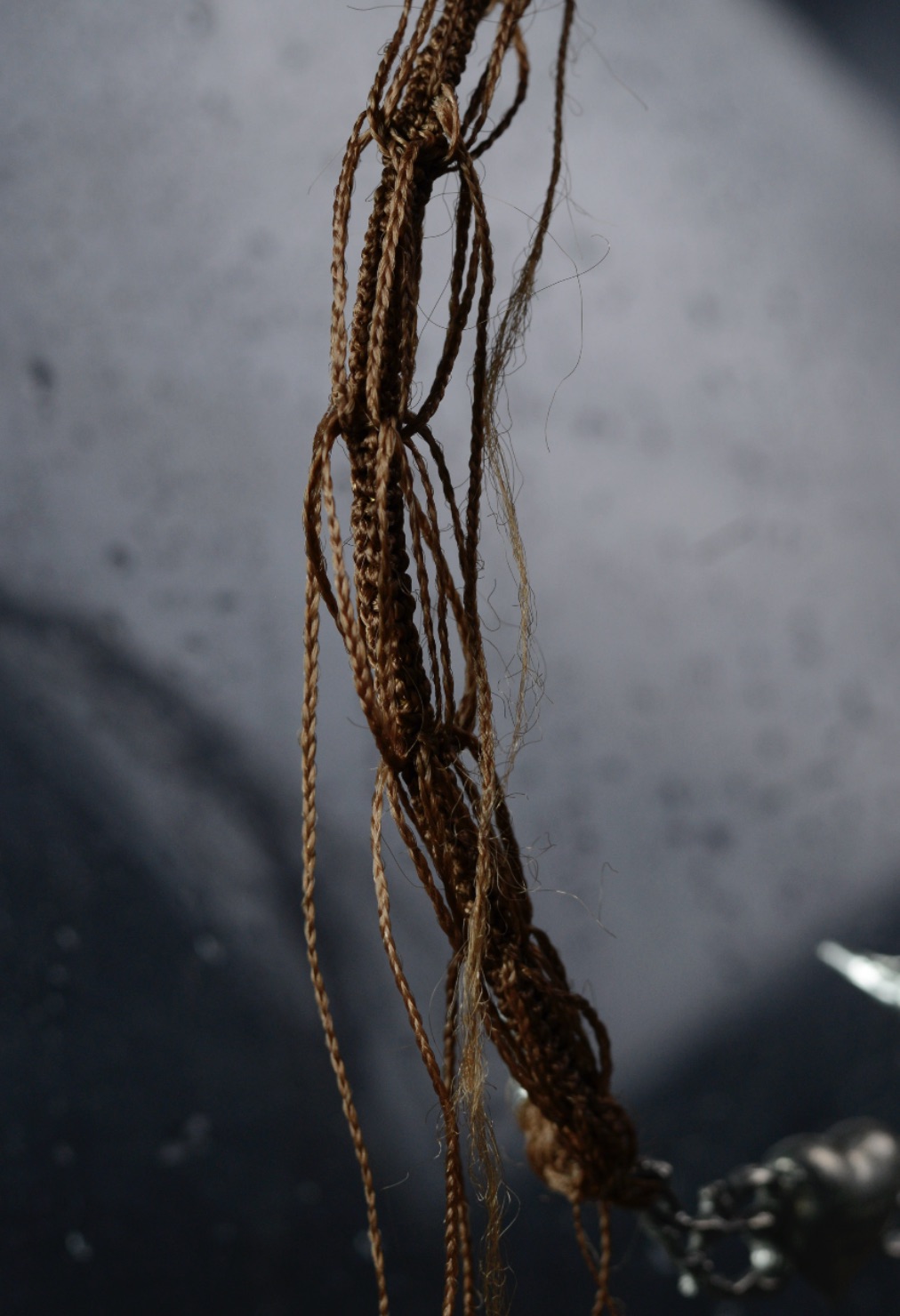
“To the one I was not let to become” is showing a non-linear process of healing andcoping with trauma of experiencing war by encoding personal experience of dealingwith anger, grief, loss and despair into a mourning necklace, braided of hair from “I will
find myself waiting” (self-portrait telling the story of the personal experience of fleeing from war, 2022). Dedicated to someone potentially (not) existing, the work is made using the technique of the hairwork, which was used throughout the XV–XVIII centuries to create mourning jewellery from the hair locks of dead and loved ones.