

ANA DE ALMEIDA
“Ficou
a ver
passar
navios.”
#ARTS-BASED RESEARCH #ARCHITECTURE #COMMONS #INSTALLATION #SPACE #MULTIMEDIA #IDENTITY #PERFORMANCE
#NEO-COLONIAL #VIDEO #GENDER
BIO. Ana de Almeida (b.1987) is an artist and author from Lisbon, currently based in Vienna. She is a member of the artists’
collective dienstag abendof
of VBKÖ and of the Interndinner collective against precarization of work in the cultural field. Her artistic practice addresses memory and remembering processes, narrative constructions that connect space and subject, and plurispatial and multilayered narratives in general.
Ana de Almeida is currently a Ph.D. candidate at the Academy of Fine Arts of Vienna, pursuing a doctoral thesis about the production of images in the 1974—1989 inter-revolutionary space between the Carnation and the Velvet Revolutions.
Ana de Almeida is currently a Ph.D. candidate at the Academy of Fine Arts of Vienna, pursuing a doctoral thesis about the production of images in the 1974—1989 inter-revolutionary space between the Carnation and the Velvet Revolutions.
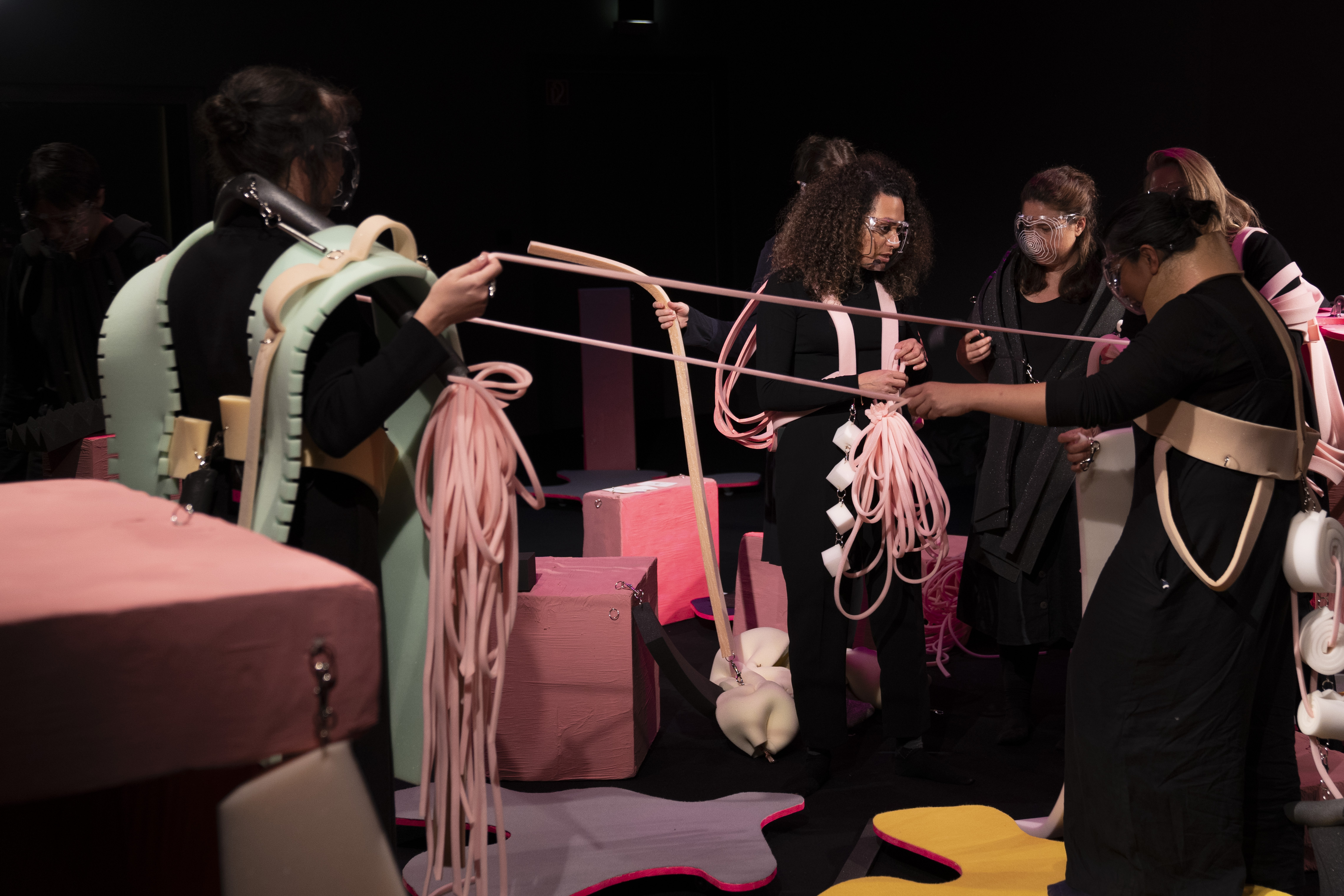
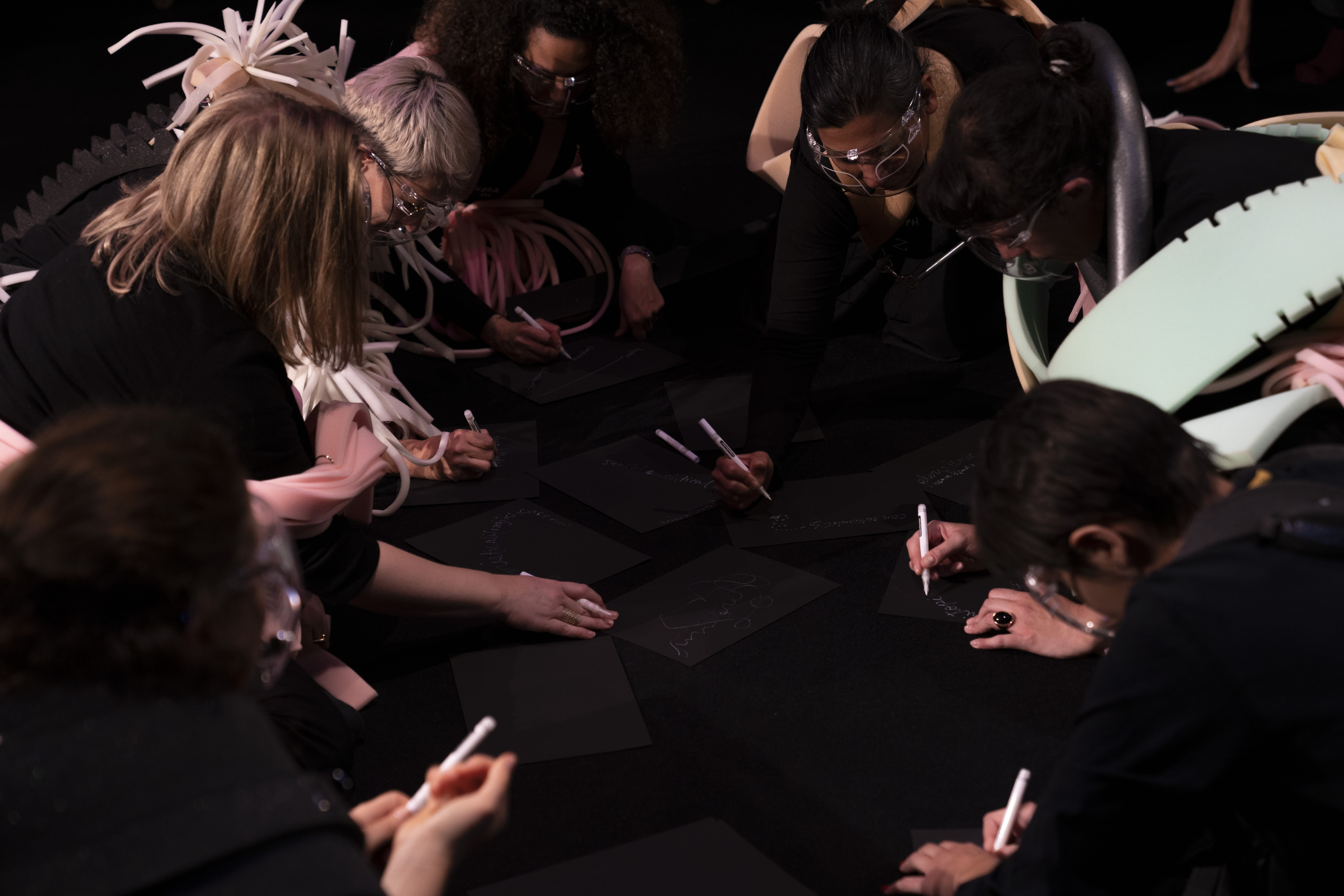
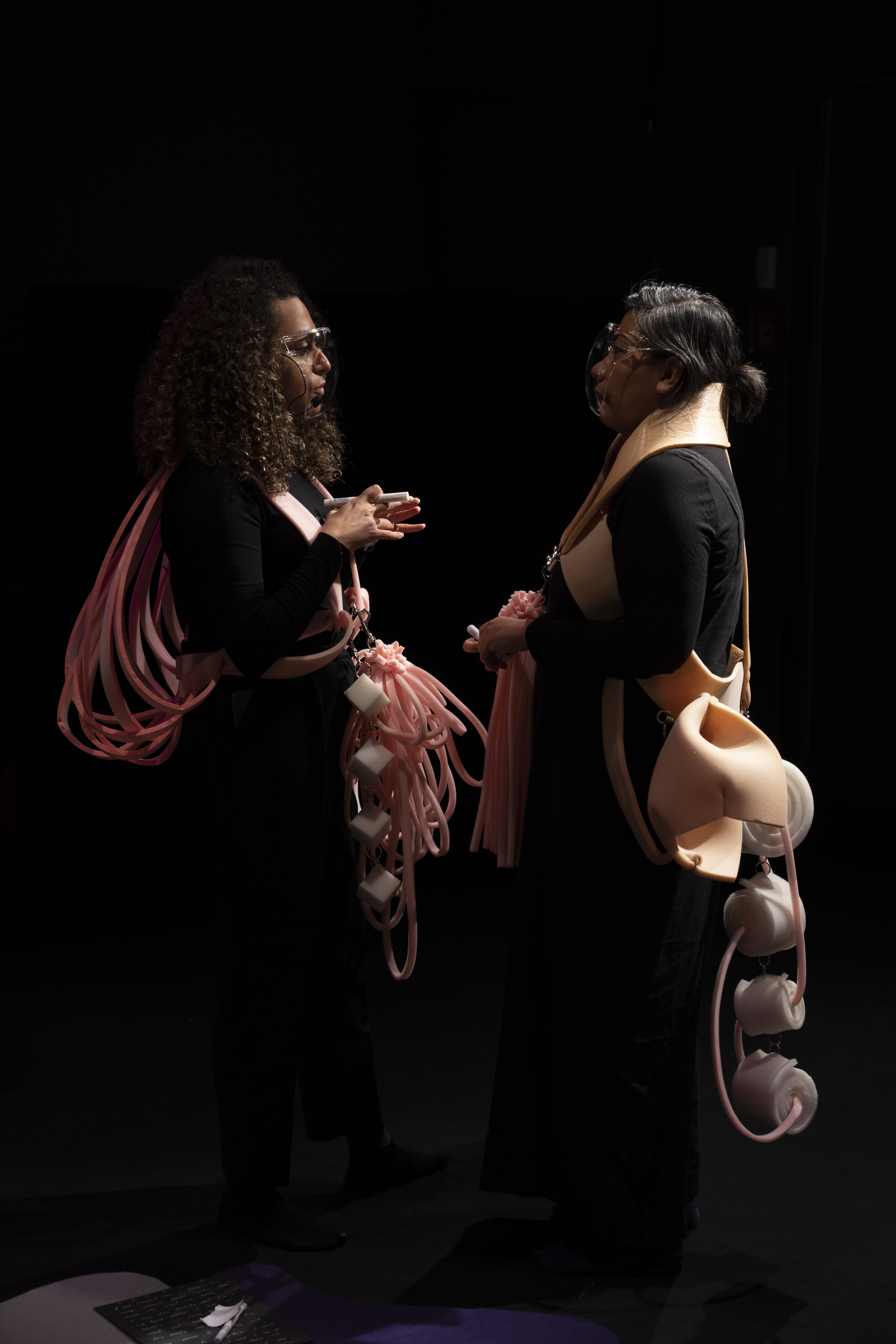

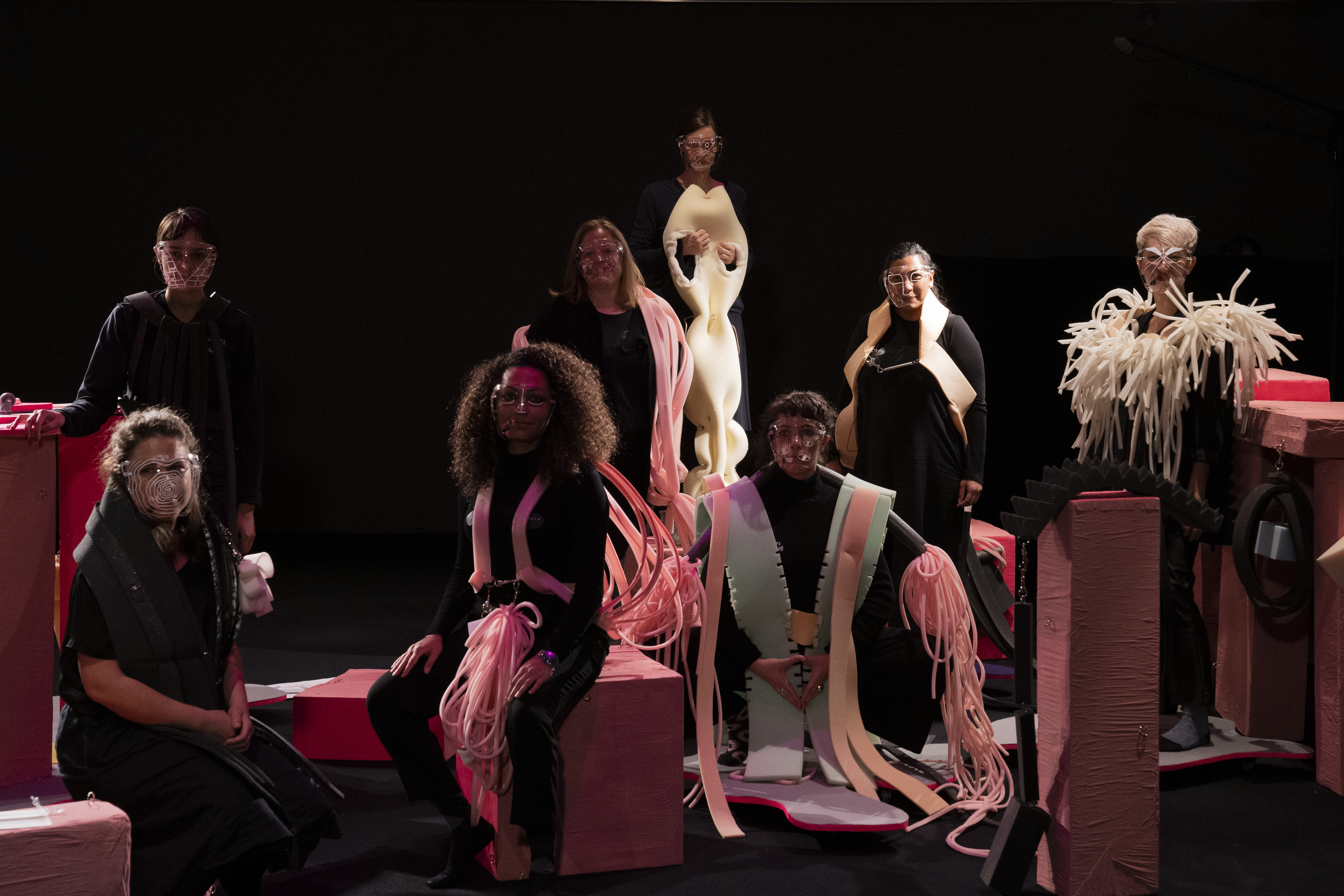
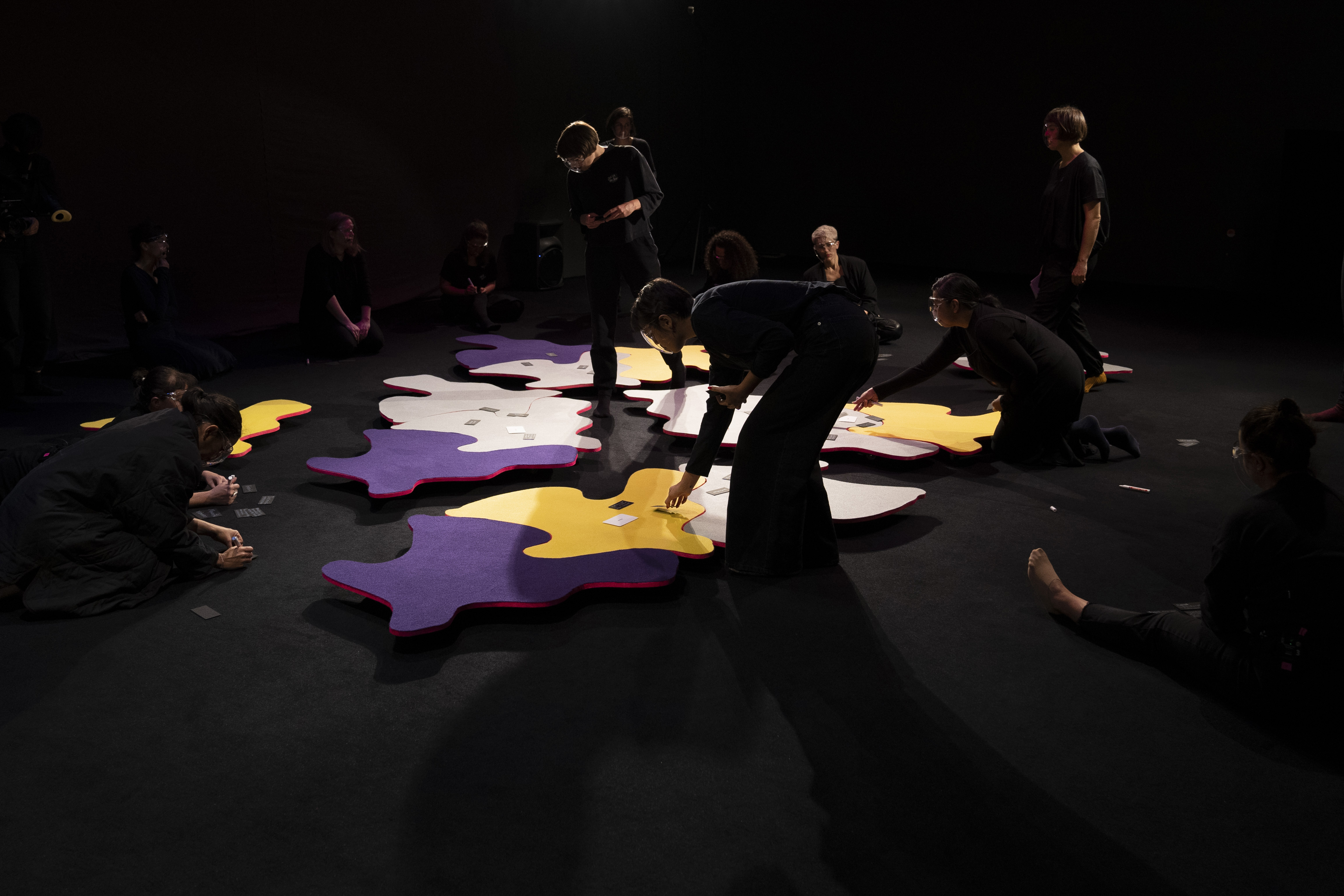
Ana de Almeida, Alicja Rogalskaand & Vanja Smiljanic
NOVA. Future thoughts on surviving together (2020 AT)
Live Action Role Play
In the future, gender inequality was erased. Nova is a multitude of newly born, radically inclusive and self-managed communities. Heterogeneous in their forms of commoning and social organization, Nova share a vow to never let oppression in any form rise again. Nova. Future thoughts on surviving together is a feminist futurist LARP - Live Action Role Play by Ana de Almeida, Alicja Rogalska and Vanja Smiljanić; directed towards feminist and queer-feminist activists based in Vienna. NOVA is a day of speculative gaming aimed at sharing survival strategies, exercising solidarity and intersectionality, creating solidarity networks and forming new alliances between different emancipatory movements. Together, we created a piece of feminist political fiction - a work in progress and a world free of patriarchal oppression in the making.
With: VBKÖ, Saloon Wien, Kunst & Kind, Latinxs Unidxs, Kültür Gemma, Cine Collective, Mala Sirena, female:pressure.


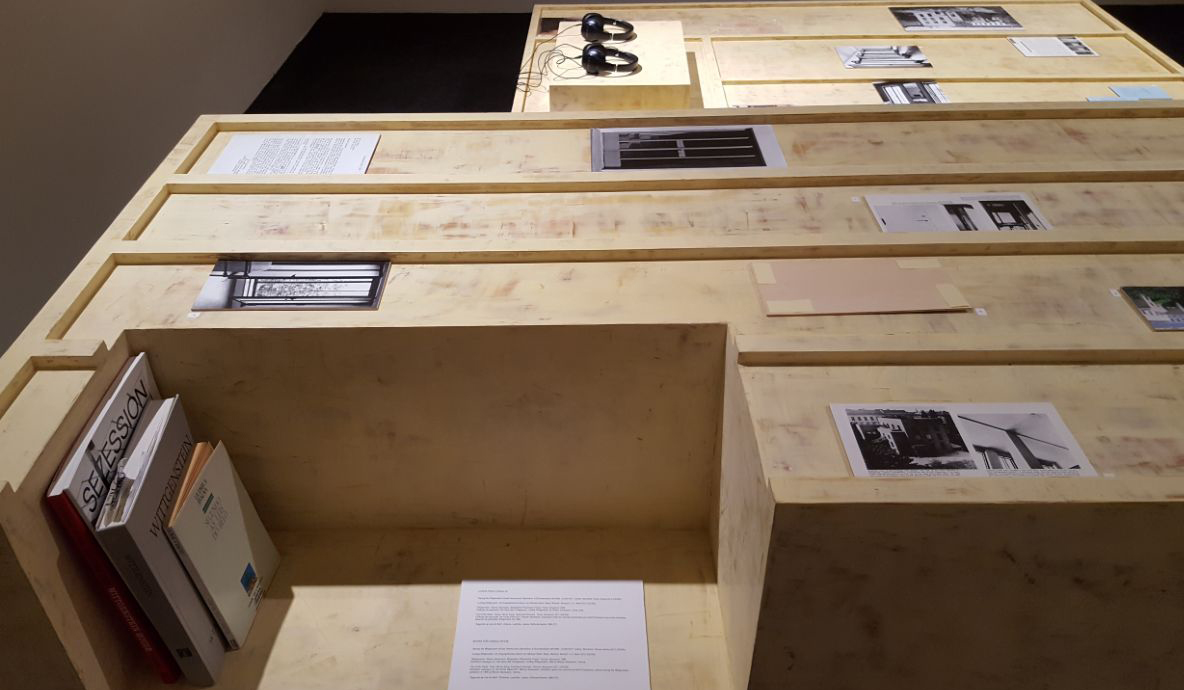
A Casa / The House The flat / Die Fläche (2018 PT)
MDF, stucco-lustro, stereo sound 42'5'' looped
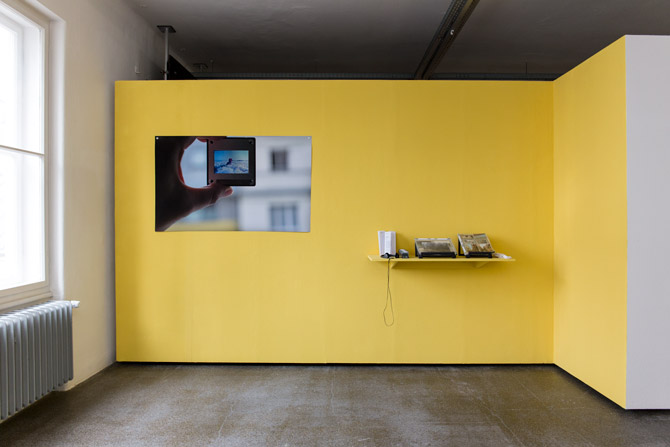
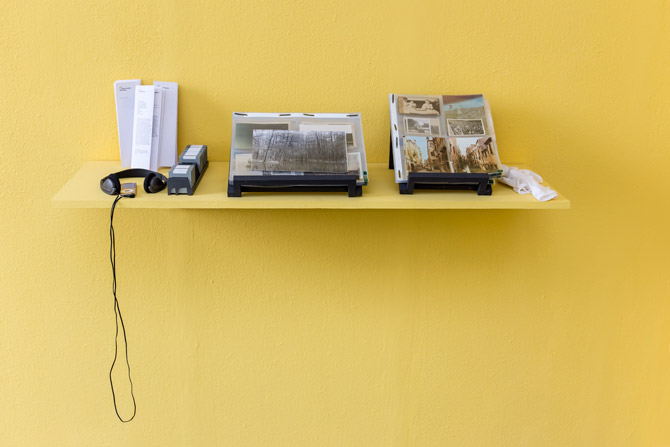
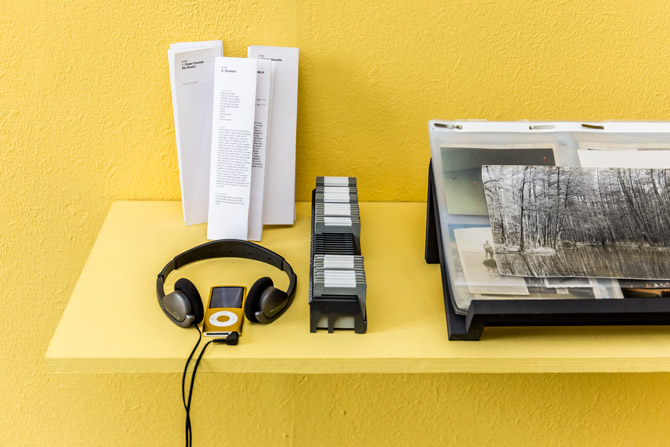
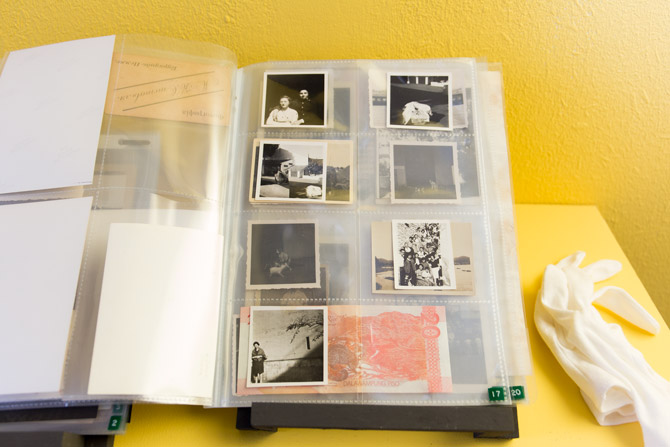
Likewise a sculpture, A Casa (The House) shares the aesthetic and architectonic language of the House Wittgenstein in Vienna. The two volumes are a transposition and folding down of two of its architectonic elements: a window and the vestibule door. They serve as display for documental material such as letters and photos and incorporate an audio piece with interviews led by the artist. The surface is covered by stucco-lustro, a coating technique proliferating in Vienna on the turn to the 20th century, similar to how could the original coating of the walls of the House Wittgenstein have looked like before they were painted white after World War II. The highlighting of the stucco-lustro architectonic detail points out to a fundamental discovery for the understanding of the house as aesthetic experiment in which the house interiors, composed by materials which evoke extreme hardness, seem to dematerialize through the highly reflecting properties of the stucco walls.

Photos: © Ana de Almeida & Stephanie Misa
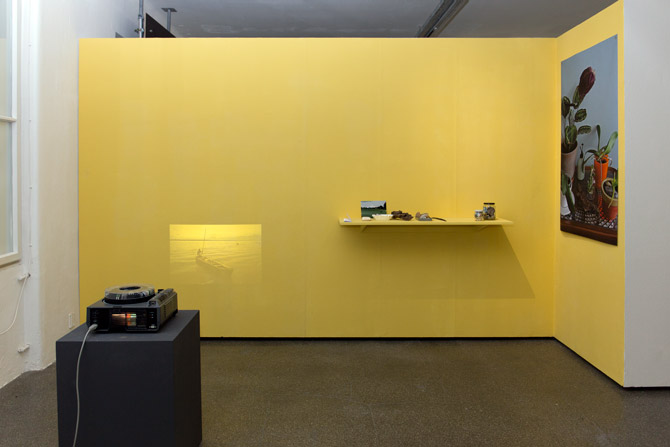
Untitled (Yellow) (2017 PT)
Wall, yellow paint, memorabilia, diashow, stereo sound
A cooperation between Ana de Almeida (PT/AT) and Stephanie Misa (PH/AT) . This is a project about landscape as formal and informal disposition of elements. Coordinates. An arrangement, a hierarchy: borders and de-limitations, transpositions and transgressions, frames and their inside-outside, margins, and of course landscape — of the geographical, political, personal, and emotional nature. Edouard Glissant’s Traité du Tout-Monde. (Poétique IV), calls it archipelagic thinking, a group of islands that lends its topography to an alternative imaginary: a reassessment of the insularity of bound cultures, of nation-states, and the heaviness of “continental thought”. The archipelago is an alternative imaginary, one that posits that identity could be as a conglomeration of islands (composed of many, yet is one). Identity formation, embodiment, complex colonial histories, evolution, interconnectedness, diaspora and change — Oh to dispell the oppressive idea of nationalistic wholeness!
ERIKA FARINA
“Textile
work

is an act of
resistance.”
#ARTS-BASED RESEARCH #BODY #ECOLOGY #FABULATION #GENDER #INSTALLATION #TEXTILE
BIO. Erika Farina (she/her) is a Vienna-based textile artist and musician. Initially trained as a tailor, she gained professional experience working with several Austrian fashion labels. Her practice spans costume design, installation and participatory projects, with a particular interest in translating cultural, digital, and media content into textile processes. Under the alias FRNRKE, she collaborates with musician and producer A_Phan on an alt-pop electronic music project. Farina is currently studying art and art education at the University of Applied Arts Vienna.


Symbionts (2022-2024)
Mixed media installation
The installation is a speculative multispecies landscape. In this space, boundaries between species, territory, and kinship are fluid and reimagined.The project is inspired by feminist philosopher Donna Haraway‘s concept of tentacularity which she uses in her book Staying with the Trouble: Making Kin in the Chthulucene (2016), as a metaphor to emphasize the complex, non-linear, and interwoven relationships that define life on Earth. The tentacle, as a figure, suggests a web of interconnected lines, movements, and flows that extend beyond human-centered modes of understanding the world.


Ma lui un mostro non é (2024)
Embroidery on metal grid
With reference to Guerrilla Embroidery and Katharina Cibulka’s Solange Project, the embroidery Ma lui un mostro non è. was stitched onto a metal grid. The work recalls an oversized Spruchtuch, a cloth traditionally bearing embroidered sayings. The text derives from a speech by Elena Cecchettin on the Italian TV program Dritto e Rovescio (Nov 19, 2023). Elena Cecchettin is the sister of Giulia Cecchettin, who was murdered on Nov 11, 2023 by her ex-boyfriend Filippo Turetta, a case that sparked widespread outrage in Italy. In her speech, Cecchettin rejected the portrayal of the perpetrator as a monster, framing femicide instead as a product of patriarchal society and rape culture. Following her intervention, she faced heavy criticism, her words dismissed as performance and her appearance judged as inappropriate, responses that exemplify how discourse on femicide and women’s rights is handled in Italy by many politicians and the mainstream media. By translating these words into embroidery, the work reclaims the Spruchtuch as a political medium. Cecchettin’s speech insists that femicide must be named within its cultural context to be actively confronted. More info: https://fondazionegiulia.org/


Images: © Auguste Marceau
Dickpic (2025)
Woven cotton garn
Women* have made decisive contributions to the creation and development of the internet. Nevertheless, they are disproportionately targeted by hate, harassment, and sexualized violence in digital spaces. Unwanted sexual comments and the unsolicited sending of “dick pics” (penis images) are part of everyday digital life for many, with perpetrators rarely facing legal consequences. According to a 2017 YouGov study from the United Kingdom, 40% of women* aged 18 to 36 have received a dick pic without having asked for it. The work Dickpic responds to this form of digital assault. The woven band, produced using the traditional technique of tablet weaving, translates the binary code of a penis image JPEG file into a slow, tactile process. What is usually instantaneous, invasive, and ephemeral is rendered labor-intensive, visible, and permanent. The entitled, power-driven act of sending an unsolicited penis image is here appropriated and recoded. Sexualized aggression is stripped of its immediacy and transformed through craft, reclaiming agency through time, skill, and material knowledge. In Austria, the unsolicited sending of “dick pics” has been criminalized since September 2025