

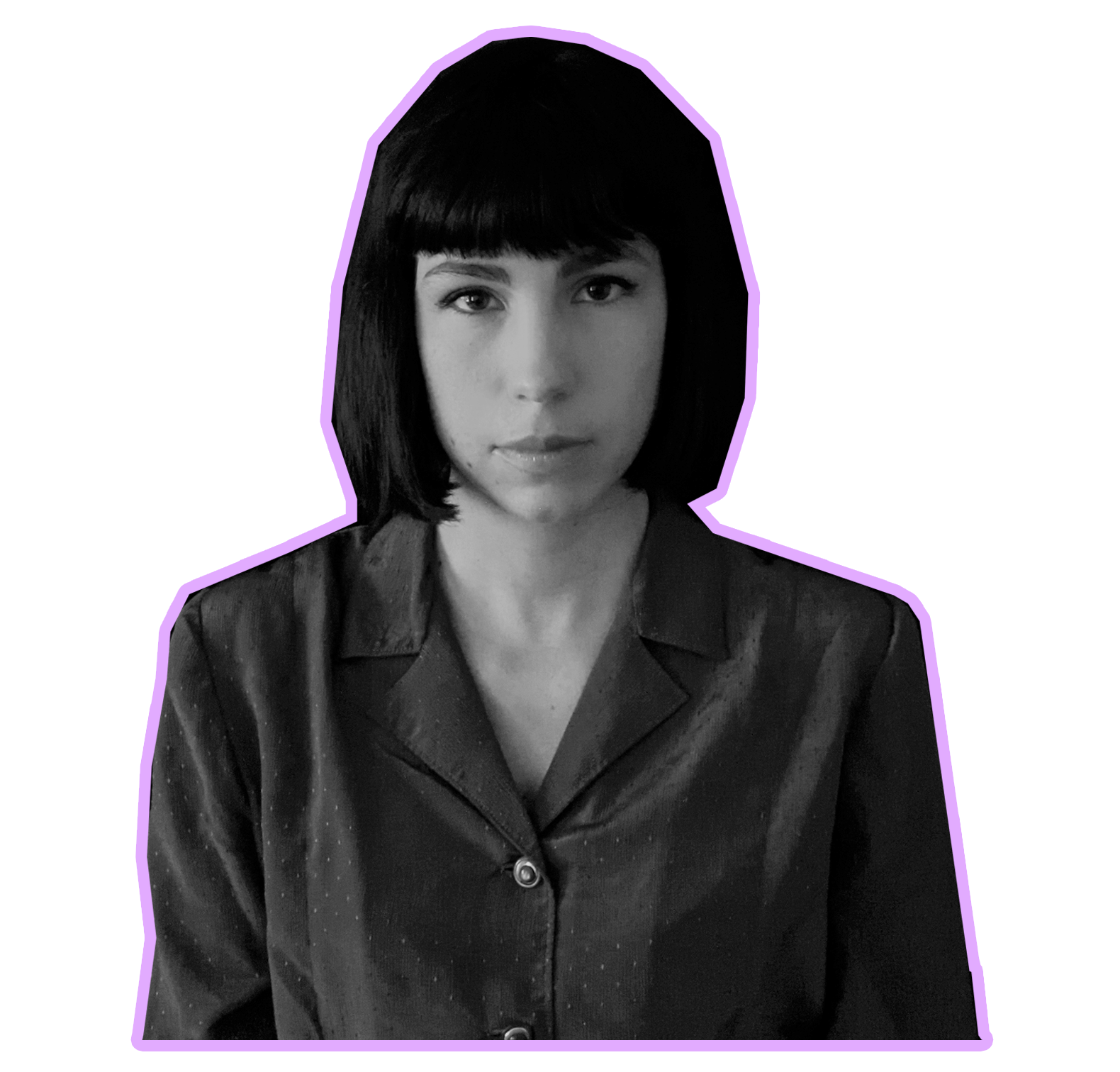
ANA DE ALMEIDA
“Ficou
a ver
passar
navios.”
#ARTS-BASED RESEARCH #ARCHITECTURE #COMMONS #INSTALLATION #SPACE #MULTIMEDIA #IDENTITY #PERFORMANCE
#NEO-COLONIAL #VIDEO #GENDER
BIO. Ana de Almeida (b.1987) is an artist and author from Lisbon, currently based in Vienna. She is a member of the artists’
collective dienstag abendof
of VBKÖ and of the Interndinner collective against precarization of work in the cultural field. Her artistic practice addresses memory and remembering processes, narrative constructions that connect space and subject, and plurispatial and multilayered narratives in general.
Ana de Almeida is currently a Ph.D. candidate at the Academy of Fine Arts of Vienna, pursuing a doctoral thesis about the production of images in the 1974—1989 inter-revolutionary space between the Carnation and the Velvet Revolutions.
Ana de Almeida is currently a Ph.D. candidate at the Academy of Fine Arts of Vienna, pursuing a doctoral thesis about the production of images in the 1974—1989 inter-revolutionary space between the Carnation and the Velvet Revolutions.
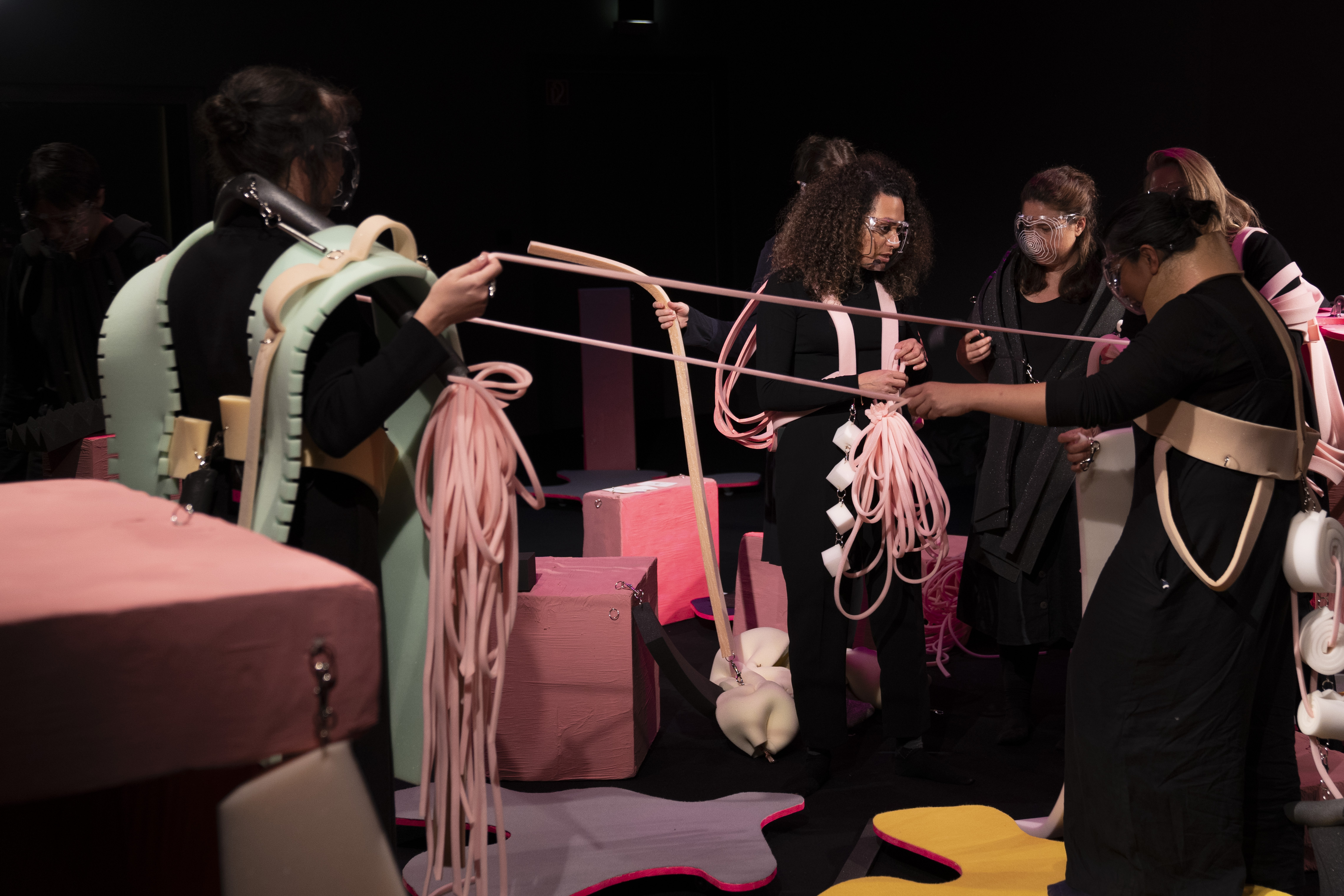
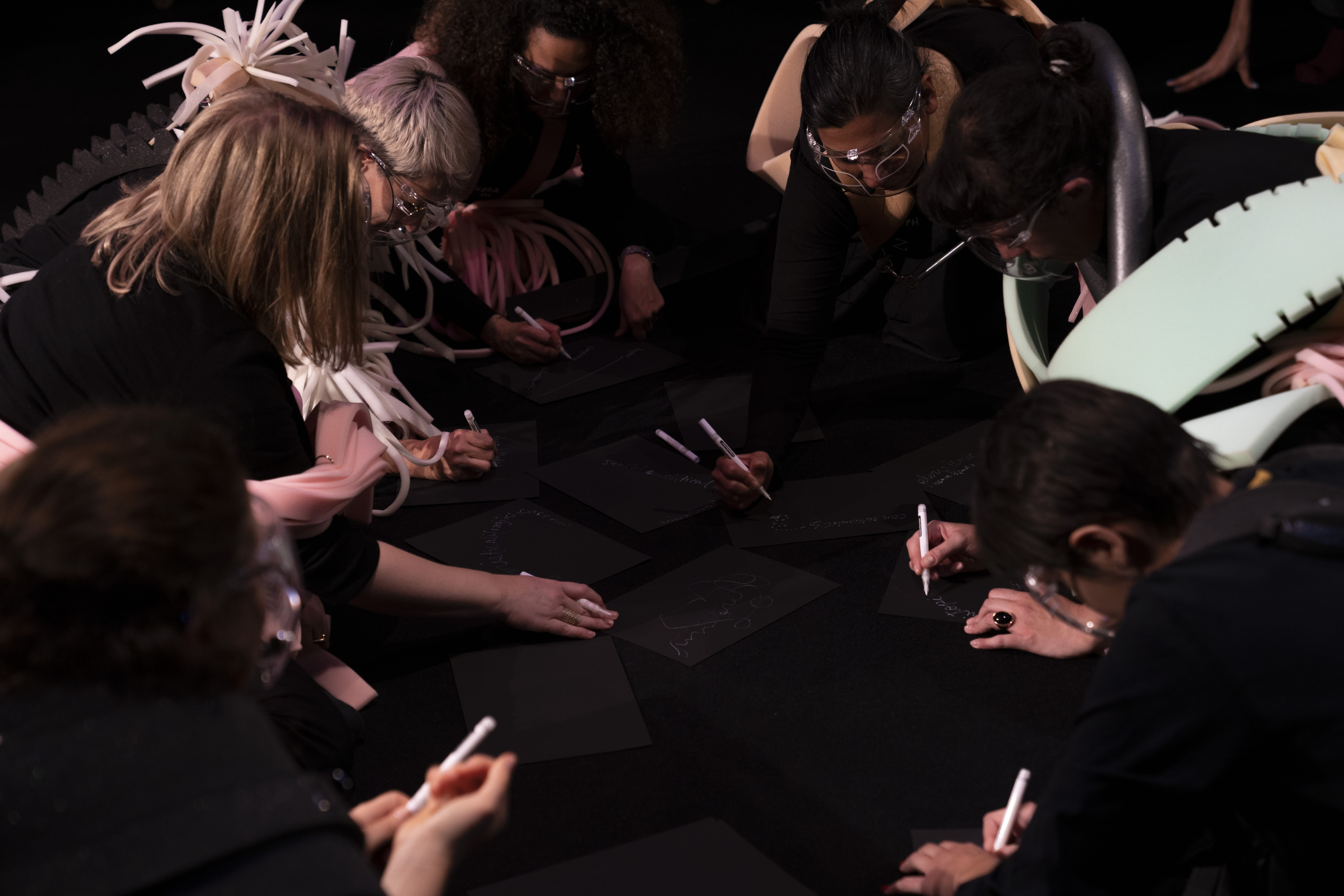
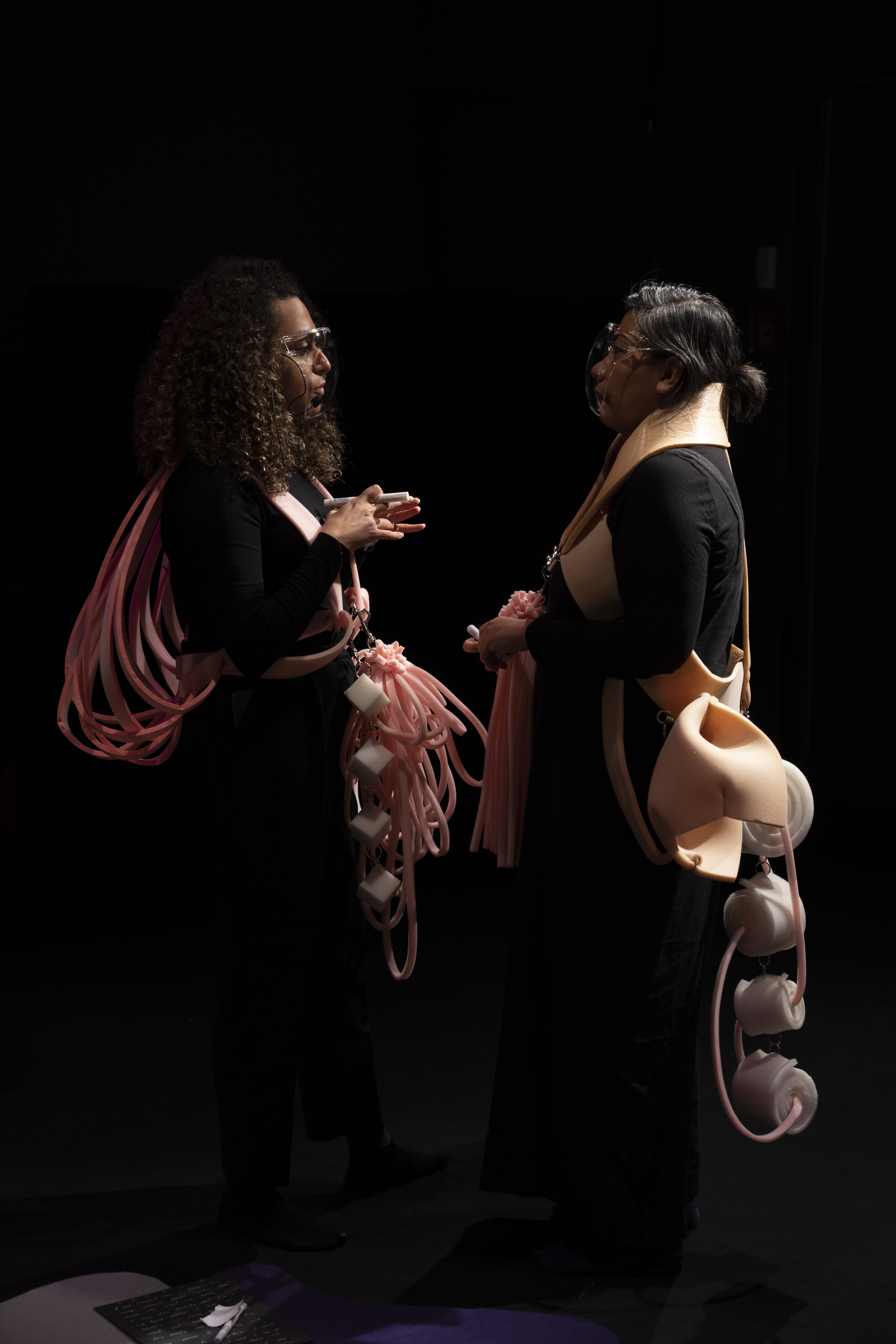

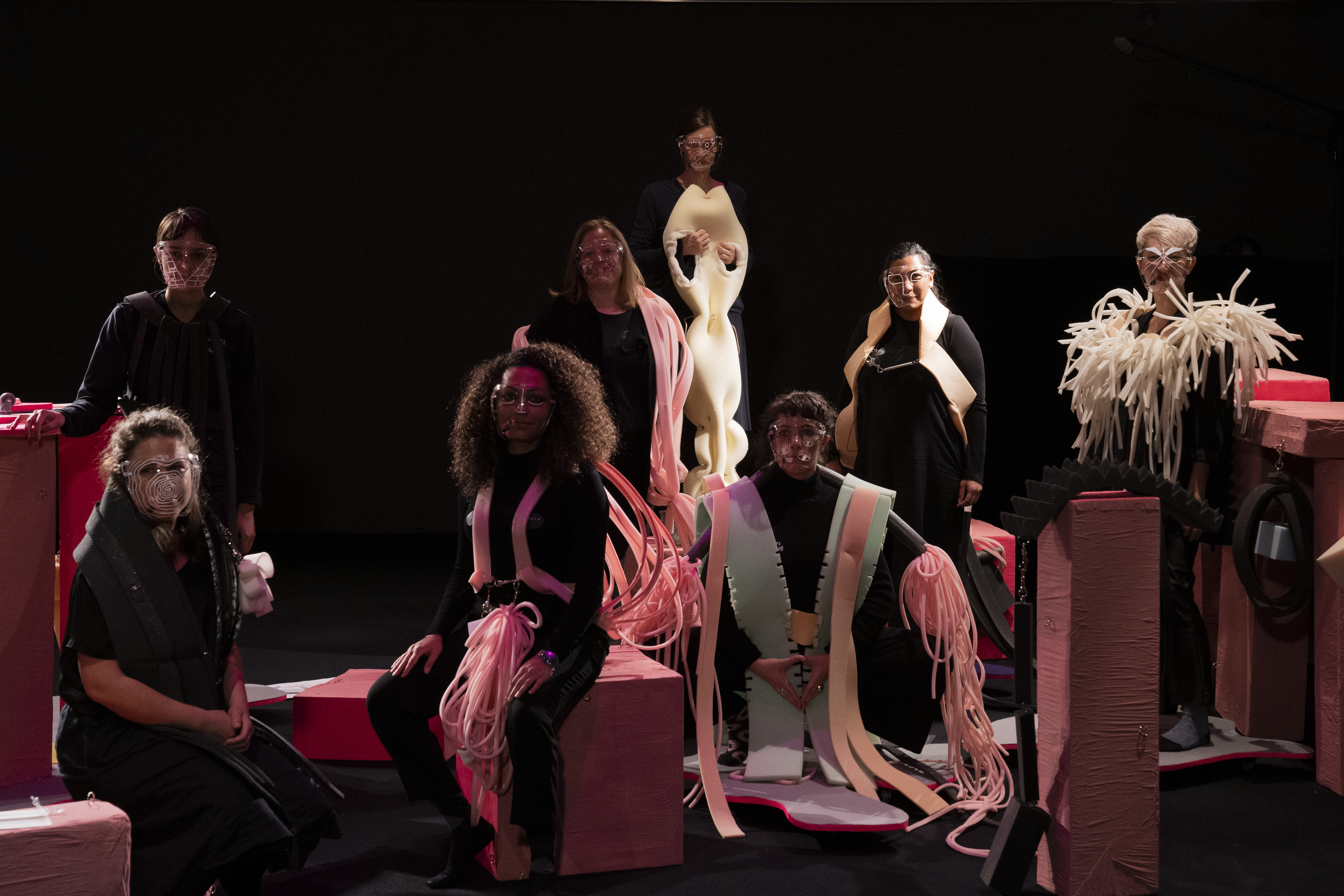
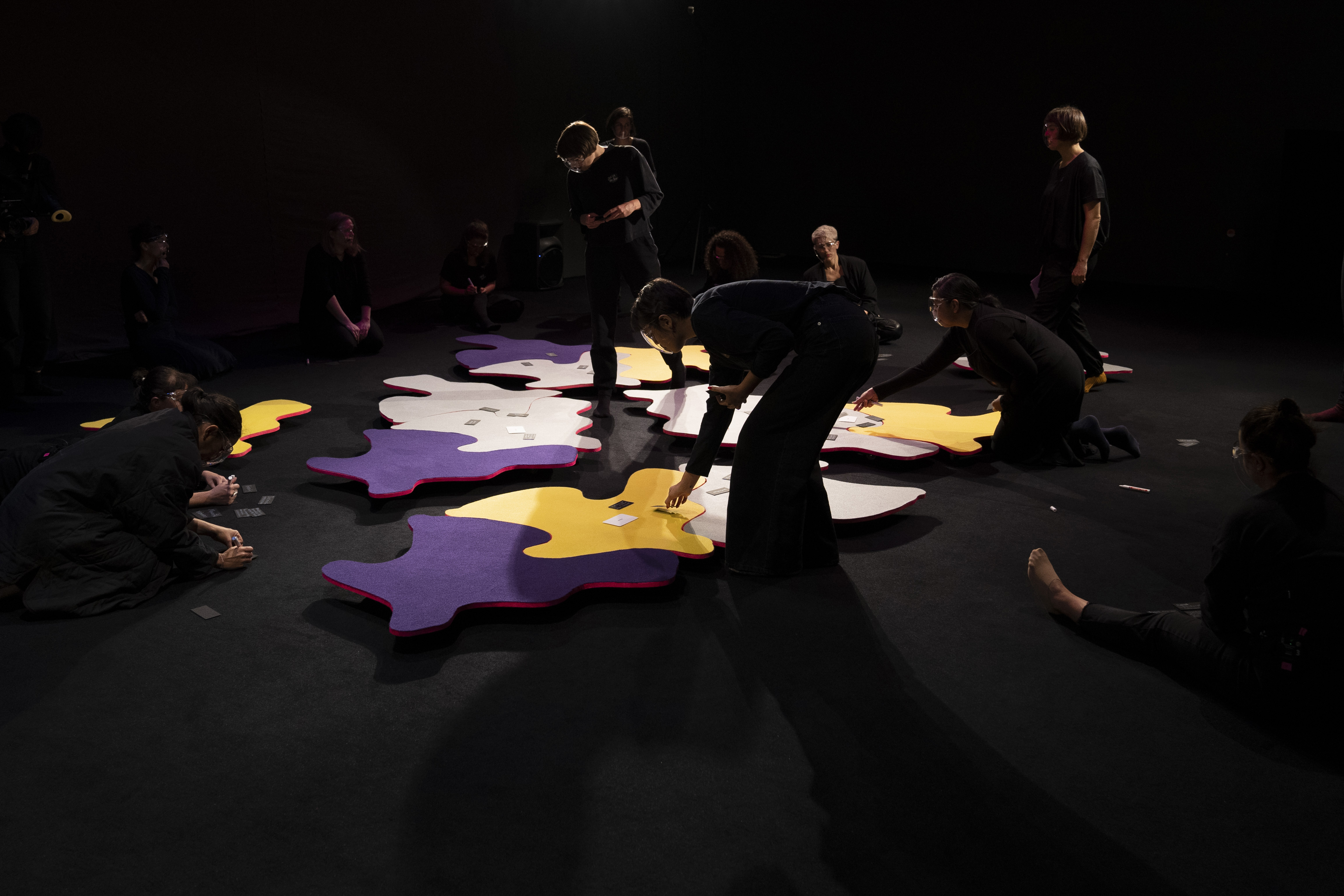
Ana de Almeida, Alicja Rogalskaand & Vanja Smiljanic
NOVA. Future thoughts on surviving together (2020 AT)
Live Action Role Play
In the future, gender inequality was erased. Nova is a multitude of newly born, radically inclusive and self-managed communities. Heterogeneous in their forms of commoning and social organization, Nova share a vow to never let oppression in any form rise again. Nova. Future thoughts on surviving together is a feminist futurist LARP - Live Action Role Play by Ana de Almeida, Alicja Rogalska and Vanja Smiljanić; directed towards feminist and queer-feminist activists based in Vienna. NOVA is a day of speculative gaming aimed at sharing survival strategies, exercising solidarity and intersectionality, creating solidarity networks and forming new alliances between different emancipatory movements. Together, we created a piece of feminist political fiction - a work in progress and a world free of patriarchal oppression in the making.
With: VBKÖ, Saloon Wien, Kunst & Kind, Latinxs Unidxs, Kültür Gemma, Cine Collective, Mala Sirena, female:pressure.


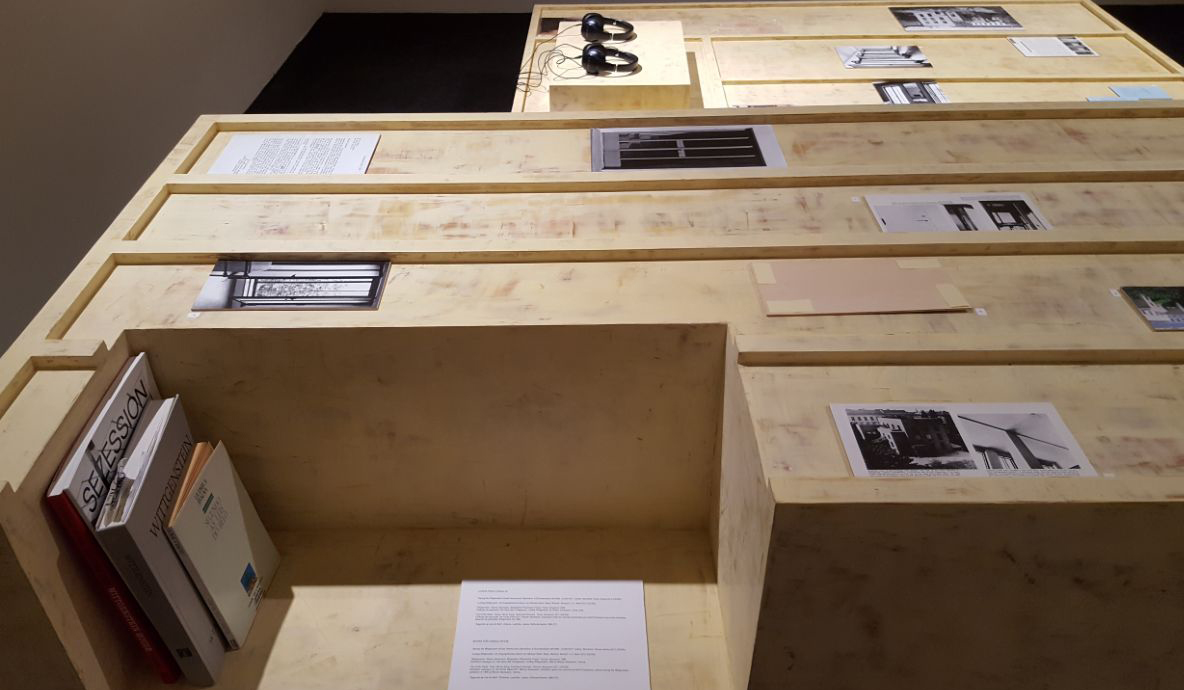
A Casa / The House The flat / Die Fläche (2018 PT)
MDF, stucco-lustro, stereo sound 42'5'' looped
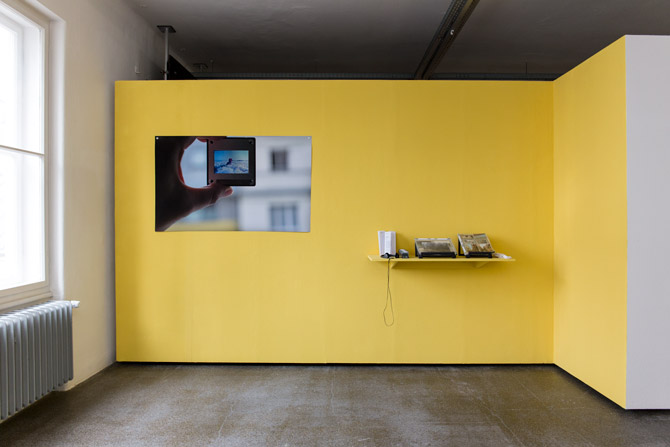
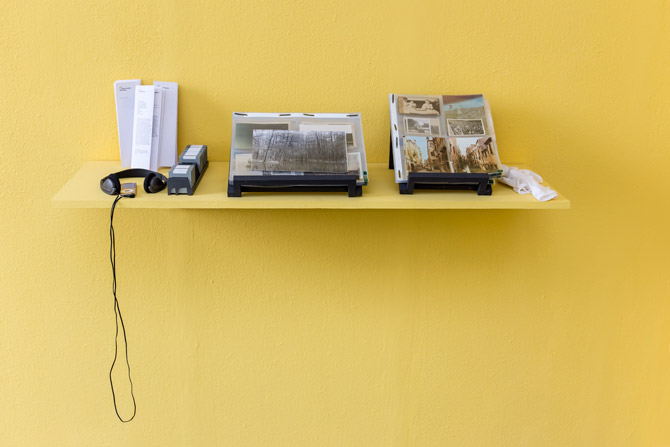
Likewise a sculpture, A Casa (The House) shares the aesthetic and architectonic language of the House Wittgenstein in Vienna. The two volumes are a transposition and folding down of two of its architectonic elements: a window and the vestibule door. They serve as display for documental material such as letters and photos and incorporate an audio piece with interviews led by the artist. The surface is covered by stucco-lustro, a coating technique proliferating in Vienna on the turn to the 20th century, similar to how could the original coating of the walls of the House Wittgenstein have looked like before they were painted white after World War II. The highlighting of the stucco-lustro architectonic detail points out to a fundamental discovery for the understanding of the house as aesthetic experiment in which the house interiors, composed by materials which evoke extreme hardness, seem to dematerialize through the highly reflecting properties of the stucco walls.

Photos: © Ana de Almeida & Stephanie Misa
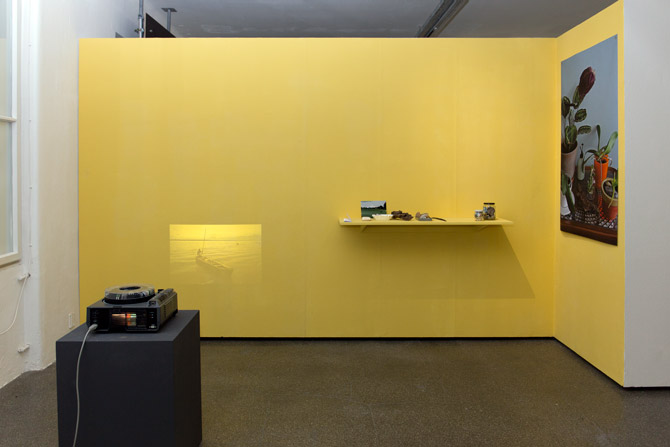
Untitled (Yellow) (2017 PT)
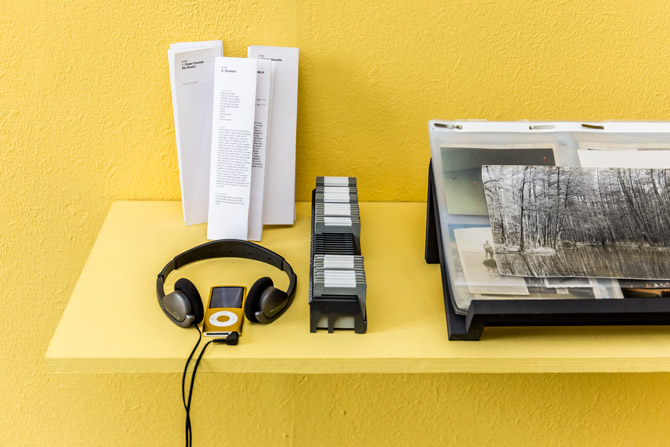
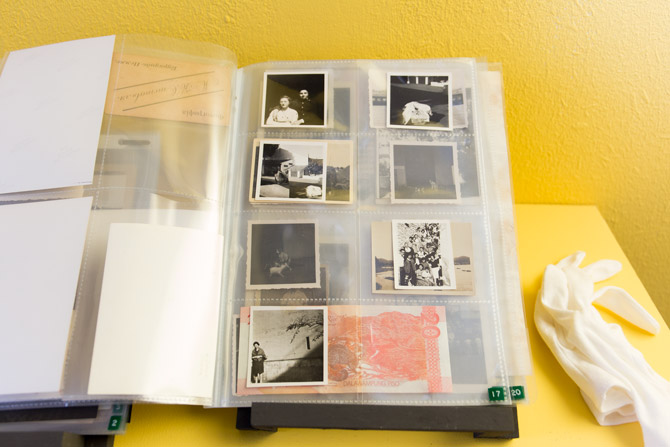
Wall, yellow paint, memorabilia, diashow, stereo sound
A cooperation between Ana de Almeida (PT/AT) and Stephanie Misa (PH/AT) . This is a project about landscape as formal and informal disposition of elements. Coordinates. An arrangement, a hierarchy: borders and de-limitations, transpositions and transgressions, frames and their inside-outside, margins, and of course landscape — of the geographical, political, personal, and emotional nature. Edouard Glissant’s Traité du Tout-Monde. (Poétique IV), calls it archipelagic thinking, a group of islands that lends its topography to an alternative imaginary: a reassessment of the insularity of bound cultures, of nation-states, and the heaviness of “continental thought”. The archipelago is an alternative imaginary, one that posits that identity could be as a conglomeration of islands (composed of many, yet is one). Identity formation, embodiment, complex colonial histories, evolution, interconnectedness, diaspora and change — Oh to dispell the oppressive idea of nationalistic wholeness!
KORINNA LINDINGER
“
Playfulness
is a
terrific empiric strategy.”

#BODY
#INSTALLATION
#SCULPTURE
BIO.
Korinna Lindinger is an artist, sociologist and curator based in Vienna. She researches and teaches at the Faculty of Architecture and Spatial Planning at TU Vienna and is part of the artistic direction of the interdisciplinary art space Symposion Lindabrunn. Being a member of as the female artist collectives maschen and k², from 2012 to 2019 she was co-responsible for tinkerlab, a space for artistic prototyping at Schmiede Hallein, and subnetAIR, a residency program of the platform for media art and experimental technologies in Salzburg.

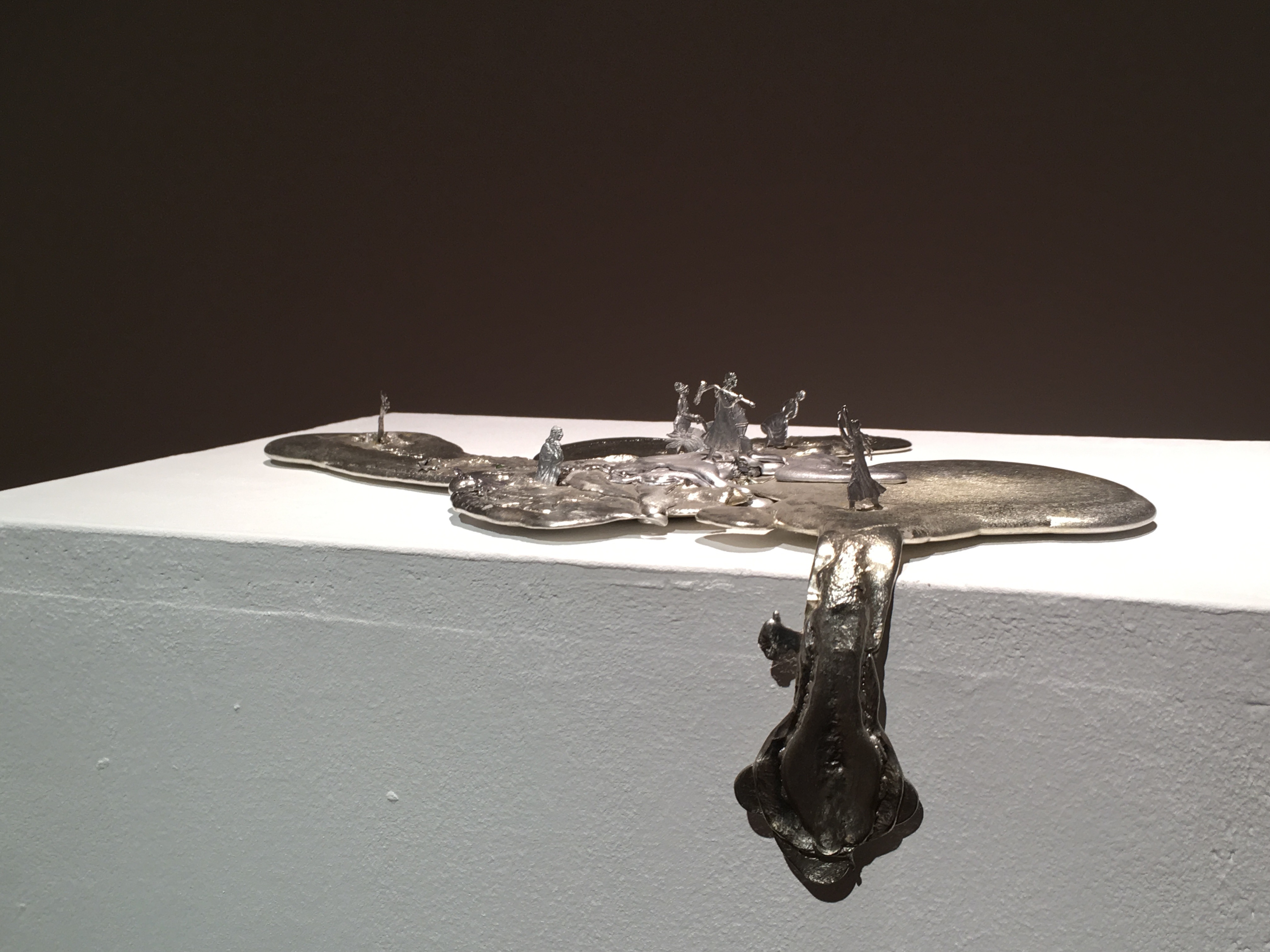
Photos: © Korinna Lindinger & Julia Rosenberger
Adelheid (2016)
Sculpture – Pewter
Adelheid is a cooperation between Korinna Lindinger and Julia Rosenberger, both part of the female art collective maschen.
Pewter figures usually show historical idealised persons or groups of persons. In play, children acquired these roles and their place in society. The tiny sculptures of play and display have been darstel mainly depictions of male honour. Female representations are more rarely found. For the sculpture Adelheid, Lindinger and Rosenberger searched various archives and collected tin women. The found objects show ladies of courtly society at dance and representation next to servants and peasant women at their daily work. Also pornographic postures and mothers with their children are found. All of them women serving or pleasing others. These glorified images were melted into a grotesque figure called Adelheid, a name of old high german origin, translating into "one of noble character".
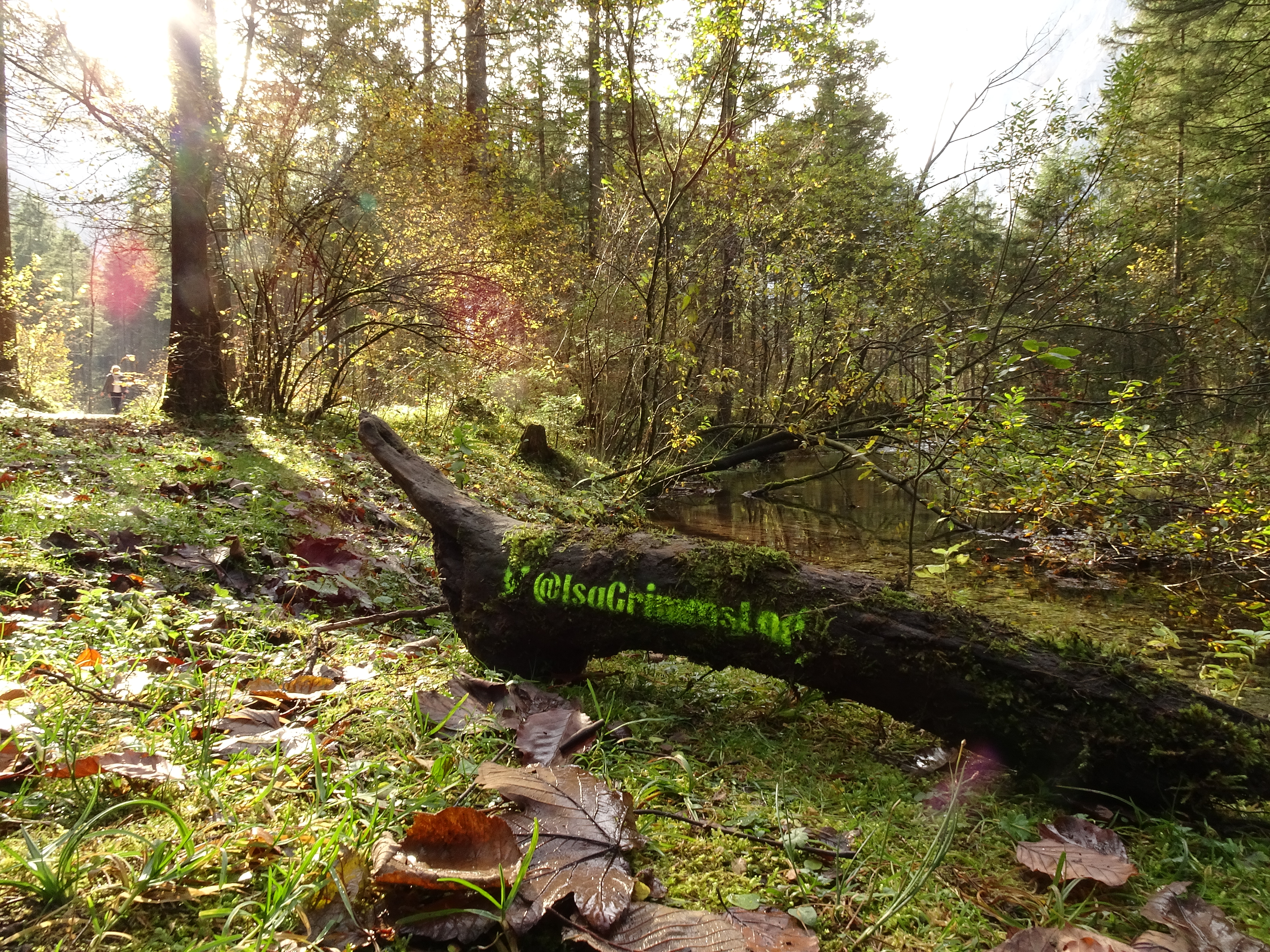

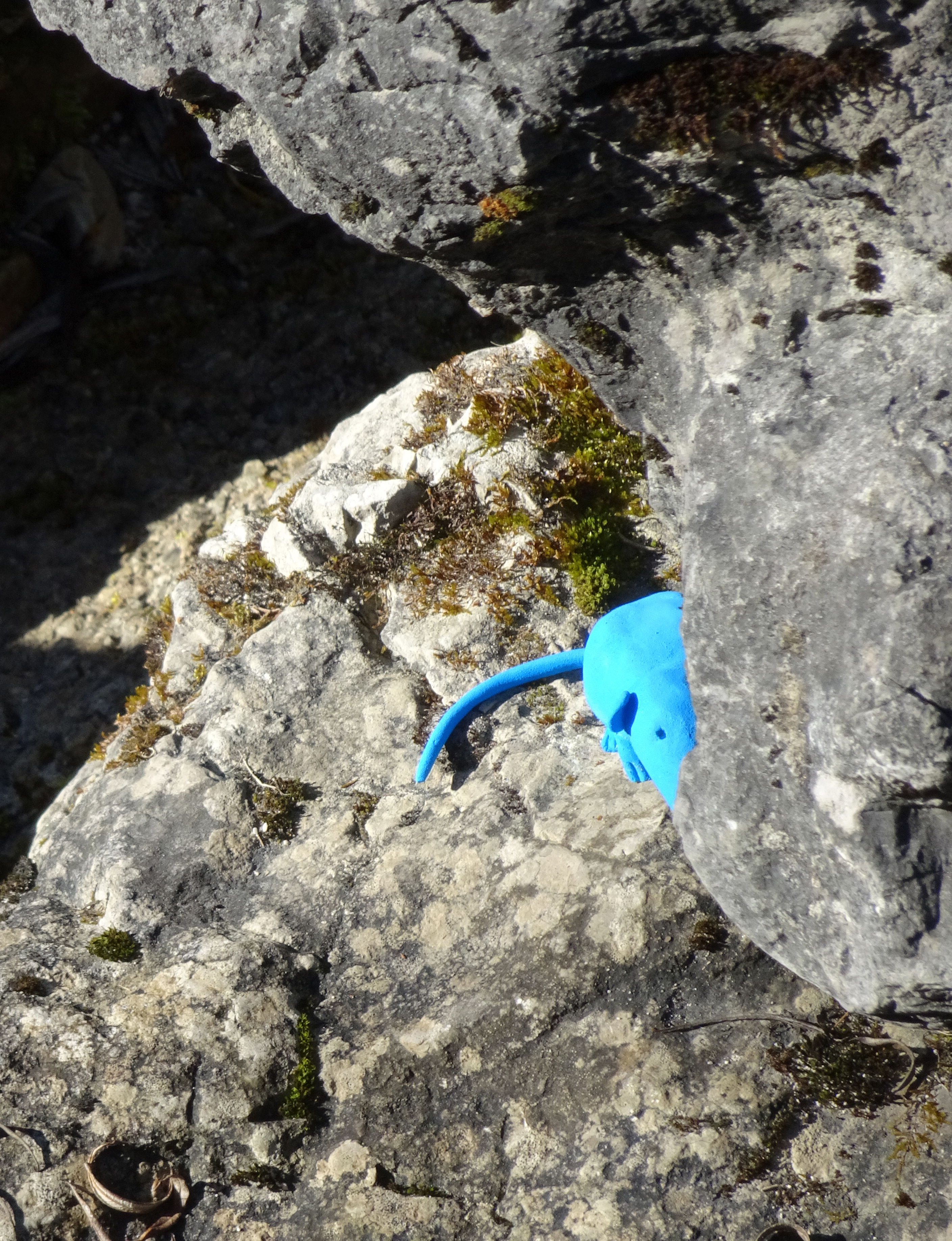
Photos: © Korinna Lindinger
Wild (2017)
Artistic interventions – twitter, ceramics, arylic paint, glass, steel, plastics and textile
Salzburg is home to many other animals besides humans – including wild animals. Some of them, the indigenous ones, have already spent the last ice age here. Others immigrated and adopted to the area later. Humankind, her transport routes, borders, economic and agricultural interests, as well as conservation policies, are changing wildlife habitats. Korinna Lindinger and Karla Spiluttini conducted interviews with biologists, ecologists, hunters and foresters to understand routes, stories and regulations of wildlife migration along the GermanAustrian border in Salzburg. In five cross-media interventions the art project places utopian perspectives into tamed wilderness, speculating on animal strategies to find their ways in an anthropocentric environment. Wild is a cooperation between Korinna Lindinger and Karla Spiluttini, together forming the female art collective kaquadrat.

Photo: © Shirin Kavin
innig (2019)
Garter, motor and components, acrylic glass
In a 30 by 30 centimeter cube a small engine drives a transmission belt made of garter. Left out of its purpose this one explores the inner and the outer surface of its shelter.