

ANA DE ALMEIDA
“Ficou
a ver
passar
navios.”
#ARTS-BASED RESEARCH #ARCHITECTURE #COMMONS #INSTALLATION #SPACE #MULTIMEDIA #IDENTITY #PERFORMANCE
#NEO-COLONIAL #VIDEO #GENDER
BIO. Ana de Almeida (b.1987) is an artist and author from Lisbon, currently based in Vienna. She is a member of the artists’
collective dienstag abendof
of VBKÖ and of the Interndinner collective against precarization of work in the cultural field. Her artistic practice addresses memory and remembering processes, narrative constructions that connect space and subject, and plurispatial and multilayered narratives in general.
Ana de Almeida is currently a Ph.D. candidate at the Academy of Fine Arts of Vienna, pursuing a doctoral thesis about the production of images in the 1974—1989 inter-revolutionary space between the Carnation and the Velvet Revolutions.
Ana de Almeida is currently a Ph.D. candidate at the Academy of Fine Arts of Vienna, pursuing a doctoral thesis about the production of images in the 1974—1989 inter-revolutionary space between the Carnation and the Velvet Revolutions.

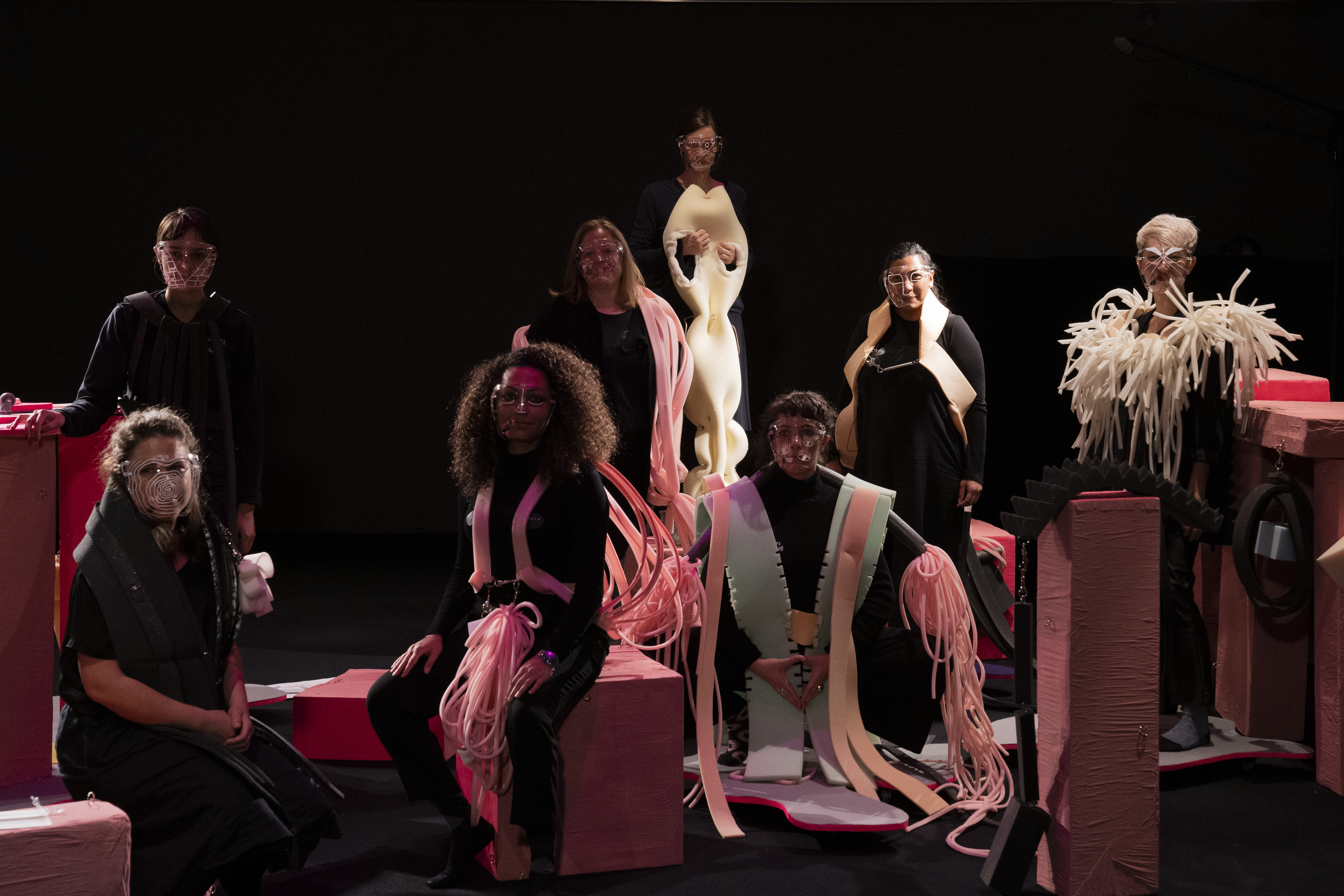
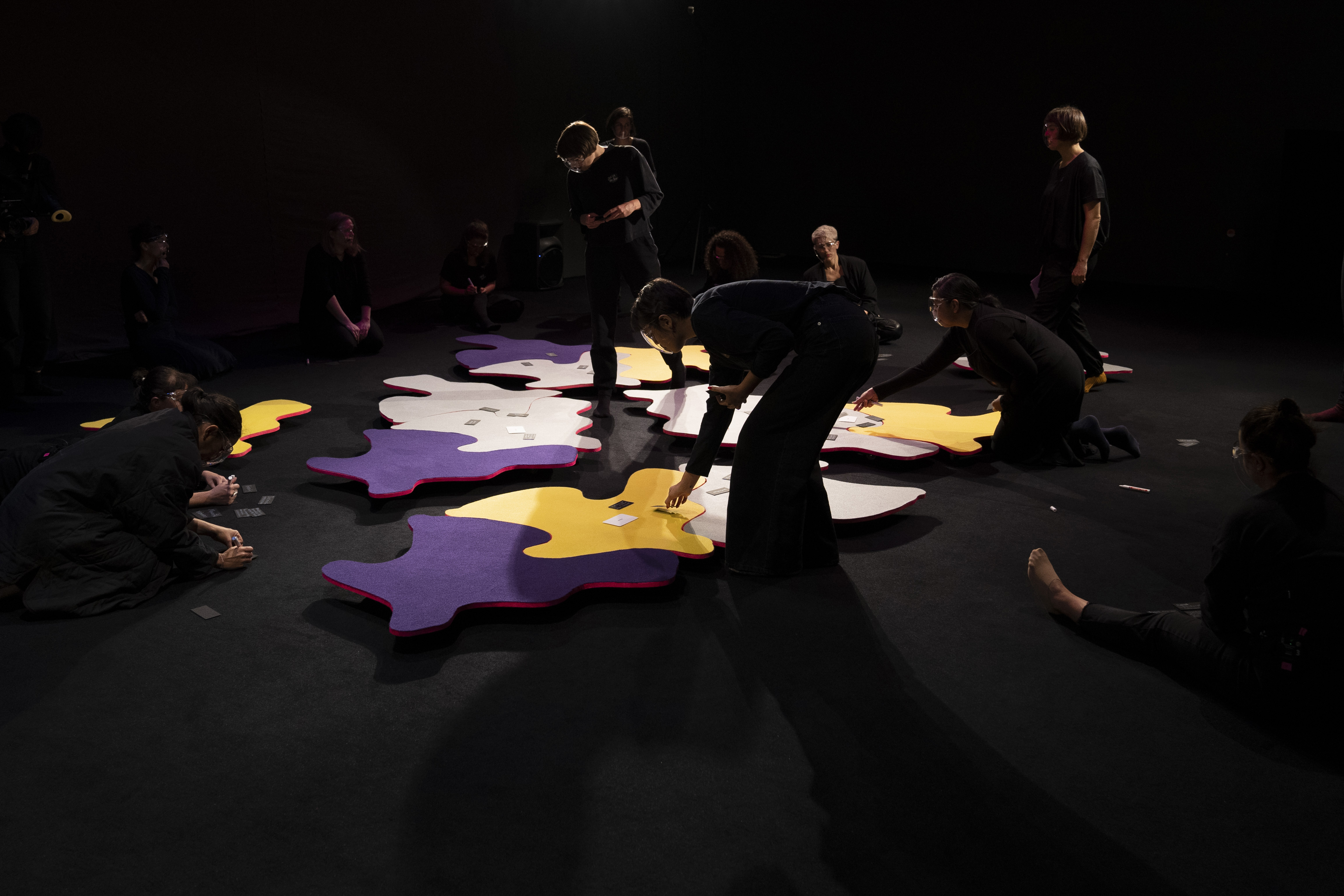
Ana de Almeida, Alicja Rogalskaand & Vanja Smiljanic
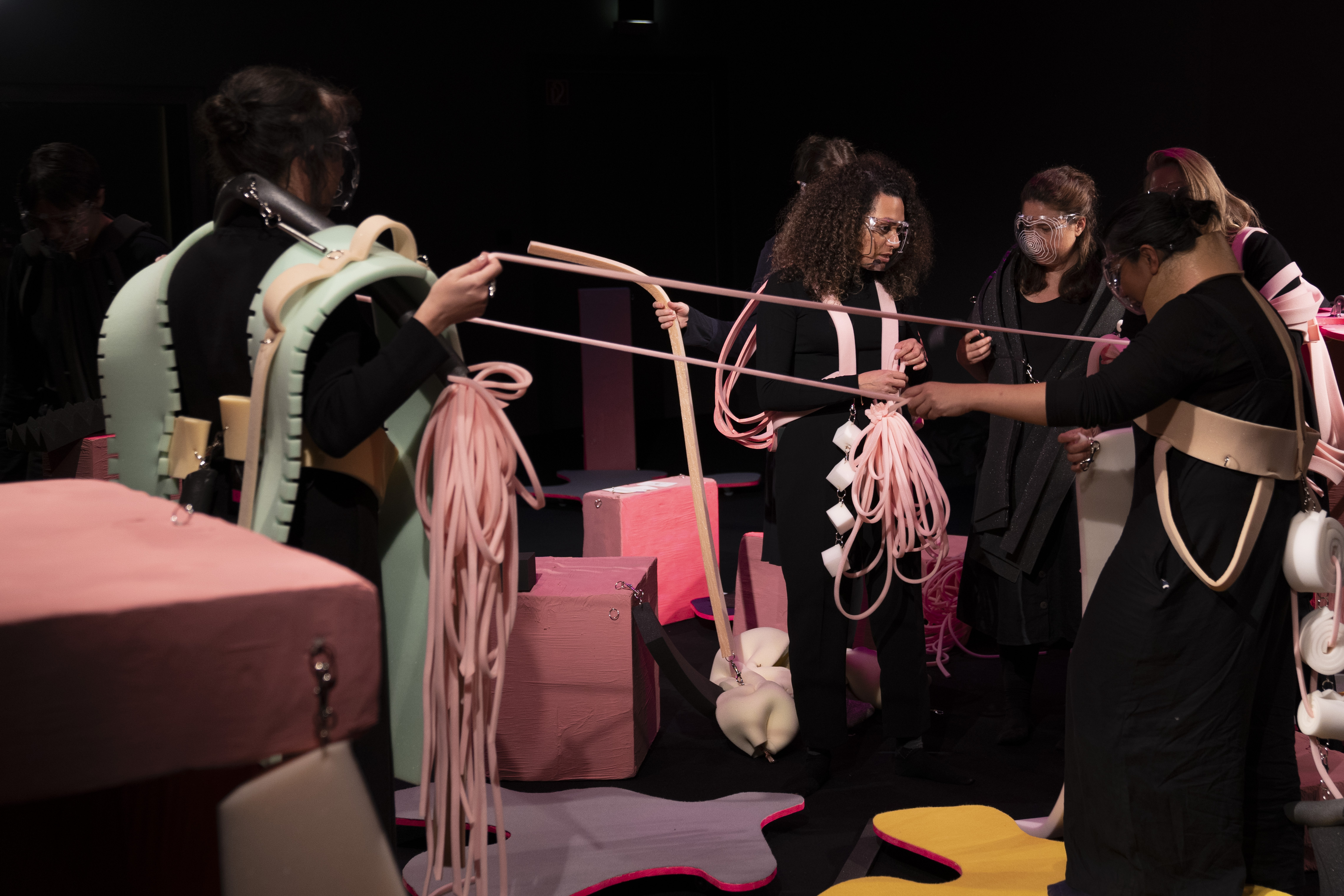
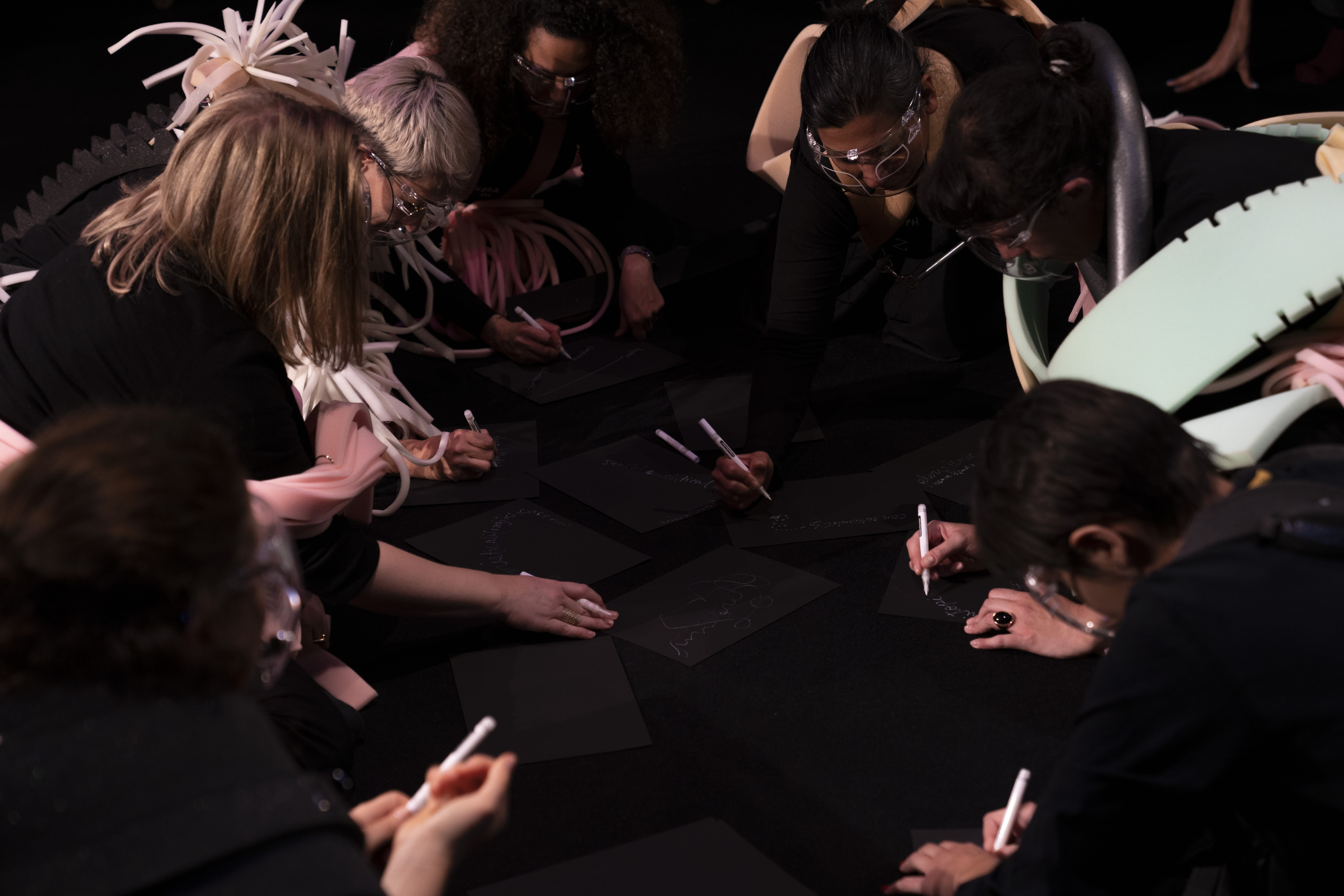
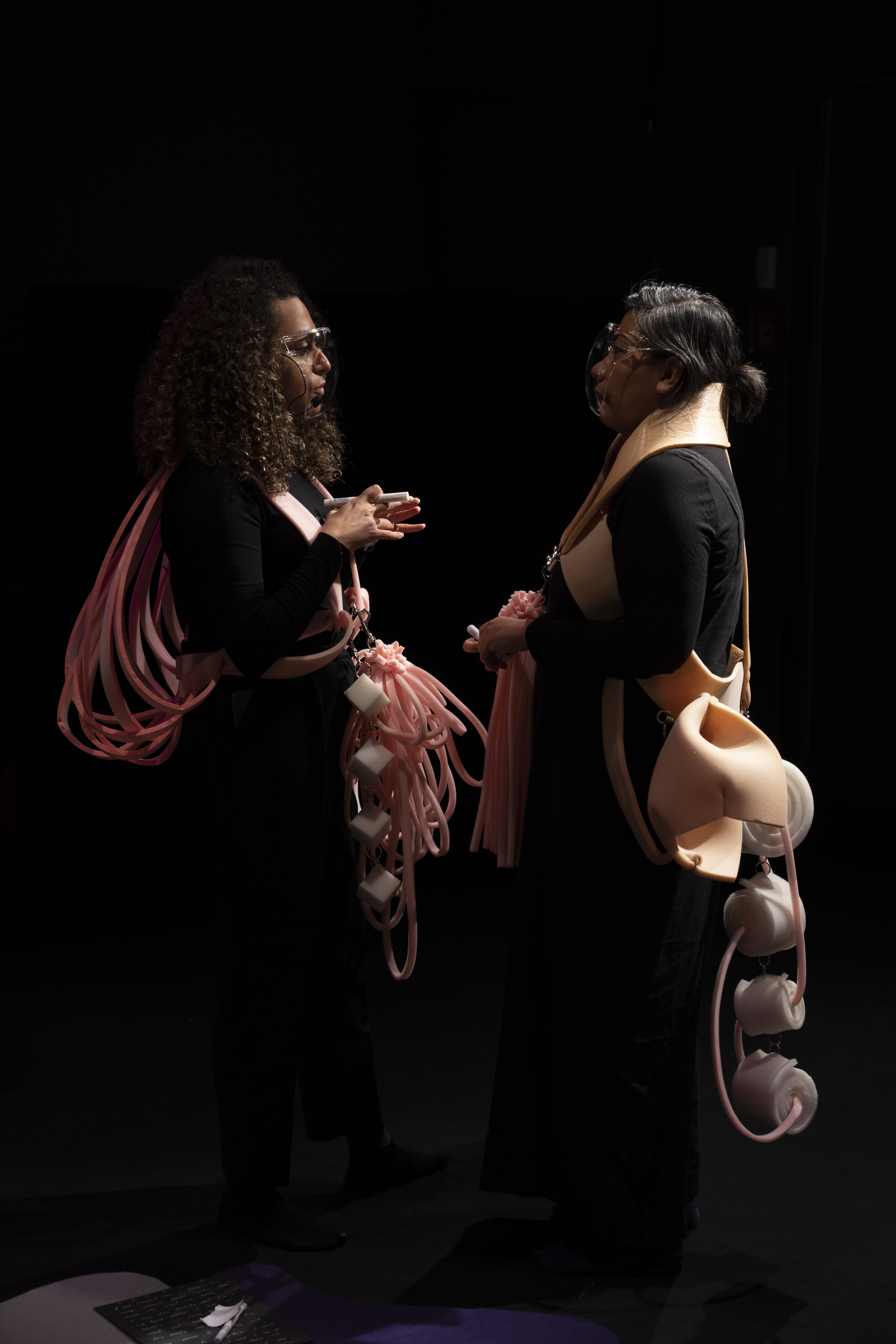
NOVA. Future thoughts on surviving together (2020 AT)
Live Action Role Play
In the future, gender inequality was erased. Nova is a multitude of newly born, radically inclusive and self-managed communities. Heterogeneous in their forms of commoning and social organization, Nova share a vow to never let oppression in any form rise again. Nova. Future thoughts on surviving together is a feminist futurist LARP - Live Action Role Play by Ana de Almeida, Alicja Rogalska and Vanja Smiljanić; directed towards feminist and queer-feminist activists based in Vienna. NOVA is a day of speculative gaming aimed at sharing survival strategies, exercising solidarity and intersectionality, creating solidarity networks and forming new alliances between different emancipatory movements. Together, we created a piece of feminist political fiction - a work in progress and a world free of patriarchal oppression in the making.
With: VBKÖ, Saloon Wien, Kunst & Kind, Latinxs Unidxs, Kültür Gemma, Cine Collective, Mala Sirena, female:pressure.


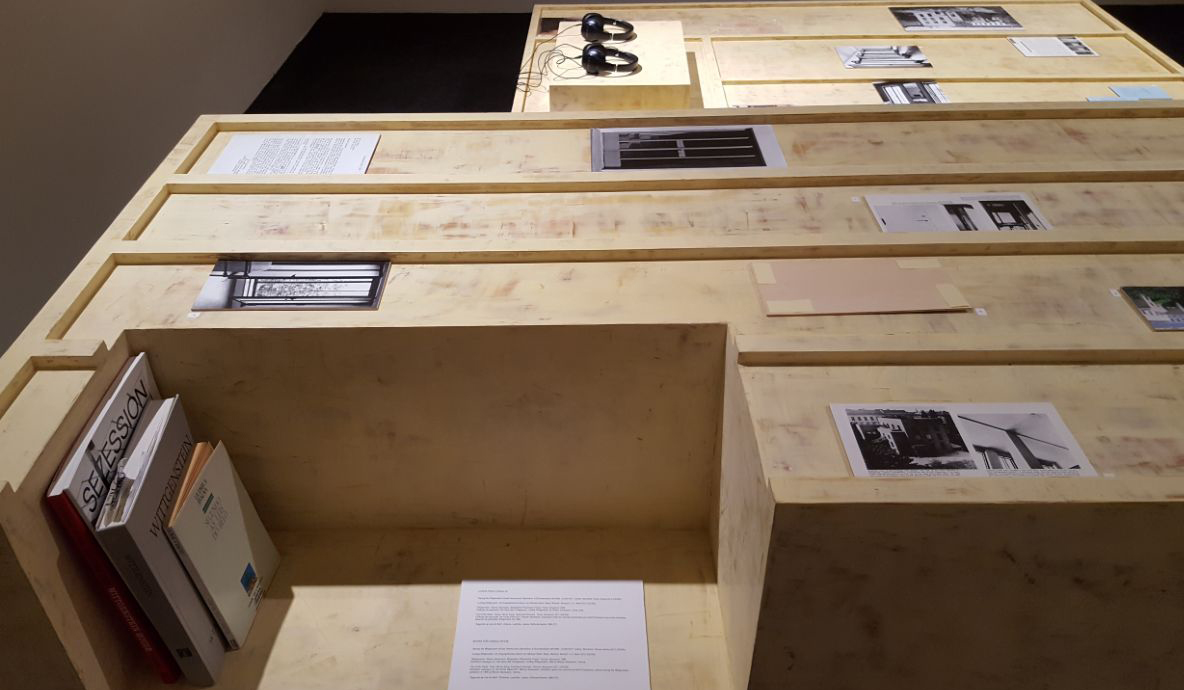
A Casa / The House The flat / Die Fläche (2018 PT)
MDF, stucco-lustro, stereo sound 42'5'' looped
Likewise a sculpture, A Casa (The House) shares the aesthetic and architectonic language of the House Wittgenstein in Vienna. The two volumes are a transposition and folding down of two of its architectonic elements: a window and the vestibule door. They serve as display for documental material such as letters and photos and incorporate an audio piece with interviews led by the artist. The surface is covered by stucco-lustro, a coating technique proliferating in Vienna on the turn to the 20th century, similar to how could the original coating of the walls of the House Wittgenstein have looked like before they were painted white after World War II. The highlighting of the stucco-lustro architectonic detail points out to a fundamental discovery for the understanding of the house as aesthetic experiment in which the house interiors, composed by materials which evoke extreme hardness, seem to dematerialize through the highly reflecting properties of the stucco walls.

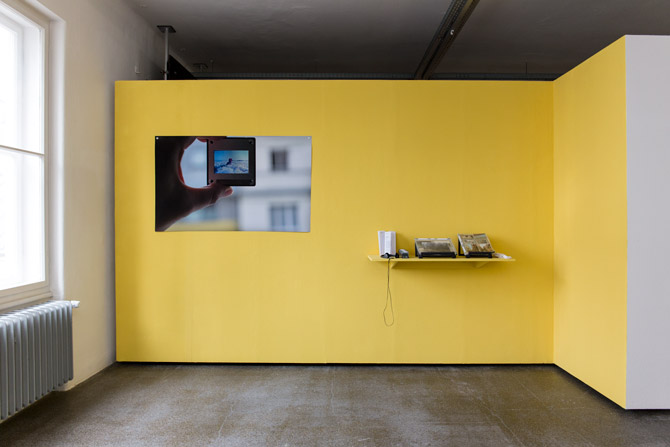
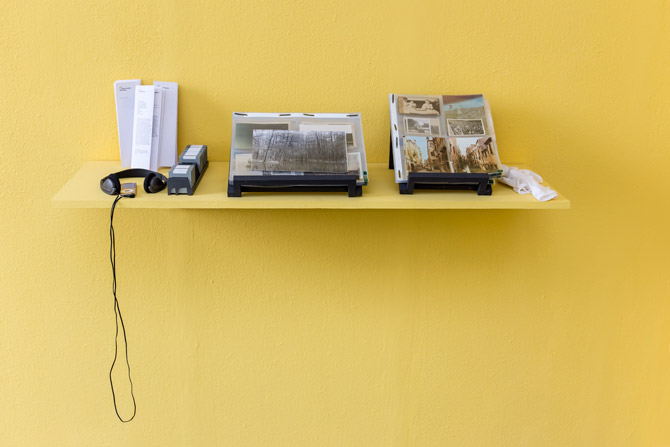
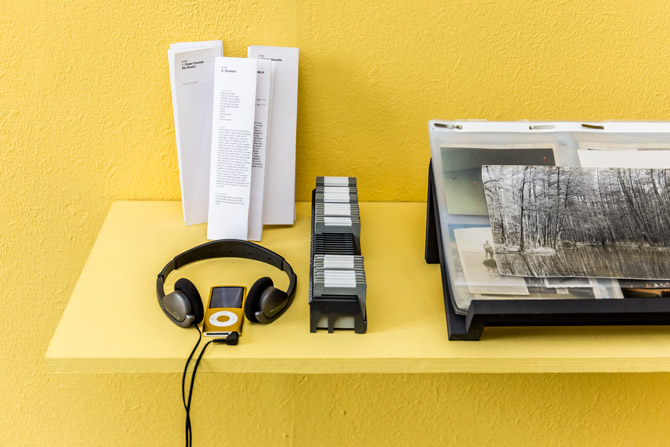
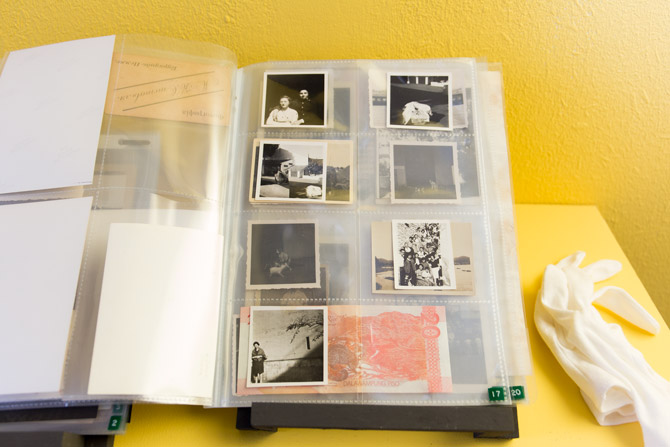
Photos: © Ana de Almeida & Stephanie Misa
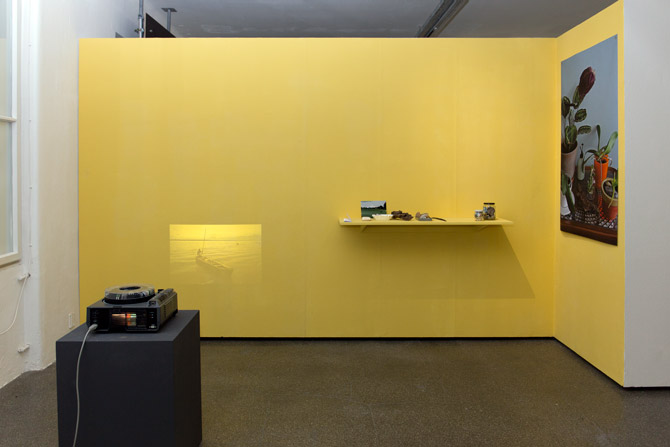
Untitled (Yellow) (2017 PT)
Wall, yellow paint, memorabilia, diashow, stereo sound
A cooperation between Ana de Almeida (PT/AT) and Stephanie Misa (PH/AT) . This is a project about landscape as formal and informal disposition of elements. Coordinates. An arrangement, a hierarchy: borders and de-limitations, transpositions and transgressions, frames and their inside-outside, margins, and of course landscape — of the geographical, political, personal, and emotional nature. Edouard Glissant’s Traité du Tout-Monde. (Poétique IV), calls it archipelagic thinking, a group of islands that lends its topography to an alternative imaginary: a reassessment of the insularity of bound cultures, of nation-states, and the heaviness of “continental thought”. The archipelago is an alternative imaginary, one that posits that identity could be as a conglomeration of islands (composed of many, yet is one). Identity formation, embodiment, complex colonial histories, evolution, interconnectedness, diaspora and change — Oh to dispell the oppressive idea of nationalistic wholeness!
ULLA RAUTER
“
When
I want to
be heard
I whisper.”
![]()

#BODY #DIGITAL #INSTALLATION #INTERACTIVE #ELECTRONICS #HACKING #MULTIMEDIA #PERFORMANCE #SOUND
BIO. Ulla Rauter works at the interface between sound and fine art.
Her works include performative sculptures, music performances and interactive sound objects. She has realized a series of interactive works in public space on the subject of silence.
One main field of her work is the development of experimental electronic sound
devices. Her sensor-based electronic music instruments have been shown internationally in solo performances or as objects in exhibitions. In 2010 she and Christine Schörkhuber founded the annual sound-art show Sound Manifestos. Since 2013 she's got a lectureship at the University of Applied Arts,
Department of Digital Art.

Photos: © Ulla Rauter
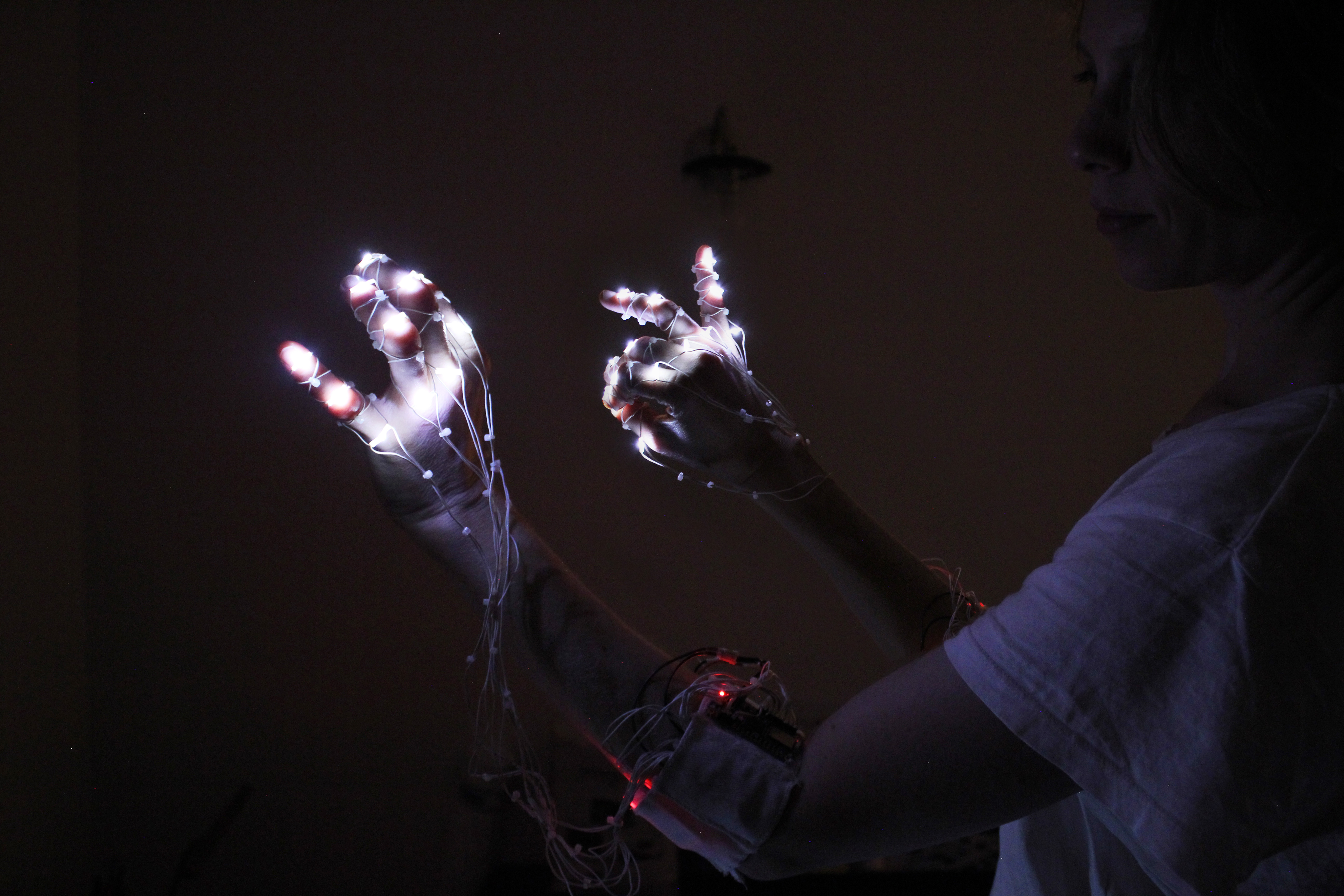
TALKING HANDS (2020)
Electronics, synthetic voice performance
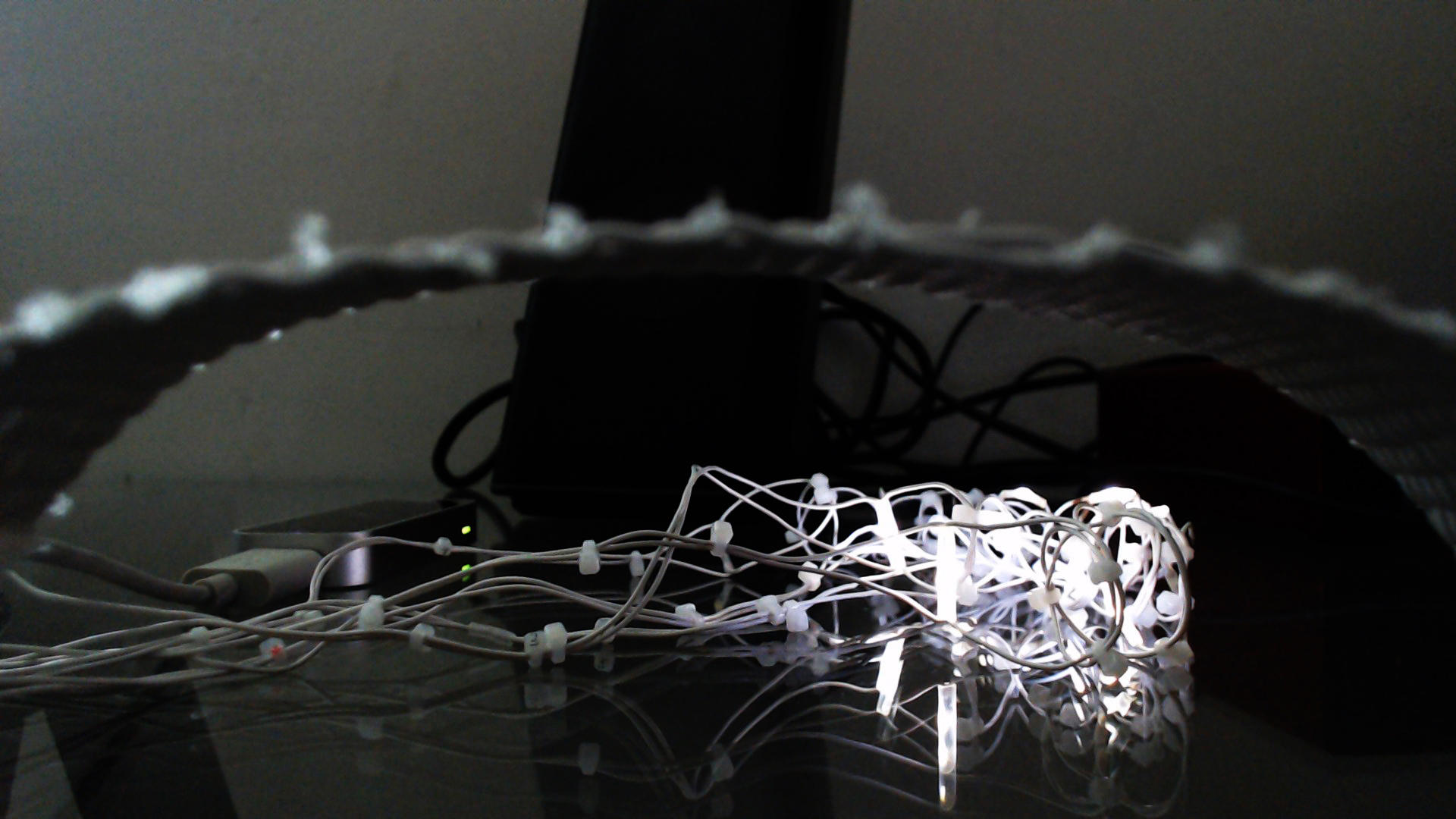
Talking hands is a sensor-based gestural interface developed as a live instrument to controll an artificial voice.
The synthetic voice is played by the artists hand movements, changing its pitch and attributes while reacting on different gestural cues.
The artificial voice - usually aimed to imitate the human voice as closely as possible - becomes an autonomouos artistic tool of expression.
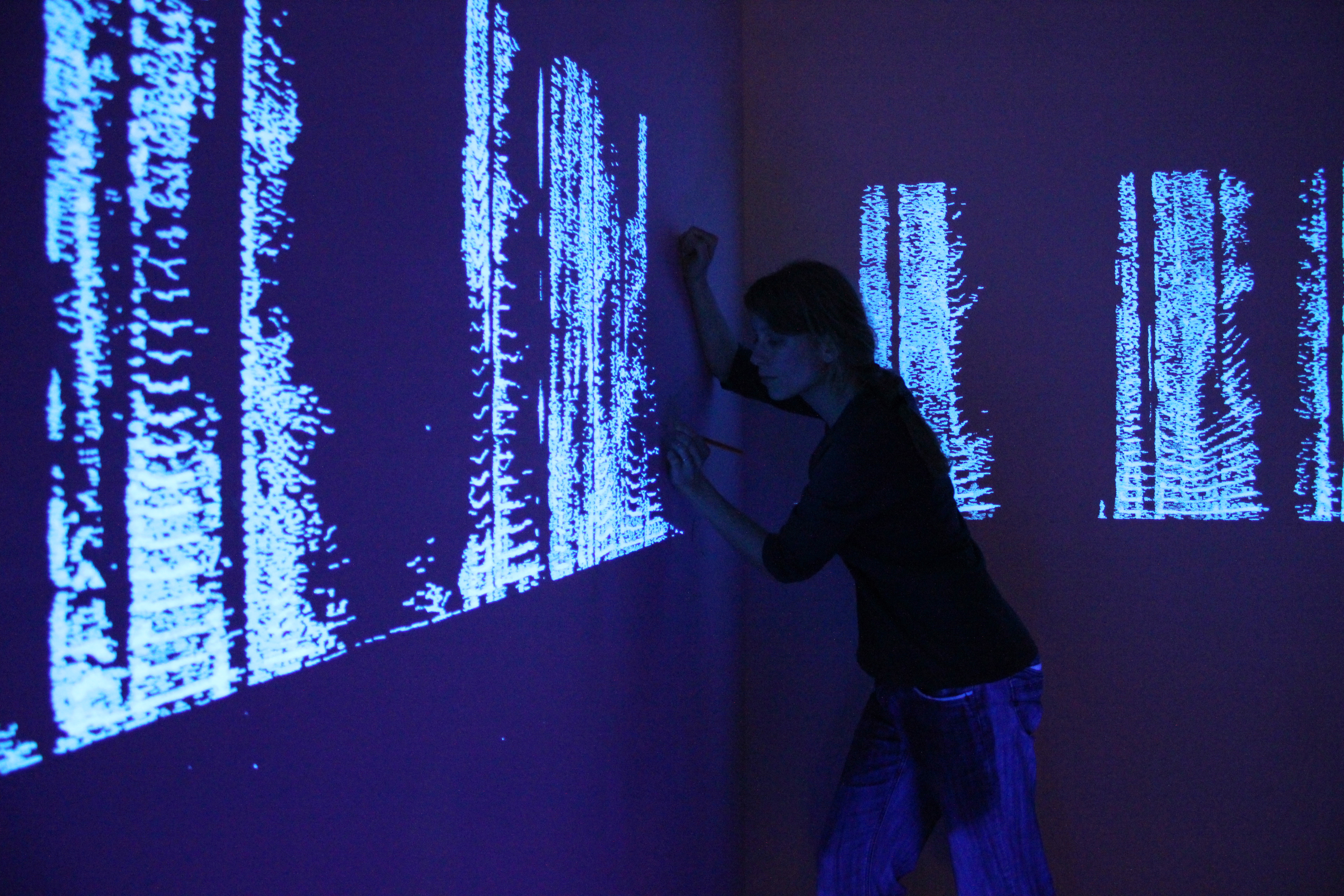
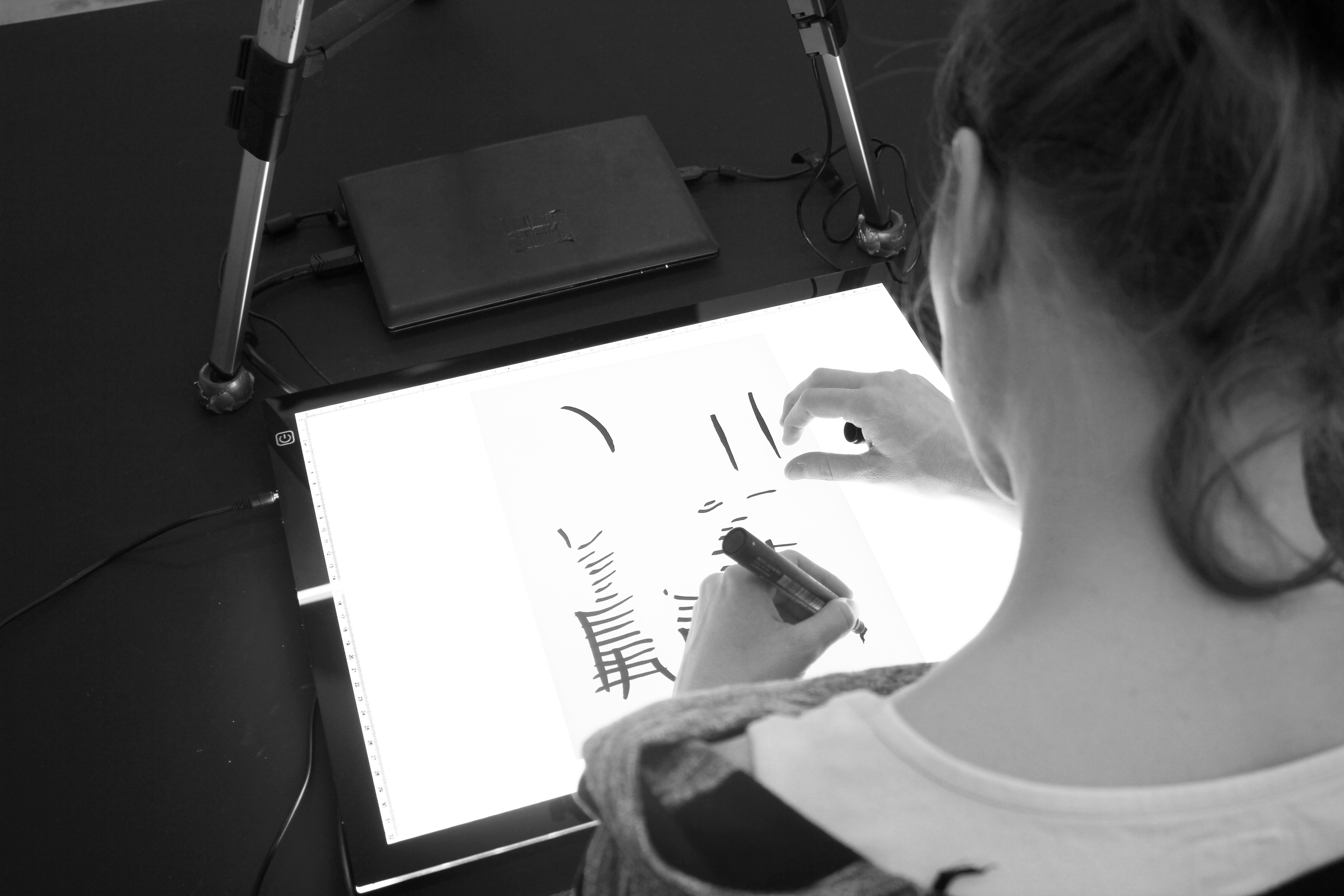
Sound calligraphie (2015)
Sonificated drawings
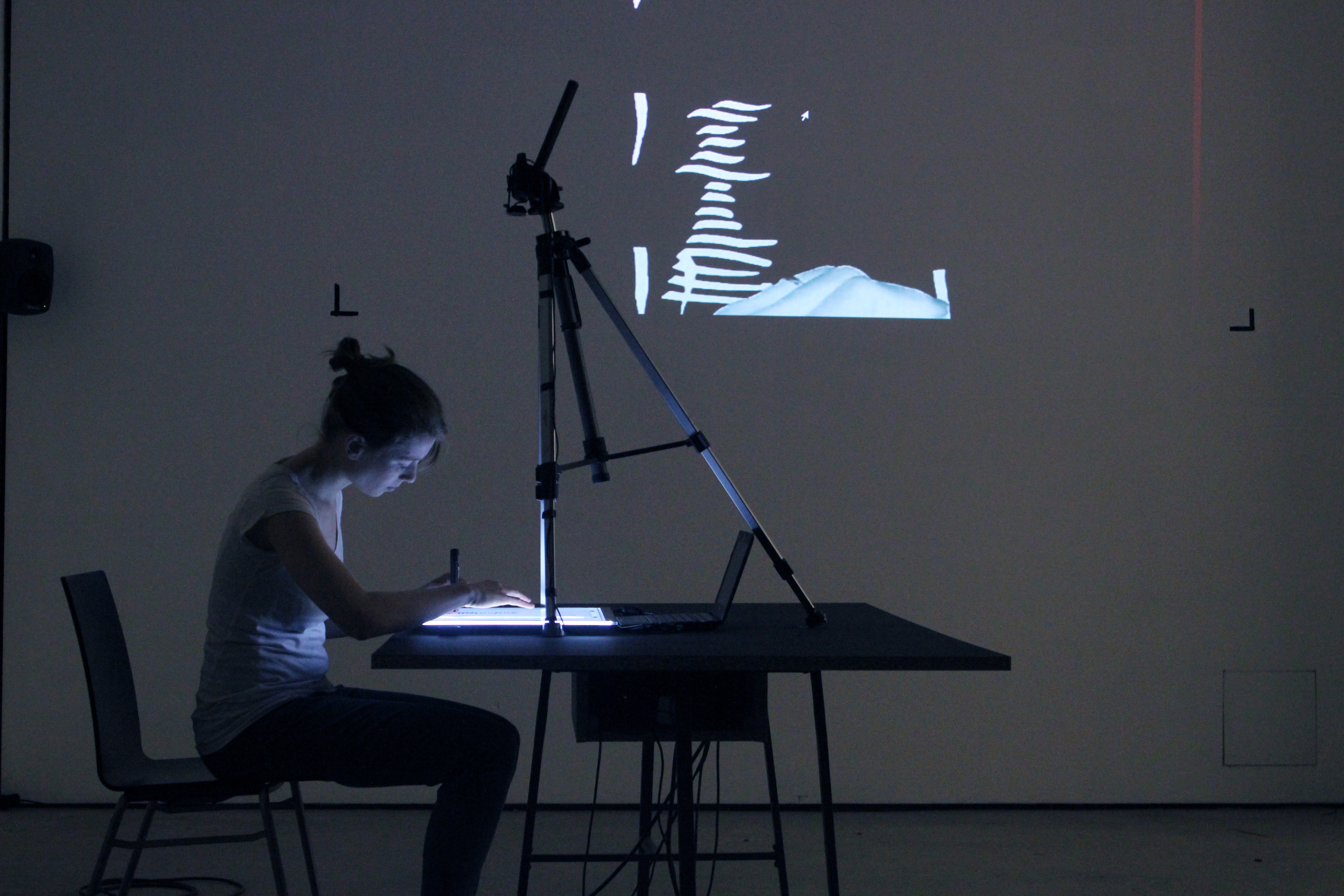
Sound calligraphies are hand-drawn voices. Based on spectrograms of spoken words I developed a calligraphic system of symbols, which I draw and sonificate in a live performance by use of brightness values. Thus, speech sounds become perceptible – the painted sound becomes an artificial voice.


Photos: © Silence Collector
Silence collectors (2014)
Wood, electronics
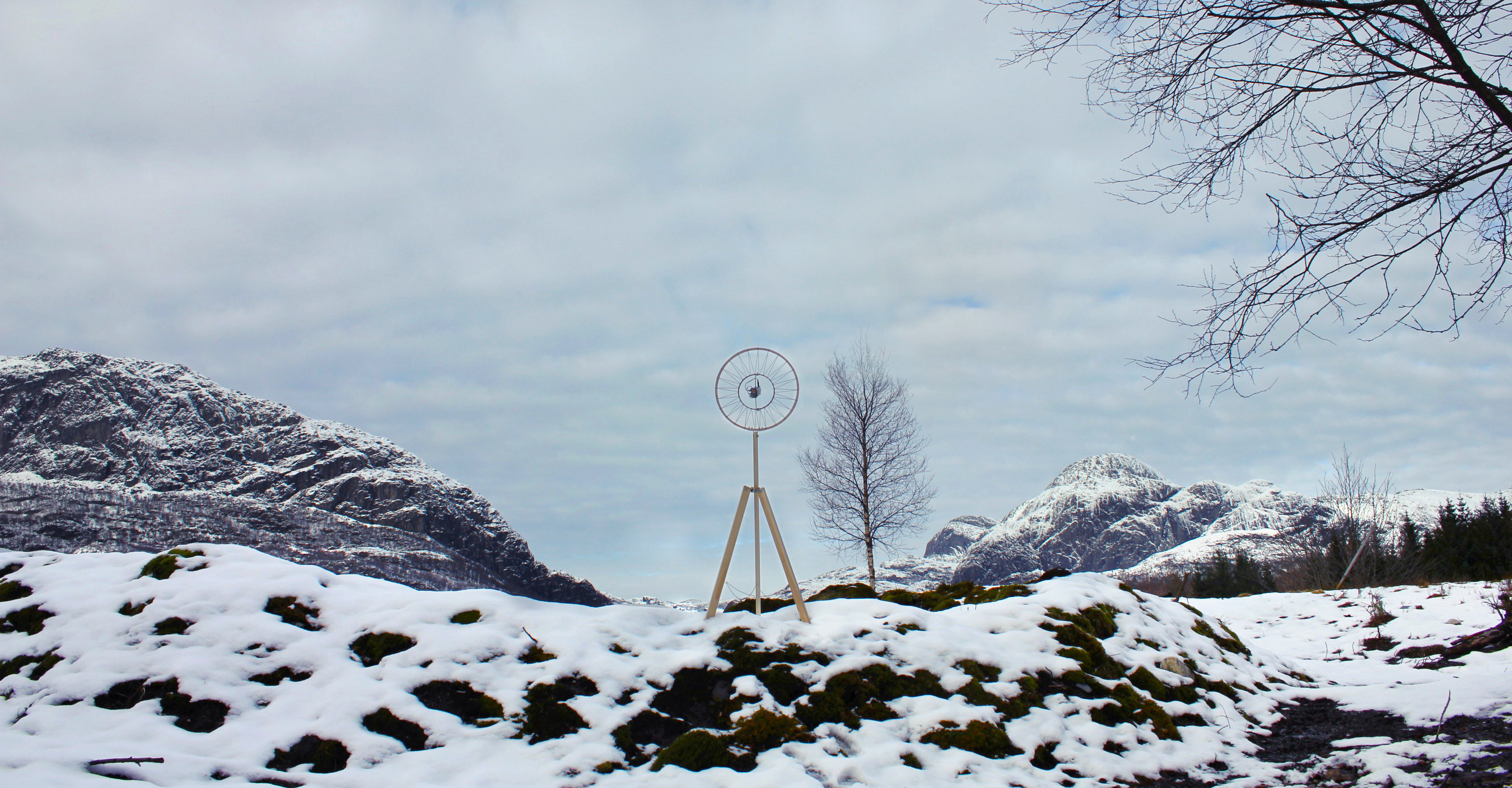
Silence collectors are stand-alone recording devices, able to collect silent recordings autonomously. The recorder gets an infrared signal and starts recording only when the actual sound level comes below a certain value. As soon as loud noises are interrupting the silence, the record will pause the recording. The collected recordings represent moments of comparative silence, which draw attention to the lowest-level acoustic events and the differents in the noise floor according to the characteristics of the place where it’s been recorded.